Start with Edmund Burke: The First Conservative. Jesse Norman's 338-page book is half biography and half argument that Burke matters now, and it is the only title here written to be picked up cold. The second half is openly partisan, which is easy to discount once you know it is there. Keep The Portable Edmund Burke beside it — a 573-page anthology running from aesthetics to America, India, Ireland and France, meant for dipping rather than reading through.
Those two exist to fix the usual mistake, which is treating Burke as a man who wrote one book. He was a working parliamentarian for nearly thirty years. He argued for conciliation with the American colonists, spent fourteen years impeaching Warren Hastings over the East India Company's conduct in Bengal, pressed for the relief of Irish Catholics, and began his career with a treatise on aesthetics. Reflections on the revolution in France is a late intervention by an old politician, not a system.
The early Burke, before there was a conservatism to found
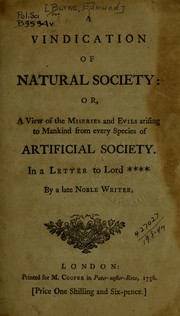
A vindication of natural society is his first publication: a 106-page parody of Bolingbroke's rationalism that argues so effectively against all government that readers took it seriously. A philosophical enquiry into the origin of our ideas of the sublime and beautiful, 240 pages, separated the sublime from the beautiful and fed two centuries of Romantic art; the appeal to feeling over analysis is the same manoeuvre the political writing later makes about inherited institutions. Thoughts on the cause of the present discontents is 79 pages defending organised political parties as legitimate rather than factional, at a point when that was a novel claim.
Then the empire. Burke's speech on conciliation with America is the most-taught piece of his oratory, and our record for it is an old 126-page school edition. On Empire, Liberty, and Reform gathers 476 pages of the major speeches and letters, including the Hastings impeachment material — much the fastest way to read the imperial Burke without working through the collected works.
Reflections, read as an argument rather than a monologue
Reflections on the revolution in France runs to 338 pages in our edition and is furious, brilliant and in places factually careless. It is placed after the early work deliberately, so you can see which of its arguments are new and which are thirty years old.
Paine's Rights of Man is here on purpose. It is not Burke, it is his most famous answer — no generation can bind its successors — and it outsold him enormously. Levin's The great debate, 290 pages, then reconstructs the exchange thematically across nature, justice, generations and change. Read it after both primary texts, not before; as a synthesis it is excellent and as an introduction it is thin.
Page count will mislead you here
The 79-page Thoughts on the cause of the present discontents will cost you more time than the 176-page Rights of Man, because Paine wrote for a mass readership and Burke wrote for the House of Commons. Norman's biography and Reflections on the revolution in France are the same length, 338 pages each, and are not the same week of reading. Almost all of Burke is eighteenth-century prose composed for the ear, and it genuinely goes better read aloud.
The book people abandon is Richard Bourke's Empire & revolution, at 1,017 pages the major modern scholarly study and the corrective to every other book here that has a present-day point to press. It is worth finishing, but not first, and not on a deadline. If you want one closing argument instead, take Conor Cruise O'Brien's The great melody, 692 combative pages built around Yeats's line, or Drew Maciag's Edmund Burke in America, 304 pages on how an Irish Whig became an American conservative icon — which is the honest answer to the label this article opened with.
The staged version of all this, with a study plan for each group of books, is on our ordered Edmund Burke path.