The U.S.A. Trilogy Reading Order: Where to Start with John Dos Passos
John Dos Passos's U.S.A. is three novels — The 42nd Parallel, Nineteen Nineteen, The Big Money — published between 1930 and 1936 and meant to be read in that order as one book about the first three decades of the American twentieth century. It is often sold as a single volume, but the three resolve as separate books and there is no reason to wait for an omnibus. The real obstacle is not order, it is form. Each novel braids four kinds of writing: twelve conventional narratives, the Newsreel collages of headlines and song lyrics, the Camera Eye passages of unpunctuated autobiography, and short prose biographies of real Americans. Readers skip the last three and then wonder why the book feels like a series of disconnected lives. It is the interleaving that carries the argument, so the fix is to read them all and to read them slowly. This path takes the trilogy first, then the novels Dos Passos wrote to get there, then the life, then the America it documents.
The trilogy, in order
BeginnerRead the three novels in sequence and learn to read the four interleaved modes as one continuous argument
▸ Study plan for this stage
Pace: Four to five months, and the page count is actively misleading here. The three volumes are 1,461 pages — The 42nd Parallel at 415, Nineteen Nineteen at 487, The Big Money at 559 — which in an ordinary novel would be ten or twelve weeks. It will not go at that rate. Dos Passos interleaves four differ
- U.S.A. is three novels published between 1930 and 1936 and meant as one book about the first three decades of the American twentieth century. It is often sold as a single omnibus, but the three resolve separately and there is no reason to wait for one.
- Four modes alternate throughout. The narratives follow twelve fictional lives in plain third person. The Newsreels are collaged headlines, song lyrics and advertising copy. The Camera Eye sections are unpunctuated first-person impressions, and they are autobiographical. The biographies are short pro
- The modes are the book. Reading the narratives and skipping the rest turns a formal argument into a set of undistinguished social novels, which is why so many abandoned copies stop around page 150.
- The Newsreels do a specific job: they supply what the country was being told about itself at the moment each narrative section takes place. The irony is structural rather than commented on.
- The Camera Eye is Dos Passos himself, and it is the only place in 1,461 pages where a first person is allowed. Its political trajectory across the three books is the trilogy's hidden spine.
- The biographies — Debs, Edison, Ford, Wilson, Isadora Duncan, Veblen, the Unknown Soldier — are where the prose is at its most controlled, and they are the easiest way into the style for a struggling reader.
- The twelve narrative lives are not equally weighted and several simply stop. That is deliberate: the trilogy is about a society, and it treats individual endings as incidental.
- The Big Money is where the disillusionment becomes total. Sacco and Vanzetti sit at its centre, and the Camera Eye's most famous passage — on two nations — comes out of it.
- What does each of the four modes know that the others do not? Take one chapter and answer it precisely.
- Pick a Newsreel and the narrative section that follows it. What is the relationship — echo, contradiction, or something less direct?
- Whose voice is the Camera Eye, and how does its position change between The 42nd Parallel and The Big Money?
- Choose two of the biographies, one admiring and one hostile. What does Dos Passos do at sentence level to produce each verdict?
- Several narrative lines end without resolution. What is the trilogy asserting by refusing to finish them?
- Why does The Big Money put Sacco and Vanzetti at its centre rather than the crash?
- For the first fifty pages, read each Newsreel twice — once at speed and once slowly enough to identify the sources. Ten minutes of that trains the reading skill the remaining 1,400 pages require.
- Read the Camera Eye sections of The 42nd Parallel as a continuous sequence, skipping everything else, in one sitting. They form an autobiography and reading them separately once makes them legible thereafter.
- Copy out one biography by hand — the Veblen or the Unknown Soldier is a good choice. It is the fastest way to feel how the prose is built.
- Keep a single sheet with the twelve narrative names and one line each on where you last left them. Dos Passos gives you no help across a 500-page gap.
- Track one commodity or industry — oil, advertising, aviation — through all three volumes. The trilogy is organised around money moving and following one channel makes that visible.
Next up: The collage method looks like a system invented for U.S.A.; the two earlier novels show it being assembled, one piece at a time.
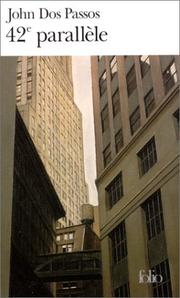
Start here. The first volume runs from the turn of the century to the eve of American entry into the First World War and introduces five of the twelve narrative lives. Read the Newsreels and Camera Eye sections rather than skipping them — the first hundred pages are where you train yourself to hold four registers at once, and it never gets harder than that.
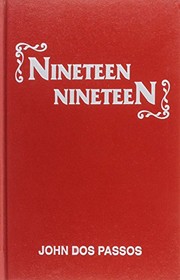
The war and the peace conference, and the most tightly focused of the three — it is also the volume most often held to be the best. Note that it is catalogued both under this spelled-out title and as 1919; they are the same book. Read it second and directly after the first, because several narratives carry across.
The boom and Sacco and Vanzetti, and the volume where the trilogy's disillusionment becomes explicit and total. Read it last: the biographies here, from Ford to Isadora Duncan, only land once you have absorbed a hundred pages of Newsreels teaching you what the country was told about itself.
Dos Passos before U.S.A.
IntermediateRead the two earlier novels where he assembled the technique the trilogy runs on
▸ Study plan for this stage
Pace: Six to seven weeks for 837 pages, and the two halves read at very different speeds. Three Soldiers at 433 pages is conventionally narrated and moves at 40 to 50 pages a session — three weeks is comfortable. Manhattan Transfer at 404 pages is the harder book by some margin, because it is where the in
- Three Soldiers, from 1921, follows three enlisted men through the American Expeditionary Force and caused a scandal on publication by treating the army itself as the enemy rather than the Germans.
- It is told conventionally — three plots, chronological, a single register. That conventionality is the point of reading it here: it establishes what Dos Passos could already do before he stopped doing it.
- Manhattan Transfer, from 1925, is where the U.S.A. method is invented: a city rendered through dozens of intercut lives with no central protagonist and no continuous plot.
- The prototype elements are all visible — the fragmentary epigraphs at chapter heads that become the Newsreels, the cross-cutting that becomes the narrative sections, the refusal of a hero.
- What Manhattan Transfer lacks is the Camera Eye and the biographies. Seeing the method without those two makes clear what they were added to do: supply a self and supply a history.
- Reading these first converts the trilogy's structure from a gimmick into a development. Dos Passos arrived at it over about a decade rather than imposing it.
- Both novels are also about institutions consuming individuals — the army in one, the city in the other — which is the subject U.S.A. scales up to a nation.
- What does Three Soldiers say about the army, and why was that a scandal in 1921 when war novels were common?
- How is Manhattan Transfer organised, given that it has no protagonist? What holds it together?
- Which elements of the U.S.A. method are already present in Manhattan Transfer, and which two are missing?
- What does the leap between the two books cost Dos Passos in reader sympathy? What does he get in exchange?
- Manhattan Transfer is about a city and U.S.A. is about a country. What has to change in the method to make that scale work?
- Read the first chapter of Three Soldiers and the first chapter of Manhattan Transfer on the same day. Four years separate them and the difference is total.
- In Manhattan Transfer, list the chapter epigraphs and compare them with a handful of Newsreels from The 42nd Parallel. The line of descent is direct.
- Take one Manhattan Transfer character and count their appearances. The average is small, and seeing the number explains why the book feels the way it does.
- Write one sentence on what the Camera Eye adds that Manhattan Transfer lacks. That sentence is the answer to why U.S.A. is the greater book.
Next up: The Camera Eye is autobiography without punctuation; the next stage supplies the life it is a record of, and the political break that ended it.
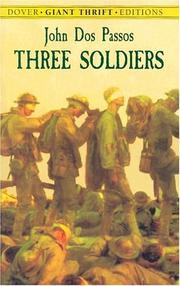
His 1921 war novel, following three enlisted men through the American Expeditionary Force, and a scandal on publication for saying the army was the enemy. Read it before Manhattan Transfer: it is conventionally told, which is exactly what makes the leap to the next book visible.
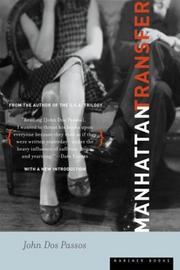
The 1925 novel where the U.S.A. method is invented — a city rendered through dozens of intercut lives with no central protagonist. This is the direct prototype, and reading it first makes the trilogy's structure feel like a development rather than a gimmick.
The man behind it
BeginnerRead Dos Passos on himself and the standard biography, and understand the political journey the Camera Eye sections encode
▸ Study plan for this stage
Pace: Nine to ten weeks for 1,195 pages, and the three are very unevenly weighted. The Best Times is 229 pages of relaxed memoir and reads in ten days at 30 pages a sitting. Adventures of a Young Man is 342 pages of conventional political fiction, another two weeks. Virginia Spencer Carr's Dos Passos is 6
- The Best Times is Dos Passos's own memoir of exactly the years the trilogy covers — Harvard, the volunteer ambulance corps, Paris, the twenties — and it names the real people and places the Camera Eye renders as impressions.
- It is also a genial book about a bitter subject, written decades later by a man whose politics had reversed. Read it as a participant's account rather than as a neutral key.
- Adventures of a Young Man is the first volume of the District of Columbia trilogy, written after Spain, about an American radical destroyed by the Communist Party.
- It is the clearest fictional statement of the break that turned Dos Passos from a man of the left into a man of the right, and it is deliberately conventional in form — the modernist apparatus is gone.
- The disappearance of the technique alongside the change in politics is the single most interesting fact about his career, and the stage exists to put it in front of you.
- Carr's biography is the standard life and reconstructs the friendships with Hemingway and E. E. Cummings, and the Spanish rupture with Hemingway that ended one of them.
- The rupture turned on the killing of José Robles, Dos Passos's friend and translator, by the Republican side. Accounts of what Hemingway knew and said differ, and the disagreement is live scholarship rather than a settled story.
- The Camera Eye's political arc across the trilogy is the record of the first half of this journey, written before the second half happened.
- Which episodes in The Best Times can you match to specific Camera Eye sections? Find at least two.
- The memoir was written long after the politics changed. Where can you feel the later man editing the earlier one?
- What destroys Glenn Spotswood in Adventures of a Young Man, and how is the diagnosis different from anything in U.S.A.?
- Why does the technique vanish when the politics change? Offer an explanation and say what would count against it.
- What does Carr establish about the Robles affair, and where does she say the evidence runs out?
- Does knowing the later Dos Passos change how the trilogy reads? Should it?
- Read a Camera Eye section and then find the corresponding passage in The Best Times. Doing this three times teaches you to read the Camera Eye without the memoir.
- Use Carr's index rather than reading straight through on a first pass: take Harvard, the ambulance corps, Spain and Hemingway, in that order. At 624 pages this is the efficient route.
- Compare a page of Adventures of a Young Man with a page of The Big Money. The subject is adjacent and the prose is unrecognisable.
- Write a timeline of Dos Passos's political positions with dates from Carr, and mark where each volume of U.S.A. was written on it. The trilogy stops looking like a single verdict.
- Find one point where the memoir and the biography disagree, and note what kind of disagreement it is. Do not try to settle it.
Next up: With the author accounted for, the last stage supplies the America he was documenting and the neighbouring books that show what his method bought him.
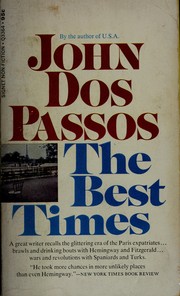
His own memoir of the years the trilogy covers — Harvard, the ambulance corps, Paris, the twenties. Read it after the trilogy: it names the real people and places that the Camera Eye renders as unpunctuated impressions.

The first volume of the District of Columbia trilogy, written after U.S.A. and after Spain, about an American radical destroyed by the Communist Party. The clearest fictional statement of the break that turned Dos Passos from a man of the left into a man of the right; read it to see where the trilogy's author went next.
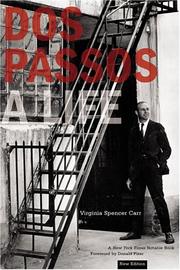
The standard biography, and the one that reconstructs the friendships with Hemingway and Cummings and the Spanish rupture that ended them. The record is catalogued under the shortened title. Read it last of this stage, as the account against which to test the memoir.
The America the trilogy is documenting
BeginnerRead the history and the neighbouring fiction that make the trilogy's targets legible
▸ Study plan for this stage
Pace: Four to five months for 2,111 pages, the longest stage on this path, and it splits cleanly into fast history and slow fiction. Frederick Lewis Allen's Only Yesterday at 370 pages is an informal popular history and reads at 50 pages an evening — under two weeks. Richard Hofstadter's The American Poli
- Only Yesterday was written in 1931, while the trilogy was being composed, and it is the closest thing to a prose Newsreel — the Red Scare, the boom, the fads, the crash, told with an appetite for headlines.
- That contemporaneity is its value. Allen did not know how the decade would be interpreted, so his emphases are the ones Dos Passos was working against rather than the ones history settled on.
- Hofstadter's twelve essays argue that the apparent conflicts of American political history sit on a shared commitment to property and enterprise — which is U.S.A.'s thesis stated as history rather than dramatised.
- Hofstadter is analysis where Allen is chronicle. Reading them in that order gives you the events and then the argument about what the events had in common.
- Studs Lonigan is the other great American trilogy of the 1930s: an Irish-Catholic Chicago boy followed from adolescence to a squalid death, in three novels usually printed as one 819-page volume.
- Farrell is a naturalist where Dos Passos is a modernist. Same decade, same politics, opposite methods — which makes it the best available measure of what the collage technique actually buys.
- The Grapes of Wrath, published three years after The Big Money, uses its own version of the intercut structure in the interchapters that alternate with the Joads' story.
- Steinbeck's interchapters are the U.S.A. method simplified enough to become a bestseller: the same alternation between a private story and a public voice, with the difficulty removed.
- Which of Allen's episodes appear in the Newsreels? Find two and compare how each is presented.
- State Hofstadter's central claim in one sentence. Where in U.S.A. is the same claim dramatised?
- Farrell and Dos Passos are writing about the same decades with opposite techniques. What does Farrell's accumulation do that collage cannot, and vice versa?
- How do Steinbeck's interchapters work, and what has he removed from the Dos Passos model to make them work for a mass audience?
- Of these four books, which is the best guide to the America of the trilogy, and which is the best guide to the trilogy?
- Having read all four, was the U.S.A. method worth its difficulty? Argue it either way with evidence.
- Read Allen's chapter on the boom immediately before starting The Big Money, or immediately after. Either order works; not doing it at all leaves half the Newsreels inert.
- Take one Hofstadter essay — the Wilson or the Roosevelt — and read it against the corresponding Dos Passos biography. Two accounts of one man, one analytic and one lyrical, is the sharpest exercise on this path.
- Read fifty pages of Studs Lonigan and fifty pages of The 42nd Parallel and time both. The difference in rate is the practical meaning of the word modernist.
- Mark every Steinbeck interchapter and read them consecutively, as you did with the Camera Eye. The parallel is exact and the difference in ambition is immediately clear.
- Write one paragraph on what an American trilogy of the 1930s was trying to do, using all three — Dos Passos, Farrell, Steinbeck. That paragraph is what the whole path was for.
Next up: That closes the path: the trilogy read whole, its method traced to its origin, its author accounted for, and its America and its rivals set beside it.
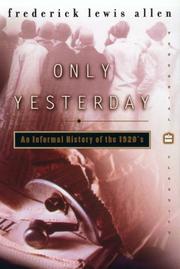
An informal history of the 1920s written in 1931, while the trilogy was being composed — the Red Scare, the boom, the crash, told with the same appetite for headlines and fads as the Newsreels. The single most useful companion to The Big Money.
Twelve essays on American political figures, arguing that the tradition's supposed conflicts sit on a shared commitment to property and enterprise — which is the trilogy's thesis stated as history. Read it after Allen, as the analysis under the chronicle.

The other great American trilogy of the thirties, following an Irish-Catholic Chicago boy from adolescence to a squalid end. Naturalism where Dos Passos is modernist, and the best measure of what the collage technique buys you.
Published three years after The Big Money and using its own version of the intercut structure in the interchapters. Read it last: it is what the U.S.A. method looked like once it had been simplified enough to become a bestseller.
Discussion
Keep reading
Paths that share books, cover the same subject, or open a related topic.