Start with The 42nd Parallel. John Dos Passos published his three novels between 1930 and 1936 and meant them to be read in that order as one book about the first three decades of the American twentieth century. There is no chronological alternative and no recommended entry point elsewhere; the three work perfectly well as separate volumes, which is fortunate, because the one-volume omnibus is a problem covered below.
The real obstacle is form, not sequence, and it is worth understanding before page one. Each novel braids four kinds of writing: twelve conventional narratives following invented lives, the Newsreel collages of headlines and song lyrics, the Camera Eye passages of unpunctuated autobiography, and short prose biographies of real Americans. Readers routinely skip the last three as interruptions, finish with a series of disconnected life stories, and conclude the trilogy is overrated. The interleaving is the argument. Read all four modes and read slowly.
The trilogy, in order
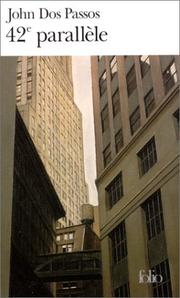
The 42nd Parallel (415 pages) runs from the turn of the century to the eve of American entry into the First World War and introduces five of the twelve narrative lives. The first hundred pages are where you train yourself to hold four registers at once; it never gets harder than that.
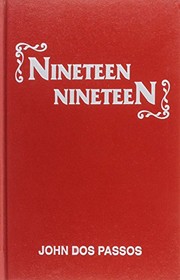
Nineteen nineteen (487 pages) covers the war and the peace conference and is the most tightly focused of the three — it is also the volume most often named as the best. Read it directly after the first, because several narratives carry across. One buying warning: we hold two catalogue records for it, one under the spelled-out title and one under 1919. Same novel — buy one, not both.
The big money (559 pages) takes the boom and Sacco and Vanzetti, and is where the disillusionment becomes explicit and total. The biographies here, from Ford to Isadora Duncan, only land once a hundred pages of Newsreels have taught you what the country was being told about itself.
Why there is no one-volume edition here
U.S.A. is usually sold as a single book, and the Library of America omnibus is the edition most people picture. This path cannot link it, because it does not resolve: the bare form U.S.A. returns nothing, USA returns The big money by itself, and The U.S.A. Trilogy returns a record displaying as U.S.A. The Big Money, Book 3 — the third volume wearing the trilogy's name. Only the separate volumes come back cleanly, which is why the path is built on them. The omnibus is a real edition and a good one; buy it direct from a bookseller.
The page count will mislead you
The three volumes come to 1,461 pages, which sounds like a few weeks. Budget four to five months. A four-page Camera Eye section can cost what thirty pages of narrative do, because it is unpunctuated and associative and parsing it stays deliberate work for a long time; the Newsreels and the biographies are compressed to a similar density. Pages per hour is not a stable quantity here, and readers who plan by length arrive at the second volume feeling behind and start skipping the hard sections to catch up. That is the most common way the trilogy gets abandoned.
The novels that built the method
Three soldiers (433 pages) is the 1921 war novel that made him notorious for saying the army was the enemy; it is told conventionally, which is exactly why it belongs before the next one. Manhattan Transfer (404 pages) is where the technique is invented — a city rendered through dozens of intercut lives with no central protagonist — and reading it makes the trilogy's structure look like a development rather than a gimmick.
The man behind it
The best times (229 pages) is his own memoir of the years the trilogy covers, and it names the real people the Camera Eye renders as impressions. Adventures of a young man (342 pages) opens the District of Columbia trilogy and is the clearest fictional statement of the political break that turned Dos Passos from a man of the left into a man of the right. Virginia Spencer Carr's biography, catalogued under the shortened title Dos Passos (624 pages), is the standard account and the thing to test the memoir against.
The America it documents
Only yesterday (370 pages) is an informal history of the 1920s written in 1931, while the trilogy was still being composed, with the same appetite for headlines and fads as the Newsreels. The American political tradition and the men who made it (378 pages) argues that the tradition's apparent conflicts rest on a shared commitment to property and enterprise, which is the trilogy's thesis restated as history. Studs Lonigan (819 pages) is the other great American trilogy of the thirties, naturalism where Dos Passos is modernist. The Grapes of Wrath (544 pages) appeared three years after The big money and uses its own version of the intercut structure in the interchapters.
Where to stop
Nowhere, if you start. The three volumes are one book and The big money carries the payoff for everything set up in the first two; stopping after two leaves you with the machinery and none of the verdict. The full ordered path, with a study plan for each stage, is at the U.S.A. trilogy reading path.