The Transcontinental Railroad: books to read, in order
The line completed at Promontory Summit in May 1869 is the standard American story of engineering triumph, and it is a good story: two companies building toward each other across mountains and desert, twenty thousand workers, a golden spike. What that version omits is most of the interesting part. The Central Pacific's workforce was overwhelmingly Chinese and its members are almost entirely absent from the written record; the whole enterprise ran on federal land grants and bond subsidies that produced the Credit Mobilier scandal; and Richard White's revisionist argument is that the transcontinentals were financial disasters built decades before there was traffic to justify them, kept alive by political influence rather than demand. Meanwhile the line ran through the territory of Native nations for whom it was the instrument of dispossession. This path takes the triumphal narrative first, because you need the events, then the workers, then the money, then the cost.
The Building of the Line
BeginnerGet the construction narrative and the cast. By the end you should be able to explain the Pacific Railway Acts, who the Big Four and the Union Pacific principals were, what the Sierra Nevada crossing required, and how the two companies came to meet at Promontory.
▸ Study plan for this stage
Pace: Four books, 2,018 pages, and they are wildly uneven in length and in quality of sourcing. David Haward Bain's Empire Express is 797 pages and is by a long way the slow one — the serious single-volume history, far better sourced than anything else here and equally good on the engineering and on the l
- The Pacific Railway Acts and the land-grant and bond-subsidy structure they created
- The Big Four of the Central Pacific and the Union Pacific principals, and how differently the two companies were run
- The Sierra Nevada crossing, the summit tunnels and what winter did to the schedule
- Grading, tunnelling and track-laying as distinct operations with distinct labour forces
- Why the two companies raced, and what the subsidy formula rewarded
- The overlapping grades and the political decision that fixed the meeting point at Promontory
- The Civil War as the political condition that made the Acts passable
- The gap between the 1869 ceremony and the state of the line as actually built
- What did the Pacific Railway Acts give the companies, and what did the government get in return?
- Why did the subsidy structure encourage speed and mileage rather than quality of construction?
- What did the Sierra crossing require that the Plains sections did not?
- How was the meeting point decided, and why had the two companies graded past each other?
- Where does Ambrose's account differ from Bain's on a point of fact, and how would you settle it?
- What did the Civil War have to do with a railroad to California?
- Draw the route on a map and mark the four or five construction problems that dominated each company's year. The geography explains most of the schedule.
- Work out the per-mile subsidy from the Acts as Bain states them and calculate what an extra ten miles of graded track was worth. That number explains the race better than any narrative does.
- Pick one episode — the summit tunnel, the ten-mile day, the meeting at Promontory — and compare Ambrose, Bain and Williams on it. Note where Ambrose is most admiring and check what Bain's sources say.
- From Borneman, list the wartime political conditions that made the legislation possible, and ask what would have happened to the bill in a peacetime Congress.
Next up: You now have the construction narrative as it has traditionally been told, in which twenty thousand workers appear mostly as a number — which is exactly the omission the next stage repairs.
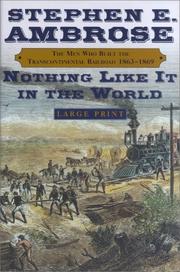
The most readable popular narrative and the fastest way into the story. It has been criticised for errors and for its unqualified admiration of the builders; read it first anyway, and let the later books correct it.
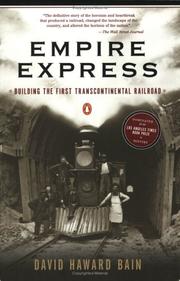
The serious single-volume history — much longer than Ambrose, far better sourced, and equally good on the engineering and on the lobbying. If you read only one book on this path, this is the one.
A tighter narrative than Bain's, strong on the physical construction and on the competition between the two companies. Useful as a second pass if Empire Express is more than you want.

A brisk account of the race to Promontory that keeps the Civil War context in view, which most treatments drop. Read it for the political timing rather than for new material.
The Workers
IntermediateRecover the labour force, particularly the Chinese workers who built the hardest sections of the Central Pacific. You should be able to explain why they left almost no direct written record, what the Stanford Chinese Railroad Workers Project reconstructed instead, and what happened to them after 1869.
▸ Study plan for this stage
Pace: Two books by Gordon H. Chang, 876 pages, and they are not read the same way. Ghosts of Gold Mountain is 316 pages and is the one to read straight through: Chang reconstructs the lives of the Chinese workers who built the hardest sections of the Central Pacific out of payroll records, archaeology and
- The scale of the Chinese workforce on the Central Pacific, and where in the line they were concentrated
- Recruitment, contracting and the crew organisation the workers operated within
- Why almost no direct written record survives, and what that does to the historian's method
- Payroll records, archaeology and Chinese-language sources as substitutes for testimony
- The 1867 strike, its demands and its outcome
- Working conditions in the Sierra tunnels and the death rate nobody recorded properly
- What happened to the workers after 1869 — dispersal, exclusion, and the road to the Exclusion Act
- The absence of Chinese workers from the Promontory photograph and from the century of narrative that followed
- How large was the Chinese workforce and what proportion of the Central Pacific's labour did it represent?
- Why did these workers leave almost no written record, and what did Chang use instead?
- What did the 1867 strikers demand, and what did they achieve?
- How many Chinese workers died building the line, and why can nobody give a firm figure?
- What became of the workforce after the line was completed?
- Return to stage one: how do Ambrose, Bain and Williams each handle the Chinese workers? Count the pages if it helps.
- Go back to the four stage-one books and find every passage about the Chinese workforce. Add up the pages. The total is the finding.
- Take one chapter of Ghosts of Gold Mountain and list every category of evidence Chang uses in it. Then ask what he could not establish with any of them.
- Look at the Promontory ceremony photograph and write down who is in it, then who built the section it commemorates.
- Use the companion volume to follow one claim in the narrative back to its underlying research, and judge how much interpretation sits between the source and the sentence.
Next up: Having seen who built the line, the next stage asks who paid for it and who profited, which is where the case that it should not have been built when it was actually rests.
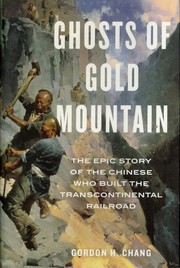
The book that changed this subject: Chang reconstructs the lives of the Chinese railroad workers from payroll records, archaeology and Chinese-language sources, since almost nothing they wrote survives. Essential and readable.

The scholarly companion volume, edited with Shelley Fisher Fishkin, collecting the research the narrative above draws on. Read the essays selectively — it is a reference, not a book to work through end to end.
The Money and the Politics
IntermediateUnderstand the finance, which is where the revisionist argument lives. You should be able to explain the land grant and bond subsidy system, what Credit Mobilier actually was, and White's case that the transcontinentals were built too early and could not have paid for themselves.
▸ Study plan for this stage
Pace: Four books, 2,551 pages, and this is the heaviest stage on the path by a distance. Read Maury Klein's Union Pacific first, 654 pages, the standard corporate history and the necessary groundwork; Klein is more sympathetic to the builders than what follows, which is exactly why he comes first. Then Ri
- Land grants and bond subsidies: what the government actually transferred and on what security
- Credit Mobilier — the construction company, the contracts, and why it was a mechanism rather than merely a scandal
- The congressional stock distribution and the investigation that followed
- White's central claim that the transcontinentals were built decades before there was traffic to justify them
- Political influence as a substitute for demand, and what a company does when it cannot earn its returns
- Fogel's social-savings method and the counterfactual it rests on
- The methodological objections to Fogel that the field has been making ever since
- How the railroads' finance shaped Gilded Age politics rather than merely coinciding with it
- Explain the land-grant and bond-subsidy system precisely enough that someone could work out what a mile of track was worth.
- What was Credit Mobilier, mechanically? Describe the flow of money and who ended up holding what.
- State White's thesis and identify the evidence it depends on most heavily.
- Where does Klein concede a point White presses, and where do they genuinely disagree?
- What is Fogel's social-savings estimate, what does it assume, and what is the standard objection to it?
- If the transcontinentals were financially indefensible, why were they built? Give the answer White gives and one alternative.
- Diagram the Credit Mobilier arrangement — who contracted with whom, who owned which company, and where the subsidy money went. If you cannot draw it, you have not understood it.
- Take three of White's specific charges against the Union Pacific and check each against Klein's corporate history. Mark them conceded, disputed or unaddressed.
- Work through Fogel's counterfactual on one commodity and state, in your own words, what the social-savings figure is measuring and what it ignores.
- Write one paragraph making the strongest case that the line should have been built when it was, using only evidence from Klein and stage one.
- Find where the railroad argument appears in White's Oxford volume and compare it with the version in Railroaded. Note what a synthesis has to soften.
Next up: The financial case has been made and answered; what neither Klein nor White is primarily about is the people whose land the line ran through, which is the final stage.
The standard corporate history of the Union Pacific, and the necessary groundwork before White's argument. Klein is more sympathetic to the builders than White is, which is precisely why to read him first.

The central revisionist work: the transcontinentals as poorly run, politically sustained enterprises that destroyed capital and corrupted government. It is a sustained attack on the story stage one tells, and it should be read as an argument with a case rather than as settled fact.
Fogel's 1964 counterfactual, which asked what American growth would have looked like without railroads and concluded that the answer was: not very different. Methodologically contested ever since, and the origin of the whole question White is answering.
White's Oxford History volume on Reconstruction and the Gilded Age, which places the railroads inside the political economy that produced them. Read it after Railroaded to see the argument at full scale.
The Cost, and What Came After
IntermediateTake up what the line did to the Plains and to the Native nations it crossed, and follow the railroad system past 1869. You should be able to connect the route surveys and the army posts protecting them to the campaigns of the 1870s.
▸ Study plan for this stage
Pace: Three books, and we hold no page count for one of them. Peter Cozzens's The Earth is weeping is 273 pages on the Indian wars of the trans-Mississippi West, told with testimony from both sides and covering exactly the period and territory the railroad opened — read it first and read it as the direct
- The route surveys and the army posts established to protect them
- The connection between rail construction and the campaigns of the 1870s on the Plains
- The destruction of the bison herds, which the railroads made possible and profitable
- Treaty boundaries crossed by the line, and the legal status of the land the grants covered
- Promontory as an episode rather than a completion — the southwestern routes and the real transcontinental system
- The eastern network's scale, against which the transcontinental was a small and late addition
- What a national myth is for, and why the golden spike rather than the tunnels became the image
- The long consequences of the land grants for western landholding
- Connect a specific route survey or army post to a named campaign of the 1870s.
- How did the railroad change the economics of bison hunting, and what followed from that?
- Whose land did the grants actually cover, and by what legal reasoning?
- Why is it misleading to treat 1869 as the completion of the transcontinental system?
- How large was the transcontinental relative to the eastern network Wolmar describes?
- Having finished the path, what would you say the line accomplished, and for whom?
- Overlay the rail route on a map of treaty territories and mark every crossing. Then mark the army posts. The correlation is the argument.
- From Cozzens, take one campaign and trace back what triggered it. Note how often a survey, a post or a construction crew appears in the chain.
- List what Wolmar says the eastern network carried and earned, and set the transcontinental's traffic beside it.
- Write the paragraph on the transcontinental railroad you would now put in a school textbook, and mark which of the four stages each sentence came from.
- Return to Ambrose's closing chapter and annotate it with everything you have learned since. Keep both versions.
Next up: This closes the path: the triumphal narrative, the workers it erased, the finance that made it indefensible and the dispossession it carried out are now four accounts of one line, and you can hold all four at once.
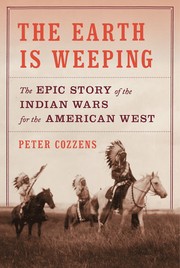
The Indian wars of the trans-Mississippi West, told with both sides' testimony, covering exactly the period and territory the railroad opened. The most direct account of what the line cost the people it ran through.

The competition to build the southwestern routes after 1869, which is where the transcontinental system was actually completed. Good on the fact that Promontory was a beginning rather than an end.
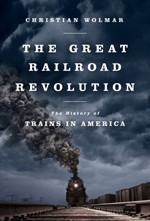
The whole history of American railroads in one volume, by a British transport historian who is unimpressed by the national mythology. The right book to finish with, because it puts the transcontinental in proportion against the far larger eastern network.
Discussion
Keep reading
Paths that share books, cover the same subject, or open a related topic.