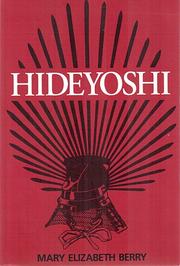
Start with Mary Elizabeth Berry's Hideyoshi, which is a book about the man who came immediately before the Tokugawa. That is deliberate. The shogunate was an answer to a problem, and the problem was a century of civil war that Hideyoshi had only just finished ending. Read him first and every strange feature of the Tokugawa settlement — the hostage system, the frozen class order, the closed borders — reads as a solution rather than an eccentricity.
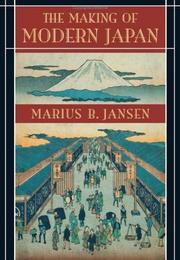
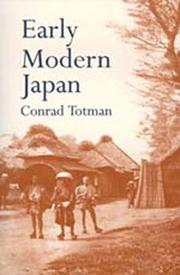
Then Marius B. Jansen's The Making of Modern Japan for the sweep, and Conrad D. Totman's Early modern Japan for the systematic account of the period itself.
How the system actually worked
Constantine Nomikos Vaporis' Tour of duty is on the alternate attendance system, which required every regional lord to spend alternating years in the capital and leave his family there permanently — a mechanism that bankrupted potential rebels, built the road network and created a national culture almost by accident. It is the single best illustration of Tokugawa governing genius.
Ronald P. Toby's State and diplomacy in early modern Japan dismantles the idea that Japan was simply closed. The country maintained managed relations with Korea, the Ryukyus, China and the Dutch throughout; the popular picture of total isolation is a later simplification.
The Edo period as lived
Charles James Dunn's Everyday Life in Traditional Japan is an older account, superseded in places, and still the most readable introduction to how ordinary people lived. Mary Elizabeth Berry's Japan in print argues that Tokugawa Japan developed something like a public — through maps, directories, guidebooks and almanacs — well before the political changes usually credited with creating one.
Musui's story is the treasure here: the autobiography of Katsu Kokichi, a low-ranking samurai who was a brawler, a swindler and a spectacular failure by every standard of his class, and who wrote it all down. Nothing else on this path gets you as close to a Tokugawa person.
The samurai, and the people outside the frame
Eiko Ikegami's The Taming of the Samurai traces how a warrior class with no wars became bureaucrats while keeping the honour culture of fighters — which is the central paradox of the period. Anne Walthall's The weak body of a useless woman is a biography of Matsuo Taseko, a peasant woman who became a political activist in the Restoration years, and it reaches parts of the society the institutional histories cannot.
The collapse
Totman's The Collapse of the Tokugawa Bakufu, 1862-1868 and W. G. Beasley's The Meiji restoration cover the end. Beasley is an older account and the age shows in places, but it remains a standard treatment of how a system that had held for two and a half centuries came apart in six years.
Where to stop
Berry's Hideyoshi, Totman's Early modern Japan, Vaporis and Musui's story is a strong and genuinely enjoyable grounding. Add the Restoration books if you want to know how it ended. Ikegami and Walthall are the ones that will change how you think about the period rather than just what you know about it.
Follow the full ordered path here: The Tokugawa Shogunate: Books to Read, in Order.
Ready to learn something deeply?
Build a reading path — free