The Tarzan Books Reading Order: Where to Start
Edgar Rice Burroughs wrote twenty-four Tarzan novels between 1912 and 1947, and almost nobody should read all of them. The first four are a genuine continuous story — Tarzan of the Apes, The Return of Tarzan, The Beasts of Tarzan, The Son of Tarzan — and after that the series becomes episodic, with each book a self-contained expedition to a lost city that has no bearing on the next. Read the first four in order, then take the best of the middle run, then dip into the lost-city books and stop when the formula stops paying. Two warnings worth having before you start. The books bear little resemblance to any film: Burroughs's Tarzan teaches himself to read from his dead parents' primers, speaks French before English, and is a literate English peer for most of the series. And the racial content of the 1910s and 1920s volumes is period-typical and frequently ugly; it is not incidental and there is no edition that removes it.
The first four, in order
BeginnerRead the one genuinely continuous stretch of the series, from the shipwreck to the second generation
▸ Study plan for this stage
Pace: Three to four weeks for 1,009 pages — Tarzan of the Apes at 286, The Return of Tarzan at 252, The Beasts of Tarzan at 210, The Son of Tarzan at 261. These are pulp serials written to a weekly deadline and they move accordingly; 60 to 70 pages an evening is easy, so five or six days each. Read the fi
- Burroughs wrote twenty-four Tarzan novels between 1912 and 1947 and almost nobody should read all of them. The first four are a continuous story; after that the series is episodic and each book is a self-contained expedition.
- Tarzan of the Apes is the only obligatory volume: marooned parents, the ape Kala, and a boy who teaches himself to read English from picture books without ever having heard it spoken.
- The self-taught literacy is the series' most famous impossibility and its most revealing idea. Burroughs's Tarzan is an aristocrat whose nobility is presented as inherited rather than learned, which is the racial argument of the books in one plot device.
- Its ending is famously abrupt — Tarzan lies about his parentage and walks away — and that non-resolution is what forced the sequel into existence.
- The Return of Tarzan takes him to Paris and the Foreign Legion and introduces the lost city of Opar, which Burroughs returned to for decades. It is the volume that turns a single novel into a franchise.
- The Beasts of Tarzan is the leanest and most propulsive of the early books: marooned on an island, he assembles an army of apes and a panther to recover his kidnapped son. The record is a mid-century Ace paperback.
- The Son of Tarzan hands the story to Jack, raised in England, who repeats his father's history in his own way. It closes Part One, and everything after it is episodic.
- The books are not the films. The Tarzan of the novels is articulate, multilingual, a French-speaking English peer, and considerably more violent than any screen version.
- How does Burroughs explain Tarzan's abilities? Track the explanation and say what kind of claim it is making.
- Why does the first novel end where it does, and what does the ending tell you about Tarzan's character as Burroughs conceived it?
- What is Opar for? What does a lost city let a serial writer do that Africa alone does not?
- How does the racial hierarchy of these books work — who is capable of what, and on what basis does the text say so?
- The Son of Tarzan repeats the first book's plot with a new character. What does the repetition reveal about the formula?
- Where does the Tarzan of these novels differ most sharply from the Tarzan of the films?
- Read the first two novels consecutively. The break between them is arbitrary and reading them as one book is closer to how they were serialised.
- Mark every passage that explains Tarzan's capabilities by heredity. The frequency, not any single passage, is the argument.
- Note where the prose is genuinely good — the ape society, the jungle geography — and where it collapses into coincidence. Burroughs is uneven within a single chapter and being specific about it is more useful than a verdict.
- Write down what the first novel says about the villagers near the treehouse. Doing this once, plainly, is the honest way to read a book of 1912 rather than reading around it.
- After The Son of Tarzan, decide whether to continue. This is the designed stopping point and stopping here is a complete reading experience.
Next up: With the continuous arc closed, the next stage takes the four strongest volumes of the run that follows rather than reading it through.
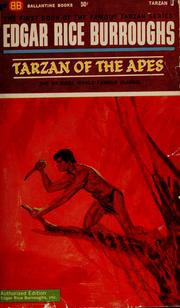
The 1912 original and the only obligatory volume — marooned parents, the ape Kala, and a boy who teaches himself to read English from picture books without knowing how any of it sounds. Its ending is famously abrupt and is what forced the sequel.
Second, and the direct continuation: Paris, the Foreign Legion, and the first appearance of the lost city of Opar, which Burroughs would return to for decades. Read it immediately — book one does not conclude without it.

Third, in which Tarzan is marooned on an island and assembles an army of apes and a panther to get his kidnapped son back. The record is a mid-century Ace paperback; the leanest and most propulsive of the early books.
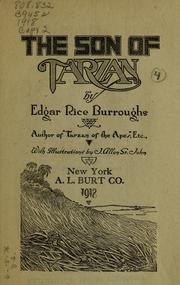
Fourth, and the end of the continuous arc — the story belongs to Jack, raised in England, who repeats his father's history in his own way. Read it fourth and treat it as the close of Part One; everything after is episodic.
The best of the middle run
BeginnerRead the four strongest volumes of the 1910s, including the one that is not a novel at all
▸ Study plan for this stage
Pace: Three to four weeks for 1,010 pages — Tarzan and the Jewels of Opar at 206, Jungle Tales of Tarzan at 234, Tarzan the Untamed at 286, Tarzan the Terrible at 284. Same pulp pace, five or six days each, with one exception: Jungle Tales of Tarzan is twelve linked stories rather than a novel and reads b
- Tarzan and the Jewels of Opar returns to Opar and to La its priestess, and establishes the lost-city template the rest of the series runs on. It is the best demonstration of what Burroughs was actually good at.
- What he was good at: geography, momentum, and a plot that keeps three separate parties converging on one place. The prose is not the attraction and never was.
- Jungle Tales of Tarzan is the odd one out — twelve linked stories of his adolescence among the apes, set before the first novel — and it is by a wide margin the best-written volume of the twenty-four.
- Because it is episodic by design rather than by exhaustion, it is the one book where Burroughs's limitations do not matter. Read it here rather than in chronological position.
- Tarzan the Untamed brings the First World War to East Africa and is the most violent and most propagandistic book in the series. It was written during the war and functions as wartime propaganda rather than as a novel about war.
- Reading it knowing what it is is the only sensible approach: it is a primary source on how a popular American writer was portraying the enemy in 1919, and it is not a considered account of the East African campaign.
- Tarzan the Terrible continues it directly into the hidden valley of Pal-ul-don, with tailed hominids and living dinosaurs, and is where the series commits fully to lost worlds.
- The shift matters: after Pal-ul-don, Africa in these books is a place where anything may be hidden, and the realism of the first novel is gone for good.
- What is the lost-city formula, stated as a structure? Lay out the steps using Jewels of Opar.
- Why is Jungle Tales of Tarzan better written than the novels around it? What does the story length let Burroughs avoid?
- How does Tarzan the Untamed portray its German characters, and what does that portrayal tell you about its date rather than about the war?
- What does Pal-ul-don allow that a realistic Africa does not?
- La of Opar recurs for decades. What function does she serve that Jane cannot?
- Across these four, where is Burroughs a genuinely skilled writer and where is he simply fast?
- Diagram the converging parties in Jewels of Opar. Burroughs runs three or four strands into one collision and the technique is more deliberate than the prose suggests.
- Read two Jungle Tales stories back to back and then a chapter of Tarzan the Untamed. The difference in care is measurable in a single sitting.
- In Tarzan the Untamed, note what the novel wants you to feel about each nationality. Stating it plainly is the correct way to read propaganda.
- List everything invented for Pal-ul-don. The inventory is the point at which the series changes genre.
- Pick which of these four you would recommend to someone who has read only the first novel, and be able to say why.
Next up: Once the formula is fixed, the 1920s volumes run it at full strength, and two of them show how far it could still stretch.

The return to Opar and to La its priestess, and the book that establishes the lost-city template the rest of the series runs on. The best single demonstration of what Burroughs was actually good at.
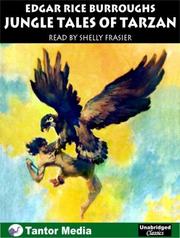
Twelve linked stories of Tarzan's adolescence among the apes, set before the first novel and published sixth. The odd one out and, by a wide margin, the best-written volume in the series — read it here rather than chronologically.
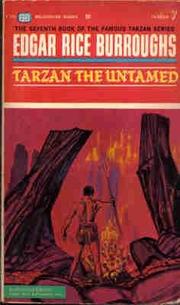
The First World War arrives in East Africa and Tarzan turns to methodical revenge; it is by some distance the most violent and the most propagandistic book of the twenty-four, and it was banned in Germany for decades. Read it knowing what it is.
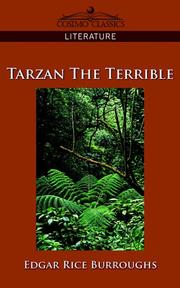
The direct continuation, into the hidden valley of Pal-ul-don with its tailed hominids and living dinosaurs. Read it straight after The Untamed, which it completes, and note that it is where the series commits fully to lost worlds.
The lost-city period
BeginnerSample the 1920s expeditions and see the formula at full strength before it hardens
▸ Study plan for this stage
Pace: Ten days to two weeks for 517 pages — Tarzan and the Golden Lion at 218 and Tarzan and the Ant Men at 299. Both are quick, 60 to 70 pages an evening, so five or six days each. This is a two-book sample of a decade rather than a run, and it is placed to answer one question: how much variation was sti
- Tarzan and the Golden Lion is a third trip to Opar with an impostor plot and the lion Jad-bal-ja, whom Tarzan raises from a cub. It is the settled formula operating exactly as designed.
- Reading it as a baseline is the point: it is a competent, unsurprising Tarzan novel, and knowing what that looks like is what makes the next book legible as a departure.
- Tarzan and the Ant Men is the strangest thing Burroughs wrote about the character — Tarzan shrunk to eighteen inches among a civilisation of tiny people.
- It carries a satirical sideswipe at eugenics, which is worth noting precisely because the racial logic of the earlier books runs in the opposite direction. Burroughs is not consistent and the inconsistency is more interesting than either position.
- It also contains a matriarchal society treated as an inversion joke, which dates the satire as thoroughly as anything else in the series.
- Both books show the formula's real strength: Burroughs could put Tarzan into almost any premise because the character has no interiority to violate.
- That flexibility is why twenty-four volumes were possible and why they do not accumulate. Nothing that happens in one changes anything in the next.
- What are the fixed components of a 1920s Tarzan novel? Derive them from Golden Lion.
- The impostor plot recurs across the series. What does it let Burroughs do about a character who cannot change?
- What is Ant Men satirising, and how does that sit against the hereditary logic of the first four books?
- Tarzan has no interior life to speak of. Is that a limitation or the reason the series could run for thirty-five years?
- Which of these two is the better book, and which is the more representative one?
- Write the plot of Golden Lion as a numbered structure, then check Ant Men against it. The template holds even where the premise is absurd.
- Note every point in Ant Men where the satire is aimed at something recognisable. Doing this establishes what Burroughs was reacting to in 1924.
- Compare Jad-bal-ja's function with Tantor's in the earlier books. The animal companions are interchangeable and that is informative.
- Decide whether the 1920s volumes are worth continuing with beyond these two. Most readers conclude not, and being able to say why is the outcome this stage is after.
Next up: The late books are where the character finally meets a century he does not fit, and two of them are worth reading for exactly that.

A third trip to Opar, an impostor plot, and the lion Jad-bal-ja that Tarzan raises from a cub. A good measure of the settled formula; read it first of this stage.

The strangest book Burroughs wrote about the character — Tarzan shrunk to eighteen inches among a civilisation of tiny people, with a satirical sideswipe at eugenics. Read it second here for the range the series could still reach in 1924.
The late books, and where to stop
IntermediateRead two of the later volumes and decide honestly whether to continue through the remaining ones
▸ Study plan for this stage
Pace: About ten days for 408 pages — Tarzan at the Earth's Core at 216 and Tarzan and the Foreign Legion at 192, the two shortest novels on this path. Four or five days each at the usual pace. They are sampled from opposite ends of the late run and are deliberately not consecutive volumes. Read Earth's Co
- Tarzan at the Earth's Core is the crossover into Pellucidar, Burroughs's hollow-earth setting, reached by dirigible. It is the most enjoyable of the 1930s volumes precisely because it abandons Africa.
- The crossover is also an admission. By 1929 Burroughs needed another of his own worlds to make the character interesting, which is a fair summary of where the series had got to.
- Tarzan and the Foreign Legion is the last Tarzan novel Burroughs published, written while he was working as a war correspondent in the Pacific and set in Japanese-occupied Sumatra.
- Burroughs was an eyewitness to the Pacific war in a limited sense — he was accredited and present in the theatre — and the book should be read as a wartime product by a participant rather than as an assessment of the campaign.
- It is the endpoint because it is where a 1912 character finally cannot be made to fit the century he has arrived in. A jungle aristocrat in a modern war is an incongruity the novel never resolves.
- The late books are shorter, thinner and more mechanical than the early ones, and the decline is real rather than a matter of taste.
- Knowing where to stop is the most useful thing a reader of a twenty-four-volume series can be told, and these two are the honest test.
- The character outgrew the books early. By the 1930s Tarzan was a film and comic-strip property whose audience mostly did not read the novels at all.
- What does Pellucidar give Burroughs that Africa no longer could?
- Is Tarzan at the Earth's Core a Tarzan novel or a Pellucidar novel with Tarzan in it? Does the distinction matter?
- How does Foreign Legion handle a modern war, and where does the character stop working?
- What has changed in the writing between 1912 and 1947? Be specific about length, incident and dialogue.
- Having read these two, would you read any of the remaining late volumes? Say what would have to be true for the answer to be yes.
- Read the first chapter of Tarzan of the Apes and the first chapter of Foreign Legion on the same day. Thirty-five years is visible in a dozen pages.
- In Earth's Core, note how much of the book Tarzan is actually in. The crossover volumes distribute the attention differently and it is worth measuring.
- Write down what Foreign Legion assumes its 1947 reader already knows about the Pacific war. That list is the book's real historical content.
- Draw up your own recommended reading order for the twenty-four novels in under ten titles. If you can defend it, this path has done its job.
Next up: Having read the fiction, the last stage covers the man who wrote it and the other series he invented in the same year.

The crossover into Pellucidar, Burroughs's hollow-earth setting, reached by dirigible. The most enjoyable of the 1930s books precisely because it abandons Africa; read it before deciding whether the rest of the late run is worth your time.

The last Tarzan novel Burroughs published, written while he was a war correspondent in the Pacific and set in Japanese-occupied Sumatra. Read it as the endpoint: it is where a 1912 character finally cannot be made to fit the century he has arrived in.
Around the novels
IntermediateRead the biography and the other Burroughs series, and place Tarzan in the pulp century he helped create
▸ Study plan for this stage
Pace: Three to four weeks for 576 pages, split between two very different books. John Taliaferro's Tarzan Forever is 400 pages of biography and reads at 40 pages an evening, so about two weeks — it is a popular life rather than a scholarly one and is easy going. A Princess of Mars is 176 pages, the shorte
- Tarzan Forever is the standard biography of Burroughs: a failed pencil-sharpener salesman at thirty-five who invented one of the most licensed characters on earth and then largely lost control of it.
- It explains the series' commercial shape better than any critical study — the serial deadlines, the film deals, the merchandising, the incorporation of himself as a company, and the reason twenty-four books exist at all.
- Burroughs was among the first writers to treat a character as an intellectual property to be managed. The way Tarzan escaped the novels is the origin of a business model, not just a curiosity.
- A Princess of Mars was written the same year as Tarzan of the Apes and is the founding text of planetary romance, with John Carter transported to a dying Mars.
- The two books together are effectively the whole of twentieth-century adventure pulp in embryo: the lost world and the other planet, both invented by one man in one year.
- The John Carter books influenced science fiction more directly than Tarzan influenced anything, and reading the first one shows why — the setting does the work the character cannot.
- Both series share the same underlying figure: a superb physical specimen dropped into an alien society whose rules he learns faster than its natives. The politics of that figure are worth stating plainly rather than treating as neutral adventure furniture.
- What was Burroughs doing before 1912, and what does the biography suggest he understood about magazines that other writers did not?
- How did Tarzan escape the novels? Trace the film and merchandising history and say who controlled it.
- What does A Princess of Mars do that Tarzan of the Apes does not, and vice versa?
- Both books were written in one year by a first-time novelist. What does that tell you about the state of magazine fiction in 1912?
- Which of the two has aged better, and on what criteria?
- What is the recurring figure across both series, and what assumptions is it built on?
- Read the biography's account of the first Tarzan sale alongside the first chapter of the novel. The commercial context changes how the writing reads.
- List the media Tarzan appeared in during Burroughs's lifetime. The length of the list is the argument of the biography.
- Read A Princess of Mars in as few sittings as possible; it was serialised and it works at speed.
- Write a paragraph comparing Barsoom and Opar as invented places. One founded science fiction and one founded the lost-world adventure, and the differences are instructive.
- Finish by writing the two-sentence answer to the question this path exists for: which Tarzan novels should someone read, and in what order.
Next up: That closes the path — the continuous arc, the strongest of the middle, the formula at full stretch, the honest stopping point, and the man behind all of it.
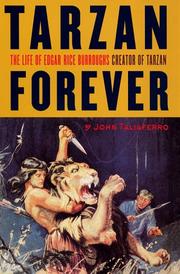
The standard biography of Burroughs — a failed pencil-sharpener salesman at thirty-five who invented one of the most licensed characters on earth and largely lost control of it. Read it after the novels; it explains the series' commercial shape better than any critical study.

Written the same year as Tarzan of the Apes and the founding text of planetary romance, with John Carter on a dying Mars. Read it last: the two books together are effectively the whole of twentieth-century adventure pulp in embryo.
Discussion
Keep reading
Paths that share books, cover the same subject, or open a related topic.