The Barsoom Books Reading Order: Where to Start with John Carter of Mars
Edgar Rice Burroughs's Barsoom novels invented planetary romance and supplied the furniture — dying seas, warring city-states, a red-skinned aristocracy, an Earthman who jumps absurdly high in the low gravity — that science fiction and film borrowed for a century. Publication order is also the right reading order here, because Burroughs hands the narration from John Carter to his children and then to other characters entirely, and each handover assumes you were there for the last one. A warning before you start: these are public-domain books, so the market is full of scanned print-on-demand reprints with mangled text; prefer an edition from a real publisher.
The first trilogy
BeginnerRead the three novels that are a single continuous story, and meet Barsoom through John Carter's own narration.
▸ Study plan for this stage
Pace: 2 weeks for about 520 pages — A Princess of Mars (176 pages), The Gods of Mars (200 pages) and the third book, catalogued as The warlord of Mars #3 (142 pages). These are magazine serials with a cliffhanger every few thousand words, so 60–80 pages a session is normal and stopping mid-book is harder
- The frame narrative: Burroughs presents himself as the editor of his uncle's manuscript, and John Carter's deathless, unexplained age is established in the first pages and never resolved
- Barsoom's physical premises — thin air, low gravity, the atmosphere plant, dead sea bottoms — and how Burroughs reuses each of them as a plot device
- The Tharks and green Martian society: incubators, communal child-rearing, the absence of family attachment, and Tars Tarkas as the exception that proves it
- Dejah Thoris and the rescue plot as the series' fixed engine — the abduction-and-pursuit structure that every later book restates
- The Therns, the Holy Hekkador and the pilgrimage down the River Iss: The Gods of Mars is a straightforward demolition of a religion, and says so
- Serial cliffhanger construction — how Burroughs ends chapters, and how the first two novels end mid-crisis by design
- The colour-coded Martian races and Carter's own Confederate background as period assumptions built into the world, not incidental details
- What exactly is Burroughs's frame device, and why does he never explain how Carter travels to Mars?
- How does the low-gravity conceit function as plot machinery rather than as science, and where does Burroughs quietly forget it?
- What is Burroughs's argument about religion in The Gods of Mars, and how far does the third book carry it?
- The three books were serialised separately. What in the text of each shows the seams — recaps, restated stakes, resolved cliffhangers?
- How does Barsoom's racial ordering shape who can be a hero, an ally or an obstacle across the trilogy?
- Keep a Barsoom glossary from page one — thoat, calot, jetan, sorak, padwar, jed, jeddak, sith — and add each term at first appearance; you will need it for eleven books
- At the end of each of the three novels, write down the exact cliffhanger and then note, in the next book, how many pages Burroughs takes to resolve it
- Count the abductions of Dejah Thoris across the trilogy and record what triggers each one; this is the series formula and you will chart its variations later
- Compare the description of Thark society in A Princess of Mars with how Tars Tarkas behaves by the end of the third book, and note what Burroughs had to change to make him sympathetic
- Check the edition you are reading against a scanned magazine or a reputable public-domain text for one chapter, to see whether your copy has OCR corruption — worth doing once, early
Next up: The trilogy is a complete story told entirely by one man; the next stage is where Burroughs hands the narration to other characters and finds out whether Barsoom can survive without John Carter at the centre.

The 1912 original: a Confederate veteran wakes on Mars, meets the Tharks and falls for Dejah Thoris. It is the entry point in every sense, and it ends on a cliffhanger the next book resolves.
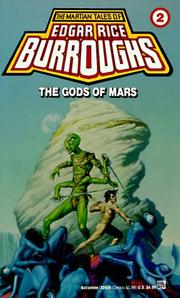
Carter returns to Barsoom and demolishes its religion. Read immediately after the first: it begins where that book stopped and ends on an even harder cliffhanger.
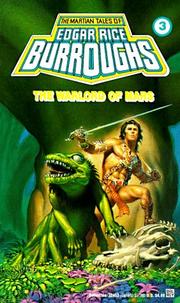
The third part of the opening arc, closing the story the first two books opened. Catalogued as The warlord of Mars #3. Stop here and you have read a complete trilogy.
The narration changes hands
BeginnerSee Burroughs open the setting up beyond his original hero.
▸ Study plan for this stage
Pace: 10 days for about 410 pages. Thuvia, Maid of Mars (176 pages) is the shortest full Barsoom novel and reads in two or three sittings; The Chessmen of Mars (234 pages) is the odder and slower of the pair, partly because it stops to explain the rules of jetan in an appendix that is worth reading rather
- Third-person narration replacing Carter's first-person memoir, and what the series loses in immediacy and gains in scope
- Carthoris and Thuvia as the second generation — Burroughs converting his hero into a dynasty so the setting can outlive him
- Jetan as a fully specified invented game, with rules appended, and the living-chess set-piece built on it
- The kaldane-rykor division of head from body as Burroughs's most sustained piece of biological invention
- Tara of Helium as a protagonist whose pride is the actual subject of the book, which is not something the trilogy ever attempted
- Telepathy, hypnotic projection and mind control as recurring Barsoomian technologies, introduced properly here
- Shared-world logic: once other characters can carry a book, Barsoom becomes a setting rather than one man's testimony
- What changes in the prose when Burroughs stops writing as John Carter, and does the loss of the memoir frame cost the books anything?
- Are Carthoris and Tara characterised, or are they their father's traits redistributed? Point to evidence either way.
- Why include the full jetan rules? What does that appendix tell you about how Burroughs expected the book to be used?
- The kaldanes are an argument about intellect and body. What is Burroughs actually claiming with them?
- Chessmen is routinely called the strangest book in the series. Strange compared with what, specifically?
- Play or set out one jetan position from the appendix, then reread the living-chess chapters and check whether the described moves are legal under the printed rules
- Take one page of Carter's first-person narration from A Princess of Mars and one page of third-person narration from Thuvia and write down every difference you can name in how information reaches the reader
- Track Tara's pride through Chessmen as you would a motif: mark every scene where it costs her something, and see whether Burroughs resolves it or simply stops mentioning it
- Add the new creatures and technologies from both books to your Barsoom glossary, noting which ones Burroughs invents here and reuses later
- Update your abduction tally from stage one with these two books and note what has changed about who gets abducted and who does the rescuing
Next up: With the setting proven able to carry other people's stories, Burroughs starts using it for something other than adventure — which is where the middle novels turn satirical.
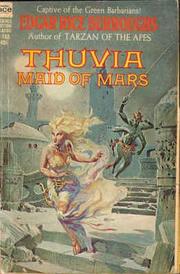
The first Barsoom book not narrated by John Carter, following his son Carthoris. Short, and the place where the series becomes a shared world rather than one man's memoir.
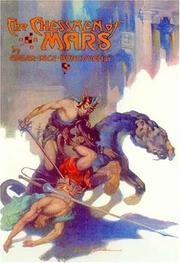
Carter's daughter Tara and the living chess game of jetan, complete with the rules in an appendix. Widely considered the strangest and most inventive book in the sequence.
The middle Barsoom novels
IntermediateFollow the series into new narrators and a more satirical register.
▸ Study plan for this stage
Pace: 10 days for about 370 pages. The Master Mind of Mars (146 pages) is short and reads in two sittings; A Fighting Man of Mars (226 pages) is a straightforward adventure and goes just as fast. Master Mind turns on Ras Thavas, a surgeon who transplants brains between bodies for paying customers, and the
- Ras Thavas and the transplant premise — Burroughs's most durable science-fictional idea, and the one later writers borrowed most
- Ulysses Paxton as a second Earthman narrator, deliberately less capable than Carter, which changes what the plot can plausibly do
- Satire entering the series: Phundahl's religion of Tur and the mechanical idol are direct comedy about belief, sharper than the Thern material in The Gods of Mars
- Body, identity and consent as the actual subject of Master Mind, whether or not Burroughs meant it to be
- The radio-transmission frame of A Fighting Man of Mars and the lower-born hero Tan Hadron, which resets the series to a working baseline after the strangeness
- The Barsoomian formula in its purest form — capture, escape, disguise, arena, rescue — visible in Fighting Man because nothing else is competing with it
- Burroughs writing to a market: both books were serialised for magazines and are shaped by instalment length
- What is Burroughs satirising in Phundahl, and is the satire aimed at religion generally or at a specific target?
- How does having a weaker Earthman protagonist change the plots available to Burroughs?
- Master Mind raises a question about where a person is located — brain, body, or both. Does the book answer it or use it?
- A Fighting Man of Mars is often called generic. Lay out its plot beats against A Princess of Mars and say whether that is fair.
- The radio frame is dropped almost immediately. What was it for, and does the book need it?
- Write out the plot skeleton of A Fighting Man of Mars in ten beats, then do the same for A Princess of Mars and mark every beat that repeats — this is the series formula rendered explicit
- List every use Ras Thavas's surgery is put to in Master Mind and sort them into plot device, horror and joke
- Read the Phundahl chapters against the River Iss chapters in The Gods of Mars and describe how Burroughs's handling of religion has changed in tone between the early trilogy and the middle novels
- Note each point where Fighting Man's radio-transmission frame could have been used and was not, and decide what a more disciplined writer would have done with it
- Keep your abduction tally running and add a second column: who narrates, and whether the narrator is present for the rescue
Next up: Having seen the formula both stretched and restated, you can read the late books for what they actually are — a writer returning to his most reliable property, with the last volume assembled after his death.

A new Earthman narrator apprenticed to a Barsoomian brain surgeon who transplants heads for a living. Read it as the point where Burroughs starts using Barsoom to be funny about Earth.

A lower-born hero and a straight adventure plot, told as a radio transmission received on Earth. It re-establishes the series' baseline after the previous book's oddity.
Late Barsoom
IntermediateFinish the sequence, including the posthumous material, and know what you are buying.
▸ Study plan for this stage
Pace: 3 weeks for about 800 pages across four books, but read them as two pairs. Swords of Mars (226 pages) and Synthetic Men of Mars (192 pages) are consecutive and should be read back to back over a week; Llana of Gathol (250 pages) is four linked novellas and is best read one novella at a sitting rathe
- Carter narrating again after four books in other voices, and what returns with him — the memoir tone, the confident asides, the direct address
- The assassins of Zodanga and the undercover plot: Swords of Mars is the closest the series comes to a crime novel, and the flight to the moon Thuria is the closest it comes to space travel
- The hormads and the vat: Burroughs joining the mad-science strand of 1930s pulp, with a laboratory that has lost control of its own product
- The novella structure of Llana of Gathol — four self-contained rescues around Carter's granddaughter, published together, and how episodic construction changes the pacing
- Late-Burroughs shortcuts: recycled set-pieces, faster resolutions, and less invention per page than in the middle books
- The posthumous volume as an editorial artefact — two late novellas gathered after the fact, with the authorship of one commonly attributed to his son
- How a pulp property ends: not with a conclusion but with the market and the author running out at the same time
- What does Carter's first-person voice do to the late books that Tan Hadron's and Paxton's could not?
- Synthetic Men has an explicit horror register. Where does Burroughs draw the line, and what does he decline to describe?
- Llana of Gathol is four novellas. Does that make it a novel, and what is lost or gained by reading it as one?
- In the final volume, can you tell the two novellas apart on the prose alone — and what specifically differs?
- Across eleven books, what actually changed in Barsoom, and what never did?
- Read the four Llana novellas one per sitting and, after each, write the same three lines — who is captured, who rescues them, what new place is introduced — then compare the four sheets
- Take the abduction tally you have kept since stage one, chart it across all eleven books, and mark where the formula tightens, loosens or breaks
- Read the two novellas in the final volume back to back and list concrete stylistic differences — sentence length, dialogue tags, how Carter's voice is handled — before looking up which is attributed to whom
- Set the Thuria sequence in Swords of Mars beside the atmosphere-plant sequence in A Princess of Mars and describe how Burroughs's handling of a purely invented environment changed between the first novel and the late ones
- Close your Barsoom glossary by marking every term that was introduced in the first trilogy and still load-bearing in the last volume — the survivors are the actual furniture the genre borrowed
Next up: This finishes the sequence, including the posthumous material, and leaves you with the full inventory of tropes — dying seas, warring city-states, low-gravity heroics — that planetary romance and a century of film have been drawing on ever since.
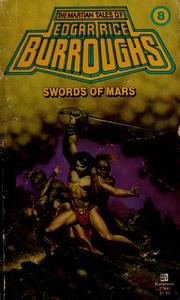
John Carter narrates again, going undercover among the assassins of Zodanga, with a trip to the Martian moon Thuria. The best of the late books.
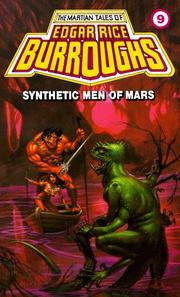
Vat-grown hormads and a laboratory gone wrong — Burroughs's contribution to the mad-science strand of pulp. Read after Swords of Mars, which it follows directly.

Four linked novellas about Carter's granddaughter, published together. Catalogued as Llana of Gathol (Mars #10).
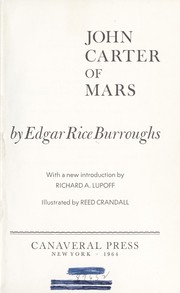
The final volume, collecting two late novellas, one of which is generally credited to Burroughs's son. Read it last and read it as an appendix; be aware the same title is also used for omnibus reprints of the early novels.