The Suez Crisis: books to read, in order
In 1956 Britain and France secretly agreed with Israel to manufacture a pretext for seizing the Suez Canal, invaded, and were forced to withdraw within weeks by American financial pressure. This path starts with the canal itself and with Nasser, moves through the crisis as narrative, then goes to the archival accounts where the collusion at Sevres is documented, and ends with the consequences — for Britain's standing, for American policy, and for decolonisation. The tone shifts as it goes: this is a subject where the popular version and the documented version genuinely differ.
The Canal and the Man Who Took It
BeginnerUnderstand what the Suez Canal was and who owned it, and how Nasser came to power and what Arab nationalism meant to him
▸ Study plan for this stage
Pace: 3 weeks. Karabell's Parting the Desert is about 300 pages and reads quickly — a week. Gordon's Nasser's Blessed Movement is a scholarly monograph on the Free Officers and needs a week read slowly. Aburish's Nasser: The Last Arab closes the stage in the final week.
- The canal as a nineteenth-century financial object: de Lesseps's concession, the Egyptian corvée labour that dug it, and the debt that led Egypt to sell its shares to Britain in 1875
- Why the Suez Canal Company was a private company registered in Egypt but controlled from Paris and London, and why that legal status mattered enormously in July 1956
- Gordon's account of the Free Officers as a faction rather than a movement with a leader: Naguib first, Nasser consolidating afterwards, and the internal fights that shaped what the regime became
- The content of Nasser's Arab nationalism — non-alignment, Arab unity, opposition to residual British basing rights — and what distinguished it from the pan-Arabism of others
- The Aswan High Dam as the precipitating issue: the American and British withdrawal of financing in July 1956 and nationalisation as the response
- Aburish's frame and its limits: an avowedly sympathetic Palestinian journalist's Nasser, useful precisely because you can see the sympathy operating
- By what legal mechanism did Nasser nationalise the canal company in July 1956, and on what grounds did Britain and France claim the act was illegitimate?
- Gordon shows Nasser emerging from a faction rather than arriving fully formed. Which of the 1952-54 internal struggles most shaped the leader Britain confronted in 1956?
- Aburish is openly sympathetic to Nasser. Identify two judgements in the book you would want corroborated from a less committed source, and say why
- What did the canal actually carry in 1956, and how much of Western Europe's oil supply depended on it? Get the number, and its source
- Karabell's canal was built with forced labour and foreign capital. How does knowing that change the moral weight of the 1956 nationalisation compared with reading it as a Cold War episode?
- Write a one-page chronology from 1854 (the concession) to 26 July 1956, marking every point at which ownership or control of the canal changed hands, and who paid whom
- Take Aburish's account of Nasser's motives for nationalisation and Gordon's account of the regime's internal position in 1956, and write a paragraph on whether the decision looks more like foreign policy or domestic consolidation
- Find the passage in Karabell on the corvée labour and its death toll, note the figure and where he sources it, then keep it — later books will describe the canal as a piece of international infrastructure without mentioning it
- Draft, in one paragraph, the British legal case against nationalisation as it would have been made in July 1956. You will test it against the archival record in stage three
Next up: With the canal's ownership history and Nasser's position established, the events of 1956 can be followed as a sequence rather than as a series of grievances.
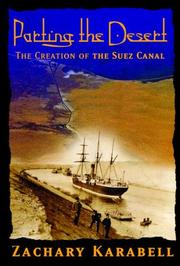
The construction of the canal in the 1860s and the finance and forced labour behind it. Start here because the 1956 crisis is unintelligible unless you know that the waterway ran through Egypt and was owned by Europeans.
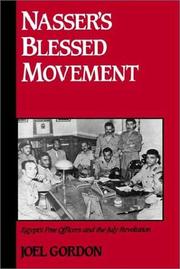
A close scholarly account of the 1952 Free Officers coup and the regime's first years. It shows Nasser emerging from a faction rather than arriving fully formed, which is how the 1956 decisions become explicable.

A sympathetic biography by a Palestinian journalist who treats Nasser as the great hope of Arab nationalism and is honest about his failures. Read it as an avowedly Arab account, which is the perspective the British and American literature lacks.
The Crisis as Narrative
IntermediateFollow the events of 1956 in sequence — the nationalisation in July, the months of negotiation, the Israeli attack, the Anglo-French landings at Port Said and the ceasefire
▸ Study plan for this stage
Pace: 3 weeks. Varble's The Suez Crisis 1956 in the Essential Histories series is short — one or two evenings, and its maps and orders of battle should stay open beside the rest. Von Tunzelmann's Blood and Sand is a day-by-day dual narrative and reads fast; ten days. Turner's Suez 1956 fills the final wee
- The military skeleton from Varble: Operation Kadesh (the Israeli attack into Sinai on 29 October), Operation Musketeer (the Anglo-French air campaign and the Port Said landings on 5-6 November), and the ceasefire on 6 November
- The three months between nationalisation in July and the invasion in late October — the London conferences, the Menzies mission, the Security Council route — and what that delay was actually for
- Von Tunzelmann's pairing of Suez with the Soviet suppression of the Hungarian uprising in the same fortnight, and the specific ways the two crises interacted diplomatically
- The pretext structure: an Israeli advance, an Anglo-French ultimatum to both sides to withdraw from the canal, and an intervention presented as separating combatants
- Turner's home front — the British press split, the parliamentary opposition, and the domestic political cost Eden was incurring in real time
- The military outcome versus the political outcome: the operation largely achieved its objectives on the ground and was abandoned anyway
- Reconstruct the timeline from 29 October to 6 November. At which point was the operation halted, relative to what it had achieved militarily?
- Von Tunzelmann argues Suez and Hungary interacted. Name two concrete ways in which one crisis affected the handling of the other, and identify what kind of evidence supports each
- Turner is strong on British domestic politics. What did Eden tell Parliament during the crisis, and what would you need to see to establish whether it was untrue?
- Why did the Anglo-French force take three months to be ready, and what did that delay cost politically?
- Varble gives you orders of battle. What did the operation require militarily that made a rapid response impossible, and does that change your reading of the delay?
- Build a single two-column chronology for 22 October to 7 November: Suez on the left, Hungary on the right, from von Tunzelmann. Mark every date where a decision on one side visibly references the other
- Map the Port Said landings onto Varble's own maps while reading Turner's narrative of the same days, and note any point where the political account and the operational geography do not line up
- Turner and von Tunzelmann both narrate Eden's conduct in the last week of October. Write each author's characterisation in one sentence, then mark which parts are inference and which are sourced to a document or a participant
- Write down the sequence of public justifications Britain gave between 30 October and 6 November. Keep the list — the next stage's documents are the test of it
Next up: You now know what was said publicly and what happened operationally, which is the only way to read the secret record and see the size of the gap.
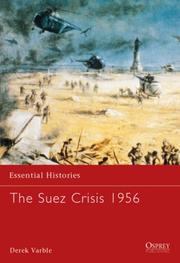
A short campaign history with the maps and orders of battle. Read it first for the military skeleton so the political narratives that follow do not have to keep stopping to explain where Port Said is.

Tells Suez and the simultaneous Soviet crushing of the Hungarian uprising day by day in parallel. The device works: the two crises interacted, and the pairing is the clearest demonstration of what Western credibility actually cost that autumn.
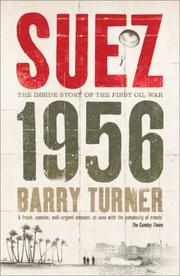
A narrative account strong on the British domestic politics and press war around the invasion. It fills in the home front that the diplomatic histories treat as background noise.
The Documents and the Collusion
IntermediateWork through the archival record of the secret Sevres protocol with France and Israel, the deception of Parliament and Washington, and Eden's conduct
▸ Study plan for this stage
Pace: 6 weeks. Kyle's Suez is over 600 pages of archive-based history and is the stage — three weeks at 30 pages a day, taking notes. Carlton's Britain and the Suez Crisis is short and analytical; read it in three or four days immediately after Kyle, as a re-statement you can argue with. Gorst and Johnman
- The Sèvres protocol: the secret agreement of 22-24 October between Britain, France and Israel, its text, and the fact that the British copy was destroyed
- What 'collusion' means precisely here — not that the three states cooperated, which is unremarkable, but that the ultimatum was pre-arranged with the party it was addressed to
- The deception of Parliament and of the United States as separate acts with separate consequences
- Kyle's evidentiary basis: British, French, Israeli and American archives, and the point at which the accumulated record made denial untenable
- Carlton's analytical account of British decision-making — the cabinet, the constraints, and the argument about how far Eden was acting alone
- Reading a documents collection properly: cabinet minutes record what was minuted, not what was said, and the absences are evidence too
- Thorpe's authorised biography as the strongest case for the defence, and how to read a sympathetic biographer of a man whose central act you have already seen documented
- State the terms of the Sèvres protocol in your own words, and then state what each of the three governments got from the arrangement
- Kyle establishes collusion from the archives; Thorpe writes the most sympathetic available account of Eden. On what specific points does Thorpe contest Kyle's reading rather than merely soften it?
- The British copy of the protocol was destroyed. How do Kyle and Gorst reconstruct its contents, and how confident should a reader be in that reconstruction?
- Carlton and Kyle differ on how much of the decision was Eden's personally versus the cabinet's collectively. Which reading does the documentary record in Gorst and Johnman better support?
- What did the American government know, when did it know it, and does the record show it was deceived or merely not consulted?
- Take the list of public justifications you compiled at the end of stage two and set each one against the corresponding document in Gorst and Johnman. Write the date on which each statement became knowably false to the person making it
- Find one cabinet minute in the documents reader that Kyle also quotes and interprets. Read the document first, form your own reading, then compare with Kyle's. Where you differ, work out whether the difference comes from the document or from what Kyle knows that it does not contain
- Write the strongest one-paragraph defence of Eden using only Thorpe's evidence. Then write the rebuttal using only Kyle's. Do not adjudicate until both are as strong as you can make them
- Carlton is short enough to reread. On a second pass, list every point where his analysis depends on a source Kyle did not have or did not use, and every point where the two simply weigh the same evidence differently
Next up: With the deception documented, the last question is what the exposure of it actually cost — which is a question about consequences rather than conduct.
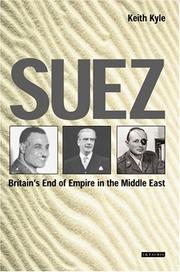
The definitive account, over 600 pages built on British, French, Israeli and American archives, and the book that made the collusion undeniable. Published as 'Suez: Britain's End of Empire in the Middle East'; the bare title returns the same work.
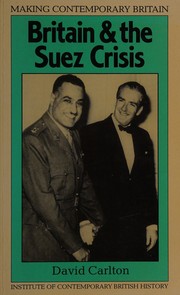
A compact analytical study of British decision-making, useful precisely because it is short enough to reread after Kyle. Good on the domestic political constraints Eden believed he was under.
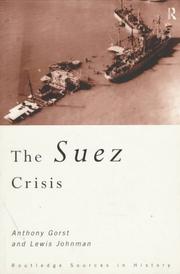
A documents reader edited with Lewis Johnman — cabinet minutes, telegrams, the Sevres protocol itself. Read after the histories so you can test their claims against the paper they rest on.

The authorised biography of the Prime Minister who ordered the invasion, and fairer to him than most Suez literature. It is the strongest case for the defence, which is why it belongs at the end of this stage rather than the start.
What Suez Ended and What It Started
IntermediateAssess the consequences — the American financial veto, the collapse of British great-power pretension, the acceleration of decolonisation and Nasser's transformation into a regional hero
▸ Study plan for this stage
Pace: 4 weeks. Nichols's Eisenhower 1956 takes ten days. Doran's Ike's Gamble is the revisionist counter-case and should be read directly after it, in a week, while Nichols is fresh. Louis's Ends of British Imperialism is a large essay collection — read the Suez and decolonisation essays over the final te
- The mechanism of the American veto: pressure on sterling, the run on British reserves, and the withholding of IMF support until withdrawal was agreed — financial rather than military coercion
- Nichols's Eisenhower as a president willing to break his closest allies, and the domestic and Cold War calculations behind that willingness
- Doran's revisionist case: that Eisenhower's handling empowered Nasser, weakened the Western position in the Middle East, and cost the United States more than the alliance discipline was worth
- The end of British great-power pretension as a specific thing — not a mood but a series of decisions about basing, defence spending and the pace of colonial withdrawal that followed
- Louis's placement of Suez in the arc of decolonisation: whether 1956 accelerated the retreat or merely made visible a process already running
- Nasser's transformation into a regional hero by losing the military campaign and winning the political one, and the effect of that on Arab politics through the 1960s
- Describe the financial mechanism by which the United States forced the British withdrawal. Which specific instruments were used, and over what period?
- Doran and Nichols reach opposite verdicts on Eisenhower's decision. Identify the factual disagreement underneath the interpretive one, if there is one — and if there is not, say what the two are actually disagreeing about
- Louis argues Suez belongs inside a longer decolonisation story. What is the strongest evidence that 1956 was a turning point rather than a marker, and how does he handle it?
- Nasser was militarily defeated and politically strengthened. By what route, exactly, did the second follow from the first?
- Having read the whole path: was Suez a cause of Britain's decline as a world power, a symptom of it, or the moment it became undeniable? Defend the answer with a specific piece of evidence from at least two stages
- Take Doran's central claim — that Eisenhower's decision was a strategic error — and check the two or three pieces of evidence he leans on most against Nichols's account of the same events. Write which of the disagreements are about facts and which about counterfactuals
- Trace one statistic through the stage: the size of the run on sterling in November 1956. Find the figure in Nichols, in Louis, and in Kyle from the previous stage, and note who is citing whom
- Write the withdrawal decision as a one-page brief from the British Treasury to the Prime Minister, dated early November 1956, using only what Nichols establishes about the financial position. The exercise is to see how little room for a political decision there actually was
- Louis writes essays, not a narrative. Pick the one that most directly contradicts the popular account of Suez as the moment the empire ended, and write a paragraph stating his case and one stating the objection
- Return to the British legal case against nationalisation you drafted in stage one and assess it against everything since. Note which of its premises were sincerely held in July 1956 and which had become pretextual by October
Next up: This is the last stage: the crisis is now closed at both ends, from the canal's construction to the imperial retreat it is credited with accelerating.

The crisis from the White House, showing an American president willing to break his closest allies with pressure on sterling. The mechanism of the withdrawal, which most British accounts describe only from the receiving end.

Argues that Eisenhower's decision was a strategic error that empowered Nasser and cost the United States more than it gained. A revisionist case against the consensus of the previous book, and worth reading as a live disagreement.
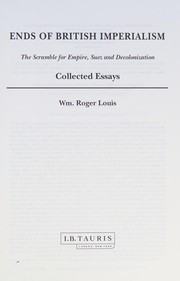
A large collection of essays by the leading historian of Britain's imperial retreat, placing Suez in the arc of decolonisation. The right last book: it stops Suez being a single humiliating episode and makes it a hinge.
Discussion
Keep reading
Paths that share books, cover the same subject, or open a related topic.