The Riyria Revelations Reading Order: Where to Start
The Riyria Revelations is six novels about a thief and a mercenary taking jobs, and the first practical problem is that they are usually sold as three omnibus volumes with different names — Theft of Swords, Rise of Empire, Heir of Novron — which makes the series look shorter and the titles look wrong. This path uses the six original novels, which is how Michael J. Sullivan wrote them and how they actually read. The order is publication order, and the prequel trilogy called the Riyria Chronicles belongs afterwards rather than first, for a reason the sixth book makes obvious.
Start Here: The Two That Read Like Capers
BeginnerMeet Royce and Hadrian in the series' lightest, most self-contained mode, and see whether the double act works for you.
▸ Study plan for this stage
Pace: 2 weeks. The Crown Conspiracy is short, around 350 pages, and Avempartha is not much longer. Both read in three or four sittings each; this is the fastest stage in the path.
- Sort the edition problem out before you buy anything. These six novels are usually sold as three omnibuses, and the omnibus titles do not match the novel titles, so it is easy to buy the same story twice. Ask what a volume contains rather than trusting the cover.
- Royce Melborn and Hadrian Blackwater are a two-hander: a thief with no illusions and a swordsman with too many. The series works or fails entirely on whether their dialogue lands for you, and you will know by page fifty.
- The Crown Conspiracy is deliberately small. Two men are hired to steal a sword and are framed for a king's murder, and that is the whole plot. Do not read the opening as an indication of the scale to come.
- Sullivan wrote all six books before publishing the first, and it shows. Details that look like throwaway colour in these two are load-bearing later, which is why the series rewards attention early rather than momentum.
- The world is deliberately traditional fantasy furniture: an empire that fell, a church that wants it back, an heir prophecy. Sullivan is not subverting the genre, he is executing it cleanly, and expecting subversion is the commonest way readers misjudge the series.
- Avempartha widens the frame slightly and introduces the church politics that eventually take over. It is the book that tells you whether you want the other five.
- Chapters are short and the prose is plain. This is a series to read quickly; slowing down to analyse the sentences finds less than the plotting does.
- What does each of Royce and Hadrian believe about people, and how does each belief get them into trouble in these two books?
- The Crown Conspiracy is a heist that goes wrong within a chapter. What is the rest of the book actually about?
- Which details in these two books look decorative rather than plot-bearing? Write them down; you will check the list later.
- What does the church want, and how much of that is stated versus inferred by the end of Avempartha?
- Sullivan is using very familiar fantasy materials. Where does the execution beat the familiarity, and where does it not?
- Confirm which novels are inside whatever volume you have bought before starting, so you do not read Avempartha twice under two covers.
- Keep a running list of apparently minor details: a name mentioned once, an object, an offhand claim about someone's past. Revisit the list at the end of the path.
- After Avempartha, decide deliberately whether to continue. The tone is about to change scale but not register, and if the double act has not landed by now it will not.
- Read one chapter aloud. The banter is the series' engine, and hearing it is the fastest way to tell whether Sullivan's dialogue rhythm suits you.
Next up: You have the double act and the caper register fixed in your ear, which is exactly what the next two books need in order to widen the scope without your losing the thread of who these two men are.
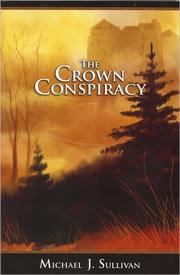
The correct starting point. Two professional thieves are framed for a king's murder and have to get out of a dungeon and a kingdom. It is short, fast and almost entirely plot — deliberately so, because Sullivan wrote all six books before publishing any of them.
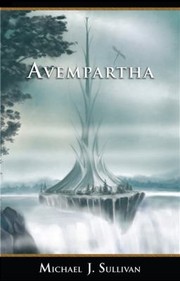
A village monster, an elven tower and the first hint that the jobs are being arranged by someone. Second, and the book where the standalone-adventure structure starts quietly turning into a single long plot.
The Series Gets Bigger
BeginnerWatch the scope widen from two-man heists to imperial politics without the tone changing.
▸ Study plan for this stage
Pace: 2-3 weeks. Nyphron Rising and The Emerald Storm run around 350-400 pages each and read as fast as the first two, despite covering considerably more ground.
- The scale changes and the tone does not. Nyphron Rising moves from local jobs to imperial politics while keeping the same wry, close-third voice, and that consistency is the series' most distinctive choice.
- Nyphron Rising is where the prophecy-and-heir material stops being background and becomes the plot. Note what it costs the two protagonists to be pulled into it.
- The Emerald Storm changes setting substantially, moving the story onto a ship and away from the familiar territory. It is the most self-contained-feeling book of the six and the one whose relevance is least obvious on a first read.
- Modina's storyline runs in parallel and is the series' emotional centre of gravity from here on. Readers who skim her chapters to get back to Royce and Hadrian miss the reason the ending works.
- Backstory begins arriving in pieces: what Royce was before Riyria, what Hadrian did in the east. Both are withheld deliberately and both matter.
- The church-versus-empire conflict is a political plot, not a theological one. Track who benefits from each move rather than who is right.
- This is the stage where the early jobs stop looking like separate adventures. If you kept the list of minor details, several of them will start to pay.
- What changes for Royce and Hadrian when they can no longer take or refuse a job freely?
- Why does The Emerald Storm leave the established setting, and what does the change of location let Sullivan do that he could not do at home?
- What is Modina's arc actually about, and why is it running alongside the main plot rather than inside it?
- How much of Royce's past have you inferred by the end of this stage, and from what evidence?
- Which items on your list of minor details have now paid off? Which are still open?
- Sketch a one-page map of who holds power at the start of Nyphron Rising and again at the end of The Emerald Storm. The political shift is easy to lose while following the characters.
- Track Modina's chapters separately, noting only what changes for her. Read that thread back in one go at the end of the stage.
- Update the details list from the first stage, marking each item paid, pending or apparently decorative. Do not discard anything yet.
Next up: The political board is now set and both protagonists' pasts are half-exposed, which is the precise state of ignorance the final two books are built to resolve.

Third, and the pivot: the new empire is real, the church is manoeuvring, and Royce and Hadrian stop being able to walk away from the consequences. This is where the series stops being episodic.
Fourth, and the most conventional adventure of the six — a sea voyage and a jungle expedition. Read it in place: several apparently incidental discoveries here are load-bearing for the finale.
The Ending
IntermediateFinish the six-book arc and see the payoff for the seemingly disposable early jobs.
▸ Study plan for this stage
Pace: 3 weeks. Wintertide is around 400 pages; Percepliquis is the longest book in the series at roughly 500 and is best read in a concentrated stretch rather than spread out.
- Wintertide is the convergence book. Nearly every thread and character introduced since The Crown Conspiracy arrives in the same city, and the pleasure of it depends on your having read them in order.
- Percepliquis is the payoff for the whole six-book design, including material planted in the very first chapters. This is where a series written complete before publication proves the value of that method.
- Backstory closes here. What Royce was, what Hadrian did, and how the two of them came to be Riyria are all answered, which is precisely why the prequels belong afterwards.
- The prophecy that has been quietly steering the plot resolves in a way that recontextualises earlier books. Expect to want to reread at least one earlier scene immediately.
- Sullivan plays the ending straight. There is no last-minute deconstruction, and the emotional register stays where it has been since book one.
- Percepliquis takes the cast underground and physically together for a long stretch, which is the only sustained ensemble section in the series.
- Stopping here is a complete experience. The prequels are additive, not required, and the path treats them that way.
- Which apparently disposable early job turns out to have mattered most, and when did you first suspect it?
- What does the prophecy resolution do to your reading of Avempartha and Nyphron Rising?
- Wintertide brings everyone to one place. Which reunion carries the most weight, and why is that a function of reading order rather than of the scene itself?
- Now that Royce's and Hadrian's pasts are stated rather than hinted, were the hints fair?
- Is the ending earned by the plotting, by the character work, or by both? Argue it from a specific scene.
- Take out the details list one last time and mark every item that paid. The proportion is the most concrete evidence of what a pre-written series buys a reader.
- Reread the first chapter of The Crown Conspiracy immediately after finishing Percepliquis. It is a different scene now, and the exercise takes twenty minutes.
- Before starting the prequels, write down what you think Royce and Hadrian were like when they met. The next stage is largely a test of that guess.
- Decide whether you are stopping. A reader who is satisfied here has finished the story Sullivan set out to tell, and nothing in the prequels contradicts that.
Next up: Knowing exactly who these two became is the only condition under which their first meeting can carry any weight, which is why the prequels come now rather than first.

Fifth, a single tense sequence around an imperial wedding, and the book where nearly every long-running thread is drawn tight. Do not start it unless the last one is available — it ends on the sharpest hook in the series.

The sixth and final novel, and a genuine conclusion — Sullivan planned the whole arc in advance and it shows. It also answers the questions about Royce's past that make the prequels worth reading afterwards.
Afterwards: The Riyria Chronicles
IntermediateRead the prequels in the only position where they add rather than subtract — after you already know who these two became.
▸ Study plan for this stage
Pace: 3 weeks for the three, at around 350 pages each. They are episodic and can be spaced out; unlike the Revelations, nothing is lost by leaving a month between them.
- The Chronicles are prequels written after the fact, and reading them first is a real mistake rather than a preference. The Crown Tower's central question is how these two could possibly work together, and that question is only interesting if you already know the answer.
- The Crown Tower is the first meeting, and it is deliberately unpleasant. Royce and Hadrian dislike each other, and the book's job is to make the partnership you already enjoy look improbable.
- The Rose and the Thorn fills in the Medford backstory that Revelations referenced without explaining, including material about Royce that reframes his behaviour in the main series.
- The Death of Dulgath is the most self-contained of the three and the closest the series gets to a straight mystery. It is also the lightest, and reads as a return to the caper mode of the very first book.
- These are standalone jobs rather than a serial arc. The Chronicles are structured as episodes; do not expect the accumulating design of the Revelations.
- Chronology and reading order deliberately diverge here, and that is the whole point of the stage. The path is publication-experience order, not timeline order.
- Sullivan continued the Chronicles beyond these three. Stopping after The Death of Dulgath leaves you at a natural point, having seen the partnership form, harden and settle.
- Does The Crown Tower's version of Royce and Hadrian match the guess you wrote down at the end of the last stage? Where were you wrong?
- What does the Medford material in The Rose and the Thorn change about how you read Royce's behaviour in the main series?
- Why does knowing the ending of Percepliquis make these books better rather than redundant?
- The Death of Dulgath is structured as a mystery rather than an arc chapter. Does the lighter form suit these characters?
- Would you now recommend the Chronicles first to a new reader? Make the argument for the position you rejected.
- Read the first meeting scene in The Crown Tower and then the equivalent partnership scene from The Crown Conspiracy back to back. The distance between them is the entire point of the prequels.
- Note every Revelations reference the Chronicles resolve, and every one they deliberately leave alone.
- Write the two-line answer you would give someone asking where to start with Riyria. If you can defend the six-first order in two lines, you have understood what the series is doing structurally.
Next up: This closes the path: you have read the six-book story as written, then the origin that only means something once you know how it ends.

How Royce and Hadrian met, twelve years before The Crown Conspiracy. Written later and better than the early Revelations books, but do not start here: their partnership is the joke the Revelations spends six books setting up, and this explains it.
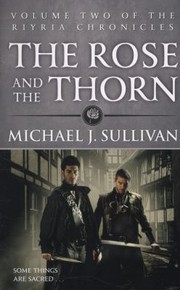
The second Chronicles book, following on directly and filling in the Medford background the first novel treats as already established. Read straight on from The Crown Tower.

The third prequel, and the purest Riyria caper anyone has written — one job, one town, no empire. A good place to stop, since the Chronicles are an open-ended series of adventures rather than an arc.
Discussion
Keep reading
Paths that share books, cover the same subject, or open a related topic.