The Pre-Raphaelites: The Best Books to Read, in Order
Seven young men founded the Pre-Raphaelite Brotherhood in 1848 with a manifesto they barely agreed on, painted pictures that Victorian critics found shocking, and then spent forty years turning into the most commercially successful painters in Britain. This path starts with two short surveys that establish what the work actually looks like and why it caused offence, then reads the group's tangled private lives — which are inseparable from the pictures, because the models were the wives, the mistresses and eventually the painters — then Ruskin and Holman Hunt in their own words, and finishes with the individual careers, including the William Morris side that turned the movement into design.
What they painted, and why it offended
BeginnerGet the basic account in place: what 'Pre-Raphaelite' meant in 1848, why the sharp focus, brilliant colour and unidealised religious figures scandalised critics, and how the second-generation work of Rossetti and Burne-Jones came to look nothing like the first.
▸ Study plan for this stage
Pace: Three to four weeks for 520 pages, and this stage is short by design — it exists to give you a picture of the pictures before any biography. Timothy Hilton's The Pre-Raphaelites is 216 pages, the compact illustrated survey, and is genuinely the most efficient afternoon you can spend on the movement;
- What Pre-Raphaelite meant in 1848: a rejection of the compositional conventions the Royal Academy traced back to Raphael, in favour of what the seven founders took to be the honesty of earlier Italian painting.
- The technical method that produced the look — painting into a wet white ground, which is what gives the pictures their peculiar brilliance and sharp, shadowless focus.
- Why the religious pictures caused offence. Unidealised faces on sacred figures, ordinary bodies and specific dirt read to Victorian critics as irreverence rather than as fidelity.
- Truth to nature as a working rule rather than a slogan, and Prettejohn's argument about how far the pictures actually obey it.
- The two generations. First-generation work is minutely observed and moralising; the second generation around Rossetti and Burne-Jones is dreamlike, decorative and repetitive of a single female type, and the two look almost nothing alike.
- The Brotherhood as a group that barely agreed on its own programme, which is why any single-sentence definition of Pre-Raphaelitism collapses on contact with the paintings.
- Prettejohn's insistence on looking rather than decoding — that a Pre-Raphaelite picture rewards attention to surface, colour relationships and paint handling before it rewards a reading of its subject.
- What specifically were the founders rejecting when they called themselves Pre-Raphaelite, and how accurate was their account of Raphael's influence?
- Describe the wet-white technique and say what it does to colour and to shadow.
- Which pictures caused the greatest offence and on what grounds? Distinguish the religious objection from the aesthetic one.
- How do the first and second generations differ in subject, in technique and in what they are for?
- What does Prettejohn think earlier writers got wrong about these paintings, and what does she propose instead?
- Pick five paintings reproduced in Hilton and look at each for a full five minutes before reading a word of commentary. Write one sentence per picture on what you notice, then read what he says.
- Take one first-generation and one second-generation picture and list every difference you can see in handling, colour, composition and subject. The list is the whole argument of this stage.
- Find the same painting reproduced in both books and compare what each author says about it. Where Prettejohn goes into technique, Hilton usually goes into context, and the contrast shows you two ways of writing about art.
- Write your own one-paragraph definition of Pre-Raphaelitism, then test it against three paintings. If it fails on any of them, you have understood the problem.
Next up: You can now recognise the pictures and the faces in them, which is the point at which it becomes worth knowing whose faces they were.
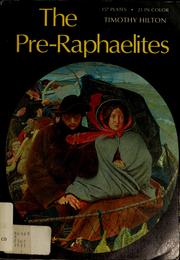
The compact Thames and Hudson survey that has introduced the movement to more readers than anything else, and still the most efficient hour you can spend on it. Note that several books here carry near-identical titles; this is Hilton's illustrated survey, not Christopher Wood's larger volume of the same name.
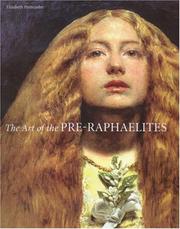
Prettejohn is the leading modern scholar of the movement, and this is the book that takes the paintings seriously as paintings rather than as illustrations of biography. Read it second: after Hilton's outline you can follow her arguments about technique, colour and what the Brotherhood's rejection of Raphael actually meant.
The lives entangled with the pictures
BeginnerThe Pre-Raphaelite circle's relationships are unusually consequential for the art, because the models sat for painting after painting and several of them were the painters' partners. Read this stage for the human material, and keep some scepticism about how confidently any of these books reconstruct private feeling.
▸ Study plan for this stage
Pace: Seven to eight weeks for 1,090 pages, and this is a stage to read at narrative pace. Daly's Pre-Raphaelites in love is 468 pages and goes first because it is the most carefully sourced of the three, built on letters and diaries and covering the marriages and affairs of the Brotherhood — Rossetti and
- The model-as-partner arrangement, which is why the same handful of faces recur across hundreds of canvases and why the biography and the iconography are difficult to separate.
- Elizabeth Siddal as both the most painted face of the movement and a working artist in her own right, a fact the love-story framing tends to submerge and which the next stage restores.
- The Effie Gray case: a marriage annulled for non-consummation, a public scandal in a society with almost no vocabulary for it, and a woman who then married one of the painters she had sat for.
- Hunt's relationship with Annie Miller and its explicit project of education and improvement, which is the clearest instance of the circle's habit of treating a model as material.
- The documentary base. Daly works from letters and diaries and says where she is inferring; Moyle narrates more freely, and knowing which you are reading is the discipline of the stage.
- Where Cooper's account differs from the standard telling because it uses Effie's own papers rather than Ruskin's defenders' version.
- The limits of psychological reconstruction from correspondence, particularly Victorian correspondence written in the expectation of being read aloud or preserved.
- Which women sat repeatedly for which painters, and in which relationships did modelling and partnership overlap?
- Set out the sequence of the Effie Gray case, and say what Cooper's use of Effie's own papers changes about the standard account.
- Where does Daly explicitly mark an inference, and where does Moyle narrate the same episode as fact? Find one example.
- What was the Hunt and Annie Miller arrangement, and what does it reveal about how the circle regarded its models?
- Which claims in these three books rest on a surviving document and which on plausibility? Take three episodes and sort them.
- Build a chart of the circle: painters down one side, models and partners across the top, with the major paintings in the cells. It is the reference you will keep using for the rest of the path.
- Take one episode covered by all three books and write the three versions side by side, noting exactly where they diverge and what each cites.
- Choose a painting from stage one whose model you now know and look at it again. Then write a paragraph on what the biographical knowledge added and what it may have cost you as a viewer.
- Read Cooper's account of the annulment and then find how Ruskin's own defenders explained it. The gap is what a partisan source looks like.
Next up: That version of the story casts the women as subjects rather than makers, which is exactly the picture the next stage was written to correct.
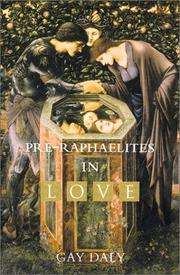
The standard group biography of the Brotherhood's marriages and affairs — Rossetti and Siddal, Millais and Effie, Hunt and Annie Miller — built on letters and diaries. Start the stage here because it is the most carefully sourced of the three.

A vivid, fast narrative of the same material that became a BBC drama; readable and more willing than Daly to fill gaps with inference. Read it for pace and cross-check anything startling against Daly.
The single most famous scandal of the circle — Effie Gray's unconsummated marriage to Ruskin, its annulment, and her marriage to Millais — told from Effie's side using her own papers. Our record displays it under the bare title 'Effie'; it is the same book.
The women
IntermediateCorrect the picture the previous stage gives. The women of the circle were not only models: several were working artists whose careers were obstructed, and Jan Marsh's research is what put them back into the historical record.
▸ Study plan for this stage
Pace: Four to five weeks for 568 pages, and the two books work as a pair. Marsh's The Pre-Raphaelite sisterhood is 408 pages and takes three to four weeks; published in 1985, it reframed Siddal, Cornforth, Morris and the others as participants rather than as subjects and set the agenda for essentially eve
- Marsh's central reframing: the women of the circle were colleagues, students and professionals as well as models, and the historical record had recorded only the modelling.
- The institutional exclusions that shaped these careers — the Royal Academy Schools closed to women, restricted access to life drawing, and the exhibition and sales networks that followed from both.
- Elizabeth Siddal's own work, which is the test case: a body of drawings and watercolours that had been subsumed entirely into her role in Rossetti's biography.
- Marie Spartali Stillman and Evelyn De Morgan as painters with long working careers, which is the direct evidence against reading the circle's women only through their relationships.
- Why the reproductions matter more than the prose in the second book. An argument about neglected work is settled by looking at the work.
- The mechanics of historical recovery: what Marsh had to find, where it had been filed, and why an artist disappears from a record even when the objects survive.
- That this correction does not undo the previous stage. The relationships were real and consequential; the point is that they were not the whole of these women's lives.
- What did Marsh's 1985 book change about how the Pre-Raphaelite circle is written about?
- Name the specific institutional barriers facing a woman who wanted to train as a painter in Victorian Britain.
- What does Siddal's own surviving work look like, and how does seeing it change your reading of the paintings she appears in?
- Which of the women in these books sustained a long professional career, and on what terms?
- How does the second book function as evidence for the first, and what would be missing if you read only one?
- Go through the plates in Pre-Raphaelite women artists first, before reading any text, and write down what you would have assumed about the artist of each work. Then read the attributions.
- Take one woman from Marsh's book and reconstruct her working life as a timeline — training, exhibitions, sales, interruptions. The shape of the gaps is the argument.
- Return to the chart you built in stage two and add a column for what each woman made. Several cells you expected to be empty will not be.
- Compare Marsh's account of Siddal with Daly's and Moyle's from the previous stage. The differences are not about facts but about what counts as the subject.
Next up: Having read three modern reconstructions of the circle, it is time to hear from the people who were in it and had an interest in how it was remembered.
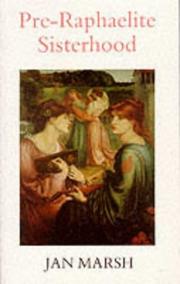
The 1985 book that reframed Siddal, Cornforth, Morris and the others as participants rather than as subjects, and set the agenda for everything written since. Read it directly after the love-stories stage so the corrective lands against a specific version of events.
Marsh and Nunn's catalogue of the women who painted — Siddal, Marie Spartali Stillman, Evelyn De Morgan and others — with the work reproduced rather than described. The evidence for the previous book's argument, and the reason to read the two together.
In their own words
IntermediateGo to the primary sources: the critic whose defence saved the Brotherhood's reputation, and the founder member who wrote the movement's own history decades later with a strong interest in how it came out. Read both aware that each is an interested party.
▸ Study plan for this stage
Pace: Two and a half months for 1,309 pages, and none of it is continuous reading in the ordinary sense. Ruskin's Modern painters — our record is the first of five volumes, 417 pages, published in 1843 before the Brotherhood existed — should be read in selections rather than cover to cover; three weeks, g
- Ruskin's demand that the artist go to nature rejecting nothing and selecting nothing, and the fact that this was a moral instruction as much as a technical one.
- The 1851 defence. Ruskin's public letters in the Brotherhood's support changed their critical fortunes at the point where hostile reviewing threatened to end them.
- That Modern painters was begun as a defence of Turner and only later became the theoretical basis others read into Pre-Raphaelitism, which is why the connection is looser than it is usually presented.
- Hunt's stake in the history he is writing: by 1905 he was the last surviving founder with a claim to have originated the movement's principles, and the book is shaped by that claim.
- How to read a partisan memoir usefully — for the detail nobody else was present to record, and against the framing that detail is placed in.
- Ruskin's role as patron and purchaser as well as critic, which means his advocacy had a financial dimension for both parties.
- Hilton's biography as the corrective to both primary sources, giving the documented life of a man whose criticism and private conduct were both central to this circle.
- What exactly did Ruskin instruct artists to do, and how did the Brotherhood's practice differ from what he actually wrote?
- What did Ruskin's 1851 intervention change, and what would plausibly have happened without it?
- Which claims in Hunt's memoir can be checked against other sources, and which rest on him alone?
- Where does Hunt's account serve his own claim to have originated the movement? Find two specific passages.
- How does Hilton's biography change your reading of Ruskin's criticism, and should it?
- What is the difference between reading Modern painters as a source for Pre-Raphaelitism and reading it as Ruskin's own project?
- Extract every passage in the first volume of Modern painters that could be read as a Pre-Raphaelite programme, then check each against a painting from stage one. Several will not fit.
- Take three factual claims from Hunt's memoir and check them against Daly and Marsh. Mark each as corroborated, contradicted or uncheckable.
- Write a one-page account of the movement's founding as Hunt tells it, then a second as a modern historian would. The gap is what a memoir does.
- Read Hilton's chapters on Ruskin's dealings with the Brotherhood and cross-reference the money — purchases, allowances, commissions — with the paintings involved.
- Compare Ruskin's published criticism of a specific picture with what Prettejohn says about the same picture. A century and a half of art writing separates them and the difference is instructive.
Next up: The founders' own version accounts for the beginning; the individual careers are where the movement actually went.
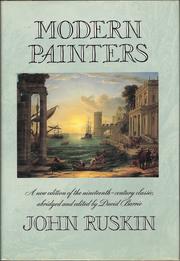
The vast critical work whose demand that artists go to nature 'rejecting nothing, selecting nothing' gave the Brotherhood its method, and whose author then publicly defended them in 1851. Our record is the first of five volumes, published in 1843 before the Brotherhood existed — read the relevant parts rather than the whole thing.
Hunt's own 1905 account of the movement's founding, written more than fifty years after the fact by the member most invested in claiming it. Indispensable and unreliable in equal measure; our record is the first of two volumes.

Hilton's biography of Ruskin, the standard modern life of the critic whose patronage, money and criticism shaped the Brotherhood's fortunes. Read it after 'Modern Painters' so you know what the writing was before you read what the man was.
The individual careers
IntermediateFollow the three most consequential figures out of the Brotherhood and into their separate later work. By the end you should be able to explain how a movement that began by painting religious subjects with photographic exactness ended in dream imagery, wallpaper and the Arts and Crafts movement.
▸ Study plan for this stage
Pace: Four months for 1,937 pages, the largest stage on the path and the one that explains how the movement ended somewhere entirely unlike where it began. Bullen's Rossetti: Painter and Poet is 272 pages, three weeks, and goes first because Rossetti is the pivot between the two generations and because it
- Rossetti as the hinge. He was in the original Brotherhood and he invented the second generation's imagery, so the change of direction after 1860 runs through one man.
- Bullen's argument that Rossetti's poems and paintings are a single project, and that reading either alone misrepresents both.
- The Millais problem: the most technically gifted of the founders became the most commercially successful painter in Britain, and Rosenfeld's case is that this was a development rather than a fall.
- Burne-Jones's transposition of Pre-Raphaelite subject matter into a decorative, non-narrative mode that could be executed in stained glass and tapestry as readily as in oil.
- The Morris firm as the mechanism by which a painting movement became a style of manufacture, with a workshop, a catalogue and a market.
- Morris's socialism and the tension MacCarthy documents between a critique of industrial production and a business selling handmade goods to the wealthy.
- The friendship between Burne-Jones and Morris as the actual continuity between the two MacCarthy volumes, and the reason to read them consecutively.
- How the whole arc runs: from painting religious subjects with photographic exactness in 1848 to wallpaper, stained glass and the Arts and Crafts movement fifty years later.
- How did Rossetti's work change after 1860, and what in Bullen's account explains the change?
- What is the old story about Millais's later career, and what is Rosenfeld's case against it? Which do you find more persuasive, and on what evidence?
- What did Burne-Jones take from the first generation and what did he discard?
- By what steps did the Morris firm turn a painting style into a decorative one? Name the products and the processes.
- How does MacCarthy handle the contradiction between Morris's politics and his firm's customers?
- Trace the line from a first-generation Brotherhood picture to an Arts and Crafts object, naming the intermediate steps. If you can do this, the path has worked.
- Read one Rossetti poem alongside the painting of the same subject and write on what each does that the other cannot. Bullen's whole argument becomes obvious in one sitting this way.
- Line up three Millais paintings from across his career — an early Brotherhood picture, a mid-career subject, a late commercial success — and describe the technical continuity rather than the subject change.
- Find a Burne-Jones design executed in two media, such as a cartoon and the stained glass made from it, and note what survives the translation.
- Look at a Morris pattern and identify what in it descends from Pre-Raphaelite painting and what does not. The answer is less than most accounts imply.
- Write the fifty-year arc of the movement in one page, using the chart from stage two and the careers from this one. That page is the thing worth keeping from the whole path.
Next up: The Brotherhood dissolved into individual careers and then into a decorative industry, which is where a reading path about painters has to stop.

The best single-volume study of Rossetti that treats the poems and paintings as one body of work, which is the only way his later obsessive images of women make sense. Start here, because Rossetti is the pivot between the two Pre-Raphaelite generations.

The modern reassessment of the Brotherhood's most gifted technician, arguing against the old story that his commercial success in later life was simply a betrayal. Our record displays it as 'John Everett Millais'; it is Rosenfeld's monograph.
MacCarthy's biography of Edward Burne-Jones, the second-generation painter who carried the movement's imagery into the 1890s and into stained glass and tapestry. The bridge from painting to design, and superb on the friendship with Morris.
The standard life of Morris — the poet, designer, manufacturer and socialist whose firm turned Pre-Raphaelite taste into an entire decorative style. Our record shows the bare title 'William Morris'; read it last, because it is where the movement stops being a group of painters and becomes a way of making things.