The Pre-Raphaelite Brotherhood was founded in 1848 by seven young men who barely agreed on their own manifesto, painted pictures that Victorian critics found genuinely shocking, and then spent forty years turning into the most commercially successful artists in Britain. The subject has a trap in it: the private lives are so lurid that most readers arrive through the gossip and never get to the paintings. This order puts the pictures first on purpose.
The second thing to know is that the movement changed beyond recognition. The 1849 work — sharp focus, brilliant colour, unidealised religious figures — looks nothing like the dream imagery Rossetti and Burne-Jones were producing thirty years later, and nothing like the wallpaper and stained glass the movement ended in. Any single book that treats it as one style is simplifying.
What they painted, and why it offended
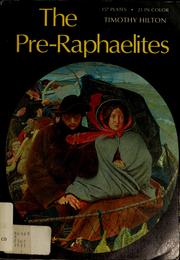
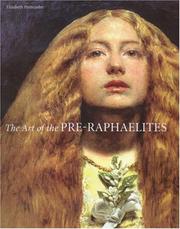
The Pre-Raphaelites by Timothy Hilton is the compact illustrated survey that has introduced the movement to more readers than anything else — 216 pages and still the most efficient hour you can spend on it. Be careful with the title: Christopher Wood published a larger book under the same name, and this is not it. The Art of the Pre-Raphaelites (Elizabeth Prettejohn, 304 pages) comes second because it takes the paintings seriously as paintings rather than as illustrations of biography. Prettejohn is the leading modern scholar of the movement, and after Hilton's outline you can follow her on technique, colour, and what rejecting Raphael actually meant.
The lives, entangled with the pictures
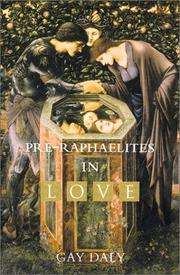
The relationships are unusually consequential here, because the models sat for painting after painting and several were the painters' wives and partners. Pre-Raphaelites in love (Gay Daly, 468 pages) is the standard group biography of the marriages and affairs — Rossetti and Siddal, Millais and Effie, Hunt and Annie Miller — and the most carefully sourced of the three, which is why it goes first. Desperate Romantics (Franny Moyle, 340 pages) covers the same ground faster and became a BBC drama; it is more willing than Daly to fill gaps with inference, so cross-check anything startling. Effie (Suzanne Fagence Cooper, 282 pages) tells the circle's most famous scandal — Effie Gray's unconsummated marriage to Ruskin, its annulment, and her marriage to Millais — from Effie's side, using her own papers. Keep some scepticism throughout this stage about how confidently any book reconstructs private feeling.
The women, as artists
The Pre-Raphaelite sisterhood (Jan Marsh, 408 pages, 1985) is the book that reframed Siddal, Cornforth, Morris and the rest as participants rather than as subjects, and it set the agenda for everything written since. Read it directly after the love stories so the correction lands against a specific version of events. Pre-Raphaelite women artists (160 pages) is Marsh and Pamela Gerrish Nunn's exhibition catalogue of the women who painted — Siddal, Marie Spartali Stillman, Evelyn De Morgan — with the work reproduced rather than described. It is the evidence for the previous book's argument, which is why the two belong together.
In their own words
Two primary sources, both by interested parties. Modern painters is the critical work whose demand that artists go to nature, rejecting nothing and selecting nothing, gave the Brotherhood its method — and whose author publicly defended them in 1851. Our record is volume one of five, published in 1843, five years before the Brotherhood existed; read the relevant parts rather than attempting the whole. Pre-Raphaelitism and the pre-Raphaelite brotherhood is William Holman Hunt's 1905 account of the founding, written more than fifty years after the fact by the member most invested in claiming it — indispensable and unreliable in equal measure, and our record is volume one of two. John Ruskin (616 pages) is the standard modern life of the critic whose money and criticism shaped the movement's fortunes; it is by the same author as the survey that opened this path, catalogued as Tim Hilton here and Timothy Hilton there.
The individual careers
Rossetti: Painter and Poet (J. B. Bullen, 272 pages) treats the poems and paintings as one body of work, which is the only way the later obsessive images of women make sense; Rossetti is the pivot between the two generations. John Everett Millais (Jason Rosenfeld, 256 pages) is the modern reassessment of the Brotherhood's most gifted technician, arguing against the old story that his later commercial success was simply a betrayal. The last Pre-Raphaelite (Fiona MacCarthy, 629 pages) is her life of Edward Burne-Jones, who carried the imagery into the 1890s and into stained glass and tapestry. Her William Morris (780 pages) closes the path, because Morris is where the movement stops being a group of painters and becomes a way of making things.
The staged version, with study plans, is at /paths/pt_ai_the-pre-raphaelites.