J. M. W. Turner: The Best Books to Read, in Order
Turner is the rare artist whose reputation has only ever gone up, and the literature on him splits cleanly into three kinds of book: lives, studies of the pictures, and the enormous scholarly apparatus built around the Turner Bequest — the roughly thirty thousand works on paper he left to the nation. This path takes them in that order, because the specialist volumes assume you already know the outline of a life that was deliberately obscure even to his contemporaries. One catalogue warning worth reading before you buy anything: an unusual number of books here are filed under the bare display title Turner, so check the author and the subtitle rather than the spine when ordering. Where that applies, the published subtitle is named below.
The life
BeginnerGet the biography — the barber's son from Covent Garden, the Royal Academy prodigy, the secretive later years — and understand why so little of it is securely known.
▸ Study plan for this stage
Pace: 6 weeks. This is about 1,390 pages covering one life three times — Moyle 528, Bailey 478, Hamilton 384 — so budget three weeks for Moyle at roughly 25 pages a day and then read the other two much faster, because you already know the chronology and are reading for disagreement. All three deal with Tu
- The documentary thinness is not an accident of survival. Turner was secretive on purpose, used a false name in Chelsea, and left a will that produced decades of litigation, so every biographer is working around deliberate gaps.
- Moyle's frame is class and money: the barber's son from Maiden Lane who became rich, and who kept the accounting habits of the trade he came from.
- Bailey's frame is movement and relationship — the annual sketching tours, the patrons, the daily texture — which is why Moyle and Bailey feel like different men rather than the same one told twice.
- Hamilton's distinct contribution is Turner among the sciences of his day: meteorology, geology, colour theory and the new industrial technology. Keep a note of which pictures he attaches each idea to; the next stage needs it.
- The Royal Academy is the institution the whole life runs through — Associate at twenty-four, full Academician at twenty-six, Professor of Perspective for thirty years, and the Varnishing Days on which he finished pictures in public.
- Turner's income was not mainly from selling paintings. Engraving rights, topographical commissions and property gave him an independence that explains why he could afford to paint work nobody would buy.
- The Turner Bequest — roughly thirty thousand works on paper left to the nation — is the reason a fourth stage of this path exists at all, and all three biographies end by explaining what the will tried to do and what the courts did to it instead.
- What is actually documented about Sarah Danby and Hannah Danby, and where does each of the three biographers stop asserting and start inferring?
- Why does Moyle spend so long on Covent Garden and the barbershop before Turner has painted anything?
- Turner's will was contested and substantially rewritten by the courts. What did he intend, and what did the nation end up with?
- Which of Hamilton's scientific contexts do you find genuinely load-bearing for the paintings, and which read as background colour?
- Where do Bailey and Moyle give different accounts of the same episode, and what is each one relying on to do it?
- Pick one episode — the 1802 Paris trip and the Louvre notebooks is a good one — and read all three accounts back to back, listing for each what is asserted, what is sourced and what is hedged.
- Read Moyle with a pencil on the sentences where she says the evidence does not exist. Then check whether Bailey leaves the same silence or fills it, and on what basis.
- From Hamilton's chapters on meteorology and colour, write out the list of pictures he names. Carry that list into the next stage and check it against Wilton.
- Keep a running one-line-per-year timeline from Moyle, with exhibition dates in one column and private life in the other. The gap between how public the career was and how private the life was is the whole biographical problem, and it only becomes visible laid out side by side.
Next up: You now know the outline of a life the specialist literature assumes rather than explains, which is exactly what the books on the pictures take for granted.

The best modern biography and the right first book: published as Turner: The Extraordinary Life and Momentous Times of J. M. W. Turner, though our catalogue files it under the bare surname. Strong on the London he came from, the money, the concealed domestic life, and the professional politics of the Academy.
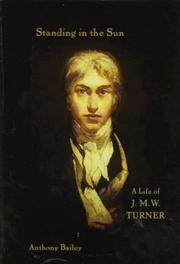
The other major life, and warmer than Moyle's — Bailey is better on Turner's travelling, his relationships with patrons, and the texture of the man's ordinary days. Read it second, as the complementary portrait rather than a competing one.

Hamilton's biography, published as Turner: A Life. Useful chiefly for its handling of Turner's engagement with the science of his day — meteorology, colour theory, the technology of the new industrial landscape — which the other lives cover more thinly. Note Hamilton also has a separate volume catalogued simply as Turner.
The pictures
IntermediateMove from the life to the work — the sublime, the watercolours, the handling of light — and learn to look at a Turner as a nineteenth-century viewer would have.
▸ Study plan for this stage
Pace: 3 to 4 weeks, and the page counts are misleading — these are looking books. Wilton's Turner and the Sublime is 192 pages, Smiles's J.M.W. Turner 88, Egerton's Turner, the Fighting Temeraire 143: 423 pages in total, but you should be spending as long on the plates as on the text. A fortnight on Wilto
- The sublime as Burke and the eighteenth century defined it — terror, obscurity, vastness, the pleasurable fear of what could destroy you — is a specific historical category, not a compliment. Wilton's argument is that Turner learned it, exploited it, and then dismantled it.
- Wilton ran the Turner collection at the Tate, and the book is built out of that collection, so most of the works he discusses are drawings and watercolours rather than the famous oils.
- Smiles is the state-of-the-field book, and the arguments he lays out are the live ones: what counts as finished, what status the oil sketches have, and how much of the modernist reading of late Turner is anachronism.
- The finish-versus-non-finish question is not a technicality. It decides whether the late canvases are experiments Turner never meant anyone to see or the point of the whole career.
- Egerton's book is the single-work monograph in its ideal form — one painting, exhaustively: what the Temeraire actually was, what the scene could and could not have looked like, what Turner altered, and why.
- Turner made his changes for pictorial reasons, not documentary ones. Egerton's reconstruction of the real tow up the Thames is the clearest demonstration in the literature of how far he would move the facts.
- A nineteenth-century viewer arrived at these pictures already knowing the poetry, the classical subjects and the news. Reading these three books is largely the business of reinstalling that knowledge.
- In Wilton's account, what does Turner do to the sublime that his predecessors in the category did not?
- Name the three open arguments Smiles identifies among Turner scholars, and say which side each book on this stage takes.
- According to Egerton, what did Turner change about the Temeraire's last voyage, and what did each change buy him?
- Take a late canvas Smiles discusses. What would you need to believe for it to be unfinished, and what would you need to believe for it to be complete?
- Which of the pictures Hamilton attached to a scientific idea in the previous stage does Wilton read differently, and on what grounds?
- Work through Wilton's plates in order with the text, and for each one write the single word or phrase from Burke's category that it is doing. Where you cannot find one, note it — those are the pictures where his argument is under most strain.
- Read Egerton's reconstruction of the real tow, then look at the painting again and list every departure from it. Then answer, for each, whether the picture would be better or worse without the change.
- Take the list of pictures you carried over from Hamilton and find each one in Wilton or Smiles. Where the two accounts of the same painting disagree, write out both in a sentence each.
- Pick one watercolour from Wilton and one oil from Egerton or Smiles and describe each in writing without using the word beautiful. Forcing the vocabulary is the fastest way to stop looking at Turner as weather and start looking at what he made.
Next up: With the pictures in view you can now read the reception history, which is largely a record of people arguing about the works you have just spent a month looking at.
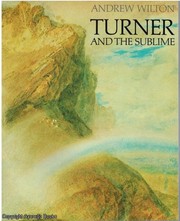
The exhibition study that established how Turner used the eighteenth-century category of the sublime and then dismantled it. Wilton ran the Turner collection at the Tate, and this is the book that makes the difference between admiring the late pictures and understanding them.
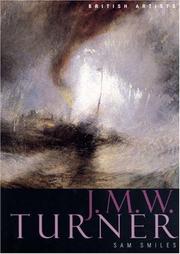
A compact critical survey of the whole output rather than the life, and the clearest guide to the arguments among Turner scholars — finish or non-finish, the status of the oil sketches, how modern the late work really is. Read it after Wilton for the state of the field.
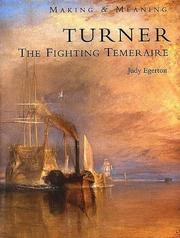
One picture, studied exhaustively: what the ship was, what the scene could and could not have looked like, what Turner changed, and why Britain later voted it the nation's favourite painting. The single-work monograph is the most instructive form in art history, and this is a model of it.
Turner in his world
IntermediatePlace him among his rivals, his sources and his critics, and read the advocacy that turned a controversial painter into a national institution.
▸ Study plan for this stage
Pace: 6 weeks, and this is the heaviest stage. Wilton's Turner in His Time is 256 pages, Solkin's Turner and the Masters 240, Warrell's Turner and Venice 276, and Ruskin's Modern Painters volume one is 417 — about 1,190 pages. Give the three modern books three weeks between them and Ruskin the remaining t
- Wilton's Turner in His Time is a documentary life: contemporary reviews, letters, diaries and sale records, arranged year by year. It shows the reception as it happened, including how much of the work simply baffled people.
- Solkin's argument in Turner and the Masters is that the career was a sustained competitive campaign against Claude, Poussin, Rembrandt, Ruisdael and Canaletto — which reframes the strangeness of the work as ambition rather than temperament.
- The exhibition Solkin's book documents hung Turner beside the painters he was challenging. Reading it means reading the comparisons, so use the plate pairings rather than the text alone.
- Warrell's Turner and Venice covers the point where the watercolours and late oils come nearest to abandoning subject altogether. Note that our catalogue record carries a marketplace string as its display title; the book is the Tate exhibition volume edited by Ian Warrell.
- Ruskin is an advocate, not a historian. He began Modern Painters in his early twenties as a defence of Turner against hostile reviewers, and the book is the document that manufactured the reputation rather than a reliable guide to the man.
- Read volume one of Modern Painters only. It grew to five volumes of Victorian art theory, and the later ones are about Ruskin's system rather than about Turner.
- Ruskin's central claim — truth to nature, checkable against the world — is the opposite of Solkin's claim that Turner was competing with pictures. Holding both is the most productive tension on this stage.
- What did contemporary critics actually object to, and does Wilton's documentary record support the story that Turner was misunderstood?
- Name three specific old-master pictures Solkin sets against a Turner, and say what the pairing demonstrates in each case.
- In the Venice work, what is left when the subject has almost gone? Answer from particular sheets in Warrell rather than in general.
- Where in Modern Painters is Ruskin demonstrably arguing from something other than the evidence in front of him?
- Can Ruskin's truth-to-nature Turner and Solkin's competitive Turner both be right? Where exactly do they conflict?
- Take one picture that appears in both Wilton's documentary record and Solkin, and set the contemporary reviews Wilton reprints against Solkin's old-master comparison. Decide which explanation better fits the picture.
- Read Solkin by the plates: cover the text, look at each Turner-and-master pair, and write down what you think the pairing is meant to prove before reading what Solkin says it proves.
- Choose one passage of Ruskin — the storm-cloud and sea writing is the standard choice — and rewrite his claim in one flat sentence. Then judge whether the picture supports the flat sentence.
- Track one Venice motif across Warrell's plates from the earliest sheet to the latest, and note the point at which you can no longer identify the buildings. That point is the argument the whole stage has been circling.
- Keep a two-column note as you read: what the Victorians praised Turner for, and what we praise him for. They are not the same list, and the difference is the history of taste in miniature.
Next up: Having seen how the reputation was built and argued over, you are ready for the working material and the reference apparatus the arguments are conducted with.
A documentary life built from contemporary sources — reviews, letters, diaries, sale records — and richly illustrated. It shows how the work was actually received year by year, including how much of it baffled people.

The exhibition that hung Turner next to the painters he was competing with — Claude, Poussin, Rembrandt, Ruisdael, Canaletto — and demonstrated that his career was a sustained campaign to beat the old masters at their own subjects. It reframes the whole output as ambition rather than temperament.
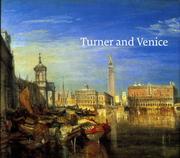
The Tate's study of the Venice work, where the watercolours and the late oils come closest to abandoning subject entirely. The catalogue record carries a marketplace string as its title; the book is the exhibition volume Turner and Venice, edited by Warrell.
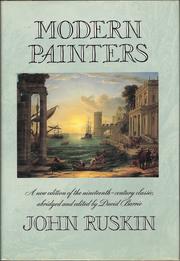
Ruskin began this in his early twenties as a defence of Turner against hostile critics and it grew into five volumes of Victorian art theory. Read the first volume only, and read it as advocacy — it is the document that created Turner's reputation, and it is not a reliable guide to the man.
The Bequest and the reference shelf
IntermediateGo to the working material and the scholarly tools — the sketchbooks, the catalogue apparatus, and the Victorian life that every later biographer has had to argue with.
▸ Study plan for this stage
Pace: 4 to 5 weeks, but only one of these three is read straight through. Warrell's Turner's Sketchbooks is 240 pages and takes a fortnight if you look properly; Thornbury's 1862 Life is 636 pages of Victorian prose and needs two to three weeks. The Oxford Companion is 419 pages of alphabetical entries an
- The sketchbooks are the largest and least-seen part of the Bequest, and they are the working evidence: Warrell's book is the nearest thing to watching Turner make the pictures rather than looking at the results.
- Nothing else in the literature shows so plainly how constantly he drew, or how far a finished canvas travelled from what was on the spot in front of him.
- The Oxford Companion is compiled by Butlin, Herrmann and Joll — the scholars behind the standard catalogues of the paintings — so its entries carry the authority of the catalogue apparatus in a form you can actually use.
- Use the Companion for people, patrons, places and technical terms as they come up. Reading it through is a waste of a reference book.
- Thornbury's 1862 Life was written from interviews with people who had known Turner and is the source of nearly every anecdote still in circulation about him.
- Thornbury is also gossipy, careless and resented by every serious scholar since, which is precisely why it belongs at the end: you now know enough to see where he is inventing.
- The circular problem worth noticing: the modern biographies in stage one are largely arguments with Thornbury, so you have been reading the corrections for six months before reaching the thing being corrected.
- What can you see in the sketchbooks that no finished picture shows, and what does that tell you about the finish argument from stage two?
- Take one anecdote from Thornbury that Moyle, Bailey or Hamilton repeated. What is Thornbury's evidence for it, and what did the modern biographer do with it?
- Where does Thornbury contradict the documentary record in Wilton's Turner in His Time, and which do you believe?
- How does the Oxford Companion handle a disputed attribution? Find one entry where it declines to settle the question.
- What did the Bequest actually consist of, and why did it take a century for most of it to be seen?
- Pick one finished picture you know well from stage two and trace it backwards through Warrell's sketchbook material to whatever survives of the drawing on the spot. Write down every stage of the change.
- Read fifty pages of Thornbury with the Oxford Companion open, and check every name, date and place he gives against it. Keep a tally of hits and misses; the ratio is the answer to how much of him to trust.
- Take three anecdotes from Thornbury and find where each of the three modern biographers deals with them. Note who repeats, who attributes and who refuses.
- Choose ten entries in the Companion for terms you did not know — a pigment, a printing process, a patron — and read those ten before your next look at any Turner. It changes what the surface of a picture tells you.
Next up: You have now read the lives, the pictures, the reception and the working material, which is the full shape of the Turner literature and the point at which the Tate's own catalogue entries become readable on their own terms.

A guide to the working notebooks he carried on every journey, which are the largest and least-seen part of the Bequest. Nothing else shows so plainly how the finished pictures were made, or how constantly he drew.
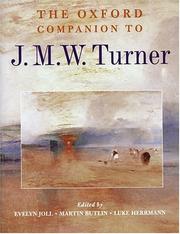
The reference volume, compiled by Butlin, Herrmann and Joll — the scholars behind the standard catalogues of the paintings. Entries on individual works, patrons, places and terms; keep it beside you rather than reading it through.
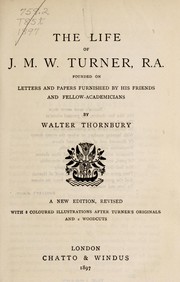
The 1862 biography, written from interviews with people who had known him, and the source of most of the anecdotes still in circulation. It is also unreliable, gossipy and resented by every serious scholar since — which is exactly why it belongs last, once you know enough to read it critically.