Best Books on the Panama Canal, in Reading Order
The canal is usually told as an engineering triumph, and it is one, but the more interesting literature is about everything the engineering required: a French bankruptcy, a manufactured revolution, a segregated labour system that imported tens of thousands of West Indians, and a strip of foreign territory cut through the middle of another country for most of a century. This path starts with the great narrative history, then the French attempt and the disease problem, then the workforce and the towns that were erased for the lake, then the American acquisition and its economics, and finally the Canal Zone and how Panama got the canal back.
The Great Narrative
BeginnerGet the whole story once, from Ferdinand de Lesseps to the first transit in 1914, with the engineering explained clearly.
▸ Study plan for this stage
Pace: 4-5 weeks for 698 pages. McCullough writes long chapters and moves in three big blocks — the French decades, the American acquisition, the construction — so read at 25-30 pages a day and treat each block as a unit. Do not take notes on everything; note names, dates and the three engineering decision
- Why de Lesseps insisted on a sea-level canal: Suez had been cut at sea level and made him the most celebrated engineer alive, and the transfer of that solution to a mountainous, rain-soaked isthmus is the founding error of the whole story
- The lock-and-lake design that replaced it — Gatun Dam impounds the Chagres River to make a lake most of the way across, so ships are lifted 26 metres, sailed across a reservoir, and lowered again. Understand why damming the river that had been the chief obstacle was the elegant move
- The Culebra Cut as the real problem: an eight-mile excavation through the continental divide where the slides kept refilling what had been dug, and the volume moved kept rising because the sides kept coming down
- The mosquito discovery and Gorgas's sanitation campaign — Walter Reed's confirmation of the Finlay hypothesis, then fumigation, drainage and screening, without which the American attempt fails the way the French one did
- The 1903 sequence in the form McCullough gives it: the failed Hay-Herrán treaty with Colombia, the Panamanian secession, the Hay-Bunau-Varilla treaty signed by a Frenchman, and the Zone granted in perpetuity
- The cast that recurs in every later book — de Lesseps, Philippe Bunau-Varilla, Theodore Roosevelt, John Stevens, George Goethals, William Gorgas — and what each was trying to accomplish
- McCullough's frame, which the rest of the path pushes against: a story of American competence and perseverance in which labour, Panamanians and the politics of acquisition are present but not central
- Explain the lock-and-lake design to someone who has never thought about it, including why the lake is at the elevation it is. If you cannot, reread the Gatun chapters
- Why did the sea-level design fail at Panama when it had worked at Suez? Name three specific differences between the two isthmuses
- What did Gorgas's campaign actually consist of, and how much of the American success is attributable to it rather than to engineering?
- Reconstruct the events of 1903 from McCullough alone. Whose account of the secession is he relying on, and where does he say the evidence is contested?
- Who is present in McCullough's narrative and who is absent? Make the list now, before stage 3 makes it for you
- Draw the canal in profile from the Atlantic to the Pacific, marking the three lock flights, Gatun Lake, the Chagres River and the Culebra Cut, with elevations. You should be able to reproduce this from memory by the end of the stage
- Make a timeline from 1869 (Suez opens) to 1914 (first transit) with columns for France, the United States, Colombia and Panama. Every later book adds rows to this
- Write 300 words summarising why the French attempt failed, ranking the causes — design, disease, financing, management — in the order McCullough's evidence supports. You will revise this ranking after stage 2
- List every named individual McCullough treats as a major figure and note their nationality and role. Then note how many are West Indian or Panamanian. Keep the count
Next up: You have the whole story once through in its most confident form; the next stage returns to the French decades that McCullough covers fastest and where the mortality actually was.
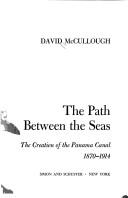
The book everyone starts with, and rightly: forty years of the story told as one continuous narrative, with the lock design and the Culebra Cut made comprehensible to non-engineers. Read it first and let the rest of the path complicate it.
The French Attempt and the Disease
BeginnerUnderstand why the first canal effort collapsed — the sea-level design, the financing scandal, and yellow fever and malaria before anyone knew mosquitoes carried them.
▸ Study plan for this stage
Pace: 4 weeks for 530 pages at roughly 20 pages a day. Parker covers the same span as McCullough but weights it differently, so read specifically for the French chapters and the medical material rather than for the narrative you already have.
- The scale of French mortality, which is the reason to read this book: Parker is far more direct than McCullough about how many died and what they died of, and the figures are worse than the standard account suggests
- Yellow fever and malaria before the mosquito was implicated — miasma theory, the belief that the disease was in the air or the soil, and hospital practices such as water-filled bed legs to keep ants off that bred the vector indoors
- The financing scandal: the Panama Company's collapse in 1889 wiped out hundreds of thousands of small French investors, and the ensuing bribery revelations became one of the Third Republic's defining political crises
- The technical situation the French actually faced — the Chagres in flood, the volume of the Culebra excavation, the equipment available in the 1880s — so you can distinguish decisions that were wrong at the time from ones that were only wrong in hindsight
- Bunau-Varilla's dual role as French engineer and later as the man who signed away Panamanian sovereignty on Panama's behalf, which is the thread linking this stage to stage 4
- Conditions in the cut as Parker reconstructs them from letters and memoirs, and the difference between reading a mortality statistic and reading the accounts behind it
- What survived the French attempt and was used by the Americans — surveys, some excavation, the railroad, and the corporate assets whose sale becomes the money question in stage 4
- Revise the ranking of causes you wrote in stage 1. After Parker, does disease move up or down, and what specifically moved it?
- What would a competent engineer in 1881 have needed to know that no one did know, to have made the right call on the sea-level design?
- The French company's collapse ruined ordinary investors and produced a bribery scandal. How does that shape what the remaining assets were worth in 1903, and to whom?
- Compare Parker's and McCullough's handling of the same French decade. What does Parker include that McCullough compresses, and does it change the story or only its tone?
- Reconstruct the state of medical knowledge in 1885. Given it, were the French hospital practices negligent or reasonable? Be careful to answer as of 1885
- Compile the mortality figures Parker gives — French period and American period, by nationality where he supplies it — into one table. Note where the numbers are estimates and where they are records. That distinction is most of the historiography
- Write a 250-word explanation of yellow fever transmission as understood in 1881 and again as understood in 1905, and mark exactly which observations closed the gap
- Take one first-hand account Parker quotes from the cut and write 200 words on what it tells you that the aggregate figures do not
- Add the French financing collapse and the scandal to your stage-1 timeline, with the specific dates. You will connect these to the 1903 share purchase in stage 4
Next up: Parker restores the people who died to the story; the next stage restores the people who worked and the people who were removed.

Stronger than McCullough on the French period and on the medical history, and vivid about what conditions in the cut were actually like. The natural second book: same story, different emphasis, considerably more mortality.
Who Actually Built It
IntermediateReplace the engineers-and-presidents version with the labour history: the Caribbean workforce, the silver and gold payrolls, and the Panamanian towns flooded by Gatun Lake.
▸ Study plan for this stage
Pace: 7 weeks. The Canal Builders (496 pages) needs three to four weeks; it is an academic labour history and the payroll material rewards slow reading. Erased (352 pages) needs three weeks. Read Greene first — she establishes the social order that Lasso then shows being imposed on the landscape.
- The silver and gold payrolls: a two-tier wage and benefit system in which gold-roll workers were overwhelmingly white American and silver-roll workers overwhelmingly West Indian, with separate housing, commissaries, hospitals and queues — segregation implemented through a payroll category rather tha
- Where the workforce came from — Barbados above all, with Jamaica, Martinique and elsewhere — and the recruitment apparatus that moved tens of thousands of men across the Caribbean to a construction site
- The Zone as a governed space: Greene's account of policing, deportation, alcohol regulation and the management of workers' lives outside working hours, which is what makes this a study of American state power and not only of employment
- Worker agency, which is Greene's real subject — desertion, informal bargaining, the movement between the Zone and the Panamanian cities, and the limits on all of it
- Lasso's central finding: the Canal Zone was not empty jungle. It contained established Panamanian towns with churches, schools and municipal governments, and their populations were removed and their existence written out of the official account
- The depopulation mechanism and its timing — some removals were necessary for the lake, others were not, and Lasso separates the two. That separation is the core of her argument
- Why the erasure mattered rhetorically: presenting the Zone as reclaimed wilderness supported the claim that American administration created something from nothing, which is the frame stage 5's treaty argument runs into
- Explain the silver and gold payrolls precisely enough that someone could tell you which roll a given worker would be on. Where does the system's logic break down, and how was it handled when it did?
- Greene argues workers exercised meaningful agency within a coercive system. What is the strongest evidence for that, and what is the strongest evidence against?
- Lasso shows towns removed that the lake did not require. What does she offer as the reason, and how well is it evidenced?
- Return to the count you made in stage 1 of named West Indian and Panamanian figures in McCullough. What do Greene and Lasso restore, and is McCullough's omission a matter of emphasis or of framing?
- The canal is routinely called an American achievement. After these two books, what would a more accurate one-sentence attribution look like?
- Build a table of the silver and gold rolls from Greene: wages, housing, food, medical care, holiday and repatriation terms for each. Seeing the two columns side by side does more than any summary
- Map the Canal Zone with Lasso's towns marked on it, and shade the area actually flooded by Gatun Lake. The towns outside the shaded area are her argument in one image
- Take one West Indian worker's account quoted by Greene and write 300 words placing it against McCullough's version of the same construction period
- Look up the current population of Barbados and compare it to the number of Barbadian men recruited for the canal. Write a paragraph on what a labour migration of that proportion does to a sending society
- Write a 400-word revision of the construction chapter of McCullough as Greene and Lasso would have written it, using only facts from all three books
Next up: With the social order and the erasure established, the next stage turns to how the United States came to hold the territory in the first place, and what it was worth.
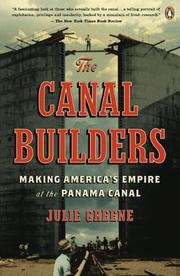
The standard labour history of the construction, on the segregated payroll system, the recruitment of West Indian workers and the policing of the Zone. Read it before Lasso — it establishes the social order that her book shows being imposed on the landscape.

By a Panamanian historian, on the depopulation of the Canal Zone: prosperous towns cleared and written out of the record so the Zone could be presented as jungle reclaimed. The strongest corrective on this path to the standard American telling.
How the United States Got It
IntermediateFollow the 1903 Panamanian secession, the syndicate that profited from it, and the long economic argument about whether the canal was worth what it cost.
▸ Study plan for this stage
Pace: 6 weeks. How Wall Street Created a Nation (254 pages) is short and pointed — two weeks. The Big Ditch (430 pages) is an economic history with real quantitative content; three to four weeks, and work through the tables rather than reading past them. The order is deliberate: the accusation, then the a
- The share syndicate at the centre of Diaz Espino's case: the New Panama Canal Company's assets were bought by the United States for $40 million, and the question is who held the shares and what they knew about the coming secession
- The 1903 sequence in detail — Colombia's senate rejects the Hay-Herrán treaty, a Panamanian secession follows within months, the USS Nashville prevents Colombian troops from landing, and the new republic is recognised in days
- Bunau-Varilla signing the Hay-Bunau-Varilla treaty as Panama's minister to the United States, granting the Zone in perpetuity on terms the Panamanian delegation had not seen — the specific grievance that runs to 1977
- Diaz Espino's book is an argument by a Panamanian lawyer, not a neutral survey. Read it for the case it makes and for the documents it assembles, and note where inference is doing the work of evidence
- Maurer's economic question, which is different from everyone else's: across the whole century, who gained and who lost, and did the United States actually profit from holding the canal?
- Maurer's conclusions cut against both readings — the returns to the United States were lower than the imperialist story assumes, and the benefits distributed in ways neither the celebratory nor the anti-imperialist account predicts
- The distinction that makes this stage work: whether an acquisition was wrongful and whether it was profitable are separate questions with separate evidence, and a strong answer to one does not settle the other
- Lay out the 1903 timeline day by day. Which steps are documented and which does Diaz Espino infer? Mark the inferences
- What is the strongest defence of American conduct in 1903 that can be made on the facts? Construct it honestly before deciding what you think
- Maurer finds lower returns to the United States than expected. What is he counting, what is he not counting, and would a different accounting change the answer?
- If Maurer is right that the canal was not very profitable for the United States, does that bear at all on whether the acquisition was legitimate? Say why or why not
- Diaz Espino and Maurer are both critical of the standard telling but disagree about what the canal was. Where does their disagreement actually sit — on facts, on method, or on what question matters?
- Reconstruct the flow of the $40 million from Maurer and Diaz Espino together: who was paid, who held the claims, and what is documented about the holders. Where the two books disagree, note it rather than choosing
- Read the text of the Hay-Bunau-Varilla treaty — it is short and freely available — and mark every clause a Panamanian government would later want changed. Keep the marked copy for stage 5
- Take three of Maurer's tables and write, for each, one sentence on what it shows and one on what it cannot show
- Write two 300-word accounts of November 1903, one from Bogotá and one from Washington, using only facts both books accept. The exercise is to make both defensible, not to pick one
- Add 1903 to your timeline in day-level detail. This fortnight is the hinge of the entire path
Next up: Having established how the Zone was acquired, the last stage examines what it was to live beside it and how it was given back.
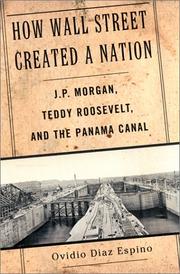
By a Panamanian lawyer, on the New York investors behind the Panama Canal Company shares and their role in the secession from Colombia. A pointed argument rather than a neutral survey, and the case it makes deserves a hearing.

An economic history asking who gained and who lost from the canal across the whole century, including whether the United States actually profited. Maurer reaches conclusions that cut against both the imperialist and the anti-imperialist readings; read it after Diaz Espino for the contrast.
The Zone and the Handover
BeginnerUnderstand the Canal Zone as a governed territory, the American military presence, and the treaties that transferred the canal to Panama in 1999.
▸ Study plan for this stage
Pace: 8-9 weeks. Emperors in the Jungle (265 pages) is two to three weeks. Panama Odyssey is 763 pages of negotiation memoir — read it selectively over five to six weeks, working through the chapters covering the negotiating rounds closely and skimming the social detail, and treat it as a primary source y
- The Zone as a governed territory rather than a construction site: American courts, police, schools and civil administration operating inside Panama for most of a century, and the daily experience of a border running through a country
- Lindsay-Poland's specific findings on the military presence — the base network, Southern Command, and the chemical weapons testing on San José island, which is the least known and best documented episode in his book
- The 1964 flag riots and their significance: a dispute over which flag flew at a Zone high school produced deaths and a break in diplomatic relations, and it is the event that made treaty revision politically unavoidable
- The 1977 Torrijos-Carter treaties — the Panama Canal Treaty transferring the canal by the end of 1999, and the Neutrality Treaty with its reserved American rights, which is the clause that mattered later
- Jorden was the American ambassador and was in the room, which makes Panama Odyssey both the fullest record available and an interested one. Read it asking what a participant can see that a historian cannot, and what he cannot see at all
- The 1989 invasion, which Lindsay-Poland treats and Jorden's book predates: it happened a decade before the handover, under the Neutrality Treaty's shadow, and it is the reason the transfer's meaning was still contested in 1999
- The handover itself in December 1999 and the fact that Panamanian administration of the canal has since been a competent operation — a plain fact worth registering against a century of arguments that it could not be
- What did the Neutrality Treaty reserve to the United States, and how was that clause read differently in Washington and in Panama City? Set both readings out fairly
- Jorden was a participant. Take one negotiating round he describes and ask what a Panamanian negotiator's memoir of the same room would emphasise instead
- Why did the 1964 riots change the politics when earlier grievances had not? What was different about the flag dispute?
- Lindsay-Poland documents chemical weapons testing on San José island. What is the evidentiary basis, and what remains unresolved about it?
- Run the whole path forward: which of the arguments made in 1903, in 1964 and in 1977 turned out to rest on claims that later evidence settled, and which are still arguments about values?
- Take the Hay-Bunau-Varilla treaty you marked in stage 4 and set it beside the 1977 Panama Canal Treaty clause by clause. The differences are the seventy-four-year argument in document form
- Build a map of the American base network in Panama at its height from Lindsay-Poland, and overlay it on your stage-3 map of the Zone and the flooded area. Three eras of the same territory on one sheet
- Pick one chapter of Panama Odyssey and write 300 words on what Jorden's position lets him report and what it stops him from seeing. Cite the passage that made the limit visible
- Complete your path-long timeline from 1869 to 1999, and mark for each decade who governed the Zone, who worked in it, and who profited from the canal. That single sheet is the deliverable of the path
- Write 500 words answering the question the path opened with — whose achievement was the Panama Canal — and mark every sentence that depends on one author's framing rather than on evidence several of them share
Next up: This is the end of the path: you can read any account of the canal and identify immediately whose story it is telling and what it has left out.
The US military in Panama across the twentieth century — bases, chemical weapons testing on San José island, and the 1989 invasion. The best account of what the Zone meant to the country it sat inside.

The Torrijos-Carter treaty negotiations by the American ambassador who was in the room, at enormous length. A primary source with an obvious stake in the outcome, and the fullest record available of how the canal changed hands.
Discussion
Keep reading
Paths that share books, cover the same subject, or open a related topic.