The Panama Canal has one dominant book and a generation of scholarship written partly in response to it. That shape is the reason to read in order rather than picking whichever title turns up first.
The dominant book tells the canal as an engineering and political triumph: French failure, American success, yellow fever defeated, mountains moved. It is accurate about what it covers. The books written since ask different questions — who dug it, under what conditions, who lived on the land before it was flooded, and whether the enterprise made economic sense at all — and their answers substantially revise the picture. Read the classic first because the revisionists assume you know the story they are revising. Then read them, because on several points they disagree with it directly and the disagreement is the interesting part.
The classic
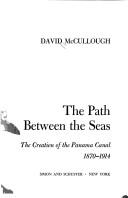
The Path Between the Seas is David McCullough's 1977 account and still the book most people mean. It is magnificent narrative history, exceptionally good on Ferdinand de Lesseps and the French collapse, on the medical work against yellow fever and malaria, and on the engineering decision between a sea-level canal and a lock canal. Its centre of gravity is American — the engineers, Roosevelt, the decisions made in Washington — and the West Indian labourers who did most of the digging are present but not central.
Panama fever is Matthew Parker covering the same ground more recently and with considerably more weight on the workers and the death tolls among them. If you only read one construction narrative, McCullough is the better book; if you read two, Parker is the one that starts moving the frame.
The revisions
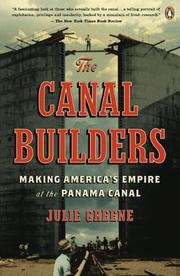
The Canal Builders is Julie Greene's labour history and the pivot of this path. She reconstructs the Canal Zone as a governed society rather than a construction site — a segregated payroll that split workers by race into separate rolls with separate wages, housing and food, policed by an American administration that used the project as a laboratory. It does not contradict McCullough so much as show what his frame leaves out.
Erased is Marixa Lasso's book and the sharpest argument here. Lasso documents the Panamanian towns inside the future Zone that were depopulated and demolished, and the deliberate construction of an image of the isthmus as empty jungle before the Americans arrived. Her case is that the erasure was not incidental. Read it directly after Greene.
The economics and the politics
How Wall Street created a nation is Ovidio Diaz Espino arguing that a syndicate of American financiers with an interest in the French concession helped engineer Panama's 1903 secession from Colombia. The financial interests are documented; how far they amounted to a coordinated plot rather than opportunism is disputed by other historians, and the book states its case more confidently than the consensus does.
The big ditch is Noel Maurer and Carlos Yu asking a blunt economic question — who actually gained from the canal, and by how much — and concluding that the returns to the United States were smaller and the returns to Panama larger than the standard account implies. That conclusion is contested too, and it is a useful antidote to reading only narrative history.
Emperors in the Jungle is John Lindsay-Poland on the American military presence in Panama across the century, including weapons testing and the environmental legacy in the former Zone. It is written from an advocacy position and it is well sourced; read it knowing both.
Close with Panama odyssey, William J. Jorden's account of the negotiations that produced the 1977 treaties transferring the canal to Panama. Jorden was the American ambassador and a participant, so it is a memoir with the strengths and the blind spots that implies — and the only inside account of how the handover was actually agreed.
Follow the full path below to read them in this order.
Follow the full ordered path here: The Panama Canal in Books: Where to Start and What to Read Next.