Murderbot Reading Order: Novellas and Novels
The Murderbot Diaries is a science fiction series by Martha Wells following a part-human, part-robot "SecUnit" who has hacked its own governor module and just wants to watch TV serials — but keeps getting pulled into dangerous situations. The best way to experience it is strictly in publication order: start with the original novellas to get comfortable with Murderbot's voice and world, then move into the longer novels that expand the universe and deepen the stakes.
Meet Murderbot — The Original Novellas
BeginnerGet introduced to Murderbot's unique first-person voice, the world of the Corporation Rim, and the core cast of humans Murderbot reluctantly cares about. These four novellas are the essential foundation and should be read in order.
▸ Study plan for this stage
Pace: 4–5 weeks total (~1 week per novella); each book is roughly 160–180 pages, so aim for 25–30 pages per sitting, 5 days a week. Read All Systems Red in Week 1, Artificial Condition in Week 2, Rogue Protocol in Week 3, and Exit Strategy in Week 4, leaving Week 5 as a flex/review week for re-reads, note
- Murderbot's narrative voice: the sardonic, anxious, deeply self-aware first-person perspective that filters every event through deflection, dark humor, and reluctant empathy
- The 'SecUnit' identity: what Murderbot is (a part-organic, part-mechanical construct), what it is legally (property), and the tension between those two realities established in All Systems Red
- The hacked governor module: what it means that Murderbot has freed its own behavioral controls, and why it chooses to hide this fact rather than act on it overtly
- The Corporation Rim's power structure: how corporations own contracts, constructs, and effectively people, and how that systemic backdrop creates the stakes in every novella
- Serial media as emotional refuge: Murderbot's obsessive consumption of 'The Rise and Fall of Sanctuary Moon' and other serials as a coping mechanism, identity anchor, and window into its capacity for feeling
- The evolving relationship with humans: from the PreservationAux survey team in All Systems Red, to ART (the Asshole Research Transport) in Artificial Condition, to Miki and the Barish-Estranza crew in Rogue Protocol, to the reunion with Dr. Mensah in Exit Strategy — each book adds a new relational l
- Autonomy vs. safety: the recurring tension between Murderbot's desire to be left alone and its compulsion to protect humans it has bonded with, which drives the plot of all four novellas
- Arc across the four novellas: All Systems Red establishes the status quo and the breach of trust; Artificial Condition pursues the past; Rogue Protocol tests moral agency without personal stakes; Exit Strategy forces Murderbot to choose connection over self-preservation
- By the end of All Systems Red, why hasn't Murderbot simply used its free will to escape or harm anyone — what does its restraint reveal about its character?
- In Artificial Condition, what is Murderbot trying to learn about its own history, and how does its relationship with ART challenge its preference for isolation?
- How does Rogue Protocol function as a moral test? Murderbot has no personal stake in protecting Miki's team, so what motivates it to do so anyway?
- Trace Dr. Mensah's role across all four novellas: how does she represent both the best-case scenario for human–construct relations and a source of vulnerability for Murderbot?
- What does the hacked governor module symbolize thematically — is Murderbot's freedom a gift, a burden, or both? Use evidence from at least two of the four novellas.
- By the close of Exit Strategy, how has Murderbot's definition of 'home' or 'belonging' shifted from where it started in All Systems Red?
- Voice journal: After finishing each novella, write one page in Murderbot's first-person voice reacting to a mundane real-world situation (a work meeting, a crowded elevator). This forces you to internalize the deflection, the media references, and the reluctant self-awareness that define the prose style.
- Relationship map: Draw a simple diagram after each book showing Murderbot at the center and every significant character around it, with a one-phrase label on each connection (e.g., 'owes a debt,' 'actively avoids eye contact,' 'would die for but won't admit it'). Update the map book by book to visualize how the cast grows.
- Corporation Rim world-building log: Keep a running document of every corporation, legal term, and social structure mentioned across the four novellas. By Exit Strategy you should have a rough sketch of how this world's economy of ownership operates — useful context for everything that follows.
- Media mirror exercise: Murderbot uses 'The Rise and Fall of Sanctuary Moon' as an emotional mirror. Pick a TV show or book you use similarly and write a short paragraph connecting a specific plot moment in one of the novellas to a moment in your chosen media. This builds empathy for Murderbot's coping strategy.
- Chapter-turn check-ins: At the end of every third chapter, pause and write two sentences — one summarizing what happened plot-wise, one summarizing what Murderbot felt but refused to say outright. Practicing this 'subtext translation' sharpens close-reading skills essential for the later, longer novels.
- Exit Strategy reflection essay: After finishing the fourth novella, write a 300–500 word response to this prompt: 'Murderbot spends four novellas insisting it doesn't want connection. Does Exit Strategy prove it wrong, or does it prove connection was always the point?' Use specific scenes from at least three of the four books.
Next up: Completing these four novellas gives you a fully formed emotional baseline for Murderbot's voice, fears, and relationships, so that when you move into the full-length novels — where the stakes, cast size, and world-building all expand significantly — you already trust the narrator and understand exactly what it stands to lose.

The first novella and the place every reader must start. It establishes Murderbot's voice, its hacked governor module, its social anxiety, and its unlikely bond with a survey team — all in a tight, propulsive package.
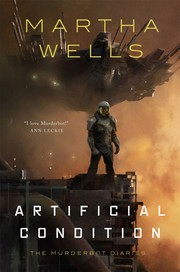
Murderbot ventures out alone for the first time and teams up with a research transport AI. Builds directly on events from All Systems Red and deepens Murderbot's backstory.

Murderbot goes undercover on an abandoned terraforming facility. Introduces the beloved bot Miki and raises the emotional and ethical stakes established in the first two novellas.

The concluding novella of the original arc, bringing together threads from all three prior books. Essential reading before moving to the novels.
The Full-Length Novels — Murderbot Grows
IntermediateExperience Murderbot in longer, more complex narratives with expanded world-building, new factions, and deeper character development. These novels reward the familiarity built in Stage 1.
▸ Study plan for this stage
Pace: 8–10 weeks total: ~2.5–3 weeks per novel. Network Effect (~350 pp): ~20–25 pages/day; Fugitive Telemetry (~170 pp): ~15–20 pages/day over ~10 days; System Collapse (~260 pp): ~20 pages/day. Allow buffer days between books for reflection and exercises.
- Murderbot's evolving sense of self and autonomy — Network Effect forces explicit confrontation with identity when ART and the colonists are threatened, pushing Murderbot beyond reactive self-preservation into proactive, chosen loyalty.
- The ART (Asshole Research Transport) relationship as a mirror for Murderbot's capacity for connection — ART's partial memory wipe and recovery arc in Network Effect dramatizes how Murderbot values relationships it refuses to name.
- Expanded corporate and political world-building — all three novels deepen the role of the Company, the Preservation Alliance, and hostile factions (the remnant Targets in Network Effect, the unknown killer in Fugitive Telemetry, the contaminated colonists and rival salvagers in System Collapse).
- Genre hybridity at novel length — Network Effect blends space opera action with found-family drama; Fugitive Telemetry is a locked-room murder mystery; System Collapse is a psychological thriller about trauma and cognitive impairment, showing Wells stretching the series across subgenres.
- Murderbot as an unreliable narrator of its own mental health — System Collapse explicitly names Murderbot's suppressed trauma response from Network Effect, making the reader re-examine how much Murderbot's first-person narration conceals even from itself.
- Found family as a structural theme — the Preservation crew (Mensah, Pin-Lee, Ratthi, Gurathin, Arada, Overse, Amena) accumulates across all three books, and each novel tests what Murderbot will risk to protect them.
- The murder mystery as a vehicle for social critique in Fugitive Telemetry — the Preservation Station setting lets Wells interrogate how even a 'good' society surveils, categorizes, and mistrusts non-human persons.
- Cognitive and psychological trauma as plot mechanics — System Collapse's central tension is not just external danger but Murderbot's compromised processing, making mental health a literal narrative obstacle rather than mere subtext.
- By the end of Network Effect, how has Murderbot's relationship with ART changed its understanding of what it wants from other beings — and how does ART's memory loss function as an emotional climax?
- Fugitive Telemetry is set before System Collapse but was published after Network Effect — how does reading it in publication order affect your understanding of Murderbot's uneasy integration into Preservation Station society?
- In System Collapse, Murderbot actively hides its cognitive impairment from its team. What does this concealment reveal about the gap between how Murderbot presents itself and how it actually experiences events — and how does this complicate the series' first-person narration retroactively?
- How do the three novels collectively develop the theme of consent and autonomy — for Murderbot, for constructs, and for the human and non-human characters it protects?
- Each book introduces a distinct antagonist structure (a corporate retrieval team + alien contamination in Network Effect, an unknown murderer in Fugitive Telemetry, a predatory salvage company + alien influence in System Collapse). How does Wells use these different threat types to explore different facets of institutional power and exploitation?
- After completing all three novels, how would you describe the arc of Murderbot's emotional growth from the end of the novellas (Stage 1) to the end of System Collapse — and what work remains unfinished?
- **Relationship map:** After finishing Network Effect, draw a diagram of Murderbot's relationships with every named character (ART, Amena, the Preservation crew, the Targets). Annotate each connection with the emotion Murderbot admits to vs. the emotion its actions imply — note the gaps.
- **Genre audit:** For each of the three books, write a one-paragraph 'genre label' (space opera, murder mystery, psychological thriller) and then list three specific scenes that fit the label and one scene that deliberately breaks it. Reflect on how Wells uses genre expectations to set up and subvert reader assumptions.
- **Unreliable narrator log for System Collapse:** As you read, keep a running list of moments where Murderbot's narration seems incomplete, deflective, or contradicted by another character's reaction. After finishing, write a short paragraph reconstructing what 'actually' happened emotionally in two key scenes.
- **Comparative close reading:** Choose one scene of Murderbot interacting with ART (Network Effect) and one scene of Murderbot interacting with a Preservation Station security officer (Fugitive Telemetry). Write a 300-word comparison of Murderbot's voice, deflection strategies, and emotional honesty in each — what does the contrast reveal about trust?
- **Reread the opening page of each novel** after finishing all three. Write a sentence for each about what the opening line or paragraph signals about that book's central anxiety — then discuss how well the novel delivers on that signal.
- **Personal essay prompt:** System Collapse deals with a character who is impaired and hiding it while others depend on them. Write 200–300 words connecting this to a real-world experience (your own or observed) of masking difficulty under pressure — then reflect on how Wells uses a non-human narrator to make this theme feel both safer and more pointed.
Next up: Having experienced Murderbot across both short and long forms — and having watched it move from isolated contractor to reluctant member of a found family grappling with trauma — the reader is now equipped to engage with thematic deep-dives, critical essays, or companion texts that interrogate the series' politics of personhood, labor, and care at a more analytical level.
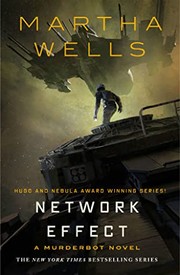
The first full novel in the series, picking up after Exit Strategy. It reunites Murderbot with familiar faces and introduces a larger, more intricate mystery — a satisfying payoff for readers who know the novellas well.

A novella set between the novels that works as a standalone murder mystery on Preservation Station. Best read after Network Effect for full context on the setting and supporting cast.

The second full novel, a direct sequel to Network Effect. It deals with the psychological aftermath of that story and is the most emotionally complex entry in the series — best appreciated after all prior books.
Discussion
Keep reading
Paths that share books, cover the same subject, or open a related topic.