The Society of Jesus has been the Catholic Church's schoolmasters, its most effective missionaries, its most reliable scapegoat, and — for forty years after 1773 — an order the papacy had formally abolished. Almost everything the Jesuits later did is explained by two documents written in the 1540s and 1550s, which is why this reading order goes back to Ignatius before it goes forward to the missions.
Two practical notes before the list. First, a good deal of Jesuit history is written by Jesuits, which is not a disqualification but is worth knowing; the entries below say when it applies. Second, this is the thinnest subject in its group in our catalogue: only about two-thirds of the books curated for it resolved to real records, and the specialist literature on the suppression of 1773 — mostly edited collections and monographs — did not resolve at all. The path covers the suppression through the general histories rather than through a dedicated book. That is a real gap, not a judgement that 1773 is unimportant.
Two histories of the whole four centuries
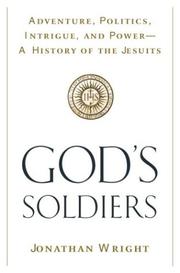
God's Soldiers (Jonathan Wright, 352 pages) is the most readable single narrative, by a secular historian who is alert to the black legend of Jesuit intrigue and to why it had purchase. Note that it was published in Britain as The Jesuits: Missions, Myths and Histories and both titles are catalogued separately — buy one, not both. The Jesuits (John O'Malley, 154 pages) is the scholarly counterpart: drier, more precise about institutions, much better on what the Society's ministries actually consisted of. O'Malley is the leading historian of the order, and reading him second corrects the emphases a narrative history inevitably picks up.
Ignatius and the founding documents
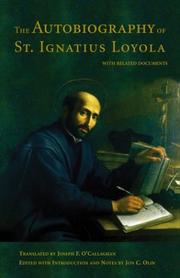
The autobiography of St. Ignatius Loyola, with related documents is 113 pages, dictated late and reluctantly, with Ignatius referring to himself in the third person as the pilgrim — the cannonball at Pamplona, Manresa, the Paris student years. Read it before The spiritual exercises of St. Ignatius of Loyola, which is not a book to be read so much as a director's manual for a four-week retreat, which is why people misread it. Everything distinctive about Jesuit formation is here in compressed procedural form. The widely held English record is an older public-domain translation; several modern versions read considerably more easily. Saint Ignatius Loyola (James Brodrick, 372 pages) is the standard older life, written from inside the order — Brodrick was a Jesuit, which shows in both the sympathies and the unmatched familiarity with the sources.
The first generation, and the machine they built
First Jesuits is O'Malley's 472-page study of the order's first fifty years, reconstructed from its own correspondence rather than from later legend, and it is the single most important book on this list. It shows the colleges arriving almost by accident and becoming the Society's defining work. Our catalogue files it without its leading article, which is why it appears in that form here. The Cambridge Companion to the Jesuits (360 pages) is an edited survey covering what a single narrative cannot — Jesuit science and mathematics, art and theatre, the Chinese Rites controversy, the order region by region — and works better as a reference than read straight through. Jesuits (Jean Lacouture, 550 pages) tells the history through individual lives, from Ignatius and Ricci to Teilhard de Chardin and the liberation theologians; opinionated and vivid where O'Malley is careful.
The missions, and the modern order
The memory palace of Matteo Ricci (Jonathan Spence, 378 pages) builds its account of the first great China Jesuit around the mnemonic system he taught Chinese scholars — the most pleasurable book here. Follow it with Journey to the East (Liam Brockey, 512 pages), the archival history of the China mission from 1579 to 1724, which deliberately displaces the Ricci-centred story to show the ordinary missionaries and Chinese Christian communities that sustained it, and the collapse once Rome ruled against the rites. The Jesuit Relations (233 pages) is the best primary-source access on the path: the annual reports from New France, edited by Allan Greer — propaganda, ethnography and eyewitness account at once.
The lost paradise (Philip Caraman, 341 pages) is the fullest English account of the Guarani reductions in Paraguay, and Caraman was himself a Jesuit — sympathetic to the missionaries and less interested in what the Guarani made of it. A vanished Arcadia (1901) is the book that made the reductions famous in English and stands behind the film The Mission; Cunninghame Graham was a Scottish adventurer and socialist, not a historian, and his romantic reading is unreliable as scholarship while being part of the story of how the reductions have been remembered. Passionate uncertainty (Peter McDonough, 390 pages) ends the path where the order actually is, through hundreds of interviews with American Jesuits who stayed and who left.
The full staged sequence, with what each stage is for, is at /paths/pt_ai_the-jesuits.