The history of Romania: books to read, in order
Romania is a country that spent most of its history as somebody's borderland — Ottoman, Habsburg, Russian — and then compressed an extraordinary amount of the twentieth century into seventy years: Greater Romania, a fascist movement with a liturgical style all its own, a Holocaust the state denied for sixty years, the most invasive secret police in the Eastern bloc, and the only revolution of 1989 that ended in a firing squad. This path builds the pre-modern ground first, then gives full stages to the two subjects Romania has argued hardest about: what was done to the Jews under Antonescu, and what the Ceausescu state actually was.
Romania in one volume
BeginnerGet the whole chronology and then immediately meet the argument that the chronology is a construction. Boia's specialty is showing how Romanian history was written to serve national claims — Dacian continuity, Latin identity, the eternal borderland — so read him as a health warning to apply to everything that follows, including Hitchins.
▸ Study plan for this stage
Pace: Three weeks for 655 pages, two books of almost identical length doing opposite jobs. Hitchins's A Concise History of Romania (327 pages) is the narrative: the Cambridge concise history by the American scholar who also wrote the field's standard multi-volume account, running from the Roman province t
- The long position as somebody's borderland, between Ottoman, Habsburg and Russian power
- Dacian continuity and Latin identity as historiographical claims with political work to do
- Boia's method: treating national history as an artefact and asking who made it and for what
- The compression of the twentieth century, with Greater Romania, fascism, the Holocaust, communism and 1989 inside seventy years
- The difference between a myth being false and a myth being consequential
- Why a standard narrative and a critique of narratives are both necessary and not reconcilable into one book
- What is the continuity thesis, and what political claims has it been used to support?
- Which parts of Hitchins's narrative does Boia specifically identify as constructed, and on what evidence?
- Does Boia argue that the standard account is false, or that it is motivated? What is the difference?
- What does it mean for a country's identity to be organised around being a borderland?
- Which of Boia's demythologisations would change your reading of the later stages if you accepted it?
- Build a timeline from Hitchins from the Roman province to 1989, then go through Boia and mark every point on it that he treats as a construction rather than a fact.
- Write a paragraph stating the Romanian national narrative as its nineteenth-century makers would have told it, then a second paragraph on what Boia says each element was for.
- Pick one myth Boia dismantles and find where Hitchins handles the same material, then write down whether Hitchins endorses it, hedges it or ignores it.
- Keep your annotated timeline; you will apply Boia's scepticism to three more stages.
Next up: You have the outline and a reason to distrust it, which is the right equipment for the next stage, where the myths Boia describes were actually manufactured.

The Cambridge concise history by the American scholar who wrote the field's standard multi-volume account. The best single narrative from the Roman province to the post-communist decades; start here.

Romania's leading demythologising historian on how the country has understood and misrepresented itself. Filed under the bare title Romania. Short, sceptical and essential as a counterweight to any straight national narrative.
The principalities, unification and Greater Romania
IntermediateFollow Wallachia and Moldavia from Ottoman suzerainty through the union of 1859, independence in 1878, and the doubling of territory in 1918 that created Greater Romania with large Hungarian, German, Jewish and Ukrainian minorities. That multi-ethnic state is the setting for everything in the next stage, and the myth-making Boia describes is being manufactured throughout it.
▸ Study plan for this stage
Pace: Five weeks for 1,199 pages, and the weight is very unevenly distributed. Hitchins's The Romanians, 1774-1866 (337 pages) covers the national awakening, the 1848 generation and the road to union, and is the detailed version of what his concise history compressed into a chapter; it is dense, authorita
- Wallachia and Moldavia under Ottoman suzerainty as autonomous principalities rather than provinces
- The union of 1859 and independence in 1878 as staged achievements with great-power involvement at every step
- The 1848 generation and the importation of Western political models into a peasant society
- The doubling of territory in 1918 that created Greater Romania, and how it was secured
- Greater Romania's large Hungarian, German, Jewish and Ukrainian minorities, and the citizenship questions they raised
- The interwar political collapse and the failure of parliamentary institutions
- Myth-making as a contemporaneous activity running in parallel with the events, which is Boia's central point
- What did Ottoman suzerainty actually require of the principalities, and what did it leave them free to do?
- How much of the union of 1859 was Romanian action and how much great-power arrangement?
- What did Greater Romania inherit in 1918 in the way of minority populations, and what provisions were made for them?
- Why did interwar parliamentary politics fail, on Hitchins's account?
- Which specific myths does Boia trace to this period, and who was manufacturing them at the time?
- Map Greater Romania's territory as of 1918 with the principal minority populations marked, using Hitchins, and keep the map for the next stage.
- Take the 1848 programme as Hitchins gives it and check which items were achieved, which abandoned and which reappeared later in a different form.
- For three myths in Boia, find the corresponding events in the Hitchins volumes and write down what was actually the case and what was made of it.
- Write a page on the position of Romania's Jewish population before 1918 from Hitchins, including citizenship status, and carry it into the next stage.
Next up: The multi-ethnic state you have just watched being assembled is the setting for the next stage, which is where a fascist movement and then a wartime regime turned the minority question into mass killing.

Hitchins's detailed account of the national awakening, the 1848 generation and the road to union. Dense and authoritative; this is the volume the concise history compresses into a chapter.

The sequel volume, covering the kingdom, the First World War, Greater Romania and the interwar collapse. Note the older spelling in the published title — it is catalogued as Rumania, not Romania.
Boia's central work, taking apart the founding myths one at a time. Read it after the two Hitchins volumes so you have the standard account clearly in mind before he starts dismantling how it was assembled.
The Iron Guard, Antonescu and the Holocaust in Romania
IntermediateThis is the most contested ground in Romanian history. The Legion of the Archangel Michael was a mass fascist movement with an explicitly Orthodox mysticism; the Antonescu regime that followed was responsible for the deaths of somewhere between 280,000 and 380,000 Jews, chiefly in Bessarabia, Bukovina and Transnistria, and for the killing of Roma. Romania denied this for six decades until its own Wiesel Commission reported in 2004, and Antonescu is still publicly rehabilitated by some. Note the
▸ Study plan for this stage
Pace: Six weeks for 1,688 pages, the longest and most difficult stage on the path, and the most contested ground in Romanian history. The Legion of the Archangel Michael was a mass fascist movement with an explicitly Orthodox mysticism, and the Antonescu regime that followed was responsible for the deaths
- The Legion as a mass movement with liturgical style, youth recruitment and ritualised violence, not a party in the ordinary sense
- The relationship between the Legion and the Antonescu regime, including the point at which they turned on each other
- The Iasi pogrom and the deportations to Transnistria as the principal sites of the killing
- The killing of Roma alongside Jews, and why it is so much less recorded
- The 1942 halt to deportations from the Old Kingdom, and the several competing explanations for it
- Six decades of official denial, and what an official commission had to establish to end it
- The evidentiary difference between an archival reconstruction and a contemporaneous diary, both of which this stage requires
- What did the Legion offer its recruits that ordinary interwar politics did not?
- How does Deletant account for the 1942 halt, and what does he refuse to conclude from it?
- What is the basis of the 280,000 to 380,000 range, and what accounts for the spread?
- How is the halt used by those who rehabilitate Antonescu, and what has to be omitted for that argument to work?
- What does Sebastian record about ordinary social life that no archive could preserve?
- After all four books, how would you state Romania's responsibility in a single paragraph that a serious historian would accept?
- Build a chronology of 1938 to 1944 with three rows: legionary activity, state policy, and what Sebastian records happening around him in Bucharest. The gaps between rows are where the denial lived.
- Take the 1942 halt and write out every explanation offered across these books, then rank them by the evidence each rests on.
- Follow the Iasi pogrom through Ioanid's documents and then find how Sebastian learned of it and what he wrote. The distance between the archive and the diary is the finding.
- Track how Sebastian describes one specific friendship across the diary from beginning to end, noting the point at which the friend's politics becomes unignorable.
- Write down the argument for Antonescu's rehabilitation in its strongest form, then dismantle it using Deletant and Ioanid only. You will need to know what it claims in order to answer it.
Next up: The regime in this stage was replaced by a communist one that built a surveillance apparatus of its own, and the next stage takes up the state that inherited both the country and its silences.

The best modern study of the Iron Guard as a lived movement — its recruitment, its rituals and its violence — rather than as an ideological curiosity. Start here to understand what Romanian fascism actually looked like from inside.
Deletant's study of Antonescu and his regime, and the book that most carefully weighs the alliance, the killings and the 1942 halt without letting any of the three excuse the others. The central scholarly text of this stage.
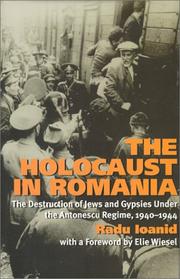
The documentary reconstruction, largely from Romanian archives, of the destruction of the Jews and Roma under Antonescu. Ioanid later worked on the Wiesel Commission; this is the evidentiary base that ended the official denial.
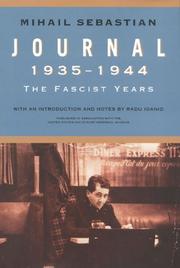
A Jewish writer in Bucharest recording the decade in which his friends became fascists and his country tried to kill him. Its publication in the 1990s was a national event in Romania; it is the testimony the scholarship in this stage is about.
The Securitate state
IntermediateUnderstand the specific texture of Romanian communism: not just repression but a police apparatus running informers at a density unusual even in the Eastern bloc, plus the Ceausescu peculiarities — the systematisation of villages, the banning of contraception and abortion under Decree 770, the debt repayment that starved the country in the 1980s, and a personality cult that embarrassed Moscow. One defector, one historian and one novelist.
▸ Study plan for this stage
Pace: Five weeks for 1,294 pages, three books of very different kinds. Deletant's Romania under Communism (606 pages) is nearly half the stage and the authoritative survey from 1945 to 1989, drawing on Securitate archives he was among the first Western historians to work in; it is dense institutional hist
- Informer density as the distinguishing feature of Romanian communism within the bloc
- Systematisation and the demolition of villages as an ideological programme with a physical output
- Decree 770 banning contraception and abortion, and its demographic and human consequences
- The debt repayment programme of the 1980s and the deliberate shortages it produced
- A personality cult of a scale that embarrassed Moscow, and what it required of ordinary people
- The evidentiary status of a defector's memoir: what corroboration it has since received and what it has not
- Surveillance as a social relationship rather than only a state activity, which is the novel's subject
- How was the informer network actually recruited and maintained, and what proportion of the population did it touch?
- What was systematisation for, in its own terms, and what did it achieve?
- What were the consequences of Decree 770, and over what timescale did they appear?
- Why did Ceausescu repay the foreign debt, and who bore the cost?
- Which of Pacepa's claims have been corroborated from archives, and which remain uncorroborated?
- What does Muller show about the effect of surveillance on private life that Deletant's institutional account cannot?
- Pick five specific claims from Red Horizons and check each against Deletant, recording confirmed, contradicted or unaddressed. That exercise is the whole method for reading defector memoirs.
- Trace Decree 770 from enactment through enforcement to consequence using Deletant, and write down each stage's mechanism.
- Read Muller's account of one friendship and then Deletant on informer recruitment, and write a paragraph on how the institutional procedure produced the personal outcome.
- Compare the Securitate as described by an insider, a historian and a target, and write half a page on what each vantage point systematically cannot see.
Next up: The system in this stage ended abruptly in December 1989, and the final stage covers both the ending and the argument about what it actually was.

Deletant's full account from 1945 to 1989, drawing on Securitate archives he was among the first Western historians to work in. The authoritative survey of the whole period.

The highest-ranking intelligence officer ever to defect from the bloc describing Ceausescu's inner circle from the inside. Sensational, self-serving and substantially corroborated later; read it as a source to be checked rather than trusted, which is how historians treat it.

The Nobel laureate's novel of young people under surveillance in Ceausescu's Romania, written out of her own experience as a Banat German harassed by the Securitate. It conveys what the archives cannot: what constant informing does to friendship.
1989 and after
IntermediateClose with the revolution that ended in the Ceausescus' summary trial and execution on Christmas Day 1989, and the long argument about whether it was a genuine uprising, a palace coup that hijacked one, or both. Then step out of politics entirely into rural Maramures, where an older Romania survived the whole century.
▸ Study plan for this stage
Pace: Two to three weeks, and it is a deliberately short close after a heavy path. Behr's Kiss the Hand You Cannot Bite (256 pages) is a journalist's account of the Ceausescus' rise and fall, written immediately after the events with the revolution's ambiguities still raw, and it remains the best narrativ
- The December 1989 sequence from Timisoara to Bucharest and the collapse of the regime within days
- The summary trial and execution on Christmas Day, and what its haste was intended to achieve
- The competing readings of 1989 as uprising, as coup, or as a coup riding an uprising
- The role of second-rank party figures in the successor government, and what continuity that implied
- Contemporary journalism as a source: rich in detail, weak on causation, and honest about it in Behr's case
- Rural Maramures as a continuity that outlasted monarchy, fascism, communism and the revolution alike
- What is the evidence for a coup within the uprising, and what would settle the question?
- Why was the trial conducted as it was, and what did the speed foreclose?
- Who took power afterwards, and what were their positions before December 1989?
- What does Behr acknowledge he cannot yet establish, and has any of it since been established?
- What does Blacker's Maramures suggest about how much of the twentieth century actually reached the villages?
- Build an hour-by-hour chronology of the final week from Behr and mark every point at which he flags that accounts conflict.
- List who held power in January 1990 and what each had been doing in 1988, then judge the continuity question for yourself.
- Read Blacker against your stage two notes on the peasant society the 1848 generation was legislating for, and write a paragraph on what changed and what did not.
- Write a final page on Romania using only the fourteen books on this path, applying Boia's scepticism to your own account as you go, and mark every point where your sources disagreed. The largest marks should fall on the Holocaust stage and on December 1989.
Next up: This ends the path: from a contested national narrative through the principalities and Greater Romania, a fascist movement and a Holocaust the state denied for sixty years, the most invasive police apparatus in the bloc, a revolution nobody has fully explained, and the villages all of it passed over.
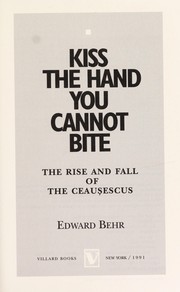
The journalist's account of the Ceausescus' rise and fall, written immediately after 1989 with the revolution's ambiguities still raw. The best narrative of December 1989 and honest that the truth was not yet established.

Blacker lived for years in Maramures villages in the 1990s, among people farming as their grandparents had. The right place to end because it shows what all the political history in this path was happening on top of.
Discussion
Keep reading
Paths that share books, cover the same subject, or open a related topic.