Herta Muller in Order: Where to Start with the Nobel Laureate of Ceausescu's Romania
Müller's prose is fragmentary and deliberately difficult — images repeat, sentences break, and the surveillance state she is describing is rendered in the syntax rather than explained. The wrong first book reads as impenetrable rather than compressed. This path starts with the most narratively continuous and works outward.
Start here
IntermediateBegin with the book that has the clearest through-line.
▸ Study plan for this stage
Pace: Two to three weeks for 242 pages, which is slow on purpose. Müller cannot be read at novel speed — twelve to fifteen pages a sitting is realistic, and rereading a page is normal rather than a failure. Do not try to finish it in a weekend.
- Four young people under Ceaușescu are watched, interrogated and picked off one at a time. It is the most narratively continuous of her books and the one the Nobel committee named, which is why it is the entry point.
- The surveillance is rendered in the syntax rather than explained. Sentences break, images recur, and the paranoia is a property of the prose before it is a property of the plot.
- Recurring images — plums, nail clippers, shoes, hair, a father's songs — return with accumulated meaning. She is building a private vocabulary and expecting you to learn it as you go.
- The green plums of the title are unripe and said to be fatal to eat, and the men who eat them are also the men doing the watching. The image is doing several jobs at once and none of them are stated.
- The narration refuses transitions. A scene ends and another begins without connective tissue, which is disorientating on purpose: it is how a life under surveillance is actually organised.
- Müller was harassed by the Securitate, refused to collaborate, and emigrated in 1987. The material is her own, but the books are not memoirs and do not present themselves as testimony.
- How does Müller make the reader feel watched rather than merely told that the characters are?
- Which images recur, and what has each accumulated by the end of the book?
- What does the refusal of transitions between scenes achieve, and what does it cost?
- Who is Captain Pjele, and how much of his power is exercised on the page versus assumed?
- This is called her most followable book. What, specifically, makes it easier than what you expect from the rest?
- Keep an image list from page one: every object that recurs, with the page numbers. This is the single most useful piece of preparation for the rest of the path, because the same method governs every later book.
- Reread any page that defeated you the following day rather than pressing on. Müller rewards the second pass at the level of the paragraph, not just the book.
- Read a page aloud. The fragmentation is prosodic, and hearing it makes the difference between impenetrable and compressed.
- Write down the plot in five sentences at the end. It is short and simple, and knowing how simple it is tells you where the difficulty actually lives.
Next up: You have the method at its most legible; the next two books apply it without the through-line to hold on to.
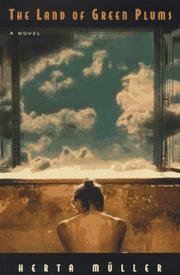
Four young people under Ceaușescu, watched, interrogated and picked off one at a time. It is the novel the Nobel committee named and the most followable of her books.
The village and the deportation
BeginnerMove to the two most concentrated works.
▸ Study plan for this stage
Pace: Four to five weeks. The Passport is under a hundred pages and can be read in two sittings, then should be read again immediately — it is short enough that a second pass costs almost nothing and gives almost everything. The Hunger Angel is 299 pages and is the hardest reading in the path; three to fo
- The Passport follows Windisch, a village miller trying to buy his family's exit from Romania with flour, and then with his daughter. It is the purest concentrated example of Müller's method.
- At that length nothing is explained. Scenes are placed beside one another and the reader supplies the causation, which is why it works better on a second reading than a first.
- Our record for The Passport carries a series suffix in its title and no publication year. It is the novella, not a different work; the suffix is catalogue noise.
- The Hunger Angel follows a seventeen-year-old deported to a Soviet labour camp in 1945, built from the testimony of the poet Oskar Pastior, who was there, and from her own mother's deportation.
- The hunger is given a voice and a name — an angel that accompanies and addresses the prisoner. It is the boldest device in her work and it converts starvation from a condition into a character.
- The camp vocabulary — the heart-shovel, cement, the cinder yard, coal — becomes a lexicon with its own chapters. She is writing a dictionary of the camp rather than a narrative of it, and that is her hardest and probably greatest book.
- What does Windisch trade, in what order, and what does the novella refuse to say plainly about the last transaction?
- How does The Passport's brevity change what the reader has to do?
- What is the hunger angel — a metaphor, a hallucination, a second narrator? Does the book let you settle it?
- Why does The Hunger Angel organise itself around objects and words rather than around events?
- Pastior's testimony is the source and he died before the book was finished. What does it mean that Müller wrote it as a novel in the first person rather than as his account?
- Read The Passport twice within a week. It is the cheapest experiment in the path and it demonstrates the thing that is true of all her books: the difficulty is front-loaded and dissolves on a second pass.
- In The Hunger Angel, keep a glossary of the camp words as they are introduced — heart-shovel, cinder, the angel itself — with the chapter where each appears. The novel is built as a lexicon and reading it as one makes it navigable.
- Take one chapter of The Hunger Angel and one chapter of The Land of Green Plums and compare how much narrative time each covers. The compression ratio is the finding.
- Add both books' recurring images to the list you started in the first stage. Objects migrate between her books, and the list will start showing it here.
Next up: The method is now familiar at both extremes of length, which is what the next stage's tightest formal constraint requires.
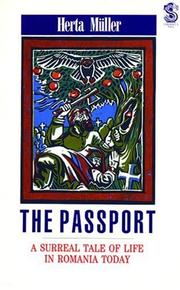
A miller trying to buy his family's way out of Romania. Under a hundred pages and the purest example of her method.
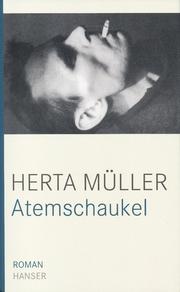
Five years in a Soviet labour camp, built from Oskar Pastior's testimony. The hunger is given a voice of its own; it is her hardest and probably her greatest book.
Surveillance
BeginnerThe novel that stays inside a single day of fear.
▸ Study plan for this stage
Pace: Four weeks. The Appointment is 240 pages inside a single tram journey — two weeks, and it works best read in a few long sittings so that the journey stays continuous. The Fox Was Ever the Hunter is 237 pages and more diffuse; two weeks at a steadier pace.
- The Appointment is one woman's tram ride to a Securitate interrogation, and the entire novel is that journey. Everything else — the marriage, the factory, the notes sewn into suits bound for Italy, the previous summonses — arrives as digression from a tram.
- The constraint is the achievement. A summons has no duration; Müller gives it one, and fills it with the life the summons is about to damage.
- The narrator keeps saying she must not think about certain things and then thinks about them. That is the book's rhythm and it is how she writes fear without naming it.
- The Fox Was Ever the Hunter is set in the last months of the Ceaușescu regime and is organised around a fox-fur rug in an apartment that is being cut apart, piece by piece, by whoever is searching the flat while the tenant is out.
- The severed fox limbs are a message and a threat, and nobody in the book says so. It is the clearest example in her work of an image doing the whole job of a plot.
- Between them these two books cover the two forms the state took: the summons you are called to, and the intrusion that happens while you are elsewhere.
- What is the narrator of The Appointment actually accused of, and how long does the novel take to tell you?
- How does Müller use the tram — the stops, the other passengers, the delay — as structure rather than as setting?
- What does the fox rug mean to Adina, and at what point does she understand it?
- Which is more frightening: being summoned or being searched? Which book do you think Müller thinks is worse?
- Both novels end without relief. Is that a formal choice or the only honest one available?
- Read The Appointment noting where the tram is at each digression — which stop, how far from the appointment. The novel gives you enough to reconstruct the journey and doing so makes the anxiety physical.
- In The Fox Was Ever the Hunter, mark every appearance of the fox and what has been cut from it. The sequence is the plot; nothing else in the book is as legible.
- Set the interrogation material in The Appointment beside Captain Pjele in The Land of Green Plums. Same apparatus, two techniques; write a paragraph on which is more effective and why.
- Take your accumulated image list and find three objects that appear in three or more of these five books. Müller's private vocabulary is now demonstrable rather than asserted.
Next up: You have read four books written in exile; the last one is the book she wrote at home, and it is the reason she had to leave.

A woman rides a tram to a Securitate interrogation, and the whole book is that journey.

The last months of the regime, told through a fox-fur rug being cut apart piece by piece.
The beginning
BeginnerFinish with the debut, which was censored at home.
▸ Study plan for this stage
Pace: A week and a half. Nadirs is 122 pages of short prose pieces about a village childhood, and it is not a novel — three or four pieces per sitting. It is short, but it is her most compressed writing and the title piece alone can absorb an evening.
- Nadirs is her debut: short prose about the German-speaking Banat village she grew up in, seen at child's height and with no nostalgia whatsoever.
- It was cut by Romanian censors, then published uncut in Germany two years later, and the resulting attention from the Securitate is what eventually forced her out of the country.
- The village is not a refuge from the dictatorship. It has its own cruelty, its own conformism and its own complicity, and Müller's refusal to sentimentalise her own minority community is what made the book unforgivable at home.
- The child's perspective is not innocence. It is a device for describing violence without the vocabulary that would explain it away, and it is the origin of the method that runs through everything else in this path.
- The Banat Swabians were a German-speaking minority in Romania, many of whose men had served in the SS. That history sits underneath the book and is one of the things the village does not discuss.
- Read last, this is the source: every image, every syntactic habit and every refusal you have met in the later books is already here in a first book by a writer in her twenties.
- How does the child's-eye view let Müller describe things an adult narrator would have to explain?
- What does the village conceal about itself, and how does the book indicate it without stating it?
- Why would this book, rather than an explicitly political one, be the thing the censors cut?
- Which images here recur in the later books, and how much have they changed?
- Having read all six, was the surveillance state or the village the more inescapable place?
- Read the title piece twice and mark every sentence that would work unaltered in The Land of Green Plums. The continuity across twelve years is the point of putting this book last.
- Take your image list from the whole path and check it against Nadirs. Most of the vocabulary should already be present in the debut, which is the finding this stage exists to produce.
- Read one piece from Nadirs and one chapter of The Hunger Angel in the same sitting. The first is a village childhood and the second a labour camp, and the prose is recognisably the same instrument.
- Write a final paragraph on what Müller's difficulty is for. You have now read her at every length she works in, and the question has an answer you can defend.
- Return to the first page of The Land of Green Plums one last time. Read last, the debut turns the entry point into something you can see the construction of.
Next up: This closes the path: the Nobel novel, the two most concentrated works, the surveillance books and the censored debut that made exile unavoidable.
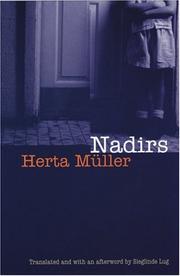
Her first collection, about the German-speaking Banat village she grew up in. It was cut by Romanian censors and published uncut in Germany, which is what forced her out.
Discussion
Keep reading
Paths that share books, cover the same subject, or open a related topic.