The Expanse Reading Order: Books and Novellas
The Expanse is a nine-novel science fiction series (with accompanying novellas) by James S. A. Corey — the pen name of collaborators Daniel Abraham and Ty Franck. This curriculum reads all nine novels in publication order, with each novella slotted in exactly where the authors intended it to be read, so that short-form character backstories and bridge stories enrich — rather than spoil — the main narrative as it unfolds.
The Solar System at War — Trilogy One
BeginnerMeet the core cast, learn the political factions (Earth / Mars / Belt), and experience the inciting mystery that sets the entire series in motion across the first three novels and their companion novellas.
▸ Study plan for this stage
Pace: 10–12 weeks total, reading in publication/companion order. Novellas are short (~60–100 pages) and can be read in 1–2 sittings. Suggested weekly breakdown: Week 1 — "The Butcher of Anderson Station"; Weeks 2–4 — "Leviathan Wakes" (~30 pages/day); Week 5 — "Drive"; Weeks 6–8 — "Caliban's War" (~30 pag
- The Three-Faction Political Order: Earth (UN), Mars (MCRN), and the Outer Planets / Belt (OPA) as competing powers with distinct economies, ideologies, and grievances
- The Belter Identity and Epstein Drive Economics: how the Epstein Drive (explored in 'Drive') made the solar system colonizable, and how resource extraction shaped Belter culture, physiology, and resentment
- Protomolecule as Inciting Mystery: the alien artifact introduced in 'Leviathan Wakes' as a weapon, a biological agent, and ultimately a transformative force that no single faction can control
- POV Architecture and Ensemble Storytelling: Corey's use of rotating limited third-person perspectives (Holden, Miller, Avasarala, Bobbie, Prax, Bull, etc.) to show the same events through radically different class and political lenses
- The Rocinante Crew as a Microcosm: Holden, Naomi, Amos, and Alex as representatives of Earth, Belt, and Mars whose cooperation models the series' central thesis about human unity
- Escalation of Scale — Personal to Systemic: how 'Leviathan Wakes' begins as a noir detective story and a missing-persons case, and how each subsequent book expands the stakes from a single station to the entire solar system to the Ring Gate and beyond
- The Ring Gate and the Threshold of the Unknown: 'Abaddon's Gate' introduces the transition from an intra-solar-system conflict to a cosmic, existential one, reframing all prior political struggles as parochial
- Moral Ambiguity and Institutional Failure: recurring theme that no government, corporation, or faction acts purely in humanity's interest — illustrated through Anderson Dawes, Avasarala's realpolitik, the MCRN's cover-ups, and Mao-Kwikowski's corporate villainy
- After reading 'The Butcher of Anderson Station' and 'Leviathan Wakes,' how does Fred Johnson's backstory reframe his role as an OPA leader — and why does Holden initially distrust him?
- How does Solomon Epstein's accidental discovery in 'Drive' directly cause the political and economic conditions (Belt colonization, resource dependency, class stratification) that make the conflicts in the three novels possible?
- In 'Leviathan Wakes,' Miller and Holden represent two fundamentally different approaches to justice and truth — what are those approaches, and how does each man's arc challenge or validate the other's worldview?
- Across 'Caliban's War' and 'Gods of Risk,' how do Bobbie Draper and David Draper (her nephew) each experience the cost of the protomolecule conflict at different scales — one geopolitical, one deeply personal?
- How does Chrisjen Avasarala's political maneuvering in 'Caliban's War' illustrate the tension between pragmatic statecraft and genuine moral responsibility, and what does she ultimately sacrifice or compromise?
- By the end of 'Abaddon's Gate,' what has the Ring Gate changed about the meaning of the Earth/Mars/Belt conflict — and what does the Investigator's final act suggest about the nature of the protomolecule's builders?
- Faction Map: After finishing 'Leviathan Wakes,' draw a three-column diagram for Earth (UN), Mars (MCRN), and the Belt (OPA). For each faction, list: one key character, one core motivation, one fear, and one grievance against the other two. Update the map after each subsequent book.
- Character Voice Journal: Choose one chapter from 'Leviathan Wakes' told from Miller's POV and rewrite a single page of it from Holden's POV (or vice versa). Note how word choice, priorities, and emotional register change — this sharpens awareness of Corey's POV technique.
- Timeline of the Protomolecule: Build a chronological event log tracking every appearance or consequence of the protomolecule across all six books. Include the location, who discovers it, what it does, and which faction tries to exploit or suppress it. This becomes a reference tool for later stages.
- Epstein Drive Thought Experiment: After reading 'Drive,' write a short paragraph (150–200 words) answering: 'If the Epstein Drive had been developed by the Belt rather than by a Martian engineer, how might the political order of the solar system be different?' This forces engagement with the novella's economic and political implications.
- Moral Ledger for 'Abaddon's Gate': As you read, keep a running list of every morally questionable decision made by a character in a position of authority (Ashford, Anna, Bull, Holden). After finishing, rank them from 'most understandable' to 'least defensible' and write two sentences justifying your top and bottom choices.
- Thematic Throughline Essay (300–400 words): After completing all six books, write a short response to this prompt: 'Trilogy One argues that humanity's greatest threat is not the alien unknown, but its own political tribalism. Do you agree, based on the evidence of these six texts?' Cite at least one moment from each of the three novels.
Next up: Trilogy One ends with the Ring Gate open and humanity on the threshold of 1,300 new solar systems, transforming the Earth/Mars/Belt power struggle into a question of species-wide survival and expansion — the exact premise that drives Trilogy Two ("Cibola Burn," "Nemesis Games," "Babylon's Ashes," and their companion novellas).

This short novella is the perfect on-ramp: it introduces the Belt, OPA politics, and Colonel Fred Johnson before you meet him in the novels — read it first to hit the ground running.
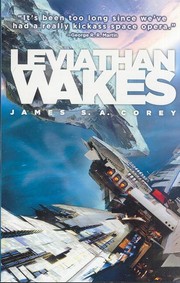
Novel 1 and the foundation of everything — introduces Jim Holden, Detective Miller, the Rocinante crew, and the alien protomolecule threat that drives the whole series.

A brief novella telling the origin story of the Epstein Drive, the technology that made the solar system colonisable; reading it here deepens your appreciation of the world before moving on.
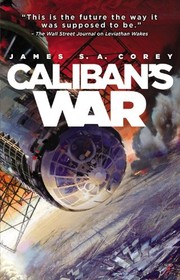
Novel 2 escalates the protomolecule crisis to a full interplanetary conflict; the political and military stakes introduced here are essential scaffolding for the rest of the series.

This novella follows Bobbie Draper's nephew on Mars between novels 2 and 3, adding texture to Martian society right before Abaddon's Gate changes everything.
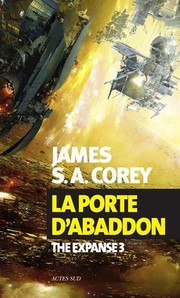
Novel 3 closes the first story arc as humanity passes through the alien Ring Gate — a natural pause point that redefines the scope of the entire series.
Through the Gates — Trilogy Two
IntermediateFollow humanity's explosive expansion into 1,300 new star systems, understand the deepening alien mystery, and track how the Rocinante crew navigates a fractured interstellar civilisation across novels 4–6 and their novellas.
▸ Study plan for this stage
Pace: 10–12 weeks, reading roughly 25–35 pages per day on weekdays and 50–60 pages per day on weekends. Suggested pacing: Week 1 — The Churn (novella, ~100 pp); Weeks 2–4 — Cibola Burn (~500 pp); Weeks 5–7 — Nemesis Games (~500 pp); Week 8 — The Vital Abyss (novella, ~150 pp); Weeks 9–11 — Babylon's Ashes
- The Ring Gates and the 1,300 new star systems: the mechanics of the gates, the political scramble for colony rights, and what 'the slow zone' means for travel and power
- The protomolecule builders and the unknown enemy: what destroyed the gate-builders, what the 'dark gods' represent, and how the alien mystery deepens from Ilus/New Terra (Cibola Burn) through Strange Dogs
- Colonial violence and resource conflict: the Ilus land dispute between RCE and Belter squatters in Cibola Burn as a microcosm of every future colony conflict
- The fracturing of the solar system's political order: the Free Navy's rise under Marco Inaros, the destruction of Earth's infrastructure, and the collapse of the old OPA/UN/MCRN triangle in Nemesis Games and Babylon's Ashes
- Amos Burton's origin story (The Churn): Baltimore, Lydia, and the trauma that shaped the Rocinante's mechanic — and why it matters for reading his arc in Nemesis Games
- The Laconian shadow: the seeds of a new imperial power planted in Babylon's Ashes and the eerie biological changes observed in Strange Dogs, foreshadowing the next trilogy
- Crew dispersal and reunion as a narrative device: Nemesis Games deliberately separates Holden, Naomi, Alex, and Amos to test each character's individual agency and values
- The protomolecule's residual activity: the Investigator (Miller's ghost), the Ilus artifacts, and the Vital Abyss researchers as evidence that the builders' technology is still 'listening'
- After reading The Churn, how does Amos's pre-Rocinante life in Baltimore explain his moral code — specifically his loyalty to individuals over institutions — as seen in Nemesis Games?
- In Cibola Burn, what does the conflict between the Belter squatters and RCE reveal about how the old Belt/Inner power dynamic will be replicated across 1,300 new worlds, and how does Holden's role as mediator reflect his character's central tension?
- What is the Free Navy's strategic logic in Nemesis Games and Babylon's Ashes — why does Marco Inaros target Earth specifically, and why does his coalition ultimately fracture?
- Who are the researchers in The Vital Abyss, what did they do for Protogen, and how does their imprisonment illuminate the ethical cost of humanity's early protomolecule research?
- By the end of Babylon's Ashes, how has the political map of the solar system and the colonies changed compared to the end of Abaddon's Gate, and which factions have gained or lost the most?
- In Strange Dogs, what do Cara's experiences on Laconia — particularly the 'dogs' and what happens to her brother — suggest about the protomolecule's ongoing agenda and the nature of Laconian exceptionalism?
- Character-voice journal: After finishing The Churn, write a one-page first-person entry from Amos's perspective set during any scene in Nemesis Games, using what you now know about his Baltimore past to inform his internal voice.
- Conflict-mapping diagram: Draw a three-column map (Inners / Belt / Colonies) and, after each of the three novels, update which factions control which resources and territories — track how the map shifts from Cibola Burn through Babylon's Ashes.
- Alien-mystery evidence log: Keep a running document. Each time a protomolecule artifact activates, the Investigator appears, or a character is biologically altered (pay close attention in Strange Dogs), log the event, the location, and what it might imply — then write a one-sentence hypothesis after each entry.
- Ethical tribunal exercise: After The Vital Abyss, hold a written 'mock tribunal' — write a 300-word prosecution and a 300-word defense for the Protogen scientists. Use only evidence from the novella and from Cibola Burn's depiction of Ilus's dormant technology.
- Marco Inaros op-ed: After Nemesis Games, write a 400-word in-universe op-ed from a Belter journalist either defending or condemning Marco's asteroid strike on Earth, drawing on the economic and political grievances established across this stage's books.
- Thematic comparison essay: After completing Strange Dogs, write a short essay (500–600 words) comparing the 'first contact with the alien unknown' experienced by Holden on Ilus (Cibola Burn) with Cara's experience on Laconia (Strange Dogs) — what does each encounter reveal about how humans respond to things they cannot control?
Next up: By ending on Strange Dogs' unsettling glimpse of Laconia's alien-touched biology and imperial ambition, this stage plants the questions that Trilogy Three — centered on the Laconian Empire's full emergence — will be forced to answer.

Read before Cibola Burn: this novella reveals Amos Burton's brutal Baltimore backstory, making his character arc in novel 4 far more resonant.
Novel 4 takes the crew to the first colonised alien world, Ilus, where settler conflict and alien remnants raise the stakes of expansion to a visceral, personal level.

Novel 5 is widely considered the series' emotional peak — the crew splits up and each member's past catches up with them during a catastrophic solar-system-wide attack.
This novella, set between novels 5 and 6, is told from the perspective of a Protogen scientist and fills in crucial protomolecule lore before Babylon's Ashes.

Novel 6 resolves the Free Navy crisis ignited in Nemesis Games and closes the second trilogy with a large ensemble cast and a hard-won political settlement.

A bridge novella set on a colony world that introduces the eerie phenomena — and a key character, Cara — that will become central to the final trilogy.
The Laconia Endgame — Trilogy Three
ExpertExperience the series' culmination: a Martian empire, a dying alien intelligence, and the ultimate fate of humanity, across novels 7–9 and the final novella — completing the full Expanse canon.
▸ Study plan for this stage
Pace: 10–12 weeks total, reading roughly 25–35 pages per day. Suggested pacing: Persepolis Rising (~560 pp) in ~3 weeks; Auberon (~130 pp) in 3–4 days; Tiamat's Wrath (~560 pp) in ~3 weeks; The Sins of Our Fathers (~110 pp) in 2–3 days; Leviathan Falls (~560 pp) in ~3 weeks. Build in one full reflection w
- The Laconian Empire and the ideology of benevolent authoritarianism — how High Consul Winston Duarte frames conquest as salvation for humanity in Persepolis Rising and Tiamat's Wrath
- The protomolecule builders' extinction and the nature of the 'dark gods' — the alien intelligence that destroyed the gate-builders and what it represents as an existential threat beyond human comprehension
- The evolution of the Rocinante crew across a 30-year time jump in Persepolis Rising — aging, loss, and the question of whether resistance is still meaningful for older protagonists
- Laconian transhumanist experimentation — Duarte's and later Cara's biological transformations, and the ethical horror of using the alien repair mechanism on human subjects
- Teresa Duarte as a coming-of-age lens — her disillusionment with her father's empire in Tiamat's Wrath and Leviathan Falls mirrors the reader's own reassessment of Laconian ideology
- The underground resistance movement (the underground railroad of Auberon, the broader insurgency) as a study in asymmetric warfare, moral compromise, and the cost of fighting a superior power
- Collective consciousness vs. individual identity — the central philosophical crisis of Leviathan Falls, where the alien signal threatens to dissolve human selfhood, and Holden's ultimate sacrifice to preserve individuality
- Series-long thematic closure — how Leviathan Falls resolves the protomolecule mystery, the gate network's purpose, and the fates of every major character thread seeded across all nine novels and the novellas
- How does Winston Duarte justify the Laconian takeover of the ring gate network in Persepolis Rising, and in what ways does the narrative both present and undermine his logic by the end of Leviathan Falls?
- What is the significance of the 30-year time jump at the opening of Persepolis Rising — how does it change the emotional stakes for the crew of the Rocinante compared to earlier stages of the series?
- In Auberon and The Sins of Our Fathers, how do the novella-scale stories illuminate the human cost of empire on the colonial fringe, and what do they add that the main novels cannot?
- What is the nature of the 'dark gods' (the alien intelligence beyond the gates), and how does the series use deliberate ambiguity about their motives to sustain dread across Tiamat's Wrath and Leviathan Falls?
- How does Teresa Duarte's arc function as a moral compass for the trilogy, and what does her ultimate choice in Leviathan Falls say about inherited guilt and personal responsibility?
- What does Holden's final act in Leviathan Falls sacrifice, and why does the narrative frame this as the only solution — what does this say about the series' ultimate stance on individualism versus collective survival?
- Ideology audit: After finishing Persepolis Rising, write a 400-word 'Laconian propaganda pamphlet' from Duarte's point of view, then write a 400-word rebuttal from a resistance member's perspective — compare the two to map the novel's moral tension.
- Character aging timeline: Create a visual timeline tracking each core Rocinante crew member (Holden, Naomi, Amos, Alex/Bobbie) from their introduction in the series through their arcs in this trilogy, noting how their priorities and fears shift with age and loss.
- Novella deep-dive: Read Auberon and The Sins of Our Fathers back-to-back, then write a one-page comparative essay on how each novella uses a 'small' colonial story to reflect the 'large' imperial themes of the main novels.
- Alien intelligence analysis: Compile every piece of information the books give about the 'dark gods' — their behavior, their apparent goals, what they destroy and why — then write a one-paragraph hypothesis about their nature, noting where the text supports and where it deliberately withholds.
- Thematic closure map: After finishing Leviathan Falls, create a two-column chart listing every major unresolved question from Stages 1 and 2 of your curriculum (the gate network, the protomolecule, the Miller construct, etc.) and whether/how this trilogy answers, reframes, or intentionally leaves it open.
- Series-ending reflection essay: Write a 600-word personal essay responding to the question: 'Does Leviathan Falls earn its ending?' — drawing on specific scenes from all five books in this stage to argue your case, and situating the finale within the series' long-running themes of human resilience and cosmic insignificance.
Next up: Completing the full Expanse canon — all nine novels and the four novellas — equips the reader with a comprehensive command of the series' world-building, character arcs, and philosophical ambitions, making them ready to engage with secondary literature, author interviews, and comparative science fiction studies that place The Expanse alongside other landmark works of hard SF and political space op

Novel 7 jumps 30 years forward and introduces the authoritarian Laconian Empire — a tonal shift that recontextualises everything built before it; read Strange Dogs first so Cara's role lands immediately.
This novella set on a colony world under Laconian rule explores how ordinary people negotiate with empire, adding political depth between novels 7 and 8.
Novel 8 is the series' darkest and most propulsive entry — the resistance against Laconia collides with the alien threat in ways that make the finale feel truly earned.

The final novella, released after novel 9, is best read immediately before Leviathan Falls as it bridges the emotional gap and sets up the series' closing themes.

Novel 9 and the series finale — every thread, character, and mystery from all eight previous novels converges here for a conclusion that rewards readers who followed the full sequence.
Discussion
Keep reading
Paths that share books, cover the same subject, or open a related topic.