Conn Iggulden's Emperor Series Reading Order: Where to Start
Conn Iggulden's Emperor novels follow Julius Caesar from a boyhood on a Roman estate to the knives in the Senate house and the war that followed, and the sequence is strictly chronological — there is no publication-versus-story-order argument to have here. What there is instead is a question of how much invention you are willing to accept: Iggulden reshapes the historical record heavily and openly, most famously by making Marcus Brutus Caesar's boyhood friend and by compressing decades of campaigning into a readable line. This is a short, clean five-book series, and the path reads it in order before pointing at where Iggulden went next.
The boys who become Caesar and Brutus
BeginnerGet the two central figures established and see how far Iggulden is prepared to depart from the record for the sake of the story.
▸ Study plan for this stage
Pace: Three to four weeks for 990 pages. The Gates of Rome is 434 pages and The Death of Kings 556, so the second book is a quarter longer and needs the larger share of the time — read the first in ten days or so and give the second a fortnight. At roughly 45 pages an evening the pair is a month's reading
- The invented boyhood friendship between Caesar and Brutus, and why every later book in the series depends on it
- Rome under Marius and Sulla as the political weather the young Caesar grows up in
- Historical compression as a deliberate method: decades of campaigning shaped into a readable line
- The pirate capture and Caesar's early military service, which are episodes the ancient sources genuinely record
- The difference between an invented relationship and an embellished anecdote — both are here, and they are not the same kind of liberty
- The rise-of-a-leader structure Iggulden uses in every one of his series, visible here in its first form
- What does the invented Caesar-and-Brutus friendship buy the novel, and what does it cost a reader who knows the history?
- Which episodes in The Death of Kings are recorded by the ancient sources, and which are Iggulden filling gaps?
- How does the first book present Sulla, and is he functioning as history or as an obstacle for the protagonist?
- The Death of Kings is a quarter longer than The Gates of Rome. What is the extra length used for?
- At the end of these two books, what kind of leader has the series decided Caesar is?
- Read the short account of Caesar's capture by pirates in Suetonius or Plutarch — a few paragraphs — and compare it with Iggulden's version. This is the cleanest single demonstration of what the series does with a source.
- Keep a two-column list as you read: things you believe are historical and things you suspect are invented. Check it at the end of the path rather than as you go.
- Mark every scene the two boys share in The Gates of Rome. Those pages are the load-bearing fiction of the whole sequence, and knowing how many there are tells you how much of the series is built on them.
- Sketch the political map of Rome — Marius, Sulla, the factions — from the first book alone, then note what the novel has not told you.
Next up: The invention is now visible and the young commander is made, so the next two books can run the campaigns at full speed without stopping to explain anyone.
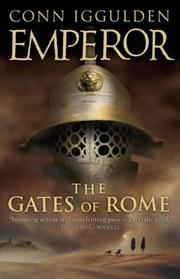
The first book, covering Caesar's childhood, his friendship with Marcus, and Rome under Marius and Sulla. Read it knowing that the boyhood friendship with Brutus is Iggulden's invention and the single largest liberty in the series — everything after depends on it.
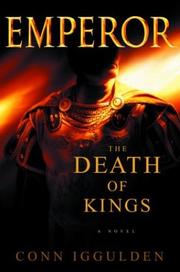
Caesar's capture by pirates and his early military service, which is where the novels start drawing on episodes Suetonius and Plutarch actually record. Second in order, and the book that turns the boy into a commander.
Caesar in command
BeginnerFollow the rise through Gaul and the civil war that ends the Republic.
▸ Study plan for this stage
Pace: A month to six weeks. The Field of Swords is 480 pages, covering Spain, Gaul and Britain; no reliable length is recorded for The Gods of War, which is a full-length novel on the scale of its neighbours. Read them in order and do not attempt The Gods of War first under any circumstances — it is the p
- The Gallic campaigns as Caesar himself wrote them up, retold as adventure rather than as dispatch
- The distance between Caesar's Commentaries as a self-serving document and the novel's use of them as a plot source
- The Rubicon as the series' structural hinge — everything before it is ambition, everything after is civil war
- Pompey as the antagonist the series has needed since the first book, and how Iggulden builds him
- Egypt, Cleopatra and the point at which the sequence leaves the Republic behind
- The Ides of March delivered as the payoff of an invented friendship rather than of a political conspiracy
- Compression again, now at its most aggressive: years of campaigning inside a few hundred pages
- How does The Field of Swords handle Britain, and what does it do with the fact that Caesar's own account is propaganda?
- What has to be cut to get the Gallic wars into one novel, and which of the cuts do you notice?
- How does the assassination read differently because of the fiction established in stage one?
- Is Pompey a character in his own right in these books, or a measure of Caesar? Point to the evidence.
- Where in The Gods of War does the series stop being a story about a soldier and become a story about power?
- Read Caesar's own opening paragraphs on Gaul in the Commentaries, then the corresponding stretch of The Field of Swords, and note what the novel adds and what it quietly declines to repeat.
- Draw a timeline of the campaigns as the two books present them, then check it against any standard chronology of Caesar's career. The gaps are the compression, and seeing them is more instructive than being told about them.
- Before reading the assassination scene, write down what you expect Brutus to be given as a motive. Then read it. The gap is the whole argument about this series.
- Add to the historical-versus-invented list from stage one. It should be growing faster now, not slower.
Next up: Caesar's story is finished at the end of The Gods of War, which is exactly the problem the fifth book was written to solve.

Spain, Gaul and Britain — the campaigns Caesar wrote up himself in the Commentaries, retold as adventure. Third, and the book where the series is at its most confident.

The Rubicon, Pompey, Egypt and the Ides of March. It is the payoff of the whole sequence and is unreadable out of order. The catalogue record for this one is filed under an awkward marketplace-style display title; it is the fourth Emperor novel.
After the Ides
IntermediateFinish the series with the volume Iggulden added a decade later, and judge whether it belongs.
▸ Study plan for this stage
Pace: Two to three weeks for one 433-page novel. The Blood of Gods was added long after the first four books, and it reads like a sequel to a completed story rather than a fifth act of one — it takes up Octavian, Antony and the vengeance on the conspirators after Caesar is already dead. Treat it as genuin
- A sequence continued after its protagonist dies, and what that does to the structure it had
- Octavian and Antony as the new centre, neither of whom the earlier books developed as leads
- The vengeance on the conspirators as the plot that pays off the invented friendship one last time
- The difference between a fifth act and a sequel, and which this book actually is
- Iggulden's later prose against his earlier, visible in a book written well after the first four
- Where a reader is entitled to stop: the case for and against treating four books as the whole series
- Does The Blood of Gods work without Caesar, and what is holding it up in his absence?
- How is Octavian characterised here, and does the portrait fit the man the first four books implied?
- What does the vengeance plot do with Brutus that only this series could do?
- Is this book a fifth act or a sequel? Defend the answer with the structure rather than the marketing.
- Would you tell a friend to read four books or five, and why?
- Before opening it, write down whether you think the series needed this book. Answer again afterwards and compare.
- Compare a page of dialogue from The Gates of Rome with a page from The Blood of Gods. The change in Iggulden's line is the clearest evidence of how much time separates them.
- Finish the historical-versus-invented list and check it against any short life of Caesar. Do this once, at the end, rather than fact-checking as you read — the series is better read as fiction first.
Next up: With the sequence closed, the last stage is a choice between the two directions Iggulden took the same rise-of-a-leader structure afterwards.

Written eight years after The Gods of War and covering Octavian, Antony and the vengeance on the conspirators, so it is a sequel to a finished story rather than a fifth act. Read it last, and treat it as optional if you were satisfied by Caesar's death.
Where to go next with Iggulden
IntermediatePick the next Iggulden sequence on the strength of what you liked about this one.
▸ Study plan for this stage
Pace: Six weeks for 922 pages, or read only one — this stage is a fork rather than a sequence. Wolf of the Plains is 458 pages and The Gates of Athens 464, so they are near-identical in length and either can be read first. Pick on the basis of what you actually liked about Emperor. If it was the rise of a
- The same rise-of-a-leader structure transplanted twice, which is what makes the comparison useful
- A thin historical record as a freedom rather than a handicap — the Mongol material against the Roman
- Source discipline as a choice: the Athenian books are visibly more careful than the Emperor novels
- Steppe warfare against legionary warfare, and what each lets a novelist stage
- Marathon and the Persian wars as an episode with a strong surviving record, which constrains the fiction
- How to choose a next series from what you liked rather than from what is next in a list
- Does Wolf of the Plains handle the boyhood of its leader better than The Gates of Rome, and if so, is it the writing or the freer record?
- Where can you see The Gates of Athens declining to invent something the Emperor books would have invented?
- Which of the two makes better use of a battlefield, and what is the difference in how it is staged?
- Having read Emperor, what do you now want from a historical novel — the history or the story?
- If you read only one of these two, which was the right call given your answer to the last question?
- Read the first chapter of each before committing to either. Two openings is enough to tell you which sequence you want, and this stage is designed to be sampled.
- Compare the treatment of a young leader's first command in Wolf of the Plains with the equivalent passage in The Death of Kings.
- Take one battle from The Gates of Athens and check the outline against a standard account of the Persian wars. Then do the same for one battle in The Field of Swords. The difference in fidelity is the point of putting these two books in one stage.
Next up: This is the end of the path: the Emperor sequence is read in full and both of Iggulden's later directions have been sampled far enough to choose between.

The first Conqueror novel, on the boyhood of Genghis Khan, and the natural next series: the same rise-of-a-leader structure with a much less familiar record to depart from, which most readers find frees Iggulden up.

His much later Athenian sequence, on Marathon and the Persian wars, written with noticeably tighter discipline about the sources. Read it if what you wanted from Emperor was the history rather than the invention.
Discussion
Keep reading
Paths that share books, cover the same subject, or open a related topic.