Conn Iggulden books in order: where to start
Iggulden writes in complete, self-contained series, so the only real question is which one to start. Emperor, on Julius Caesar, is the obvious entry and the most uneven; Conqueror, on Genghis Khan and his successors, is the better sequence and the one most readers finish faster. This path takes them in the order he wrote them, notes where each series departs from the historical record — Emperor does so drastically — and ends with the later books that stand outside the trilogies.
Emperor: Julius Caesar
BeginnerRead the five-book Caesar sequence in order and learn to hold Iggulden's inventions and the actual record apart.
▸ Study plan for this stage
Pace: Seven to eight weeks for roughly 2,400 pages across five novels. The Gates of Rome (434 pp), The Death of Kings (556 pp), The Field of Swords (480 pp) and the fourth book, The Gods of War, run about ten days each; The Blood of Gods (433 pp) closes in a week. Read them in this order - they are strict
- The Brutus fusion as the load-bearing invention: it is not a small liberty, it is the premise the series is constructed on
- The trajectory of the sequence - a weak first book, a stronger second, a genuinely accomplished third, then a fourth that covers the famous material and a fifth written nine years later as a coda
- Iggulden's method with sources: he compresses, combines and invents, and his author's notes generally say which he has done
- The Roman republic as a setting rendered for pace rather than for accuracy - the political machinery is simplified to what the plot needs
- Why The Blood of Gods reads differently from the four before it: it was not part of the original plan and covers a period after the protagonist's death
- The difference between a historical novel that fills gaps in the record and one that contradicts it, and where Emperor sits
- Battle writing as Iggulden's actual strength, and The Field of Swords as the demonstration
- What is the Brutus invention exactly, which historical figure is folded into him, and what would the series lose if it were removed?
- Where does each novel depart from Plutarch and Suetonius, and in which cases does Iggulden acknowledge it in an author's note?
- Why is The Field of Swords the best-executed book of the five? Point to the specific technical improvements over the first two.
- What changes in The Blood of Gods now that Caesar is dead, and does the series survive losing its centre?
- Is the Roman political system as depicted in these novels wrong, or simplified? Give an example where the distinction matters.
- Keep a two-column log through all five books: on the left, events that are in the ancient sources; on the right, Iggulden's version. Enter one line per chapter. By the end of The Gods of War the right-hand column will be substantially longer, and that ratio is the honest description of the series.
- Read Plutarch's account of the pirate captivity, then Iggulden's version in The Death of Kings. Write a paragraph on what he added and what the addition is for dramatically.
- Read every author's note in the five books consecutively, in one sitting, and list what he admits to. Then compare that list against your two-column log. The gap between what he flags and what he does is the useful finding.
- Take the assassination scene in The Gods of War and rewrite the first page as it would read without the invented friendship. This is the fastest way to feel how much of the series depends on it.
- Rate each of the five books on pace, prose and fidelity, separately, out of ten. The three curves do not move together, and seeing that is the point.
Next up: With Iggulden's habits catalogued on a period you can check him against, the next stage moves to the Mongols, where the sources are thinner and the inventions cost less.
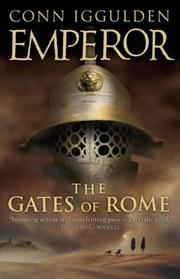
The first book, and the one that decides whether Iggulden is for you: Caesar's boyhood, told with pace and very little regard for the sources. Be warned at the outset — the book makes Marcus Brutus Caesar's childhood friend and effectively fuses him with a different historical figure, which is the largest liberty in the whole series and it is taken on page one.
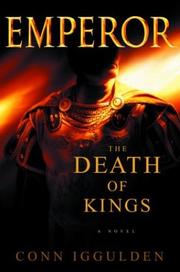
Caesar captured by pirates, then Spartacus. The plotting is stronger than in the first book and the invented friendship starts paying dramatic dividends even as it departs further from history.

Gaul, Britain and the making of the army. The best-executed book of the five and the point at which the series becomes hard to put down.

The Rubicon, the civil war, Egypt and the Ides of March. The catalogue files this one under an odd shelf-order display title; it is the fourth Emperor novel.

Written nine years after the fourth and covering the aftermath — Octavian, Antony, the second triumvirate. Read it as a coda; it was not part of the original plan and reads like it.
Conqueror: the Mongols
BeginnerRead the five Mongol novels in order, which most readers consider his best work, and see him handle a period where the sources allow more freedom honestly.
▸ Study plan for this stage
Pace: About eight weeks for roughly 2,500 pages. Wolf of the Plains (458 pp), then Lords of the Bow (528 pp), Bones of the Hills (528 pp), Empire of Silver (448 pp) and Conqueror (536 pp) - ten to twelve days each, and the middle three are the ones you will read fastest. Note that Wolf of the Plains was p
- Why thin sources suit Iggulden: the Secret History of the Mongols leaves gaps a novelist can fill without contradicting anything, which is the opposite of the Caesar problem
- The structure of the sequence - the making of a leader, the first foreign campaign, the war that changes the moral register, the succession, the empire's consolidation under Kublai
- Temujin's unification of the steppe as a political achievement rather than a military one, which is what Wolf of the Plains is actually about
- The siege problem in Lords of the Bow: an army with no experience of walled cities learning to take them, which is the best single technical sequence in Iggulden's work
- The Jochi and Chagatai fracture as the emotional and moral centre of the series
- The handover of viewpoint in Empire of Silver, and what it costs a series to lose the character three books have been built on
- Chronological compression in Conqueror, which Iggulden acknowledges - the dates in the last book should be read as impressionistic
- What does the sparseness of the Mongol sources let Iggulden do that the Roman sources did not?
- How does Lords of the Bow handle the technical problem of an army learning siegecraft, and why is that sequence more convincing than the equivalent material in Emperor?
- What does Bones of the Hills do with the destruction of the Persian cities, and does the novel treat it as a strategic decision, a moral failure, or both?
- Empire of Silver shifts its central character. What does the series gain and lose by that?
- Where in Conqueror does the chronology stop being reliable, and does Iggulden's note about it change how you read the book?
- Having read both sequences, which is better and on what criteria - construction, fidelity, prose, or pace?
- Read the opening fifty pages of Wolf of the Plains and the opening fifty of The Gates of Rome consecutively, four years apart in composition, and list the specific differences in how a child protagonist is established. The comparison measures what Iggulden learned between the two series.
- Track the Jochi thread from his birth in Wolf of the Plains to its resolution in Bones of the Hills, noting each scene that bears on his paternity. It is the most carefully constructed long arc in either sequence, and following it deliberately shows the craft.
- Read the Secret History of the Mongols on Temujin's early exile - it is short and available in translation - and set it against the first hundred pages of Wolf of the Plains. Where Iggulden invents here, note whether he contradicts the source or fills a silence in it. Compare that ratio against your Emperor log.
- Build a timeline of the Mongol campaigns from a reference history, then place each novel's events on it. Conqueror will not fit; identify exactly which decades are compressed and by how much.
- Write half a page on what the series does with mass killing - whether it is narrated as consequence, as spectacle, or as strategy - citing two specific passages from Bones of the Hills.
Next up: The Mongol books work partly because the record is thin, so the next stage tests Iggulden on a period documented in detail.

Temujin from outcast child to the unification of the steppe tribes. This is the better place to start Iggulden altogether if Rome does not appeal — the material is less familiar, so the inventions cost less. Published in the United States as Genghis: Birth of an Empire, which is a separate catalogue record for the same novel.
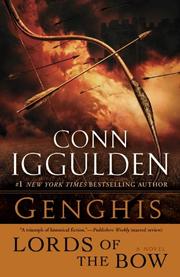
The campaign against the Chin and the taking of walled cities by an army that had never besieged one. The strongest single book in the sequence.
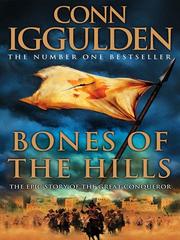
The Khwarezmid war and the destruction of Persia's cities, plus the fracture between Jochi and Chagatai. Darker than the first two and the moral centre of the series.

After Genghis: Ogedai, Tsubodai's western campaign, and the ride to the edge of Europe. Read it knowing the leadership shifts away from the character you have followed for three books.

Kublai, China and the founding of the Yuan. Closes the sequence. Iggulden compresses decades hard here, and says so; treat the chronology as impressionistic.
Wars of the Roses
IntermediateFollow the four-book English civil war sequence and see him working with a much better-documented period.
▸ Study plan for this stage
Pace: About six weeks for roughly 1,860 pages. Stormbird (464 pp), Trinity (420 pp), Bloodline (480 pp) and Ravenspur (496 pp), ten days each, strictly in order. Stormbird has the slowest opening of any Iggulden series and is the one that most rewards patience - the collapse it describes is administrative
- A well-documented period as a constraint: with a full chronicle record, Iggulden's freedom shrinks and his method visibly changes
- The dynastic problem stated plainly - Henry VI's incapacity, the loss of the French territories, and a succession dispute with no clean legal answer
- Margaret of Anjou as the series' most substantial character and the one Iggulden treats least conventionally
- Compression of the political chronology into four books, and which years get collapsed
- The battle sequences - Towton, Barnet, Tewkesbury, Bosworth - and how Iggulden varies their construction so they do not read identically
- The author's note as a working document rather than an afterword: this is the series where reading them changes what you notice
- Ravenspur as the strongest of the four, and what a series gains by ending on the material its author most wanted to write
- Why does Stormbird open with governmental collapse rather than with battle, and what does that choice buy the series?
- How does Iggulden's treatment of the record here differ from Emperor? Give two specific instances where he stays with the sources against dramatic convenience.
- What does he do with Margaret of Anjou that departs from her conventional depiction?
- Which years of the Wars of the Roses are compressed hardest across the four books, and what is lost?
- Compare the Towton sequence in Bloodline with the largest battle in Conqueror. What is technically different about writing a battle where the casualty figures are documented?
- Build a single chronology of 1444 to 1485 from any reference history, then mark on it what each of the four novels covers and at what length. The uneven distribution shows which parts of the war Iggulden considers a story and which he considers connective tissue.
- Read the four author's notes in sequence before reading the novels themselves, then again afterwards. Note which admissions you would not have detected without them - that set is the measure of how well the fiction conceals its seams.
- Take the Towton chapter in Bloodline and compare its casualty figures and its account of the rout against a modern historical treatment of the battle. Note where the novel follows the historians and where it takes the higher, more contested figures.
- Track Margaret of Anjou across all four books and write a paragraph on how her characterisation changes between Stormbird and Ravenspur. Then check that arc against what the chronicles actually record about her.
- Compare your Emperor two-column log with an equivalent one kept for Stormbird alone. The difference in the ratio of invention to record is the finding of this stage.
Next up: The trilogies show Iggulden working in series; the last stage takes the books written outside that structure, which is where his prose is most controlled.

Henry VI, the loss of France and the beginning of the collapse — the slowest opening of any of his series and the one that most rewards patience. Start here; the four books are strictly sequential.

York's protectorate and the first battles. The catalogue files it with its series prefix. Iggulden is more careful with the record here than in Emperor, and his author's notes flag where he is not.

Towton and its aftermath, including the bloodiest single day in English history handled at length.

Edward's return, Barnet, Tewkesbury and Bosworth. Closes the sequence and is the strongest of the four.
Beyond the Trilogies
IntermediateSample the later standalone and short-series work, which is where his prose is at its most controlled.
▸ Study plan for this stage
Pace: Four to five weeks for about 1,360 pages. Dunstan (463 pp) first and on its own, ten days - it depends on nothing else in his work and is by a distance his best-written book. Then The Gates of Athens (464 pp) and Protector (432 pp), which are sequential, ten days each. The standalone Persian-war nov
- First-person unreliable narration in Dunstan, and how differently Iggulden writes when he is not managing an ensemble across a trilogy
- The tenth-century English church and court as a political arena, and a protagonist who serves seven kings by outlasting them
- The Athenian novels as a return to a period with a strong surviving source - Herodotus - and Iggulden staying much closer to it than he ever did to Plutarch
- Marathon, Thermopylae and Salamis as three battles requiring three entirely different kinds of narration: a land engagement, a defensive holding action and a naval trap
- Themistocles as a protagonist chosen for political cunning rather than martial virtue, which is a departure from Caesar and Temujin
- The relationship between series length and prose quality across his career: the standalones are tighter, and the reason is structural
- Where to send a reader who will read exactly one Iggulden novel, and why the answer is Dunstan rather than anything in the trilogies
- How does Iggulden signal that Dunstan is unreliable, and at what points is the reader meant to disbelieve him?
- What does first-person narration allow him that the third-person trilogies do not?
- How closely do the Athenian novels follow Herodotus, and where do they depart? Contrast that with his handling of Plutarch in Emperor.
- What is technically different about writing Salamis compared with writing Thermopylae?
- Why is Themistocles a more interesting protagonist for Iggulden than Caesar was, given how much less familiar he is?
- Across all four stages, where is Iggulden most and least trustworthy as a guide to the period he is writing about?
- Reread one chapter of Dunstan looking only for places where the narrator's account of his own motives does not match his actions. Mark them. The count is the argument for the book being his best.
- Read Herodotus on Marathon - it is a short passage - then Iggulden's version in The Gates of Athens, and log the departures in the same two-column format you used for Emperor. Put the two logs side by side; the difference across eighteen years of his career is the conclusion of this path.
- Compare the opening page of Dunstan with the opening page of The Gates of Rome. Sentence length, viewpoint control, how much is withheld. This is the concrete evidence for the claim that the standalones are better written.
- Take the three battles across The Gates of Athens and Protector and write down the narrative device each one relies on - whose eyes, what is withheld, where the reversal falls. He does not reuse a structure, and identifying that is the craft observation the stage exists for.
- Write a hundred-word recommendation of one Iggulden book for a reader who cares about historical accuracy, and another hundred words for a reader who does not. If both recommendations name the same book, explain why.
Next up: This closes the path: four series mapped, the liberties in each named specifically, and a clear answer to where a new reader should start and where a careful one should be sceptical.

A first-person account of the tenth-century abbot who served seven kings, and by some distance his best-written book. Read it whenever you like; it depends on nothing else. If you only read one Iggulden outside the trilogies, this is it.

The first Athenian novel — Marathon, Thermopylae, Salamis. He is more faithful to Herodotus here than to anything in Emperor, which makes it a useful contrast.

The second Athenian book, carrying through to Plataea and the rise of Pericles. The standalone Persian-war novel The Falcon of Sparta sits alongside these two and can be read independently.
Discussion
Keep reading
Paths that share books, cover the same subject, or open a related topic.