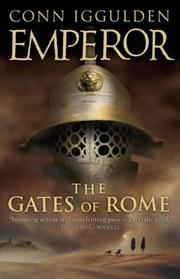
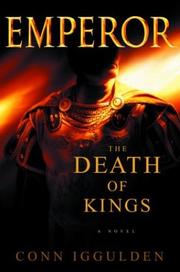
Start with The Gates of Rome (Emperor). The Emperor novels follow Julius Caesar from a boyhood on a Roman estate to the knives in the Senate house and the war that followed, and the sequence is strictly chronological. There is no publication-versus-story-order argument to have, no prequel to place, and no companion volume. Five books, in the order they were written.
The question worth answering before you start is a different one: how much invention are you willing to accept. Iggulden writes deliberate historical fiction, not history, and he reshapes the record heavily. The largest liberty is Marcus Brutus, who in these novels is Caesar's boyhood friend and near-contemporary. In the historical record Brutus was born around 85 BC, some fifteen years after Caesar, and there is no evidence of a childhood friendship. Iggulden also compresses decades of campaigning into a readable line, relocates events and invents characters wholesale. He says so himself — every volume carries an author's note setting out what he changed and why. Read those notes. Treated as novels they are strong; treated as a history of the late Republic they will mislead you.
Caesar and Brutus as boys
The Gates of Rome (Emperor) covers Caesar's childhood, that invented friendship, and Rome convulsing under Marius and Sulla. Everything afterwards is built on the friendship, so if the liberty is a dealbreaker you will know within the first book.
The Death of Kings (Emperor, Book 2) takes in his capture by pirates and his early military service, and is where the novels start drawing on episodes Suetonius and Plutarch actually record — the pirate story is in the sources, embellishment and all. It is the book that turns the boy into a commander.
Caesar in command
The Field of Swords (Emperor, Book 3) covers Spain, Gaul and Britain, retelling as adventure the campaigns Caesar wrote up himself in the Commentaries. The series is at its most confident here, and it is also the point at which a reader who wants the real thing should note that Caesar's own account is a piece of political self-promotion, not a neutral record.
Emperor V 4 The Gods Of War is the Rubicon, Pompey, Egypt and the Ides of March. It is the payoff of the whole sequence and unreadable out of order. Our catalogue holds it under an awkward marketplace-style display title; it is the fourth Emperor novel, published as The Gods of War.
After the Ides
The Blood of Gods: A Novel of Rome (Emperor Series Book 5) was written eight years after the fourth book and covers Octavian, Antony and the vengeance on the conspirators. It is a sequel to a finished story rather than a fifth act, and it reads that way. Read it last and treat it as optional if Caesar's death satisfied you.
Where to go next
Two Iggulden sequences sit at the end of the reading path for readers who want more. Wolf of the Plains opens the Conqueror novels on the boyhood of Genghis Khan — the same rise-of-a-leader structure against a much less familiar record, which most readers find frees him up. The Gates of Athens is his much later Athenian sequence, on Marathon and the Persian wars, written with noticeably tighter discipline about the sources. Pick the second if what you wanted from Emperor was the history rather than the invention.
Where to stop
Emperor V 4 The Gods Of War is the end of Caesar's story and a complete arc. The fifth book is a genuine continuation, but nothing is left dangling without it.
Ready to learn something deeply?
Build a reading path — free