The Commonwealth Saga Reading Order: Where to Start with Peter F. Hamilton
Peter F. Hamilton's Commonwealth universe is two stories separated by fifteen hundred years, and almost everyone who bounces off it started in the wrong place. This path runs the duology first, in the order it must be read, then the short prequel material, then the Void trilogy and the Fallers duology that close the arc, and finishes with the three other Hamilton entry points readers usually want next.
Start here: the duology that is one novel
IntermediateRead the Commonwealth Saga proper and understand why it cannot be entered anywhere else.
▸ Study plan for this stage
Pace: Three to four months for 1,738 pages — Pandora's Star at 896 and Judas Unchained at 842, the two longest books on this path by a wide margin. Hamilton reads faster than his bulk suggests once the threads are established, but the first two hundred pages of Pandora's Star are the hard part: he opens a
- Pandora's Star is the true beginning of the Commonwealth and the only correct first book. Everything later in the universe assumes it.
- Judas Unchained is not a sequel. It is the second half of a single novel that was split because 1,738 pages will not bind as one volume, and stopping between them leaves the story literally unfinished.
- The Commonwealth is a human civilisation linked by wormholes rather than starships, which means planets are connected by trains and the economics of interstellar society are completely different from the usual model.
- Rejuvenation is the other founding technology: people live indefinitely by re-growing young bodies and re-loading memories, which changes what a family, a career and a crime look like.
- The Dyson Pair is the inciting anomaly — two stars enclosed by force fields that were switched on from the inside — and the expedition sent to find out why is the spine of the duology.
- The Starflyer conspiracy is the second spine, and the two are not obviously the same story for a very long time. Trusting Hamilton to converge them is the reading discipline this duology demands.
- Paula Myo, the genetically engineered investigator who cannot let a case go, is the character most readers stay for, and the one the short fiction later expands.
- Hamilton's method is many threads at once with deliberate delay before connection. The opening is not badly organised; it is a structure that pays out over 1,738 pages.
- What does a wormhole network change about interstellar civilisation compared with a starship-based setting? Name three consequences the duology works through.
- How does indefinite rejuvenation change the society? What crimes, careers and relationships become possible or impossible?
- What is the Dyson Pair, and what is the argument for and against going to look at it?
- When do the Dyson Pair thread and the Starflyer thread first connect? Note the page and say what you had missed.
- Paula Myo is engineered to be incapable of dropping a case. What does Hamilton do with a protagonist who has no discretion?
- The two volumes are one novel. What in the structure proves it — where does Pandora's Star fail to end?
- Keep a list of storylines and viewpoint characters for the first two hundred pages. It is the single most useful thing you can do, and readers who bounce off Hamilton nearly always bounced here.
- Note which threads you assume are unrelated. Checking that list at the end of Judas Unchained is the duology's designed pleasure.
- Have Judas Unchained physically to hand before you finish Pandora's Star. This is practical advice, not a figure of speech.
- Track the economics: who pays for a wormhole, who owns one, and what that does to politics. Hamilton is unusually interested in this and it explains most of the plot.
- After finishing, write down what the Commonwealth is in five sentences. Every later book on this path assumes that summary.
Next up: With the duology finished, the short prequel and the story collection stop being curiosities and become foundations — which is exactly why they come second rather than first.
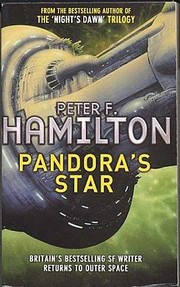
This is the true beginning of the Commonwealth and the only correct first book. It opens the wormhole-linked human civilisation, the Dyson Pair anomaly and the Starflyer conspiracy, all of which the later books assume you already know.
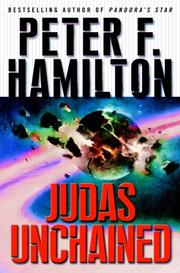
Not a sequel but the second half of a single novel split for length, so read it immediately after. Every thread Pandora's Star opens is resolved here, and stopping between the two leaves the story literally unfinished.
The prequel and the offcuts
IntermediateFill in the invention that created the Commonwealth, and read the short fiction set inside it, once the duology has made them mean something.
▸ Study plan for this stage
Pace: Three to four weeks for 658 pages — Misspent Youth at 386 and Manhattan in Reverse at 272 — which after the duology will feel like almost nothing. Misspent Youth is a small contemporary-scale novel and reads at 50 pages an evening, about ten days. Manhattan in Reverse is a story collection and is be
- Misspent Youth is chronologically the first Commonwealth book: it introduces Jeff Baker, whose rejuvenation technology underwrites the entire civilisation the duology depicts.
- It is deliberately small — a domestic novel about one family in near-future England — and its scale is why it fails as an entry point and works as a foundation stone.
- The subject is what rejuvenation does to one man and the people around him, which is the human version of the technology the duology only shows at civilisational scale.
- It is the most divisive book in Hamilton's catalogue, and a reader who dislikes it should not conclude anything about the Commonwealth books from that.
- Manhattan in Reverse is a collection whose best pieces are Commonwealth stories, including two Paula Myo investigations that expand the character considerably.
- Several stories spoil the duology outright, which is the whole reason for the placement. Reading the collection first costs you plot you cannot get back.
- The Myo stories work as detective fiction inside a science-fiction setting, and they show Hamilton doing something at short length that the novels have no room for.
- Neither book is required. A reader who wants only the main sequence can go straight from Judas Unchained to The Dreaming Void without losing the plot.
- What does Misspent Youth show about rejuvenation that the duology, operating at civilisational scale, cannot?
- Why is Jeff Baker important to the Commonwealth, and how much of that is visible in his own book?
- The novel is domestic and the duology is enormous. Is the tonal gap a flaw or a deliberate contrast?
- In the Myo stories, what does the short form let Hamilton do that a thousand-page novel does not?
- Which stories in Manhattan in Reverse would have spoiled the duology? Identify them after the fact and confirm the placement is right.
- Are either of these necessary? Make the case for and against each.
- Read Misspent Youth after the duology even if the chronology tempts you otherwise. This is the placement argument the path exists to make, and testing it is easy: read the first chapter and ask whether it would have meant anything before.
- Take the two Myo stories and read them consecutively, then reread her introduction in Pandora's Star. The character is substantially larger afterwards.
- Sort the collection into Commonwealth and non-Commonwealth stories before reading. The non-Commonwealth pieces are good and they are a different reading experience.
- Write one sentence on what rejuvenation costs, using both books. The duology says it institutionally and Misspent Youth says it personally.
Next up: With the foundations filled in, the sequence jumps fifteen hundred years to a Commonwealth its founders would not recognise.

Chronologically first — it introduces Jeff Baker, whose rejuvenation technology underwrites the whole Commonwealth — but read it here rather than first, because it is a small domestic novel that reads as a curiosity before the duology and as a foundation stone after it.
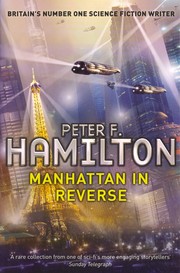
A collection whose best pieces are Commonwealth stories, including two Paula Myo investigations that expand the character the duology makes you care about. Placed after the duology because several stories spoil it outright.
The Void trilogy: the Commonwealth, fifteen centuries on
BeginnerRead the second Commonwealth sequence in order and follow its two interleaved narratives without losing either.
▸ Study plan for this stage
Pace: Four to five months for 2,032 pages — The Dreaming Void at 651, The Temporal Void at 709, The Evolutionary Void at 672. These are slightly shorter than the duology volumes and slightly harder work, because each alternates two entirely different narratives: a post-human Commonwealth fifteen centuries
- The Dreaming Void picks up a Commonwealth transformed by post-human factions, fifteen hundred years after Judas Unchained, and it explains almost none of what it inherits.
- That is why starting here fails. The factions, the technology and the politics are all differences from a baseline the reader is assumed to hold.
- The trilogy alternates two narratives: the Commonwealth outside, and Edeard's life inside the Void, delivered as dreams that a religious movement receives and treats as revelation.
- The Edeard sections read as fantasy — a young man with psychic abilities in a pre-industrial city — and readers expecting continuous space opera often find them an intrusion. They are the trilogy's actual argument.
- The Temporal Void is where Edeard's thread turns from pastoral into the question the trilogy is really asking: what the Void is for, and what it does to anyone inside it.
- The Void itself is the central object — a region at the galactic core that consumes stars and grants those inside it something close to omnipotence. The tension between those two facts is the plot.
- The Evolutionary Void resolves both narratives and pays off decisions characters made in Judas Unchained, which is the clearest demonstration that this is one universe rather than two series.
- It is also the natural place to stop. A reader who ends here has a complete Commonwealth story across five volumes.
- What has changed in the Commonwealth in fifteen hundred years, and how does Hamilton convey it without exposition?
- What are the post-human factions and what do they disagree about? State the argument rather than the names.
- Why is Edeard's story told as a dream received by a religious movement? What does that framing add?
- What is the Void, and why is a region that grants near-omnipotence a catastrophe rather than a gift?
- Which characters from the duology recur, and what have the intervening centuries done to them?
- Do the two narratives need each other? Argue it from The Temporal Void specifically.
- For the first hundred pages of The Dreaming Void, note every difference from the Commonwealth of the duology. That list is the trilogy's exposition, delivered by implication.
- Read the Edeard chapters of one volume consecutively, skipping the Commonwealth thread, and then go back. It is a legitimate one-off exercise and it makes the alternation's design visible.
- Track what the Void does to Edeard's choices across the three books. The mechanism is the trilogy's argument and it is easy to read past as fantasy plotting.
- When a duology character reappears, go back and reread their last scene in Judas Unchained. The payoffs are precise and depend on the earlier text.
- At the end of The Evolutionary Void, decide whether to continue. Five volumes is a complete story and the Fallers books are a coda.
Next up: One thread the Void trilogy opens is deliberately left hanging, and the two-book coda that closes it has to come after rather than inside the trilogy.

The book most new readers wrongly start with. It picks up a Commonwealth transformed by post-human factions and alternates with Edeard's story inside the Void — a structure that only makes sense if you already know what the Commonwealth was.
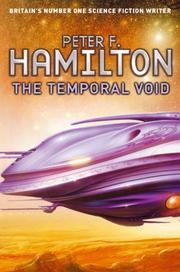
The middle volume, where Edeard's thread turns from pastoral fantasy into the trilogy's actual argument about what the Void is for. Read straight on from the first; the trilogy is continuous.

The resolution of both narratives, and the point where characters from the original duology pay off decisions made in Judas Unchained. This is the natural place to stop if you want a complete Commonwealth story.
The Chronicle of the Fallers
BeginnerRead the two-book coda that resolves a thread the Void trilogy left open, and know why it is last rather than chronological.
▸ Study plan for this stage
Pace: Two and a half to three months for 1,338 pages — The Abyss Beyond Dreams at 627 and Night Without Stars at 711. Same rate as the Void trilogy, about six weeks each. The scheduling point that matters is the placement rather than the pace: The Abyss Beyond Dreams sits chronologically inside the Void t
- The Abyss Beyond Dreams takes Nigel Sheldon, one of the two founders of the Commonwealth from the duology, into the Void. The chronological position is inside the Void trilogy and the reading position is after it.
- The reason is straightforward: the book proceeds from knowledge of how the Void trilogy resolves, so reading it in chronological order spoils three long novels for the sake of a timeline.
- The Fallers are the thread the Void trilogy left open — a species that reproduces by replacing human beings, which turns the setting into something closer to horror than the rest of the sequence.
- The world of Bienvenido is functionally a lost colony inside the Void, which lets Hamilton run a planetary story with none of the Commonwealth's technology available.
- Night Without Stars is set generations later on the same world and concludes the Fallers story. It is the last Commonwealth book to date.
- The two-book structure repeats the duology's shape — one continuous story split across two volumes — so read them back to back.
- This coda is genuinely optional. It resolves a thread rather than continuing the arc, and a reader who stopped after The Evolutionary Void has not left the main story unfinished.
- It is also the most conventional science fiction in the sequence: a single planet, a definable enemy, and a resistance. Some readers prefer it for exactly that.
- Why must The Abyss Beyond Dreams be read after the Void trilogy despite happening during it? Point to the specific dependency.
- What are the Fallers, and what does their reproductive method do to the kind of story Hamilton can tell?
- What does removing Commonwealth technology from the setting allow? Compare Bienvenido with any Commonwealth world.
- Nigel Sheldon has been present since the duology. What has the sequence done with him, and why is he the right person to send in?
- Is the Fallers duology a coda or a continuation? Where does it sit against the main arc?
- How does Night Without Stars close the Commonwealth sequence, and does it feel like an ending?
- Before starting, write down how the Void trilogy ended. The Abyss Beyond Dreams builds directly on it and the dependency is easy to verify from the first fifty pages.
- Track Nigel Sheldon from Pandora's Star through to here. He is the longest continuous presence in the sequence and following him is a route through five thousand pages.
- Note where the Fallers books read as horror rather than space opera. The generic shift is deliberate and it is what makes them distinct.
- Read the two back to back as you did the duology. The structure is the same and the same advice applies.
- Write one paragraph on whether the coda was worth 1,338 pages. It is a fair question and the answer is not obviously yes.
Next up: With the Commonwealth complete, the last stage is the practical question every reader who finishes it asks: what of Hamilton's other universes is worth starting.

Nigel Sheldon, from the duology, enters the Void — so this sits chronologically inside the Void trilogy but depends on knowing how that trilogy ends. Read it after, never before.
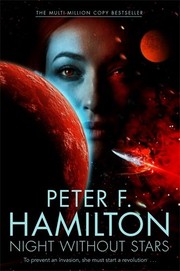
The direct conclusion of the Fallers story and the last Commonwealth book to date, set generations later on the same world. The catalogue records it under the bare title Night Without Stars; it is the same novel.
Where Hamilton readers go next
BeginnerChoose the right follow-on among Hamilton's other universes, knowing what each does differently from the Commonwealth.
▸ Study plan for this stage
Pace: Three to four months for 1,791 pages — The Reality Dysfunction at 609, Fallen Dragon at 630, Salvation at 552 — though this stage is a menu rather than a sequence and most readers will take one of the three. All read at the Hamilton rate of 40 to 50 pages a session, so five to six weeks each. If you
- The Reality Dysfunction opens the Night's Dawn trilogy in a separate universe, and it is the book most Commonwealth readers move to next.
- It is bigger, wilder and considerably more horror-inflected than the Commonwealth, and its content is substantially harsher. That difference is the main thing to know before starting.
- Start at the beginning of Night's Dawn rather than mid-trilogy. Its volumes are also split for length in some editions, which routinely confuses the numbering.
- Fallen Dragon is a standalone and the shortest route to finding out whether Hamilton's style suits you without a multi-thousand-page commitment.
- It is also the best palate cleanser between the two long sequences, and it does at 630 pages something the Commonwealth needs five volumes to attempt.
- Salvation opens the later Salvation Sequence, which reuses the wormhole-network idea from a colder and more suspicious angle. It is a distinct universe.
- Reading Salvation as more Commonwealth is the mistake to avoid. The technology is familiar and the argument about it is not the same one.
- Across all three, Hamilton's constants hold: many viewpoints, deferred connection, real interest in economics and infrastructure, and a payoff engineered for a reader who kept notes.
- What does Night's Dawn do that the Commonwealth does not, generically? Name the shift precisely.
- Fallen Dragon is a standalone. What has to change in Hamilton's method for a single volume to work?
- How does Salvation treat the wormhole network differently from Pandora's Star? What has soured?
- Which of the three would you recommend to a reader who liked the Commonwealth for its optimism, and which to one who liked it for its scale?
- What is constant across all of Hamilton's universes? Answer in one sentence and test it against each.
- Read the first fifty pages of each of the three before committing to any. Hamilton's openings are representative and half an evening saves six weeks.
- If you choose Night's Dawn, check the edition and volume numbering before ordering. Split volumes make this the most confusing series on this path to buy.
- Compare the wormhole politics of Salvation with those of Pandora's Star directly. The same technology and a different verdict is the most interesting thing about the later book.
- Write your own recommended entry order for Hamilton, for three different kinds of reader. That is the practical product of this entire path.
Next up: That closes the path — the duology first as one novel, the foundations second, the Void and the Fallers in the order that protects them, and the rest of Hamilton placed.
The opening of the Night's Dawn trilogy, a separate universe and the book most Commonwealth readers move to. Bigger, wilder and more horror-inflected — start here rather than mid-trilogy.
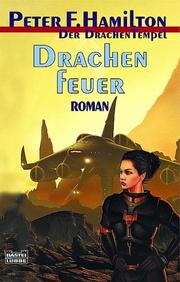
A standalone, and the shortest route to finding out whether Hamilton's style suits you without a thousand-page commitment. Useful as a palate cleanser between the two long sequences.

The first book of his later Salvation Sequence, which reuses the wormhole-network idea from a colder angle. It is a distinct universe, so read it as a fresh start rather than as more Commonwealth.
Discussion
Keep reading
Paths that share books, cover the same subject, or open a related topic.