Peter F. Hamilton books in order: where to start with the Commonwealth
Hamilton writes space opera at a scale almost nobody else attempts — two multi-thousand-page future histories, each self-contained, each with a different problem for a new reader. Start with the Commonwealth: Pandora's Star opens with a clean hook, the technology is legible, and the sequence keeps going for another five books afterwards. Night's Dawn is the more famous entry point and the wrong one to begin with, because its central idea turns the second half of the trilogy into something very different from what the first book promises.
Start here: the Commonwealth Saga
BeginnerRead the two-book duology that is the best entry to Hamilton, and decide from it whether the scale suits you before committing to anything longer.
▸ Study plan for this stage
Pace: Five to seven weeks for 1,738 pages across two volumes — Pandora's Star at 896 and Judas Unchained at 842. Treat them as one novel split for binding reasons and read them back to back with no gap, because Pandora's Star does not resolve and stopping between them is the single commonest way readers a
- The hook is clean and worth stating because it is why this is the entry point: a star vanishes inside an artificial force field, and humanity sends a ship to find out why. Everything in 1,700 pages follows from that one question.
- The Commonwealth's central technology is wormhole travel used as infrastructure rather than adventure — trains run between star systems — and the social consequences of that choice are worked out in detail rather than asserted.
- Rejuvenation, memory storage and re-life change what a character is. People here have long careers, revised bodies and backed-up memories, which alters what is at stake in a death scene and takes some adjustment.
- Hamilton runs many viewpoint threads at once and lets them converge slowly. The detective thread, the colonial thread and the political thread appear unrelated for a long stretch and are not.
- The scale is the aesthetic. Long stretches of world-building with no immediate plot function are the point of the form rather than padding, and deciding early whether you enjoy that is what this stage is for.
- Hamilton's habitual weaknesses show up here too and are worth naming so they do not surprise you later: the prose is functional rather than fine, and the handling of sex and of some characterisation is uneven.
- Judas Unchained resolves the Commonwealth Saga fully. If you stop after it you have read a complete, self-contained story, which is a genuine option and the reason this stage exists as a decision point.
- What is the actual question posed in the opening chapters of Pandora's Star, and how long does it take the novel to answer it?
- How does wormhole-as-railway change the shape of the Commonwealth as a society, compared with a setting that uses starships?
- Rejuvenation and re-life reduce the finality of death. What does Hamilton do to keep dramatic stakes, and where does it not work?
- Track any one viewpoint thread from its first appearance to its convergence with the main plot. At what point did you understand why it was there?
- Having finished both volumes: do you want another two thousand pages of this? Answer honestly, because everything after this stage is longer.
- Keep a character and world ledger from the first chapter — name, planet, affiliation, thread. Hamilton reintroduces people hundreds of pages later without reminders, and this ledger is the difference between following the book and rereading it.
- Mark the page at which the disparate threads first visibly connect, and write a sentence on what the connection was. That structural move is Hamilton's signature and you will see it again in every sequence.
- Write down your working theory of what is inside the Dyson barrier before the novel tells you. Date it and check it.
- After Judas Unchained, write one paragraph on what you liked and one on what you did not. Keep both — they are the honest basis for deciding whether to continue into the Void trilogy or stop here.
Next up: You have the setting, the cast and the taste for the scale; the Void trilogy jumps twelve hundred years forward and assumes every bit of it.
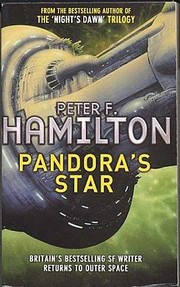
The place to start, and not a close call. A star vanishes inside a force field, humanity sends a ship, and the consequences run for a thousand pages. Wormhole trains, rejuvenation and a functioning interstellar society are all introduced without a prologue's worth of exposition.
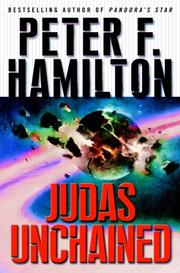
The second half of one novel, not a sequel — Pandora's Star does not resolve, so treat these two as a single book split for binding reasons. Read them back to back.
The Void trilogy
IntermediateContinue the Commonwealth twelve hundred years on, and see Hamilton run a fantasy narrative inside a science-fiction one.
▸ Study plan for this stage
Pace: Six to nine weeks for 2,032 pages — The Dreaming Void at 651, The Temporal Void at 709 and The Evolutionary Void at 672. This is a genuine trilogy with no resolution until the third volume, so plan to read straight through. Expect the first hundred pages of The Dreaming Void to be slow going: it is
- The structural gamble that defines these books: alternating chapters run a secondary-world fantasy narrative — Edeard's story inside the Void — against the science-fiction frame. Knowing that in advance is the difference between finding it inventive and finding it a bait and switch.
- You will know within a hundred pages whether the Edeard sections work for you. Readers divide sharply on them, and this is the most honest warning on the whole path: if they do not land, this is the stage to stop rather than to push through.
- The Void itself as a premise — an enclosed region at the galactic core with different physical laws, consuming matter, with the human pilgrimage toward it as the political crisis of the outer narrative.
- The continuity assumption. Characters, institutions and consequences carry directly from Pandora's Star and Judas Unchained, and readers who start here are lost in a way that is not their fault.
- The Temporal Void is the strongest of the three on the Edeard thread, and the Edeard material is where most readers who love the trilogy locate their affection for it.
- There is no natural stopping point after volume two. The Temporal Void ends mid-motion by design, so plan the reading schedule with that in mind.
- The Evolutionary Void resolves both the inner and the outer narrative and closes the arc that began with the missing star in Pandora's Star. This is the real end of the main Commonwealth story.
- What is the Void, in the terms the novels actually give, and why does its existence constitute a political crisis rather than only a scientific one?
- After a hundred pages of The Dreaming Void, are the Edeard sections working for you? Say specifically what is or is not working — the register, the pacing, or the interruption of the outer plot.
- How does Hamilton connect the inner and outer narratives structurally? At what point does the connection become explicit rather than thematic?
- Which Commonwealth Saga characters and institutions return here, and what would a reader who skipped the first stage fail to understand about them?
- Does The Evolutionary Void earn its resolution, given how much it has to close? Name the strand you found least satisfyingly resolved.
- Keep two ledgers rather than one — inner narrative and outer — and note every point where information crosses between them. The crossings are the architecture of the trilogy.
- At the hundred-page mark of The Dreaming Void, write a one-line verdict on the Edeard structure and decide then whether to continue. Deciding deliberately at that point is better than abandoning it at page four hundred.
- Compare the Edeard chapters with a straightforward secondary-world fantasy you know. What is Hamilton doing with the form that a fantasy novel would not?
- After finishing, list every thread opened in Pandora's Star and mark whether it closed here. The remainder is what the next stage exists to address.
Next up: The Void trilogy closes the main arc but leaves one substantial thread hanging, and the two-book Chronicle of the Fallers is where that thread is picked up.

Direct continuation of the Commonwealth, and it assumes you have read Pandora's Star and Judas Unchained. The alternating Edeard sections are effectively secondary-world fantasy; readers either love that structure or bounce off it, and you will know within a hundred pages.
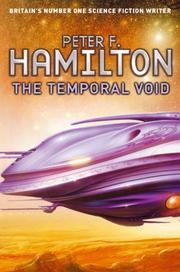
The middle volume and the strongest of the three on the Edeard thread. No natural stopping point after it.

Resolves both threads and closes the arc that began in Pandora's Star. This is the real end of the main Commonwealth story.
Chronicle of the Fallers
IntermediateRead the two-book coda that resolves a thread the Void trilogy left open, and understand where the Commonwealth sequence actually finishes.
▸ Study plan for this stage
Pace: Four to five weeks for 1,338 pages — The Abyss Beyond Dreams at 627 and Night Without Stars at 711. Two books, one story, read consecutively. The chronology of these volumes invites you to read them earlier than this, and that invitation should be declined: they work considerably better after the Vo
- The reading-order decision, stated plainly: publication and internal chronology point in different directions here, and the recommendation is to read the Fallers books after the Void trilogy because the earlier volumes supply context these two assume emotionally rather than factually.
- The Abyss Beyond Dreams is set on a world inside the Void with a Commonwealth character at its centre, which is why it cannot be read as a standalone despite superficially looking like one.
- The Fallers as antagonist are a different kind of threat from anything in the Commonwealth Saga — closer to body horror than to political or military conflict — and the tonal shift is deliberate.
- Hamilton reuses a structure here that the Void trilogy established: a constrained, low-technology society examined in detail while the larger science-fictional frame presses in on it.
- Night Without Stars is the UK form of the title and is the form the catalogue holds; the same novel appears in some markets with a leading article. It is one book, not two.
- This duology concludes the whole Commonwealth continuity. After it there is nothing further in this sequence, which makes it a genuine end point rather than a pause.
- The revolution and resistance material in these books is Hamilton at his most politically explicit, and it is uneven — worth reading with the same eye you applied to the Void's fantasy sections.
- Why do these books read better after the Void trilogy than before it, despite the chronology? Give a reason from the text rather than from the recommendation.
- What are the Fallers, and how does the threat they pose differ from the threats in the earlier sequences?
- Which structural device from the Void trilogy is reused here, and does it work better or worse the second time?
- How does Night Without Stars close the Commonwealth continuity? Name the specific threads it retires.
- Having now read nine Commonwealth volumes, what would you tell a new reader about where to start and where to stop?
- Before starting, write out what you expect the Fallers duology to resolve. Check the list afterwards; the gap tells you what Hamilton was actually interested in.
- Track the Commonwealth character at the centre of The Abyss Beyond Dreams back through the earlier books and note what the reader is expected to already feel about them.
- Write a two-paragraph reading-order recommendation for the whole Commonwealth continuity in your own words, with the reasons. This is the most useful artefact to produce at the end of the sequence.
- Decide now whether you are continuing to Night's Dawn. If the answer is no, this is a complete and legitimate stopping place for the whole path.
Next up: With the Commonwealth finished you know what Hamilton is and what he does, which is exactly the equipment needed to take on the earlier and stranger sequence this path deliberately postponed.

Set on a world inside the Void with a Commonwealth character at its centre. It works better after the Void trilogy than before it, despite the chronology inviting the opposite.
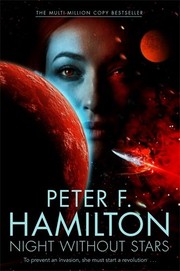
Published in the UK as Night Without Stars, which is the form the catalogue holds. Concludes the Fallers duology and, with it, the whole Commonwealth continuity.
The other big one: Night's Dawn
IntermediateTake on Hamilton's first and largest sequence, knowing what its central conceit is and why it divides readers.
▸ Study plan for this stage
Pace: Three to four months for 2,982 pages, and the largest single commitment on the path. The Reality Dysfunction is 609 pages, The Neutronium Alchemist 744 and The Naked God 1,179 — with A Second Chance at Eden, a 450-page collection, as an optional fourth. Read the trilogy in order and read the collect
- Why this sequence comes fourth on the path rather than first. The Reality Dysfunction is the book most new readers are pointed at, and it is a superb opening — but the antagonist that arrives partway through changes what the trilogy is, in a direction many readers did not sign up for. Meeting that t
- The Edenist and Adamist split is the setting's organising division: one branch of humanity uses bitek — living, grown habitats and affinity-linked minds — and the other rejects it on religious grounds. Almost every conflict in the trilogy runs along this line.
- Bitek and the Edenist habitats are Hamilton's most inventive world-building anywhere, and the early colonisation material on Lalonde is as good as space opera gets.
- The central conceit, which is what divides readers: the threat is not the technological or political one the opening sets up, and the genre shifts underneath the reader partway through the first volume. This is not a spoiler so much as a purchasing decision.
- The Neutronium Alchemist is the best sustained writing in the trilogy and the volume where the middle-book problem does not apply — the story is at its widest and the plotting at its tightest.
- The Naked God's ending is the most argued-about thing in Hamilton's work. A great many readers find the resolution unearned after three thousand pages, and that criticism is worth taking seriously rather than dismissing.
- A Second Chance at Eden collects stories in the same universe including the origin of the Edenists, and it works as background at any point but reads best once you know what the setting became.
- Describe the Edenist and Adamist division and the religious basis of the split. Why does it make the conflict harder to resolve than a purely political one would be?
- At what point in The Reality Dysfunction does the nature of the threat become clear, and what did you expect the book to be before that?
- Why is The Neutronium Alchemist generally rated the strongest volume? Give reasons about structure rather than about events.
- State the case that The Naked God's ending is unearned as strongly as you can. Then state the defence. Which do you hold?
- Compare Night's Dawn with the Commonwealth sequence on invention, plotting and characterisation. Which is the better work, and which is the better entry point? They need not be the same answer.
- Does A Second Chance at Eden add anything to the trilogy, or is it a companion piece? Be specific about which stories.
- Check before buying whether the edition in front of you is a full volume or one half of a split paperback. Doing this once at the start saves a great deal of confusion at volume three.
- Keep the character ledger going — Night's Dawn has the largest cast Hamilton ever wrote and the reintroduction gaps are the longest.
- Write your prediction for how the trilogy resolves at the end of The Neutronium Alchemist, then compare it with what happens. The gap between them is the argument about the ending, in miniature.
- After The Naked God, write a one-page assessment of the ending. This is the exercise the stage is really for: the argument is only worth having if you have finished, and having your own position on it is the point of reading nearly three thousand pages.
- Read the Edenist origin story in A Second Chance at Eden last and note what it retroactively changes about the trilogy's central division.
Next up: You have now read both of Hamilton's enormous future histories, which makes the standalones legible as what they are — the same writer working at a length where he has to be disciplined.
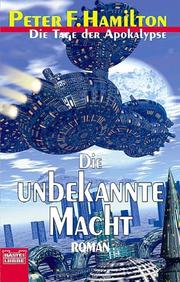
The book most people are told to start with, and the one this path deliberately puts fourth. It is a superb opening — colonisation, the Edenist and Adamist split, bitek habitats — but the antagonist that arrives partway through takes the trilogy somewhere many readers did not sign up for. Better to meet it having already decided you like Hamilton.
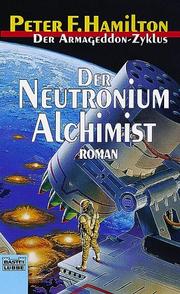
The middle volume, and the best sustained writing in the trilogy. Split into two paperbacks in some markets, which is worth knowing when buying.
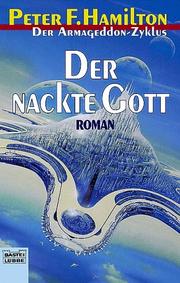
The conclusion, and the most argued-about ending in Hamilton's work — a great many readers find the resolution unearned after three thousand pages. Read it anyway; the argument is only worth having if you have finished.
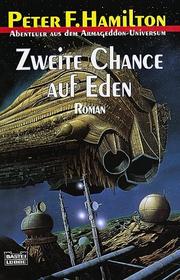
A collection set in the Night's Dawn universe, including the origin of the Edenists. It works as background at any point but reads best after The Naked God, when you know what the setting became.
Standalones and the early work
IntermediateFill in Hamilton outside the two big sequences, including the near-future thrillers he started with.
▸ Study plan for this stage
Pace: Four to six weeks for 2,021 pages — Fallen Dragon at 630, Great North Road at 948 and Mindstar Rising at 443. There is no required order within this stage. Fallen Dragon first if you want the best single Hamilton novel, Great North Road first if you want the most unusual, Mindstar Rising first if yo
- Fallen Dragon is a single self-contained novel and the right book to hand anyone who will not commit to a sequence. Corporate asset-realisation as a model of interstellar colonialism is a genuinely good idea and the compression improves Hamilton's plotting considerably.
- Great North Road is a murder investigation in a future Newcastle that opens out into something much larger — the closest Hamilton has come to a procedural, and the closest he comes to writing a real city.
- The standalones show what constraint does to this writer. Both are recognisably his and both are tighter than any volume in the two big sequences, which is a useful thing to know about him.
- Mindstar Rising is the first Greg Mandel novel and Hamilton's debut: near-future England after climate collapse, with a psychic ex-soldier as detective. Small, cheap and nothing like the space opera.
- The Greg Mandel trilogy is completed by A Quantum Murder and The Nano Flower if you want the sequence, though Mindstar Rising is sufficient to see where he started.
- The Salvation sequence is a separate later trilogy again, unconnected to the Commonwealth, and is where to go next if this stage leaves you wanting more.
- Reading the debut last is deliberate. Having read nine thousand pages of mature Hamilton, the early book is legible as apprenticeship rather than as a disappointment, and the trajectory is the interesting thing about it.
- What does Fallen Dragon do in six hundred pages that the Commonwealth Saga needs seventeen hundred to do? Name a specific structural economy.
- Great North Road is a procedural that becomes something else. Where is the hinge, and does the mystery hold up as a mystery?
- What in Mindstar Rising already looks like the later Hamilton, and what looks like a different writer entirely?
- Rank the standalones against the sequences on plot, character and invention. Where does the length actually help him, and where does it hurt?
- Having finished the whole path, what is your one-paragraph answer to someone asking where to start with Peter F. Hamilton?
- Read Fallen Dragon and write a paragraph on how the colonial premise is set up in its first fifty pages, then compare with how long Pandora's Star takes to establish its premise.
- Track the mystery in Great North Road as a mystery — suspects, evidence, misdirection — and assess whether it plays fair. Hamilton is not primarily a crime writer and it is worth knowing how he does at it.
- Read Mindstar Rising last and list three things in it that recur across his later work.
- Write the reading-order guide you wish you had at the start of this path: entry point, what to skip, where to stop, and what to read if you want more. That is the deliverable of the whole thing.
Next up: This is the end of the path: both major sequences, the standalones and the debut, with a clear view of which of them is worth a new reader's first thousand pages.
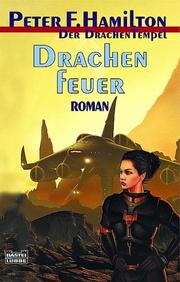
A single self-contained novel, and the best thing to hand someone who does not want to commit to a sequence. Corporate asset-realisation as interstellar colonialism, in one volume.
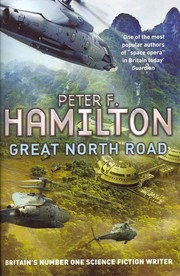
A murder investigation in a future Newcastle that opens out into something much larger. Standalone, and the closest Hamilton has come to writing a procedural.
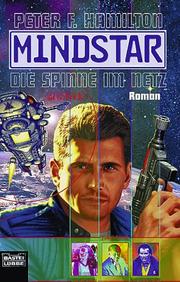
The first Greg Mandel novel and Hamilton's debut — near-future England after climate collapse, with a psychic ex-soldier as detective. Small, cheap and nothing like the space opera; read it to see where he began. A Quantum Murder and The Nano Flower complete the trilogy, and the later Salvation books are a separate sequence again.
Discussion
Keep reading
Paths that share books, cover the same subject, or open a related topic.
