The Broken Empire Reading Order and Guide
This curriculum guides you through Mark Lawrence's Broken Empire universe in the intended reading order, starting with the original trilogy that introduced Jorg Ancrath, then moving into the connected Prince of Thorns world through the Red Queen's War and Book of the Ancestor series. Each stage builds familiarity with Lawrence's dark, morally complex prose style, his post-apocalyptic medieval world, and the overlapping characters and lore that reward readers who follow the recommended sequence.
The Broken Empire Trilogy — The Core
BeginnerExperience the original trilogy in order, meeting Jorg Ancrath and fully understanding the world, tone, and shocking reveals of the Broken Empire.
▸ Study plan for this stage
Pace: 10–12 weeks total; roughly 2–3 weeks per book at ~20–25 pages/day. Prince of Thorns (~350 pp): weeks 1–3; King of Thorns (~550 pp): weeks 4–7; Emperor of Thorns (~470 pp): weeks 8–11; week 12 reserved for reflection, re-reading key chapters, and completing exercises.
- Jorg Ancrath's unreliable narration — understanding when and why to distrust the protagonist's own account of events
- The dual timeline structure (present action vs. past memory/journal entries), especially prominent in King of Thorns, and how Lawrence uses it to control revelation and suspense
- The post-apocalyptic world-building of the Broken Empire — medieval-seeming Europe concealing a far-future collapsed technological civilization, and the gradual unveiling of this truth across all three books
- The Builder mythology and the nature of 'magic' as decayed science — understanding devices, data-ghosts, and the remnants of the old world as reframed technology
- Jorg's psychological arc — trauma, the thorns of the briar patch, the Box, and how his capacity for violence is rooted in specific formative wounds rather than simple villainy
- Moral ambiguity and the anti-hero — Lawrence's deliberate challenge to the reader to engage with a protagonist who commits atrocities, and what the trilogy ultimately argues about agency and survival
- The political landscape of the Broken Empire — the fragmented kingdoms, the role of the Church, the Hundred War, and Jorg's drive toward unification as Emperor
- The Dead King and the supernatural threat — how the existential stakes of Emperor of Thorns reframe everything that came before as a necessary, if brutal, preparation
- By the end of Prince of Thorns, what do we understand about the event Jorg witnessed on the road as a child, and how does Lawrence use the briar patch and the Box as psychological metaphors for his coping mechanism?
- How does the dual-timeline structure in King of Thorns function as a narrative device — what is being concealed in the 'present' timeline, and what does the wedding-day frame ultimately reveal about Jorg's planning and ruthlessness?
- What is the true nature of the Builders' world, and at what point across the three books does the reader have enough clues to fully understand that the Broken Empire is a post-apocalyptic far-future Earth?
- How does Jorg's relationship with Katherine evolve across all three books, and what role does she play in humanizing or complicating the reader's perception of him?
- What is the Dead King's origin and motivation in Emperor of Thorns, and how does his threat force Jorg into a form of self-sacrifice that contrasts with his earlier purely self-serving actions?
- In what ways does Mark Lawrence use secondary characters — Makin, Miana, Chella, Sageous — to reflect or challenge different facets of Jorg's character and worldview?
- Unreliable Narrator Log: While reading Prince of Thorns, keep a running list of moments where Jorg's narration feels incomplete, contradictory, or self-serving. After finishing the book, revisit the list and annotate each entry with what you now believe actually happened or what Jorg was hiding from himself.
- Timeline Mapping (King of Thorns): Draw a two-column timeline — 'Wedding Day Present' on one side, 'Four Years Prior' on the other — and plot major events as you encounter them. At the end, write a one-paragraph explanation of why Lawrence structured the book this way and what effect it had on your reading experience.
- World-Building Archaeology: After completing all three books, compile a 'Builder Dossier' — a list of every piece of technology, data-ghost, or pre-collapse artifact encountered across the trilogy. For each, write a sentence identifying what real-world technology or concept it represents (e.g., a 'ghost' as an AI hologram, 'Builder sun' as a nuclear weapon).
- Character Moral Ledger: For Jorg Ancrath, create a two-column ledger of his most significant actions across the trilogy — 'Acts of Destruction/Cruelty' vs. 'Acts of Protection/Sacrifice.' After completing Emperor of Thorns, write a short verdict: do you believe Lawrence intends for the reader to sympathize with Jorg, condemn him, or something more complicated? Use specific textual evidence.
- Reread the Opening of Prince of Thorns After Finishing Emperor of Thorns: Return to the first chapter of Prince of Thorns with full trilogy knowledge. Write a half-page reflection on what details land differently, what foreshadowing you now notice, and how your understanding of Jorg has changed from page one to the trilogy's conclusion.
- Discussion or Journal Prompt — The Cost of Empire: Emperor of Thorns ends with Jorg achieving a form of victory through ultimate sacrifice. Write a 300–500 word response to this question: 'Is the Broken Empire a tragedy, a hero's journey, or something that deliberately defies both labels?' Support your argument with evidence from all three books.
Next up: Completing the original trilogy gives the reader a fully grounded understanding of the Broken Empire's world, history, and moral logic — the essential foundation for exploring how Lawrence revisits and expands this same universe through different eyes and timelines in his companion series and related works.
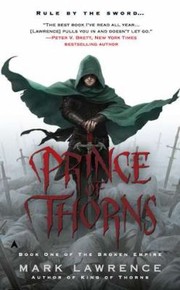
The starting point of everything — introduces Jorg, the brutal world, and Lawrence's distinctive unreliable-narrator voice. Read this first, no exceptions.

Deepens the world-building and raises the stakes dramatically; the dual timeline structure rewards the foundation built in Prince of Thorns.
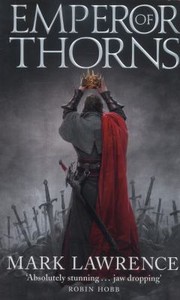
The trilogy's conclusion, paying off every thread from the first two books and revealing the full truth of the Broken Empire's post-apocalyptic secret.
The Red Queen's War Trilogy — A New Perspective
IntermediateFollow Prince Jalan and Snorri through the same world seen from a lighter, wry perspective, deepening your understanding of the Broken Empire's lore and the Red Queen's machinations.
▸ Study plan for this stage
Pace: 8–10 weeks total: ~2–3 weeks per book at roughly 20–25 pages/day. Prince of Fools (weeks 1–3), The Liar's Key (weeks 4–6), The Wheel of Osheim (weeks 7–10, slightly slower to absorb the climactic lore revelations).
- Jalan Kendeth as an unreliable narrator — his cowardice, self-interest, and wit as a lens that reframes events the reader may already know from the Broken Empire trilogy
- The Silent Sister's spell and the nature of the 'unborn' bond between Jalan and Snorri — light and dark, opposites tethered together
- Snorri ver Snagason's Norse-inspired warrior ethos, his grief, and his obsessive quest to recover his family through the key and the door
- Loki's Key (the Liar's Key) as a magical MacGuffin and metaphor — the idea that every lock has a door, and every door a consequence, echoing the trilogy's theme of unintended outcomes
- The Dead King and the mechanics of necromancy in the Broken Empire — how the Dead King's power grows and what it means for the world's eschatology
- The Wheel of Osheim and the Builder-era simulation/computational mythology — the revelation that reality itself may be a construct, and how this recontextualizes all magic in the series
- The Red Queen's long game — seeing her machinations from the outside through Jalan's ignorant perspective versus the reader's informed vantage point from the Broken Empire trilogy
- Tonal contrast as a storytelling device — how Lawrence uses dark comedy, Jalan's self-deprecating voice, and picaresque adventure to explore the same grimdark world from a humanizing angle
- How does Jalan's self-serving narration in Prince of Fools create dramatic irony for readers who have already experienced the Broken Empire trilogy, and what does it reveal about the reliability of any single perspective in this world?
- What is the nature of the magical bond between Jalan and Snorri, who cast it and why, and how does the light/dark duality they represent develop across all three books?
- What is Loki's Key, what can it unlock, and why does possession of it make every character who holds it a target — what does the key ultimately 'open' by the end of The Wheel of Osheim?
- How does The Wheel of Osheim's revelation about the Builders' technology (the simulation/computational underpinning of magic) change your understanding of events in both this trilogy and the Broken Empire trilogy?
- Trace the Red Queen's plan as it can be reconstructed from clues scattered across all three books — what is she ultimately trying to prevent, and how does Jalan (unknowingly) serve her purposes?
- How does Snorri's arc — from grieving father and husband to his final choice at the door — function as a thematic counterweight to Jalan's arc of reluctant growth?
- Dual-perspective journal: After each major plot event in Prince of Fools, write 2–3 sentences as Jalan would describe it, then 2–3 sentences as Jorg Ancrath (from the Broken Empire trilogy) might — compare the tonal and moral gap between the two voices.
- Map the journey: Draw or annotate a map of the Broken Empire and physically trace Jalan and Snorri's route across all three books, noting which locations overlap with Jorg's travels and what new regions are introduced.
- Key & Door log: Keep a running list of every 'lock and key' moment — literal and metaphorical — across The Liar's Key, noting what each character hopes a door will give them versus what they actually receive.
- Red Queen reconstruction: After finishing The Wheel of Osheim, write a one-page summary of the Red Queen's full plan as you understand it, citing specific scenes from all three books as evidence — then compare it to what Jalan himself understands at the end.
- Character contrast essay (500 words): Argue whether Jalan's cowardice is a character flaw, a survival mechanism, or a form of honesty — use at least three specific scenes spread across the trilogy to support your position.
- Thematic connection: Identify two or three moments in The Wheel of Osheim where the Builder/simulation mythology reframes a 'magical' event from earlier in the trilogy, and write a short explanation of how the new context changes the meaning of each scene.
Next up: By completing this trilogy, the reader has now seen the Broken Empire's world, lore, and the Red Queen's war from two contrasting narrative perspectives — equipping them to engage with deeper dives into Lawrence's craft, thematic synthesis across both trilogies, or companion works that explore the world's mythology and Builder-era history at a more analytical level.

Set concurrently with King of Thorns, this introduces the cowardly but charming Jalan — a tonal contrast to Jorg that enriches the shared world.

Continues Jalan and Snorri's quest; the mythology of the Dead King and the underworld expands significantly here, connecting back to Emperor of Thorns.

The trilogy's climax converges directly with the events of Emperor of Thorns, making prior knowledge of Jorg's story essential and deeply rewarding.
Book of the Ancestor Trilogy — A New Corner of the World
IntermediateExplore the same broken world through the eyes of Nona Grey in a convent setting, broadening your grasp of Lawrence's universe while enjoying a fresh, female-led story.
▸ Study plan for this stage
Pace: 9–11 weeks total: ~3–4 weeks per book at roughly 25–30 pages/day. Red Sister (weeks 1–3): read slowly to absorb the convent world-building and Nona's origin; Grey Sister (weeks 4–7): maintain pace while tracking escalating political and magical threads; Holy Sister (weeks 8–11): slow down again for
- The Corridor and the Ark — understanding the Broken Empire's dying sun, the narrowing habitable strip of land, and how Sweet Mercy Convent sits within that geopolitical pressure cooker
- Nona Grey's arc from hunted peasant child to fully realized warrior-nun, and how her identity is shaped by loyalty, trauma, and chosen family rather than birthright
- The four bloods (Hunska, Gerant, Marjal, Quantal) as a magic taxonomy — how each blood-type manifests, how rare 'full' or 'dual' bloods are, and why Nona's combination makes her uniquely dangerous
- Thread-work and the Path — the distinction between Nona's blade-path (physical perfection) and the deeper mystical Path that Quantal nuns walk, and how Holy Class training pushes both to their limits
- The sisterhood of Sweet Mercy — Ara, Zole, Kettle, Abbess Glass, and the other nuns as a found-family whose bonds are tested by the Noi-Guin, the Academics, and the empire's politics
- Abbess Glass as a master strategist — recognizing her long game across all three books and how her apparent defeats are often engineered sacrifices
- The Sherzal/Thuran Tacsis political conspiracy — tracking the antagonists' shifting alliances and how secular imperial power threatens the Church and the convent
- The Ark and the Shiphearts — understanding these ancient relics as both literal power sources and thematic symbols of humanity clinging to survival against entropy
- By the end of Red Sister, what do we know about why Nona was sold to the child-taker, and how does that origin shape her relationships inside Sweet Mercy?
- How does the magic system evolve across the three books — what can Nona do in Red Sister that she cannot yet do, and what new abilities or depths does she unlock in Grey Sister and Holy Sister?
- What is Abbess Glass's overarching plan, and at what point in the trilogy did you first suspect she was operating on a level beyond what the narrative surface suggested?
- How does Zole's role shift from apparent rival to something far more pivotal by Holy Sister, and what does her arc say about sacrifice and destiny in Lawrence's world?
- In what ways does the convent setting function as both sanctuary and trap for Nona — and how does Lawrence use the physical space of Sweet Mercy to mirror Nona's internal state at key moments?
- How does the Book of the Ancestor trilogy expand or complicate your understanding of the Broken Empire established in the Prince of Thorns / King of Thorns / Emperor of Thorns trilogy?
- Blood-type character map: After finishing Red Sister, draw a chart listing every named character, their known blood-type(s), and their demonstrated abilities — update it with new information after each subsequent book to watch the magic system deepen.
- Abbess Glass timeline: Keep a running log of every decision Glass makes across all three books, noting what information she had at the time versus what she was concealing — at the end of Holy Sister, write a one-page summary of her true strategy.
- Convent hierarchy diagram: Sketch the social and institutional structure of Sweet Mercy (novices, novice mistresses, Holy Class, abbess, the Church above) and annotate how power flows — and how it is subverted — at three key crisis points in the trilogy.
- Antagonist motivation tracker: For Sherzal, Thuran Tacsis, and the Noi-Guin, write a brief paragraph per book explaining their goals, methods, and how those shift — then assess whether Lawrence presents them as purely evil or as products of the same broken world Nona inhabits.
- Thematic journal — survival vs. belonging: After each book, write 200–300 words on how Nona's central tension between being a weapon and being a person evolves; compare your three entries at the end to trace the arc.
- Comparative world-building note: After completing Holy Sister, write a short essay (400–500 words) identifying two or three specific details — geographic, historical, or cultural — that connect the Book of the Ancestor trilogy to the Broken Empire trilogy, and discuss what reading both adds to your understanding of Lawrence's world.
Next up: Completing the Book of the Ancestor trilogy gives you a panoramic, dual-perspective view of the Broken Empire's world and themes, positioning you to engage with Lawrence's third series — the Book of the Ice — with the full thematic and geographical context needed to appreciate how he continues expanding and deepening this shared universe.

Opens the Book of the Ancestor series with Nona Grey's training at a martial convent — a great entry point that stands alone while sharing the same world's deep history.

Raises the political and magical complexity; best read after Red Sister as it assumes full familiarity with the convent's factions and Nona's abilities.

The trilogy's conclusion, tying together all character arcs and revealing connections to the broader Broken Empire cosmology for attentive readers.
Book of the Ice Trilogy — The Deepest Lore
ExpertComplete your journey through Lawrence's interconnected universe with the most recent trilogy, which draws on threads from all prior series and rewards readers who have followed the full path.
▸ Study plan for this stage
Pace: 4–5 weeks, ~25–30 pages/day; read The Girl and the Stars first (complete before starting Girl and the Mountain), allowing 2–3 weeks per book with buffer days for note-taking and reflection sessions
- The Corridor and the Ice — understanding the insular, survival-driven society of the Corridor-dwellers and how geographic isolation shapes culture, morality, and mythology
- The Pit as a narrative device — how The Girl and the Stars uses the act of 'dropping' outcasts into the Pit to explore themes of rejection, hidden worth, and the underworld as a place of revelation rather than death
- Yaz as a culminating protagonist — tracing how her arc synthesizes Lawrence's recurring motif of an unlikely, underestimated young person who carries world-altering power without seeking it
- The stars and the Missing — unpacking the cosmological lore introduced in The Girl and the Stars and expanded in Girl and the Mountain, connecting the ancient Missing civilization to threads seeded across the Broken Empire and Red Queen's War universes
- Ice and darkness as symbolic landscape — how the frozen, lightless world mirrors internal states of characters and functions as a moral testing ground distinct from the sun-drenched or war-torn settings of prior series
- Tribal politics and the cost of tradition — examining how the Corridor tribes' rigid customs (the dropping, the hierarchy of the strong) serve as a microcosm for systemic injustice and the violence of conformity
- Interconnected universe payoff — identifying specific lore callbacks, place-name echoes, and thematic rhymes that reward readers who have completed the Broken Empire and Red Queen's War trilogies before arriving here
- Friendship, loyalty, and found family — how Yaz's relationships in both books (particularly with Quina, Thurin, and Erris) carry the emotional weight of the plot and distinguish this trilogy's tone from Lawrence's earlier, more solitary protagonists
- How does the society of the Corridor use the practice of 'dropping' to enforce conformity, and what does Yaz's survival reveal about the assumptions that society is built on?
- What is the significance of the Missing and their remnant technology, and how does Girl and the Mountain expand on the mysteries introduced in The Girl and the Stars?
- In what ways does Yaz differ from Lawrence's earlier protagonists (Jorg, Jalan) in terms of motivation, morality, and relationship to power — and what does that evolution say about the thematic arc of the wider universe?
- How do the physical settings of the Pit and the ice surface in both books function symbolically, and what journey do they map onto Yaz's internal development?
- Which specific details, place names, or lore elements in these two books appear to connect back to the world of the Broken Empire or the Red Queen's War, and what do those connections suggest about the shared cosmology?
- How does the theme of 'what is discarded has hidden value' operate across both books, and which characters or objects best embody it?
- Lore-mapping exercise: After finishing The Girl and the Stars, draw or diagram the physical geography of the Corridor and the Pit, annotating it with the social rules that govern each space — then revisit and revise the diagram after Girl and the Mountain to see how your understanding has shifted.
- Cross-series callback log: Keep a running list as you read both books of any names, places, technologies, or mythological references that echo material from the Broken Empire or Red Queen's War trilogies; write a short paragraph at the end speculating on what each callback implies about the shared timeline.
- Character comparison essay (500–700 words): Compare Yaz to one protagonist from a prior stage (Jorg or Jalan) on a single axis — attitude toward power, relationship to violence, or use of found family — using at least two specific scenes from the Book of the Ice books as evidence.
- Thematic close-read: Select one scene from each book in which a character is literally or metaphorically 'dropped' or cast out; annotate both passages for language, imagery, and emotional register, then write a paragraph on what Lawrence is arguing about the relationship between rejection and transformation.
- Predictive reading journal: Before starting Girl and the Mountain, write down three unresolved mysteries or dangling threads from The Girl and the Stars and your predictions for how they will be addressed; after finishing, return to your predictions and evaluate which were confirmed, subverted, or left open — and why Lawrence may have made those choices.
- Universe synthesis reflection: After completing both books, write a one-page personal response to the question: 'Having read across the full Broken Empire universe, what single idea or image do you think Mark Lawrence returns to most obsessively, and how does the Book of the Ice trilogy either confirm or complicate that reading?'
Next up: Completing these two books — and the universe-wide lore synthesis they demand — positions the reader to engage with the third Book of the Ice volume and any future Lawrence works from a place of full cosmological fluency, ready to evaluate how he closes (or deliberately leaves open) the grand unified mythology he has been constructing across all three series.
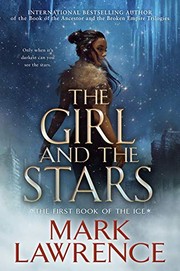
Set in the same world but in the icy north, this opens the Book of the Ice trilogy and is richest for readers already versed in Lawrence's world-building conventions.

Continues Yaz's story with escalating stakes and deeper dives into the world's dying sun mythology, building directly on the first book's revelations.
Discussion
Keep reading
Paths that share books, cover the same subject, or open a related topic.