The Boys Reading Order: Where to Start the Comic and How It Differs From the Show
Garth Ennis and Darick Robertson's The Boys runs seventy-two issues collected as twelve slim trades, and it reads in one order: straight through, with Herogasm and Highland Laddie in their numbered slots rather than as optional spin-offs. This path stays inside the twelve-trade numbering rather than the six-volume omnibus line, since mixing the two double-counts, and it is explicit about which trades our catalogue can and cannot link. It also flags what the television series changes, which is most of the ending.
Where to start
IntermediateMeet the team and the CIA remit, and calibrate how far the comic is from the show.
▸ Study plan for this stage
Pace: Two evenings. Volume 1 is 152 pages and volume 2 is 192, 344 between them, and these are slim trades of six issues each rather than fat collections — an hour a volume at most, and probably less, since Robertson's pages are conventional grids with a lot of dialogue but no density to fight through. Re
- The Compound V premise and the CIA remit — the machinery the entire series runs on, established in volume 1
- Hughie as the reader's entry point, recruited into something he has no capacity for
- Butcher's remit as stated versus Butcher's remit as practised, a gap the series takes twelve volumes to close
- The satire's real target shifting in volume 2 from superheroes to the institutions that own them
- Where the show and the comic part company, and why volume 1 is the last shared ground
- The twelve-trade numbering against the six-volume omnibus line, and the necessity of picking one
- What does the CIA actually want the Boys to do, as stated in volume 1, and who benefits from it?
- What is Hughie for, structurally? What does the series gain from a protagonist who is out of his depth?
- Where does volume 2 stop being about superheroes, and what does it become about instead?
- If you know the show, which specific elements of volume 1 does it keep and which does it already alter?
- What is Compound V, and how much of the series' politics follows directly from how it is distributed?
- Confirm which edition you are buying before volume 3. If a book is called Volume 1 and runs to several hundred pages you are in the omnibus line; this path's volume numbers will not match it.
- If you have seen the show, list everything volume 1 does differently. It is a short list, which is exactly why the later divergence catches people out.
- Write down Butcher's stated aim in volume 1 in his own words. You will test it against volume 10, which is the volume that reveals what he was actually doing.
- Note which corporate and governmental bodies appear in volume 2 and what each one wants. From here the plot is institutional, and the names matter more than the powers.
Next up: The premise and the satirical target are set, which is what the mid-series arc needs — and the next stage also brings the first of this path's supply gaps.
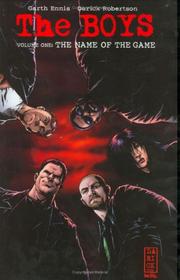
The Name of the Game, and the only correct starting point: Hughie's recruitment, Butcher's remit and the Compound V premise. The show follows this volume fairly closely and then diverges permanently, so read it first even if you have watched season one.

Get Some — the first arc that is entirely Ennis rather than premise, and the point where the satire stops being about superheroes and starts being about institutions. Read on directly.
Herogasm and the middle run
IntermediateRead the notorious mid-series arc in its correct numbered position, and understand why it is not a spin-off.
▸ Study plan for this stage
Pace: Two evenings of reading and one errand first. Neither volume 5 nor volume 6 has a page count recorded in our catalogue, but both are slim six-issue trades like the first two and read at the same rate. The errand: volumes 3 and 4 — Good for the Soul and We Gotta Go Now — have no usable English record
- Herogasm as a numbered volume of the main series rather than a spin-off, and what its plot actually advances
- The annual event as satire of corporate retreat and press management, with the sex as the vehicle rather than the point
- The Self-Preservation Society and the backstory the first five volumes deliberately withhold
- The Boys given interiority, and the turn from satire toward tragedy that starts with it
- Ezquerra's art on volume 6 against Robertson's, and what a change of artist does to the register
- Supply gaps at volumes 3 and 4 — a hole in what this path can link, not a jump the story makes
- What does Herogasm advance in the main plot? Answer it in terms of what is known at the end that was not known at the start.
- Why does the comic put this arc mid-series rather than treat it as an event, and what does the placement do to the satire?
- What does volume 6 reveal about the Boys themselves, and why was it withheld for five volumes?
- How does the tone change when the backstory arrives — is it a shift in the series or a shift in your reading of it?
- What does Ezquerra's line bring to volume 6 that Robertson's would not have?
- Source volumes 3 and 4 before starting this stage. Library systems usually hold the trades; check before you reach the gap rather than after.
- After Herogasm, write one paragraph on what it contributes to the plot, using only events. If you cannot fill a paragraph, that is a finding worth defending.
- Compare a page of Ezquerra's art in volume 6 with a Robertson page from volume 2 showing similar material. Describe the difference in faces, backgrounds and pacing.
- Update your note on Butcher from the first stage with anything volume 6 adds. The backstory volume plants most of what volume 10 later detonates.
Next up: With the team's history on the table the series is ready for its endgame — and for the second and third of this path's supply gaps.

Herogasm, which is numbered as volume 5 of the main series and belongs here rather than after it — the show treats it as a standalone event, the comic treats it as plot. Note the gap before it: volumes 3 and 4 have no usable English record in our catalogue, so read Good for the Soul and We Gotta Go Now from your own set or a library first.

The Self-Preservation Society, which finally gives the Boys themselves the backstory the first five volumes withhold. The series' turn from satire toward tragedy starts here.
The endgame
IntermediateRead the last movement, where Butcher's actual plan surfaces and the comic ends nothing like the show does.
▸ Study plan for this stage
Pace: Three evenings, and two more errands. Volume 9 has no page count in our catalogue; volume 10 is 144 pages and volume 12 is 170, 314 between them, and all three read in an hour or so each. The gaps: volumes 7 and 8 — The Innocents and the Highland Laddie arc, Hughie's solo story — have no usable Engl
- The Big Ride restarting the main plot after two character-focused volumes, and why the series needed the pause
- Butcher's origin as revelation rather than backstory: volume 10 recontextualises every earlier volume
- The plan Butcher has been running since volume 1, surfacing only when it can no longer be stopped
- An ending the adaptation does not share, and the specific things the show has to change to avoid it
- Hughie's arc completing, which is what the missing Highland Laddie volume is for
- Supply gaps at volumes 7, 8 and 11 — three holes to fill from elsewhere if the story is to hold together
- What was Butcher's plan, and at what point in the twelve volumes could an attentive reader have known?
- How does volume 10 change your reading of volumes 1 and 2? Name two scenes that read differently afterwards.
- Where does Hughie end up, and how much of that landing depends on the solo volume this path cannot link?
- What does the comic's ending assert that the television series cannot, and why?
- Is the series' turn from satire to tragedy earned across twelve volumes, or asserted in the last three?
- Source volumes 7, 8 and 11 before you begin. Highland Laddie is the one to prioritise if you can only find some of them; the other two are more easily summarised without loss.
- Retrieve your note on Butcher's stated remit from the first stage and read it again immediately after volume 10. The distance between the two is the series' actual subject.
- Read volume 12 in one sitting with no discussion of either version's ending beforehand.
- Afterwards, list what the show would have to change to arrive somewhere else. It is the clearest way to see what the comic committed to.
Next up: With The Boys finished, the last stage goes back into Ennis's own work to find where the voice came from.

The Big Ride, which restarts the main plot after two character-focused volumes. Another gap to note: volumes 7 and 8 — The Innocents and the Highland Laddie arc, Hughie's solo story — have no usable English record here, and Highland Laddie in particular is worth reading between volumes 6 and 9 if you can find it.
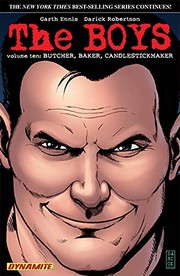
Butcher, Baker, Candlestickmaker — Butcher's origin, told straight, and the single volume that most changes how the series reads. Do not skip it as a flashback.

The Bloody Doors Off, the actual ending, which the television series does not share. Volume 11, Over the Hill with the Swords of a Thousand Men, sits between and has no record we can link — read it before this if you have it, since the finale answers it directly.
Ennis without the capes
IntermediateSee where The Boys' voice came from, in the series Ennis is actually best known for.
▸ Study plan for this stage
Pace: Three to four weeks, and the four books here are very unequal. Preacher volumes 1 and 2 are 200 and 254 pages, 454 between them, and are two slim trades that read in an evening each — enough to know whether to commit to the other seven volumes, which this path does not cover. Our catalogue holds Hit
- The road-trip structure Ennis reuses, established in Preacher
- Profane comedy over a sentimental core, which is the constant across every book here
- Hitman as the earliest version of the superhero satire with real affection underneath — the same trick The Boys plays at greater length
- The Punisher run as the tonal ancestor: what Ennis did inside a corporate franchise before he had a creator-owned book
- Collections and omnibuses as different reading commitments from trades, whatever the shelf implies
- Which elements of The Boys are the series' and which are simply Ennis
- What does Preacher establish that The Boys reuses — in structure, in cast dynamics, and in how the comedy sits against the violence?
- Where is the sentimental streak in each of these books, and is it the same sentiment each time?
- How does Hitman handle superheroes differently from The Boys, given that both are satire with affection?
- What could Ennis do on the Punisher that he could not do at Marvel otherwise, and what did the constraint cost him?
- Having read all four, which parts of The Boys' voice are Ennis's default and which were chosen for that series?
- Read Preacher volumes 1 and 2 back to back and then decide, in writing, whether you are reading the remaining seven. Two volumes is the honest test and this stage is designed around it.
- Check what your Hitman edition contains. An omnibus holds several trades, so note how many issues you are actually committing to before you start.
- Pick one comic scene from Preacher, one from Hitman and one from the Punisher collection and identify the shared construction. Ennis has a small number of reliable jokes and they are easy to see side by side.
- Write a paragraph naming the single thing The Boys does that none of these three does. That is the answer to what the series was for.
Next up: This is the end of the path: the twelve-trade run in its own numbering, Herogasm in its numbered slot, three supply gaps named honestly, and the Ennis books the voice was built in.
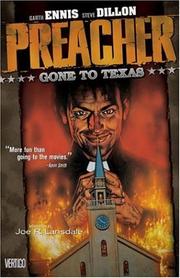
The Ennis book The Boys is constantly compared to, and the one that establishes the road-trip structure, the profane comedy and the sentimental streak underneath. Start at volume 1 rather than an omnibus if you want to test the fit.
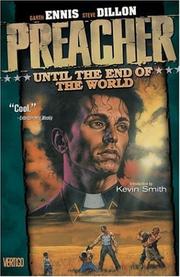
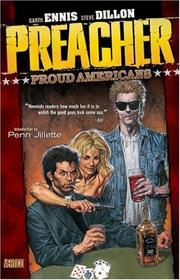
Read on directly — Preacher's first two volumes are a single setup, and the second is where the supporting cast that makes the series work arrives. Enough to know whether to commit to the other seven.

The earliest Ennis book that does what The Boys does — superhero satire with real affection underneath — and the funniest of the three. Our catalogue holds it as the Ennis and McCrea Omnibus Vol. 1, which is the same opening material in a larger collection.

The blackly comic Punisher run, and the clearest ancestor of The Boys' tone before Ennis had a creator-owned book to do it in. Read last; it is the least essential and the most purely enjoyable.