Preacher by Garth Ennis Reading Order: Where to Start
Preacher is one long story told across sixty-six issues, and the collected edition that matters is the nine numbered Vertigo trade paperbacks: read volume one to volume nine and you have read the whole thing, in order, with nothing missing. The confusion comes from the reprints — the later Book editions collect it in six, the Absolute hardcovers in four, and the specials and one-shots are folded into different places depending on which line you buy — so a reader who starts in one numbering and finishes in another will skip or repeat an arc. This path stays in the nine-volume trade numbering throughout and notes where the side stories sit.
Start Here: Gone to Texas
BeginnerMeet Jesse, Tulip and Cassidy, understand what Genesis is, and decide within two volumes whether the book's deliberate crudeness is something you can read three hundred issues of.
▸ Study plan for this stage
Pace: 2–3 weeks for three trades, roughly 685 pages of comics — which reads far faster than the same page count of prose, so a volume a weekend is comfortable. ⚠️ Read the first two volumes before committing: Preacher is deliberately extreme in its violence, blasphemy, sexual content and language, and the
- The premise: Genesis, the offspring of an angel and a demon, merges with a small-town Texas preacher and leaves him with the Word of God — a voice that compels obedience — and the knowledge that God has abandoned Heaven
- The Word as a plot device with a cost: Jesse can command anyone, and Ennis is careful about when it works, when it is misused and when it is unavailable
- The three leads and their triangle — Jesse's rigid code, Tulip's competence and refusal to be a passenger, Cassidy's charm and the rot underneath it, which volume seven cashes in
- The Saint of Killers as the series' best single creation: a western revenant with two guns forged from the sword of the angel of death, given a full standalone origin in volume two
- Volume two's structural lesson — the series can halt its main plot for a self-contained story and be better for it, which it does repeatedly
- Steve Dillon's art as the deliberate counterweight: flat, clear, unspectacular staging that plays the most grotesque content completely straight, which is why the book is not merely shock
- The Grail introduced in volume three: a conspiracy guarding the bloodline of Christ, which is where the series' satire of institutional religion gets its target
- Ennis's genuine subject underneath the provocation — friendship, the John Wayne code of masculinity, and the demand that authority justify itself
- What is Genesis, and why does its existence make God's abandonment of Heaven a problem the angels cannot solve themselves?
- How does the Word of God work, and what limits does Ennis put on it? Find a scene where it fails or is deliberately not used.
- Why does volume two stop the main plot for the Saint of Killers' origin, and what does the western do that the road trip cannot?
- Describe Dillon's storytelling: panel layout, facial acting, staging of violence. Why does flat clear art suit this material better than a more expressive style would?
- What is the Grail, and what is Ennis satirising through it?
- After two volumes, what is the series actually about underneath the provocation? Answer in one sentence.
- Before buying anything else, confirm you have the nine-volume Vertigo trade numbering and note which edition you own. The renumbered Book, Absolute and Deluxe lines fold the specials in at different points, and switching mid-series is how readers skip an arc.
- Pick one two-page spread in volume one and describe Dillon's choices shot by shot: panel count, camera distance, where the eye is led. Doing this once changes how you read the rest.
- Write 200 words on the Saint of Killers' origin as a western — what genre conventions Ennis uses straight and which he inverts.
- Keep a running list of the Word's uses, with the situation and the consequence. By volume nine the pattern of when Jesse reaches for it is a character study in itself.
- After volume two, write half a page deciding whether to continue and why. If the answer is no, that is a legitimate outcome of this stage.
Next up: The premise, the trio and the Grail are all in place; the middle three volumes pull the characters apart and put the series' best antagonist at the centre.
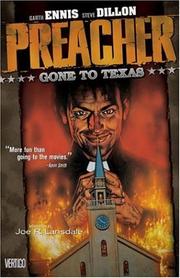
The only starting point: a small-town Texas preacher is possessed by an escaped angel-demon hybrid and sets out to find God and hold him to account. Everything the series does — the road trip, the blasphemy, the friendship — is set up here.
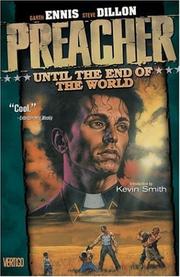
The Saint of Killers gets his origin, and the series proves it can stop dead for a self-contained western and be better for it. Second, and the volume that converts most sceptical readers.

New York, Cassidy's past, and the Grail conspiracy moving from rumour to plot. Third: the mythology the back half runs on is assembled in this volume.
The Middle of the Road
IntermediateFollow the long middle, where the plot goes to France and the American South and the three leads are pulled apart.
▸ Study plan for this stage
Pace: 3 weeks for three trades, roughly 685 pages. Volume six is the slowest stretch in the series and the one readers abandon; schedule it deliberately rather than letting it drift, and go straight into volume seven afterwards. Prerequisite: the first three volumes read in order — volume five's flashback
- Herr Starr as the series' comic engine: a ruthlessly competent Grail operative who is progressively physically destroyed across the run, and whose humiliations are only funny cumulatively
- The Grail's plan and the satire it carries — an institution that has replaced faith with logistics and is guarding a bloodline that has degenerated into nothing
- Angelville and the Jesse flashback in volume five: Gran'ma, Jody and T.C., and the childhood that explains the code Jesse has been living by for four volumes
- Why volume five sits exactly where it does — placed earlier it would be backstory, placed here it retroactively changes how you read everything before it
- The separation of the trio and Ennis's willingness to keep his leads apart for long stretches, which is what makes the reunions land
- The quiet volume-six stretch: Jesse alone, the deliberate deflation after the escalation, and the argument for reading a trough rather than skipping it
- Ennis's recurring American mythology — the West, the road, John Wayne as a literal presence — and whether the series endorses it or interrogates it
- The escalating tastelessness of the Grail material and the honest question of whether the satire earns it every time; it does not always, and reading critically is part of reading Ennis
- Why is Herr Starr funny, and why does the humour depend on reading his volumes in order?
- What does Angelville explain about Jesse that you had been reading as simple stubbornness? Name two specific earlier scenes it changes.
- Why does Ennis place the flashback at volume five rather than at the start? What would be lost either way?
- What happens to the trio's dynamic when they are separated, and what does Ennis gain by keeping them apart this long?
- Volume six is the quietest in the series. What is it doing structurally, and does it justify itself?
- Take one sequence you found gratuitous and make the case that the satire earns it, then the case that it does not. Which do you believe?
- Chart Herr Starr's physical condition volume by volume from his introduction, with what causes each injury. The chart is the joke, laid out.
- Reread three scenes from volumes one to three immediately after finishing volume five, and write 250 words on how the Angelville material changes them.
- Write a one-page character note on each of the three leads as of the end of volume six: what they want, what they are hiding, and who they have lied to.
- Track every appearance of the John Wayne figure and write half a page on what function he serves for Jesse and what Ennis thinks of it.
- Note in the margins every foreshadowing you can spot of the betrayal the series is building toward. You will check the list against volume seven.
Next up: Everything planted since volume three comes due in the last three volumes, which run as one continuous movement to the confrontation the series is named for.
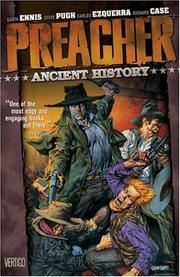
Herr Starr and the Grail take centre stage, and Ennis commits to the satire that carries the rest of the run. Fourth — Starr's escalating humiliations are cumulative and only funny in sequence.
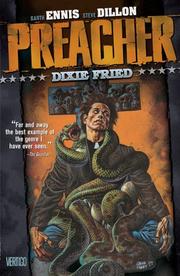
The Angelville flashback: Jesse's grandmother, and the childhood that explains why he behaves the way he does. Fifth, exactly where it falls, because it recontextualises four volumes of behaviour.

Jesse alone, and the quietest stretch of the series. Sixth: this is the trough that makes the last three volumes work, so push through rather than skipping ahead.
The Reckoning
IntermediateReach the end of the search, and see whether the series' central question gets a real answer or a joke.
▸ Study plan for this stage
Pace: 2 weeks for the final three trades, roughly 719 pages, and read them close together — volumes seven, eight and nine are structurally one movement and lose their momentum if spaced out. Give volume nine a single uninterrupted sitting.
- The volume-seven betrayal, prepared since volume three and paid off only because the friendship was built honestly first — the emotional centre of the whole run
- Cassidy re-read: every charming moment from the first six volumes reads differently afterwards, and Ennis has been fair to the reader throughout
- Tulip's arc across the run, from the woman introduced alongside Jesse to the one who makes the decisive choices at the end, and how much of her agency is her own rather than granted
- Masada and the collapse of the Grail in volume eight: the conspiracy plot resolved, and Starr's endgame
- The Saint of Killers' role in the finale, and the way his volume-two origin sets up exactly what he does at the end
- The confrontation with God: whether the series' central question — hold the creator to account — gets a real answer or a joke, and Ennis's actual position on it
- The ending's treatment of the friendship, which is what the series turns out to have been about rather than the theology
- That Preacher ends here at volume nine: the Book, Absolute and Deluxe editions renumber the same story, they do not extend it, and there is no continuation to look for
- How is the volume-seven betrayal prepared? Check your marginal list from stage two and count how many you caught on a first read.
- Re-read three Cassidy scenes from volumes one to three after finishing volume seven. Was Ennis fair to the reader, or does the reversal require ignoring earlier characterisation?
- What does Tulip actually decide at the end, and how much of the last three volumes is her story rather than Jesse's?
- How does the Grail plot resolve, and is Starr's ending consistent with the character established in volume four?
- Does the confrontation with God answer the question the series asked in volume one, or dodge it? Defend your reading with specific pages.
- What is Preacher finally about? Compare your answer to the one-sentence answer you wrote at the end of stage one.
- After volume seven, write 400 words on the betrayal: how it was seeded, what it costs, and whether it is the best thing in the series or the cheapest.
- Reread volume one immediately after finishing volume nine and write half a page on what the opening looks like from the far end.
- Write a one-page assessment of the ending: what it resolves, what it leaves, and whether the theological question gets a real answer.
- Compare Dillon's art in volume one with volume nine and write a paragraph on what changed across five years of monthly work.
- Write your own 300-word recommendation of Preacher for someone who has not read it, including an honest statement of the content they should expect. If you cannot write the warning and the recommendation in the same piece, you have not finished thinking about the series.
- If you want more Ennis after this, note what specifically you liked — the western, the satire, the friendship, the blasphemy — because his other long runs each amplify a different one of those.
Next up: This is the end of the series: sixty-six issues, nine trades, one complete story with nothing after it.

The trio reassemble and the betrayal the series has been building toward is finally in the open. Seventh — the payoff depends entirely on volumes three and six having planted it.
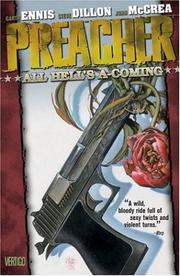
Masada, Starr's endgame, and the collapse of the Grail. Eighth, straight on from seven; the two run as one continuous movement.

The final volume, and the confrontation the whole series was named for. Ninth and last: Preacher ends here, and the Book, Absolute and Deluxe editions are the same story renumbered rather than extended.
Discussion
Keep reading
Paths that share books, cover the same subject, or open a related topic.