The Book of the New Sun Reading Order: Where to Start
Gene Wolfe's Book of the New Sun is four volumes narrated by a torturer with a perfect memory who is also, demonstrably, lying. It is usually sold as two omnibuses, Shadow and Claw and Sword and Citadel, which is fine to buy but confusing to talk about — the work is four books, not two. This path takes the four in sequence, adds the coda, and then decides whether to continue into the two later Sun cycles.
Start here: the first half
IntermediateEnter Severian's account of Urth, learn to read against the narrator, and get past the point where most first attempts stall.
▸ Study plan for this stage
Pace: 5-7 weeks for the two. Before you buy anything, understand what you are buying: The Book of the New Sun is FOUR volumes, and this path lists all four individually. It is also commonly sold as two omnibuses — Shadow and Claw contains volumes one and two, Sword and Citadel contains three and four. Eit
- Severian claims a perfect, unfailing memory in his first chapter, and is demonstrably lying — that contradiction is the operating instruction for all four books
- Reading against the narrator: he omits, reorders and quietly justifies, and the real story is the one assembled from what he does not dwell on
- The setting is Earth in the extremely far future, not a fantasy world — the 'castles' and 'destriers' are decayed technology described by someone who has no word for it
- The torturers' guild presented from inside, as an ordinary craft with ordinary loyalties, which is the book's most disquieting effect
- The Claw of the Conciliator as object and as question: is anything supernatural happening, or is Severian narrating coincidence as miracle
- Embedded stories — the play, the tales told at inns — are not digressions; each one restates the main plot in disguise
- Wolfe's rule of fair play: every reveal is prepared for in plain sight, which is why the difficulty is rereadability rather than obscurity
- What claim does Severian make about his memory, and where does the text first contradict it?
- What is Severian actually exiled for, and how does his own account frame it?
- What technology are you looking at when Severian describes the Citadel, the flier, or the Autarch's court?
- What does the play in The Claw of the Conciliator restage, and who is who in it?
- Which events does Severian narrate as miraculous, and what would a sceptical witness have seen?
- Where has time gone missing from Severian's account between volumes?
- Do not open a dictionary for the first hundred pages. If a word matters, Wolfe defines it by use within two paragraphs.
- Keep a short list of moments where Severian's account does not add up. You are building the file you will need for the second read.
- Note every embedded story and write one sentence on what it mirrors in the main plot.
- Check your edition before buying volume three — if you own Shadow and Claw you have volumes one and two, not one and three.
- If you stall, push to the end of the second volume before deciding. Almost nobody who reaches book three quits.
Next up: The first two volumes plant the evidence; the second two spend it, and the ending retroactively rewrites everything you have just read.

Severian, an apprentice of the torturers' guild, is exiled for showing mercy. Read it without a dictionary and without stopping to decode: the archaic vocabulary is real English, the plot is straightforward, and the difficulty is entirely in what Severian omits. This is volume one of four, whatever the omnibus cover says.
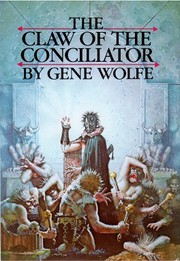
The journey north, the play within the book, and the first strong signals that Severian's memory is not what he claims. Together with volume one this is the omnibus sold as Shadow and Claw, so buy either format but do not buy both.
Finish the tetralogy
BeginnerReach the ending, at which point the first two volumes stop meaning what you thought they meant.
▸ Study plan for this stage
Pace: 5-7 weeks. The Sword of the Lictor is the most propulsive of the four and often reads fastest; The Citadel of the Autarch is the densest and its final fifty pages carry the load of the entire tetralogy, so slow down there rather than racing. Do not put a long gap between the two — the ending only de
- Severian as executioner in Thrax, where the guild's craft stops being an abstraction and the mercy problem becomes concrete
- The mountain sequence, which most readers name as the point the book reveals its scale — the geography itself turns out to be an artefact of history
- The war in the north and the hospital chapters, where the tetralogy's stories-within-stories reach their densest concentration
- The Autarch, the office rather than the man, and what continuity of memory means in this civilisation
- The closing frame: who Severian is writing for, when, and from what position — and how much of the first chapter changes once you know
- Alzabo, the flowers, and the several forms of borrowed memory the books have been quietly cataloguing since volume one
- Why the ending is felt as a reveal rather than stated as one: Wolfe declines to explain, and the reader has to do the last step
- Who is Severian by the end, and at what earlier point was that first made available to you?
- What is the Claw, actually, and does the answer make the miracles more or less real?
- What does the Autarch's office require, and why does that reframe the entire notion of a first-person narrator here?
- Which of Severian's earlier omissions turn out to have been protecting him rather than the reader?
- What is the New Sun, and what does bringing it cost?
- Now that you know the ending, what does the first paragraph of The Shadow of the Torturer say?
- Immediately after finishing, reread the first chapter of volume one. Ten minutes, and it is the single most persuasive argument for the second read.
- Go back to your list of inconsistencies from stage one and resolve as many as you can. The unresolved remainder is where the fan scholarship lives.
- Write a one-page summary of the plot as it actually happened, not as Severian tells it.
- Give yourself a break before the coda; do not roll straight on.
Next up: The tetralogy implies its answer; the coda states it, which is exactly why it is optional.
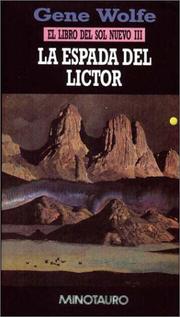
Severian as executioner in Thrax, and the sequence in the mountains that most readers name as the moment the book announced itself as a masterpiece.
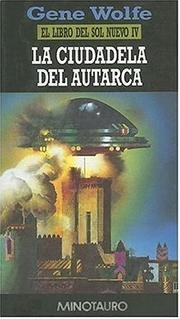
The war, the hospital, and the frame closing. These two volumes are the omnibus called Sword and Citadel. When you finish, the standard advice applies and it is not a joke: the second read is the real read, because the opening pages only parse once you know the ending.
The coda
BeginnerRead the sequel Wolfe wrote to answer the tetralogy's central question directly.
▸ Study plan for this stage
Pace: 3-4 weeks. The Urth of the New Sun is one volume of around 350 pages and reads more straightforwardly than the tetralogy, though its cosmology is stranger. Read it before any reread of the four, not after — and be aware this is a real fork in the road: a substantial number of readers deliberately sk
- Severian's voyage to bring the New Sun, which converts the tetralogy's central implication into stated fact
- What is gained by confirmation and what is lost — the four books work partly because they never quite say it
- Time travel handled as theology: the book's structure is a loop and the loop is the argument
- Wolfe writing to answer his own critics, and how that changes the tone from withheld to expository
- The consequences of the New Sun for Urth itself, which are far less triumphant than the tetralogy's ending suggests
- How this volume connects the New Sun books to the two later Solar Cycle sequences
- What does this book confirm that the tetralogy only implied, and were you already sure?
- Does the loop structure resolve the tetralogy's ending or complicate it?
- What does bringing the New Sun actually do to Urth and its people?
- Is the more expository voice a lapse or a deliberate change of register for a different job?
- Having read it, would you tell a friend to read it or to stop at four?
- Decide before starting whether you want the ambiguity preserved; if you do, skip this stage without guilt and go straight to a reread.
- Mark every passage that answers a question you had at the end of The Citadel of the Autarch.
- After finishing, reread the last chapter of the tetralogy and check whether it now reads better or worse.
Next up: With the New Sun cycle closed, the Solar Cycle continues in a wholly different register aboard a generation ship.
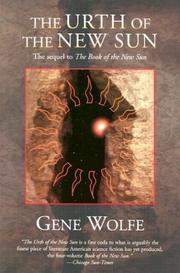
Severian's voyage to bring the new sun, and the book that confirms what the tetralogy only implies. Genuinely optional — many readers prefer the ambiguity intact — but if you loved the four, read it before rereading them.
The Book of the Long Sun
BeginnerContinue into the second Solar Cycle, a generation ship story with a completely different narrator and a much plainer style.
▸ Study plan for this stage
Pace: 10-12 weeks for the four. These were written as one long novel and split, so read them close together — Nightside, Lake, Caldé and Exodus in immediate succession, no long gaps. The prose is dramatically plainer than New Sun and the pace is faster; 35-40 pages a day is realistic. Note that some editi
- Patera Silk, a working parish priest, is the opposite kind of narrator to Severian — decent, transparent, and trying hard to tell the truth
- The Whorl is the inside of a generation starship whose population has forgotten what it is, and the gods speaking through the Sacred Windows are the ship's computers
- The plainer style is a deliberate choice, not a decline; the unreliability moves from the narrator to the world
- Viron's politics: a city under a corrupt Ayuntamiento, and a religious plot that becomes a revolution
- The gods of the Whorl as uploaded people with agendas, which is theology done as science fiction rather than the other way round
- The enlightenment Silk experiences on the ball court, which the entire four books circle back to and never fully explain
- This sequence hands off directly to the Short Sun trilogy — Exodus does not stand as an ending
- What is the Whorl, and how long does it take the text to let you be sure?
- Who or what are Pas, Echidna and the other gods, and what do they want?
- How does Silk's reliability change the reading experience compared with Severian's?
- What happened to Silk on the ball court, and does the sequence ever settle it?
- What is the Ayuntamiento protecting, and why can it not simply be told the truth?
- Why does Exodus end where it does rather than at a resolution?
- Note the first ten details that only make sense if you are inside a spacecraft. Wolfe supplies them long before Silk understands them.
- Track what each god says versus what each god does; the gap is the plot.
- Keep a cast list — the Long Sun books have more named characters than New Sun and fewer distinguishing archaisms.
- Read all four within a single stretch; readers who pause between volumes report losing the thread of Viron's politics.
Next up: Exodus ends mid-story by design, and the Short Sun trilogy picks it up on a different planet with the hardest narration Wolfe ever wrote.
Patera Silk, a priest whose god speaks to him through a ball court, in a city inside a starship that has forgotten it is travelling. The prose is clear where New Sun was ornate, which surprises people expecting more of the same.

Second of four, continuing more or less directly. The Long Sun books are best read close together since they were written as one long novel.

The political crisis in Viron comes to a head. Note the accented form Caldé on some editions; it is the same book.
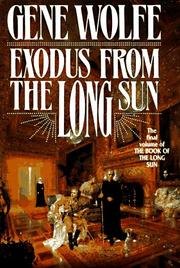
Closes the Long Sun and hands off directly to the Short Sun trilogy, which cannot be read without it.
The Book of the Short Sun
BeginnerFinish the Solar Cycle with the hardest and most rewarding of the three sequences.
▸ Study plan for this stage
Pace: 10-14 weeks for the three, and this is the hardest reading on the path — harder than New Sun. In Green's Jungles in particular braids two timelines so tightly that the identity of the narrator is the central mystery, and 20 pages in a sitting can be plenty. Do not attempt these without the Long Sun
- Horn, writing from the colony world Blue, sets out to find Silk — the frame is a search, the substance is a question about who is doing the searching
- Unreliable narration in a more disorienting form than New Sun: not a narrator concealing things, but one who may not be who he says
- Two braided timelines in the second volume, where the seams are the evidence and skipping them costs you the answer
- The inhumi, and what the trilogy eventually says about them, which is the Solar Cycle's bleakest and best idea
- Blue and Green as failed and failing colonies — Wolfe writing the aftermath of the generation ship rather than its voyage
- How the trilogy retroactively ties all twelve books of the Solar Cycle into one structure
- Reaching Return to the Whorl is the payoff for the whole path; the final pages resolve threads planted in The Shadow of the Torturer
- Who is narrating On Blue's Waters, and when do you first suspect the obvious answer is wrong?
- In In Green's Jungles, how do you tell which timeline you are in, and what does Wolfe give you to work with?
- What is the secret of the inhumi, and who is permitted to know it?
- What has become of Silk, and does the trilogy answer that or refuse to?
- How do the three sequences — New Sun, Long Sun, Short Sun — fit together as one work?
- Which of the twelve books changes most in light of the ending?
- Mark every timeline transition in In Green's Jungles as it happens; readers who lose track here usually give up.
- Keep a note of every claim the narrator makes about his own identity, with the page. That list is the solution.
- After Return to the Whorl, reread the closing chapter of Exodus from the Long Sun and then the opening of The Shadow of the Torturer.
- Write a paragraph on what the Solar Cycle as a whole is about. Doing it in your own words is the last exercise of the path.
Next up: This is the end of the path and of the Solar Cycle; from here the only thing left is the second read of New Sun, which is the one that counts.
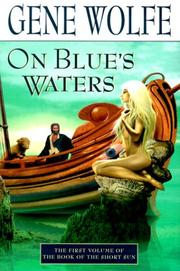
Horn, writing on a colony world, sets out to find Silk. The unreliable narration returns in a more disorienting form than anything in New Sun, so do not attempt this before the Long Sun books.

Two timelines braided so tightly that the narrator's identity becomes the actual mystery. The most demanding book Wolfe wrote.

The end of the Solar Cycle, tying all twelve books together. Reaching it is the payoff for the whole path.
Discussion
Keep reading
Paths that share books, cover the same subject, or open a related topic.