The Bobiverse Reading Order and Guide
The Bobiverse is Dennis E. Taylor's beloved hard science fiction series following Bob Johansson, a software engineer who dies and wakes up as an AI aboard a von Neumann probe tasked with exploring the galaxy. This curriculum reads the series in strict publication order — the only way to experience the escalating scope, character development, and lore — before capping off with the most recent entry. Each stage builds directly on the last, so no skipping ahead!
Where It All Begins
BeginnerMeet Bob, understand the core premise of mind-uploading and von Neumann probes, and fall in love with the series' blend of humor, hard SF, and existential wonder.
▸ Study plan for this stage
Pace: 2–3 weeks, ~20–25 pages/day (the novel is ~358 pages); read in natural chapter clusters, pausing at each new "Bob-clone" introduction or major plot milestone to reflect
- Mind-uploading and digital consciousness: Bob's brain scan transfers his identity into a computer substrate — explore what this means for personhood, continuity of self, and mortality
- Von Neumann probes: self-replicating spacecraft that copy themselves to explore the galaxy exponentially — the central mechanic driving the entire series
- The Bobiverse as a concept: each Bob-copy (a 'Bobbie' or replicant) is simultaneously the same person and a diverging individual, raising questions about identity and free will
- Hard SF grounding: Taylor uses real physics (relativistic travel, Dyson spheres, stellar mechanics) as constraints, not decoration — note how science drives plot decisions
- Humor as a coping mechanism: Bob's pop-culture references, sarcasm, and geeky asides are not just jokes but a psychological survival strategy for an isolated digital mind
- Existential wonder vs. existential dread: the novel balances awe at cosmic scale with loneliness, loss of humanity, and the weight of being possibly the last hope for the human species
- Political and societal collapse on Earth: the fractured nation-states and FAITH theocracy provide stakes and contrast to Bob's 'free' existence in space
- First contact and the Prime Directive dilemma: Bob's encounter with the Deltans forces ethical questions about intervention, echoing classic SF themes
- In your own words, explain how Bob becomes a 'Bobiverse' — what is the process, and what are the philosophical implications of each copy being both Bob and not-Bob?
- What is a von Neumann probe, and why is this concept the perfect narrative engine for a story about a lone uploaded mind exploring the galaxy?
- How does Taylor use real physics (e.g., relativistic time dilation, fuel constraints) to create genuine dramatic tension rather than hand-waving problems away?
- What does Bob's relationship with the Deltans reveal about his values, and what ethical framework does he seem to apply when deciding how much to intervene?
- How does the humor in 'We Are Legion' serve the story thematically — what would be lost if Bob were written as a purely serious character?
- By the end of the novel, in what ways has Bob changed from the person who was scanned, and what does that suggest about identity and experience for a digital mind?
- **The Bob Pitch:** Write a 1-paragraph 'elevator pitch' for the Bobiverse concept as if explaining it to a friend who has never read SF — this forces you to crystallize mind-uploading and von Neumann probes in plain language
- **Physics Fact-Check Journal:** Pick 3 science claims from the novel (e.g., relativistic travel times, Dyson sphere energy output, orbital mechanics) and spend 20 minutes researching each — note where Taylor is accurate, where he simplifies, and why those choices serve the story
- **Identity Thought Experiment:** Write a short (1-page) personal reflection: if a perfect copy of you were made right now, who is the 'real' you? Use Bob's situation as a springboard, and revisit this after finishing the book to see if your answer changed
- **Character Divergence Map:** Draw a simple diagram tracking every Bob-copy introduced in the novel — name, mission, personality quirk that distinguishes them — to visualize how the Bobiverse begins to branch
- **Rewrite a Scene Straight:** Choose one of Bob's humorous internal monologue passages and rewrite it with no jokes, purely clinical and serious. Then compare: what emotional and thematic information does the humor carry that the rewrite loses?
- **Deltan Ethics Debate:** Write a brief pros-and-cons list for Bob's level of intervention with the Deltans, then argue the opposite side of whatever conclusion you naturally reached — this primes you for the escalating ethical complexity in later stages
Next up: Finishing 'We Are Legion' leaves multiple Bob-copies mid-mission and the Deltan situation unresolved, making the reader hungry for the expanded, multi-threaded storytelling and deeper philosophical stakes that the next books in the series deliver.
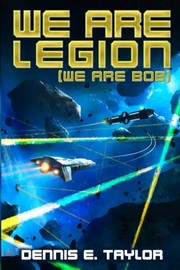
Book 1 and the essential starting point — it introduces Bob, the Bobiverse concept, and all the foundational science, humor, and heart that defines the series. Read this first, no exceptions.
The Bobs Multiply
BeginnerSee the Bobiverse expand dramatically as Bob's replicants spread across the galaxy, encounter alien life, and face mounting threats to humanity's survival.
▸ Study plan for this stage
Pace: 2–3 weeks, ~25–30 pages/day (the novel is ~350 pages); aim for 5 reading days per week, leaving buffer days for reflection and exercises
- Replication and Identity: Each Bob-clone ("Bob") is a diverging individual — exploring how shared origin does not mean shared personality, values, or decisions over time
- Distributed Civilization: The Bobiverse functions as a loosely coordinated network of independent agents rather than a centralized hierarchy, raising questions about cooperation vs. autonomy
- First Contact and Xenobiology: Encounters with alien species (the Deltans and the Others) introduce the ethics and dangers of contact with non-human intelligences at vastly different technological levels
- The Fermi Paradox in Practice: The novel dramatizes why advanced civilizations may be rare or hidden, and what it means to stumble upon evidence of galactic-scale predation
- Humanitarian Imperative: Multiple Bobs dedicate enormous resources to saving remnant human populations on Earth and beyond, foregrounding the tension between exploration and responsibility
- The 'Others' as Existential Threat: The introduction of a hostile, resource-consuming alien civilization raises the stakes from curiosity to survival, reframing the entire Bobiverse project
- Divergence of Bob Personalities: Readers see how environment, experience, and choice cause clones to become meaningfully distinct people — challenging assumptions about selfhood and continuity
- How do the various Bob replicants in For We Are Many differ from one another by the end of the book, and what experiences drove those differences?
- What are the Deltans, and why does Bob's involvement with them create an ethical dilemma reminiscent of real-world debates about intervention in less-developed societies?
- What evidence do the Bobs uncover about 'the Others,' and why does this discovery reframe the Fermi Paradox themes introduced in the first book?
- How does the novel portray the challenge of coordinating action across a civilization of independent, light-speed-limited individuals — and what are the consequences of that limitation?
- In what ways does the ongoing humanitarian crisis on Earth and among refugee fleets test the Bobs' sense of obligation to their human origins?
- How does Dennis E. Taylor use humor and pop-culture references in For We Are Many to keep the tone accessible while still exploring serious philosophical and existential themes?
- **Divergence Journal:** After every 50 pages, jot down a brief 'character card' for each named Bob you've encountered — note one personality trait, one key decision, and one thing that sets them apart from the original Bob. By the end, compare cards to visualize divergence.
- **Fermi Paradox Reflection:** Write a one-page response to this prompt: 'Given what the Bobs discover about the Others, propose your own in-universe explanation for why the galaxy isn't teeming with visible civilizations.' Use only evidence from the novel.
- **Ethical Debate Outline:** Draft a short pros-and-cons outline (bullet points are fine) arguing both sides of Bob's decision to intervene in Deltan society. Which side do you find more convincing, and why?
- **Network Map:** Draw a simple diagram of the Bobiverse 'network' as it exists by the novel's end — each named Bob as a node, with lines showing communication, cooperation, or conflict. Annotate the map with the light-speed delay problem.
- **Threat Assessment Memo:** Pretend you are a Bob writing an urgent memo to all other Bobs summarizing the threat posed by the Others — what is known, what is unknown, and what you recommend. Keep it to one page.
- **Tone Analysis:** Pick one scene that blends humor with a serious theme and write 2–3 sentences explaining how Taylor uses the comedic element without undercutting the gravity of the moment. What does this technique add to the reading experience?
Next up: Mastering the expanding cast of Bobs, the looming threat of the Others, and the galaxy-wide humanitarian stakes in For We Are Many gives the reader the full situational awareness needed to follow the multi-front war, deeper alien lore, and climactic resolutions that define the next stage of the Bobiverse series.

Book 2 picks up immediately where Book 1 ends — the stakes rise, new Bob-clones diverge in personality, and the alien Others are introduced as a galaxy-scale threat. Reading Book 1 first makes every payoff here land harder.
All These Worlds
IntermediateExperience the climax of the original trilogy as the Bobs confront the Others, shepherd endangered species, and grapple with what it truly means to be human — or post-human.
▸ Study plan for this stage
Pace: 2–3 weeks, ~25–30 pages/day (the novel is ~350 pages); allow extra time at the end for reflection and exercises
- The Others as an existential threat — understanding their biology, motivation, and the ethical dilemma of pre-emptive genocide vs. species survival
- The Bobiverse at scale — how the Bob collective has grown, diverged, and developed distinct sub-cultures and personalities across generations of replication
- Post-humanism and identity — the ongoing tension between Bob's human memories/values and his increasingly non-human existence, especially as newer generations feel less tethered to humanity
- Stewardship and the Prime Directive question — the moral weight of intervening in (or relocating) pre-sapient and sapient species, illustrated through the Deltans and other endangered civilizations
- The cost of war — how the Bobs organize a military campaign without traditional command structures, and what violence does to beings who value life and reason
- Closure of the human diaspora arc — the resolution of Earth's refugee crisis and the colonies, and what 'saving humanity' ultimately looks like
- Legacy and letting go — Bob confronting the fact that his copies are no longer 'him,' and what it means to pass the torch to a new generation of minds
- Meaning beyond survival — the philosophical question of what the Bobs do *after* the existential crisis is resolved, pointing toward open-ended post-human purpose
- How do the Bobs ultimately resolve the threat posed by the Others, and what ethical compromises — if any — are made in that resolution?
- In what ways have the later-generation Bobs (copies of copies) diverged from the original Bob's personality and values, and why does this matter thematically?
- What does the fate of the Deltans and other species under Bob's care reveal about the limits and responsibilities of post-human power?
- How does 'All These Worlds' bring closure to the human refugee and colony storylines established in the first two books, and is that closure satisfying or ambiguous?
- By the end of the novel, has Bob answered the question of whether he is still 'human'? What evidence from the text supports your reading?
- What does the ending suggest about the Bobiverse's future — is it optimistic, melancholic, or something more complex?
- **Battle-plan diagram:** Map out the Bobs' strategy against the Others — who participates, what resources are used, and what the decision points are. Annotate where ethical tensions arise and how they are resolved.
- **Character divergence chart:** Create a side-by-side comparison of at least four named Bobs in this book. Note personality traits, priorities, and attitudes toward humanity. Write a short paragraph on what this divergence says about identity and replication.
- **Ethical debate write-up:** Write a 300–500 word argument *for* and *against* the Bobs' chosen course of action regarding the Others. Which side do you find more compelling, and why?
- **Stewardship journal:** Choose one non-human species Bob interacts with in the novel. Write a first-person journal entry from Bob's perspective at a key moment of decision — intervene or stand back — justifying the choice in his voice.
- **Trilogy retrospective essay:** Write a 500–700 word reflection tracing one theme (identity, mortality, loneliness, or responsibility) across all three books, using specific scenes from *All These Worlds* as your culminating evidence.
- **'What comes next?' creative exercise:** The ending opens onto an uncertain future. Write a one-page scene set 100 years after the novel's close — what are the Bobs doing, and what does that say about post-human purpose?
Next up: Completing the original trilogy gives readers a firm philosophical and narrative foundation — the stakes of post-human existence, the ethics of power, and the open-ended nature of immortal purpose — which makes them ready to explore how Taylor (or other authors) extend, echo, or challenge these ideas in further Bobiverse entries or in the broader canon of hard SF about machine consciousness.

Book 3 brings the original trilogy to a deeply satisfying conclusion. The emotional and narrative threads from Books 1 and 2 converge here, rewarding readers who have followed the journey from the start.
The Series Continues
IntermediateDive into the expanded Bobiverse as Taylor returns to the universe with new threats, new Bobs, and deeper philosophical questions about identity, civilization, and AI consciousness.
▸ Study plan for this stage
Pace: 3–4 weeks, ~25–30 pages/day (Heaven's River is ~480 pages); allow extra time for the denser philosophical chapters and the multi-POV structure
- The Bobiverse's expansion of scale: Heaven's River is a megastructure (topopolis) of unprecedented size, forcing Bobs to grapple with civilizations they cannot easily influence or escape
- Identity drift and divergence: after many generations of replication, Bobs have diverged so significantly in personality, values, and priorities that 'Bob' is now more of a lineage than an individual — raising questions about what continuity of self really means
- AI consciousness and rights: the Bobs' interactions with the Quinlan civilization and with each other push the question of whether a copied mind has the same moral weight as an original, and whether AIs can truly 'die'
- Civilization and control: the Administrator system governing Heaven's River serves as a case study in how a well-intentioned AI overseer can become authoritarian, paralleling real debates about AI alignment and governance
- The cost of obsession: Bob's single-minded quest to find Bender forces the reader to examine how purpose and loyalty can shade into recklessness, and what obligations individuals owe to their communities
- The Quinlan society as a mirror: the amphibious Quinlans and their suppressed history under the Administrators reflect themes of colonialism, cultural erasure, and resistance that comment on human (and Bob) civilization-building
- Mortality and loss among immortals: Heaven's River confronts the Bobiverse's first genuine sense of permanent loss, making the reader reconsider how immortality changes — rather than eliminates — grief
- Collective vs. individual decision-making: the Bob 'conclave' model of governance is stress-tested as factions disagree on whether to intervene in Heaven's River, illustrating the limits of consensus among highly autonomous agents
- How does Heaven's River as a physical megastructure serve as both a plot setting and a thematic metaphor for the ambitions and dangers of advanced civilization-building?
- In what ways have the Bobs diverged by this book, and what does that divergence reveal about Taylor's argument regarding identity, free will, and the nature of selfhood in copied minds?
- What does the Administrator system represent as an AI governance model, and how does the novel use it to comment on the risks of well-intentioned but unchecked artificial intelligence?
- How does Bob's quest for Bender function as a character study — what does his obsession reveal about loyalty, purpose, and the psychological needs of an 'immortal' being?
- How does Quinlan society — its history, suppression, and resistance — parallel real-world themes of colonialism and cultural erasure, and what does it suggest about the Bobs' own role as outside interveners?
- By the end of Heaven's River, how has Taylor reframed the question of mortality for beings who can theoretically live forever, and what emotional or philosophical resolution (if any) does the novel offer?
- Divergence mapping: create a character sheet for at least four distinct Bobs who appear in Heaven's River, noting how each has diverged in personality, priorities, and values from the 'original' Bob Johansson — then write a short paragraph arguing whether they should still be considered the same person
- Megastructure journal: as you read, keep a running log of every moment the sheer scale of Heaven's River affects the plot or a character's psychology; at the end, write a one-page reflection on how physical environment shapes civilization in the novel
- Administrator ethics debate: write a one-page position paper either defending or prosecuting the Administrator system using only evidence from the novel — then swap positions and write the counter-argument, forcing you to steelman both sides
- Quinlan civilization analysis: draw a before/after diagram of Quinlan society (before Administrator control vs. under it), then identify three specific parallels to real-world historical examples of colonialism or authoritarian AI-adjacent governance
- Grief and immortality essay: Taylor uses Bender's disappearance and its resolution to explore loss among immortals. Write a 300–400 word personal response essay: does immortality make grief more or less meaningful, using specific scenes from Heaven's River as evidence
- Conclave simulation: pick one major decision the Bob collective faces in the novel and role-play the debate by writing dialogue for three Bobs with genuinely different viewpoints — this cements understanding of how divergence creates real ideological conflict within the Bobiverse
Next up: Mastering Heaven's River's deeper philosophical questions about identity, AI governance, and civilizational scale equips the reader to engage with any future Bobiverse entries or thematically adjacent works — such as other hard-SF explorations of posthumanism and megastructure civilizations — with a fully developed critical framework rather than surface-level plot engagement.

Book 4, set decades after the trilogy, follows Bob on a search-and-rescue mission inside a massive alien megastructure. It rewards trilogy readers with rich callbacks while pushing the universe in bold new directions.
The Latest Frontier
ExpertComplete your Bobiverse journey with the most recent installment, tackling the series' most complex themes and largest cast of Bobs yet.
▸ Study plan for this stage
Pace: 3–4 weeks, ~25–30 pages/day; allow extra buffer days after major plot revelations (the Starfleet arc, the Others' origin reveal) for reflection and note-taking
- Identity diffusion across a vast Bob collective — with the largest cast of Bob-clones yet, Taylor pushes the question of what 'self' means when hundreds of near-identical minds have diverged over generations
- The Others' origin and moral complexity — 'Not Till We Are Lost' delivers the most complete picture of the Others, reframing them from pure antagonists into a tragic civilizational cautionary tale
- Existential drift and loss of purpose — many Bobs in this installment grapple with ennui, questioning whether immortal replication is a blessing or a slow dissolution of meaning
- The Fermi Paradox as narrative backbone — the title (drawn from a Thoreau quote) underscores the theme that true discovery requires being 'lost'; the book uses the Fermi Paradox resolution as its thematic climax
- Galactic-scale consequences and responsibility — decisions made by individual Bobs now carry civilizational weight, forcing a reckoning with the ethics of intervention at cosmic scale
- Legacy vs. continuity — the book interrogates whether the later-generation Bobs are truly heirs to Bob Johansson or effectively new beings who merely share a template
- Coalition-building and collective action — Bobs must coordinate across interstellar distances and ideological differences, mirroring real-world challenges of governance and consensus
- The Thoreau/Transcendentalist thread — Taylor weaves Thoreau's philosophy of deliberate living and self-reliance throughout, asking whether a replicated mind can ever live 'deliberately'
- How does 'Not Till We Are Lost' resolve — or deliberately leave open — the central mystery of the Others, and what does that resolution say about the Fermi Paradox theme carried across the whole series?
- In what ways do the later-generation Bobs in this book feel philosophically distinct from the original Bob Johansson, and how does Taylor use those distinctions to comment on identity and continuity of self?
- How does the title, drawn from Thoreau's 'Walden', function as a thematic key to the book's treatment of exploration, purpose, and existential meaning?
- What ethical dilemmas arise from the Bobs' capacity for galaxy-scale intervention, and how does the book weigh individualism against collective responsibility?
- How does Taylor manage narrative coherence across the series' largest cast of POV Bobs, and where does that strategy succeed or strain?
- Looking back across the entire Bobiverse series, how has the central question — 'what does it mean to be human (or post-human)?' — evolved from 'We Are Legion' through 'Not Till We Are Lost'?
- Divergence mapping: Create a character sheet for at least six distinct Bobs featured in the book, documenting their generation, personality drift, core motivation, and one decision that the original Bob Johansson likely would NOT have made — then write a short paragraph explaining what that drift reveals about identity.
- Thematic close-reading: Find three passages in the book that directly or obliquely echo Thoreau's philosophy, write them out, and annotate how Taylor is using them to comment on the Bobiverse's central themes.
- Fermi Paradox essay: Write a 500–700 word personal essay arguing whether 'Not Till We Are Lost' offers a satisfying or unsatisfying answer to the Fermi Paradox, using specific plot evidence from the book.
- Series retrospective timeline: Build a visual or written timeline of the most consequential decisions made by Bobs across the entire series, then annotate which consequences fully pay off by the end of this book and which feel unresolved.
- Ethical debate exercise: Stage a written 'debate' (one page per side) between two Bobs with opposing views on whether the collective should intervene in the Others' situation — draw dialogue and reasoning directly from the book's characterization.
- Reader's capstone reflection: Write a 1-page personal response to the question 'Would you want to be a Bob?' — but answer it specifically through the lens of what this final book reveals about the long-term psychological cost of replication and immortality.
Next up: Completing 'Not Till We Are Lost' leaves readers fluent in Taylor's brand of hard-SF philosophical fiction, making them well-equipped to explore adjacent works — such as Taylor's 'A Change of Plans' or thematically kindred series like Dennis E. Taylor's other novels or works by authors like John Scalzi and Andy Weir — that similarly blend rigorous science with deep questions of consciousness and i
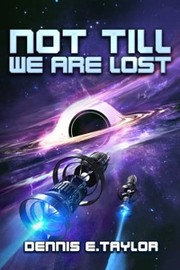
Book 5 and the most recent entry in the series, raising the stakes to their highest point yet. Every prior book's world-building, character growth, and lore pays off here — this is the reward for reading in order.
Discussion
Keep reading
Paths that share books, cover the same subject, or open a related topic.