The Barrytown Trilogy Reading Order: Where to Start with Roddy Doyle
Roddy Doyle's Barrytown books are The Commitments, The Snapper and The Van, published between 1987 and 1991, and they follow one working-class Dublin family — the Rabbittes — across three short novels told almost entirely in dialogue. Read them in publication order, which is also chronological. They are very short and can be finished in a week, and the only real trap is treating them as three unrelated comedies: the same house, the same kitchen and the same father run through all three, and The Van only hurts if you have watched Jimmy Rabbitte Senior be funny for two books first. There is also a fourth Rabbitte novel published twenty-two years later, and a separate pair of novels set in the same Dublin from the point of view of a woman the trilogy would have kept in the background. This path takes all of that, then the later work.
The trilogy, in order
BeginnerRead the three Barrytown novels in sequence and follow one family across four years of Dublin
▸ Study plan for this stage
Pace: One to two weeks for all three — 694 pages total, and they are the fastest 694 pages on this path. The Commitments is 165 pages, The Snapper 216, The Van 313, and because they are told almost entirely in dialogue the page turns much faster than the count suggests; The Commitments can genuinely be re
- The Barrytown books are The Commitments, The Snapper and The Van, published between 1987 and 1991, following one working-class north Dublin family, the Rabbittes, across roughly four years.
- The method is dialogue. Doyle writes almost no interior narration and very little description, so what a character is feeling has to be inferred from what they say and what they conspicuously do not.
- The Commitments is Jimmy Rabbitte Junior assembling a soul band on the theory that the Irish are the blacks of Europe. It was originally self-published, it is the funniest of the three, and it is 165 pages.
- The Snapper is where the trilogy shows its hand: Sharon Rabbitte is pregnant and will not say by whom, and the same comic machinery is suddenly carrying something it was not built for.
- That escalation is the trilogy's actual design. Each book puts more weight on the same household and the same jokes, and the interest is in watching what holds.
- The Van has Jimmy Senior, long unemployed, going into business with a friend selling chips from a filthy van during Ireland's run at the 1990 World Cup. It was shortlisted for the Booker.
- Its ending is the argument the first two books set up, and it is not funny. Readers who arrive expecting a third comedy are the ones who find the trilogy dishonest rather than devastating.
- The absence of a narrator's judgement is the political content. Doyle never explains these people to a middle-class reader, and the refusal is the point.
- Doyle writes almost no interior narration. Take one scene and say how you know what a character is feeling.
- Why does Jimmy Junior choose soul specifically? What is the argument in his line about the Irish, and does the novel endorse it?
- In The Snapper, what does the family choose not to say, and for how long? What is the effect of the silence on the comedy?
- Where does The Van stop being funny? Name the page or scene, and say what changed.
- What happens to the friendship in The Van, and what is Doyle saying about work through it?
- Read as one book, what do the three novels together argue about this family and this decade?
- Read The Commitments in a single sitting. It is short enough, and the momentum of the dialogue is a large part of what the book is.
- Take one page of pure dialogue and mark who is speaking on each line. Doyle gives minimal attribution and learning to track it is the skill the trilogy teaches.
- Count the jokes in the first thirty pages of The Snapper and again in the last thirty. The rate changes and the change is the book.
- After The Van, go back to a comic scene in The Commitments and reread it. The same voice reads differently once you know where it ends up.
- Write one sentence describing Jimmy Senior after each of the three novels. Three sentences in a row is the clearest way to see the arc Doyle never states.
Next up: The trilogy leaves Jimmy Junior at the start of his life; twenty-two years later Doyle went back to find out what happened to him.
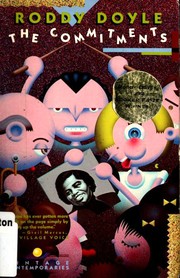
Start here. Jimmy Rabbitte Junior assembles a soul band on the north Dublin estates on the theory that the Irish are the blacks of Europe, and it is almost entirely dialogue — barely a hundred and fifty pages, self-published originally, and still the funniest of the three.
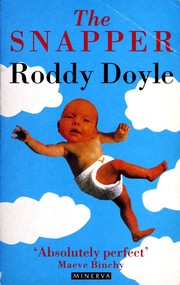
Second, and the point at which the trilogy shows its hand: Sharon Rabbitte is pregnant and will not say by whom, and the comedy is now doing something else. Read it directly after The Commitments — the shift in what the same household can carry is the whole effect.
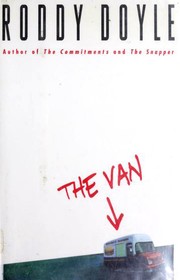
The finale, and the one that hurts: Jimmy Senior, long unemployed, goes into business with a mate selling chips from a filthy van during Ireland's 1990 World Cup. Booker-shortlisted, and the ending is the argument the first two books were setting up. Read it last.
The fourth Rabbitte book
BeginnerRead the late return to the family and see what Doyle does with twenty-two years of hindsight
▸ Study plan for this stage
Pace: About a week for 336 pages. The Guts is twice the length of The Commitments and reads a little slower — there is more narration and a middle-aged interiority the early books did not have — so 50 pages an evening rather than the trilogy's headlong pace. It is a direct sequel to The Commitments publis
- The Guts is Jimmy Rabbitte Junior at forty-seven, with bowel cancer, a wife, four children and a business reissuing forgotten Irish records.
- It is a sequel in the strict sense: the same character, continuous with the earlier book, and the emotional payload comes from the distance between the two.
- The record business is the same instinct as the band, aged. Jimmy is still convinced that finding the right music and putting it in front of people is a form of meaning, and the novel takes that seriously.
- Doyle's method has changed. There is more narration here than in the whole original trilogy, because a man with a diagnosis has an interior life he is not saying out loud.
- The illness is treated with the trilogy's deadpan rather than with solemnity, which is the book's most striking choice and the reason it does not read as a late cash-in.
- It also updates the setting: post-crash Dublin, twenty-five years after The Van's Ireland, and the difference in what the city is like is a running background argument.
- Read fourth, it retroactively changes the trilogy, because you now know what the boy on page one of The Commitments becomes.
- What has Jimmy kept from the boy in The Commitments, and what has gone?
- Doyle uses far more narration here than in the trilogy. Why does this book need it?
- How does the novel handle the diagnosis tonally? Find the passage where it comes closest to solemnity and say what pulls it back.
- What is the record business for, in the novel's terms? Is it a business, a hobby, or something else?
- What does 2013 Dublin look like in this book compared with the Dublin of The Van?
- Reread the first chapter of The Commitments immediately before starting The Guts. The join is the whole reason to read the book.
- Mark every passage of interior narration in the first fifty pages. There will be several, and there would have been none in 1987.
- List the music that matters in each of the two Jimmy books. The change in what he is chasing is the character's biography in one list.
- Write one paragraph on whether The Guts is a fourth Barrytown book or a different kind of novel about the same person. It is a real question and the answer changes how you would recommend it.
Next up: The Rabbittes get the comedy; the next stage gives the voice to the people the Barrytown jokes were told over.

Jimmy Junior at forty-seven with bowel cancer, a wife, four children and a business reissuing forgotten Irish records. A direct sequel to The Commitments published in 2013, and it only works if you remember the boy who booked the band — read it fourth, never first.
The same Dublin, a different narrator
IntermediateRead the books where Doyle turns the Barrytown comedy inside out and gives the voice to the people it was told over
▸ Study plan for this stage
Pace: Four to five weeks for 799 pages — Paddy Clarke Ha Ha Ha at 285, The Woman Who Walked into Doors at 226, Paula Spencer at 288 — and although these are not much longer than the trilogy they are considerably slower. Paddy Clarke has no chapters and no plot in the ordinary sense, just a ten-year-old's
- Paddy Clarke Ha Ha Ha won the Booker and is narrated by a ten-year-old in Barrytown in 1968, whose parents' marriage is failing just outside his ability to understand it.
- The technique is the trilogy's inverted: instead of dialogue with no interiority, this is pure interiority with no comprehension. The reader understands more than the narrator throughout.
- It is the bridge between the comic surface of the trilogy and the darker work that follows, and the last thing Doyle wrote before turning the same estate over to Paula Spencer.
- The Woman Who Walked into Doors is Paula Spencer, an alcoholic Dublin woman, reconstructing seventeen years of being beaten by her husband — and it uses exactly the register of the trilogy, plain speech and deadpan timing, on material that admits no jokes.
- Paula appeared first as a minor character elsewhere in Doyle's work, and the point of the novel is that a woman who is a background joke in one book is a full consciousness in another.
- The unreliability is the subject. Paula's memory has been damaged by drink and by injury, and the book is honest that she cannot always tell what happened, without ever suggesting she is not to be believed.
- Paula Spencer, ten years on, has her four months sober in Celtic Tiger Dublin, and it is the rarest thing in Doyle — a book about recovery that does not sentimentalise it.
- Together these three make the argument the trilogy could not: that the same voice, the same street and the same humour describe a life that is not remotely comic.
- What does Paddy understand about his parents, and how does Doyle let the reader understand more without ever stepping outside the child's voice?
- The novel has no chapters and little plot. What holds it together?
- How does Paula's narration handle the gaps in her memory? Find a passage where she says she does not know.
- The prose style is the trilogy's. What happens to deadpan timing when the material is assault rather than a chip van?
- What does Paula Spencer refuse to do that a conventional recovery novel would do?
- Taken with the trilogy, what is Doyle's argument about who gets to be funny and who gets to be understood?
- Read the last twenty pages of Paddy Clarke slowly. The final line is the whole book and it is easy to read past.
- Take a paragraph from The Commitments and a paragraph from The Woman Who Walked into Doors and mark the sentence structures. They are nearly identical, which is the most instructive thing on this stage.
- In Paula's narration, note every time she corrects herself. The pattern is deliberate and it is how Doyle builds a reliable account out of an unreliable memory.
- Read the two Paula books back to back and list what has changed in her circumstances and what has not. The novel's honesty is in the second list.
- Write one sentence on why Doyle needed a woman narrator to write this. It is a question worth answering carefully rather than quickly.
Next up: Having turned the voice on private life, Doyle turned it on the national story, which is the most ambitious thing he has done.
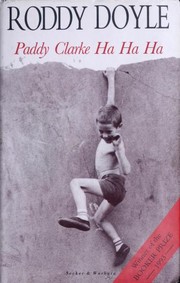
The Booker winner, narrated by a ten-year-old in Barrytown in 1968 whose parents' marriage is failing just outside his comprehension. The bridge between the trilogy's comic surface and the darker work that follows — read it first of these three.

Paula Spencer, an alcoholic Dublin woman, reconstructing seventeen years of being beaten by her husband. The exact register of the trilogy — plain speech, deadpan timing — turned on material that admits no jokes, and the best novel Doyle has written.

The sequel, ten years on, with Paula four months sober in Celtic Tiger Dublin. Read it directly after the first: it is the rarest thing in Doyle, a book about recovery that does not sentimentalise it.
The Last Roundup trilogy
BeginnerRead Doyle's historical trilogy, where the same voice is applied to the founding of the Irish state
▸ Study plan for this stage
Pace: Seven to eight weeks for 1,065 pages — A Star Called Henry at 352, Oh, Play That Thing at 377, The Dead Republic at 336. These are the most demanding books Doyle has written and they read considerably slower than anything else here: the prose is heightened, the chronology jumps, and Henry's narratio
- A Star Called Henry has Henry Smart, born in a Dublin slum in 1901, fighting in the GPO at fourteen and becoming an IRA assassin. It is Doyle's most ambitious book.
- It is a deliberate demolition of the founding myth: the Rising seen from the bottom, by someone with no stake in the Republic being declared over his head.
- The narration is tall-tale rather than realist. Henry's account is exaggerated, self-serving and occasionally impossible, and that is a claim about how national stories get made rather than a lapse.
- Oh, Play That Thing takes Henry to New York and then Chicago alongside Louis Armstrong, and it is the most divisive volume Doyle has published — some readers regard it as his best writing and many abandon it.
- The Dead Republic brings Henry back to Ireland with John Ford, who wants to film his life as The Quiet Man, and carries him through to the Troubles.
- The Ford material is the trilogy's thesis made literal: an American director turning a killer's life into a sentimental fiction about Ireland, with the killer present and unable to stop it.
- Across all three the question is who gets to tell the national story, and the answer the books give is nobody honest.
- This is the same voice as Barrytown put under enormous pressure. The dialogue is still the best thing on the page; everything around it has been raised.
- How does Henry's account of the Rising differ from the official version, and what is Doyle claiming by putting a fourteen-year-old with no politics inside the GPO?
- Where does Henry's narration become impossible? What does the exaggeration do to your trust, and is that the intended effect?
- Why does the second volume go to America? What is the argument for the detour, and does it work?
- What does John Ford want from Henry in The Dead Republic, and what does Henry want from him?
- The Quiet Man is a real film about a sentimental Ireland. What is Doyle doing by making it the trilogy's central image?
- Is this the same writer as The Commitments? Point to the continuity and to the break.
- Read a short account of the Easter Rising before starting. Doyle assumes the outline and Henry actively distorts it, and you cannot see the distortion without the baseline.
- Mark every moment in A Star Called Henry where the narration is clearly beyond belief. The list is the trilogy's method in miniature.
- If you find the second volume hard going, read to the Armstrong material before deciding. That is where most readers who stay say the book turns.
- In The Dead Republic, track what is changed each time Henry's life is retold by someone else. The novel is built out of those retellings.
- Write one paragraph on whether the trilogy succeeds. It is the one place on this path where a genuinely mixed verdict is the common one, and holding your own is worth the effort.
Next up: Having taken the voice as far as it goes, the last stage shows where Doyle brought it back to — two men at a bar, and his own parents.
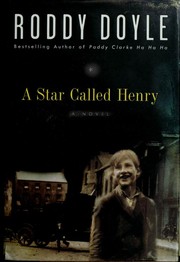
Henry Smart, born in a Dublin slum in 1901, fights in the GPO at fourteen and becomes an IRA assassin. Doyle's most ambitious book and a deliberate demolition of the founding myth — start the trilogy here.
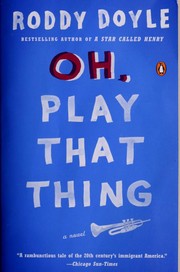
Henry in America, in New York and then Chicago alongside Louis Armstrong. The most divisive book in Doyle's catalogue and the middle of the three; the record carries a stray series tag but the book is his.

Henry returns to Ireland with John Ford, who wants to film his life as The Quiet Man, and lives on through the Troubles. Read it third and last; it closes the argument about who gets to tell the national story.
Late Doyle
IntermediateRead the recent books and the family memoir, and see where the Barrytown voice ended up
▸ Study plan for this stage
Pace: Three to four weeks. Three of the four have recorded lengths — Two Pints at 96, Smile at 219, Rory and Ita at 345, together 660 pages — and our catalogue holds no page count for Love, which is a full-length novel rather than a short one, so budget accordingly. The pacing is very uneven. Two Pints is
- Two Pints is two unnamed men at a bar discussing the news, in nothing but dialogue — the Barrytown method reduced to its absolute minimum, and the clearest demonstration of what Doyle can do with speech alone.
- At 96 pages it is also the shortest thing on this path, and it is genuinely funny in a way none of the late novels are.
- Smile begins with a middle-aged man in a Dublin pub being recognised by someone from his Christian Brothers school, and then becomes something else entirely. It is the most formally surprising book he has written.
- Go in knowing nothing about how it ends. That instruction is unusual on this path and it is meant literally — the novel's effect is not recoverable once spoiled.
- Love is two old friends drinking their way across Dublin over one night, one of them trying to explain why he has left his wife. All dialogue, thirty years after The Commitments, and about exactly the age those characters would now be.
- Rory and Ita is Doyle's parents' lives in their own words, edited into alternating accounts of twentieth-century Dublin. It is non-fiction and it is the source of the speech rhythms the whole path is built on.
- Reading it last reframes everything: the celebrated ear for dialogue turns out to be, in large part, transcription and attention rather than invention.
- The late books are all about men talking in pubs, which is where the first book started. The difference is that nothing is being assembled any more.
- Two Pints has no narration at all. What is lost, and what turns out not to be needed?
- Where does Smile stop being the novel it appears to be? Do not answer this until you have finished it.
- Love spends a whole night on one explanation. What is the man actually trying to say, and why does it take a night?
- In Rory and Ita, what do you hear that you recognise from the fiction? Find a specific turn of phrase.
- What does it change to learn that the dialogue was closely observed rather than invented?
- Across the whole path, what is Doyle's subject? Answer in one sentence and test it against the trilogy, Paula and Henry.
- Read Two Pints aloud with someone else taking the other part. It is written for the ear and this is the fastest way to hear how the timing works.
- Read Smile in as few sittings as you can manage, and do not look anything up about it beforehand.
- Take a page of Rory and Ita and a page of The Commitments and mark the sentence rhythms. The resemblance is the point of the whole stage.
- Lay out the path as a career: 1987 to the present, comedy to Paula to Henry to Love. Mark where each shift happens and what stayed constant.
- Write a three-sentence recommendation of Doyle for someone who has only seen the film of The Commitments. If you can do it, this path has done its work.
Next up: That closes the path — the trilogy read fast and in order, its sequel, its dark counterpart, its most ambitious detour, and the real voices underneath all of it.

Two unnamed men at a bar discussing the news, in nothing but dialogue — the Barrytown method reduced to its absolute minimum. Short, very funny, and the clearest demonstration of what Doyle can do with speech alone.

A middle-aged man in a Dublin pub is recognised by someone from his Christian Brothers school, and the novel turns into something else entirely. The most formally surprising thing he has written; go in knowing nothing about the ending.

Two old friends drinking their way across Dublin over one night, one of them trying to explain why he has left his wife. All dialogue again, thirty years after The Commitments, and about exactly the age those characters would now be.

His parents' lives in their own words, edited into alternating accounts of twentieth-century Dublin. Read it last: it is the non-fiction source of the speech rhythms the whole path is built on.
Discussion
Keep reading
Paths that share books, cover the same subject, or open a related topic.