Roddy Doyle Reading Order: The Barrytown Trilogy and What Comes After
Doyle's early comic Dublin novels and his later historical fiction are almost two different careers, and the Barrytown books have an internal order that the films scrambled. This path takes Barrytown in sequence, then follows the turn to much darker material.
Start here: the Barrytown Trilogy
BeginnerRead the three comic novels in order — they follow one north Dublin family.
▸ Study plan for this stage
Pace: 2-3 weeks for all three. The Commitments is 165 pages of almost pure dialogue and goes in a couple of evenings; The Snapper and The Van are longer at 216 and 313 pages but no slower.
- Dialogue-driven narration with dashes in place of quotation marks
- North Dublin working-class speech written without apology, glossary or italics
- The Rabbitte family as the thread running through all three books
- Soul music as the debut's engine and its running joke
- The Snapper refusing to name the father, and Jimmy Sr's arc around that refusal
- The Van, Italia 90, and comedy turning into damage
- How does Doyle convey action when nearly everything on the page is speech?
- What changes in Jimmy Rabbitte Sr across the three books?
- Why does The Snapper withhold what it withholds, and for how long?
- Where in The Van does the comedy stop being comic?
- Which of the three is the best book, and is it the funniest?
- Read ten pages of The Commitments aloud; the punctuation is designed for the ear rather than the eye
- Track Jimmy Sr's employment across all three novels and note what each job does to him
- Watch one of the films after reading its novel and list what the adaptation had to add as narration
- Mark the page in The Van where you stopped laughing, and check what happens immediately before it
Next up: The trilogy trains your ear for the idiom, which is the whole medium of the book that won the Booker.
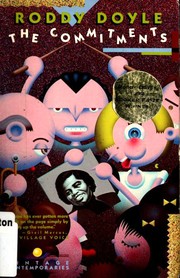
A group of north Dublin kids form a soul band. Almost entirely dialogue, and very funny; his first book, originally self-published.
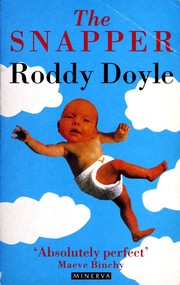
Sharon Rabbitte is pregnant and will not say by whom. The best of the three and the warmest thing he has written.
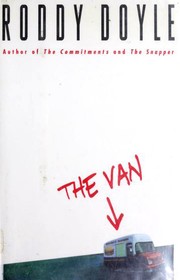
Two unemployed friends buy a chip van during Italia '90. Booker-shortlisted, and the point at which the comedy starts to hurt.
The Booker winner
BeginnerThe novel that won, and the bridge to the darker work.
▸ Study plan for this stage
Pace: About 10 days for 285 pages. There are no chapters, only breaks between fragments, so read to a break rather than to a page number.
- A ten-year-old narrator who reports far more than he understands
- Dramatic irony as the book's entire method
- Barrytown in 1968, before the Dublin of the trilogy
- The parents' marriage failing offstage and in overheard fragments
- Boyhood cruelty rendered without authorial comment
- The Booker in 1993, though our catalogue record carries a wrong year
- What is Paddy describing when he describes his parents, and how do you know?
- How do the fragments organise time?
- What does the title mean by the end of the book?
- Where, if anywhere, does adult knowledge leak into the voice?
- Why is there no chapter structure?
- Note three passages where you understand more than Paddy does, and identify the exact words that give it away
- Read the final pages twice
- Compare Paddy's voice with the boys' speech in The Snapper: the same idiom, one filtered through a child
Next up: Paddy Clarke proves the voice can carry pain it does not name, which is the technique the next two books depend on entirely.
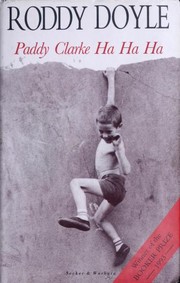
A ten-year-old narrates his parents' marriage failing without ever understanding what he is describing. It won the Booker in 1993; our record carries a wrong year.
The dark turn
IntermediateThe books where the same Dublin voice is used for much harder material.
▸ Study plan for this stage
Pace: 2-3 weeks. Both are short, at 226 and 219 pages, and both are heavy going; leave a gap between them rather than reading one straight after the other.
- Paula Spencer's first person, with memory reordered around the beatings
- The title as the lie told at the hospital desk
- Alcohol, class, and the machinery of not being believed
- Smile's Victor and the school memory that comes back
- An ending that divided readers, and what it forces you to reread
- The same comic ear turned on unbearable material
- How does Paula's chronology work, and why does she keep circling back?
- Who fails Paula, and how does the novel show institutional failure without editorialising?
- What does the ending of Smile assert, and what does it require you to re-read?
- Is the humour in these two books doing the same job it did in Barrytown?
- Where does Paula's account contradict itself, and is that the drink or the damage?
- Reconstruct Paula's timeline on paper in chronological order and mark the places she avoids
- Reread the first chapter of Smile immediately after finishing the last
- Compare a domestic scene in The Snapper with one in The Woman Who Walked into Doors: the same Dublin kitchen, ten years apart
Next up: Having seen the Dublin voice used on private damage, the historical novel turns it on the national story.

Paula Spencer, an alcoholic, tells the story of her marriage and what her husband did to her. The comic ear turned on domestic violence, without a trace of sentimentality.

A man is accosted by someone who claims to remember him from school. Short, and the ending divided readers completely on publication.
The historical novel
IntermediateFinish with the first of the Henry Smart books.
▸ Study plan for this stage
Pace: 2-3 weeks at around 30 pages a sitting for 352 pages. The tall-tale voice is sustained throughout and long stretches read better in a single push than in short bursts.
- Henry Smart as an unreliable narrator who mythologises himself as he goes
- The 1916 Rising seen from the slums rather than from the GPO's legend
- The War of Independence and the work of an assassin
- A deliberate demolition of the heroic national story
- Tall-tale exaggeration used as a political device
- The first volume of a trilogy, and where it leaves Henry
- Where does Henry's account become plainly impossible, and what is that doing?
- How does the novel treat the leaders of the Rising?
- What is the book's argument about who the Republic was actually for?
- How is this voice related to Paddy Clarke's?
- What does the exaggeration let Doyle say that a realist account could not?
- List Henry's tallest claims and mark which ones the book itself contradicts
- Read the GPO chapters against any short factual account of Easter 1916 and note the omissions on both sides
- Compare the opening page with the opening of The Commitments: the same author twelve years on, with a different idea of what a sentence is for
Next up: Henry's story continues in Oh, Play That Thing and The Dead Republic, which take him to America and bring him back.
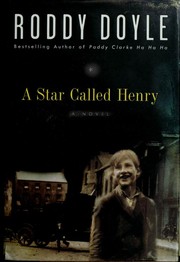
A Dublin slum child becomes an IRA assassin through the Rising and the War of Independence. A deliberate demolition of the heroic national story.
Discussion
Keep reading
Paths that share books, cover the same subject, or open a related topic.