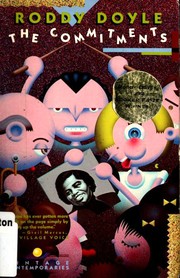
Start with The Commitments, 165 pages. Publication order and internal chronology agree completely across the Barrytown books, so there is no argument to have: Jimmy Rabbitte Junior assembles a soul band on the north Dublin estates on the theory that the Irish are the blacks of Europe, and the novel is almost entirely dialogue. It was originally self-published, it is the shortest of the three, and it is still the funniest.
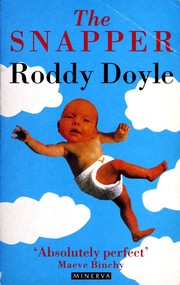
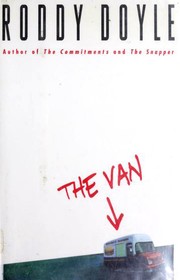
Then The Snapper, 216 pages, then The Van, 313 pages. The one trap worth naming is treating these as three unrelated comedies. The same house, the same kitchen and the same father run through all three, and The Van only lands because you have watched Jimmy Rabbitte Senior be funny for two books first.
The trilogy, in order
The Snapper is where the books show their hand: Sharon Rabbitte is pregnant and will not say by whom, and the comedy is suddenly doing something other than getting laughs. Read it immediately after The Commitments — the shift in what the same household can carry is the whole effect. The Van is the finale and the one that hurts: Jimmy Senior, long unemployed, goes into business with a mate selling chips from a filthy van during Ireland's 1990 World Cup run. It was shortlisted for the Booker, and its ending is the argument the first two books were quietly setting up.
A note for buyers: the three novels are also sold together as a single Barrytown Trilogy omnibus. Buy either the omnibus or the three separate volumes, not both.
The fourth Rabbitte book
The Guts, 336 pages, is a direct sequel to The Commitments published twenty-two years later. Jimmy Junior is forty-seven, has bowel cancer, a wife, four children and a business reissuing forgotten Irish records. It only works if you remember the boy who booked the band, so read it fourth and never first.
The same Dublin, a different narrator
Paddy Clarke Ha Ha Ha is Doyle's Booker winner, narrated by a ten-year-old in Barrytown in 1968 whose parents' marriage is failing just outside his comprehension. It runs 285 pages and is the bridge between the trilogy's comic surface and the darker work that follows. Our catalogue record carries a 1984 date, which is the record's, not the novel's — it was published in 1993.
The woman who walked into doors, 226 pages, gives the voice to a woman the trilogy would have kept in the background: Paula Spencer, an alcoholic Dublin woman, reconstructing seventeen years of being beaten by her husband. It is the exact register of the trilogy — plain speech, deadpan timing — turned on material that admits no jokes, and most readers rate it his best novel. Paula Spencer, 288 pages, picks her up ten years on and four months sober in Celtic Tiger Dublin. Read the two together and in that order.
The Last Roundup trilogy
A star called Henry, 352 pages, opens Doyle's historical trilogy: Henry Smart, born in a Dublin slum in 1901, fights in the GPO at fourteen and becomes an IRA assassin. It is his most ambitious book and a deliberate demolition of the founding myth. Oh, Play That Thing, 377 pages, takes Henry to New York and Chicago alongside Louis Armstrong and is the most divisive book in his catalogue. It is a Henry Smart novel, not a Barrytown one — our record carries a stray series tag that suggests otherwise. The Dead Republic, 336 pages, brings Henry home with John Ford, who wants to film his life as The Quiet Man, and runs him through the Troubles.
Late Doyle
Two Pints, 96 pages, is two unnamed men at a bar discussing the news in nothing but dialogue — the Barrytown method reduced to its minimum. Smile, 219 pages, starts as a middle-aged man being recognised in a Dublin pub by someone from his Christian Brothers school and then turns into something else entirely; go in knowing nothing about the ending. Love is two old friends drinking their way across Dublin over one night, thirty years after The Commitments and about exactly the age those characters would now be. Our record holds no page count for it. Rory and Ita, 345 pages, is his parents' lives in their own words, and is the non-fiction source of the speech rhythms the whole path is built on.
The full sequence, stage by stage, is at the Barrytown reading path.