Best Books on the Algerian War of Independence, in Reading Order
The war that ended French Algeria between 1954 and 1962 brought down the Fourth Republic, nearly produced a military coup in Paris, and left a torture scandal that France did not officially acknowledge for forty years. It is also a subject where French and Algerian historiographies remain far apart — on casualty figures, on the FLN's violence against its own, on whether the settler population had any legitimate claim — so this path deliberately puts the serious positions side by side rather than choosing between them. It moves from narrative history, to the colonial century that preceded the war, to the torture question in the words of the tortured and the torturers, to the revolution's own theorists, and finally to the war as it was fought inside France.
The Narrative
IntermediateFollow the war end to end — Toussaint Rouge 1954, the Battle of Algiers, the generals' putsch, the OAS, Evian — and be able to name the factions on both sides.
▸ Study plan for this stage
Pace: Five weeks. A Savage War of Peace is 606 pages and dense with names and acronyms — 25 pages a day for about a month, with a factions list open beside you. Evans's Algeria is 352 pages and reads faster because you already have the events; two weeks, read directly afterwards while Horne is still fresh
- Toussaint Rouge, 1 November 1954, and the fact that the FLN began as a very small group that manufactured a war rather than led an existing one
- The FLN's war against rival Algerian nationalists — Messali Hadj's MNA, the Café Wars among emigrants in France, the Melouza killings — which Evans covers in far more detail than Horne
- Philippeville in August 1955 and the reprisals that followed, the point at which the middle ground between the communities stopped existing
- The Battle of Algiers in 1957: Massu's paratroopers given police powers, the general strike broken, the FLN network in the Casbah dismantled — a military success that cost the political war
- The pieds-noirs as a political force in Paris, and the May 1958 crisis that destroyed the Fourth Republic and returned de Gaulle to power on the assumption he would keep Algeria French
- The generals' putsch of April 1961 and the OAS campaign that followed — the war's final phase fought by Frenchmen against the French state
- Evian in March 1962, the mass departure of the settler population, and the abandonment of the harkis, which is the part of the settlement both national narratives handle worst
- The casualty dispute itself: French figures and Algerian figures differ by roughly a factor of five, and the disagreement is about method and politics, not arithmetic
- Why does Philippeville matter more to the shape of the war than the November 1954 attacks that opened it?
- The FLN spent a great deal of effort fighting other Algerian nationalists. What was at stake, and where exactly does Evans's account of it differ from Horne's?
- Explain how the Battle of Algiers was simultaneously a French military victory and a French political defeat. What is the general lesson, and what are its limits?
- How did an Algerian war bring down a French republic? Trace the mechanism, and say why the army expected de Gaulle to serve their aim
- State the competing casualty figures, who produced each, and on what basis. Why is this not the kind of dispute more archives will settle?
- Build a factions chart before you get past Horne's first hundred pages: FLN, ALN, MNA and the Messalists, the French army, the pieds-noirs, the OAS, the harkis, the Gaullist government. For each, one line on aims and one on whom they fought
- Make a twenty-entry dated timeline from 1 November 1954 to the Evian Accords. Keep it — the next four stages all hang off it
- Take one event both books cover at length — Philippeville, or the Battle of Algiers — and write 300 words on what each historian includes, omits and emphasises. This is the whole methodological problem of the subject in miniature
- Write the strongest case for the pied-noir position as one of its holders would have made it in 1960, then write the objection. Neither book does this for you and both assume you can
- Mark every use of the word terrorism in Horne and note whom it is applied to; then do the same in Evans. Compare the two distributions
Next up: You have the war end to end from two historiographies — the next stage supplies the hundred and twenty years that made 1954 legible as something other than a sudden eruption.
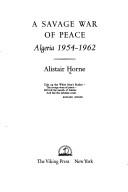
Still the standard English-language history and the best single narrative of the war. Horne interviewed extensively on the French side and is often criticised by Algerian historians for how sympathetically he renders the French army's dilemma; read it for the structure of events, with that caveat live.
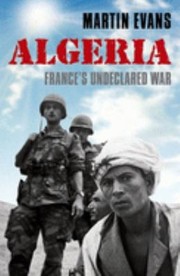
A more recent account built on Algerian as well as French sources and much stronger on the FLN's internal politics and its violence against rival nationalists. The necessary complement to Horne, and short enough to read straight after him.
The Colony Before the War
IntermediateUnderstand the hundred and twenty years of French Algeria — land expropriation, the settler community, the legal status of Muslims — that made 1954 possible.
▸ Study plan for this stage
Pace: Two weeks. Stora's Algeria, 1830–2000 is 286 pages and covers a hundred and seventy years, so it is compressed rather than difficult — 20 pages a day with time to look things up. Read the pre-1954 half slowly and the post-1962 chapters in one sitting at the end, since they are where his argument abo
- The 1830 conquest and the long resistance under Abd el-Kader, which established the pattern of a settlement built on military occupation rather than treaty
- The legal machinery of land transfer — cantonnement, the senatus-consulte, the Warnier Law — by which Algerian collective land became individually alienable and then settler property
- The Code de l'indigénat and the category of French Muslim subject: subject to French sovereignty and French conscription, without French citizenship unless renouncing Muslim personal status
- The settler population's actual composition — Spanish, Italian, Maltese and Alsatian as much as metropolitan French — and how a mixed immigrant population became the most intransigent defenders of French Algeria
- Sétif and Guelma, May 1945, and Stora's case for treating that repression rather than 1954 as the war's true opening
- Stora's thesis that France organised its own forgetting: no official war, no name for it, and forty years before the torture question was acknowledged
- Stora's own position — a pied-noir Jew from Constantine writing the standard French history of Algeria — which he does not conceal and which is worth reading as part of the argument
- The through-line to the 1990s civil violence, which is why the book runs to 2000 rather than stopping at independence
- Describe, concretely, the legal position of a Muslim Algerian in 1930 — what could and could not be done, and on what authority
- Why does Stora treat May 1945 as the beginning of the war rather than as a separate episode? What does that periodisation buy him, and what does it cost?
- Trace the mechanisms by which Algerian land became settler land. Which were legal instruments and which were their predictable side effects?
- The pieds-noirs were largely not of French descent. How does Stora explain their politics, and is the explanation sufficient?
- Stora argues France has actively organised forgetting rather than merely failed to remember. What is his evidence, and what would count against the claim?
- Draw a land-ownership timeline from 1830 to 1954 naming each legal instrument and what it did. Three or four entries is enough if each is precise
- Write 200 words describing an ordinary day for a Muslim Algerian in 1935, constrained strictly to what Stora documents about legal and economic status. Invent nothing
- Write a paragraph on how Stora links the war of independence to the violence of the 1990s, and a second on whether you find the link persuasive or convenient
- Find three places where Stora's own background is visibly operating on the text — in emphasis, in sympathy, in what he treats as needing explanation — and note each
Next up: With the colonial century in place you can see why the war's methods were not improvised, which is what the next stage examines at the closest possible range.
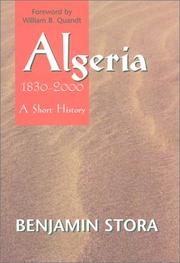
A compact history by the leading French historian of Algeria, who is himself a pied-noir and has spent his career arguing that France has refused to remember this war. It covers the conquest, the war, and the civil violence of the 1990s in one line.
Torture and the Battle of Algiers
IntermediateConfront the war's central moral question through the people on both sides of it, and understand why the practice became systematic rather than exceptional.
▸ Study plan for this stage
Pace: Four weeks, and pace this one deliberately. Read The Question in a single sitting — it is 124 pages and breaking it up defeats it — then leave a day before starting Aussaresses. The Battle of the Casbah is 213 pages and unpleasant in a different way; read it within the same week so the two accounts
- Alleg's method: a first-person account of what was done to him by French paratroopers in 1957, written flatly and with almost no generalisation, which is why it could not be dismissed
- The book's banning in France within weeks of publication, and the fact that the scandal it created was domestic — the objection that landed was what the war was doing to France
- Aussaresses's admissions, published in 2001: torture as routine, summary executions, and deaths in custody presented at the time as suicides. He was prosecuted for justifying war crimes and stripped of the Legion of Honour
- The doctrine of guerre révolutionnaire, in which the population is the terrain and intelligence is the decisive weapon — the framework that made torture a method rather than an excess
- Lazreg's central claim: that torture was theorised, taught and institutionalised, with an intellectual and in places a clerical apparatus built to sustain it
- The ticking bomb argument in its original setting rather than its seminar-room version, and what the operational record does to it
- The euphemisms — interrogation poussée, corvée de bois — and the fact that each author's choice to use or refuse them is itself evidence
- The transmission of the doctrine after 1962, which is Lazreg's reason for writing and the reason the book was received as being about more than Algeria
- Alleg almost never generalises from his own case. What does that restraint achieve that an argued indictment would not?
- Aussaresses is an unrepentant perpetrator. What is such a source reliable for, and what must not be taken from it?
- Lazreg argues that torture was doctrine rather than excess. Set out her evidence, and state what evidence would refute her
- State the ticking bomb argument in its strongest form, then say precisely which premise each of these three books attacks
- The methods produced a French military victory in Algiers. Does that fact bear on the moral argument at all, and should a historian let it?
- Read The Question in one sitting and then immediately write 300 words on the effect of its tense and person. Do it before reading anything about the book
- Set Alleg and Aussaresses in two columns on the same practices: technique described, justification offered, what happened to the prisoner afterwards. The columns will agree more than you expect, which is the finding
- From Lazreg, chart the transmission of the doctrine — who taught it, to whom, in which institutions, and where it went after Algeria
- Write the ticking bomb argument out as a formal syllogism, then annotate each premise with the page from these books that bears on it
- List the euphemisms each of the three authors uses, refuses, or quotes with distance, and write a paragraph on what those choices do to the reader
Next up: You have now read the war's central moral question from the victim, the perpetrator and the analyst — the next stage reads the people who built a theory of decolonisation on exactly this experience.
The short account by a French communist journalist of being tortured by French paratroopers in 1957, banned in France on publication and the book that made torture a domestic political scandal. Read it first here; it is under a hundred pages and it does not require any framing.
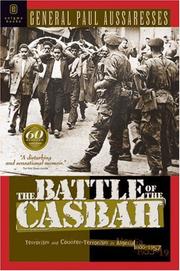
The memoir of the intelligence officer who ran interrogation and summary execution in Algiers, published in 2001, unrepentant, and the reason he was stripped of the Legion of Honour. A repellent book and an indispensable primary source — read it immediately after Alleg.
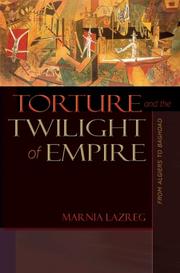
An Algerian sociologist's analysis of how torture was theorised, taught and institutionalised as counter-insurgency doctrine, and of how that doctrine travelled afterwards. The book that turns the two memoirs into an argument.
The Revolution's Theorists
IntermediateRead the intellectuals the war produced, and understand why this particular conflict shaped decolonisation thinking everywhere.
▸ Study plan for this stage
Pace: Four weeks. Les damnés de la terre is 256 pages but is an argument that repays rereading — two weeks, chapter by chapter, and deliberately save Sartre's preface for last rather than reading it first. A Dying Colonialism is 188 pages and much more concrete; one week. Algerian Chronicles is a collecti
- Fanon's compartmentalised colonial world — the settler's town and the native's town described as two species of space — which is the premise everything else rests on
- The argument about violence, which has a descriptive component (the colonial order is founded on and maintained by violence) and a prescriptive one, and which is almost always summarised as though only the second existed
- The pitfalls of national consciousness: Fanon's warning about the national bourgeoisie and the single-party state, written before independence and far less quoted than the violence chapter
- The closing psychiatric case notes, drawn from Fanon's own practice on both sides of the war, and what it means that he ends a political book with clinical material
- Sartre's preface, which for decades was read in place of the book and which states the violence argument more brutally than Fanon does
- A Dying Colonialism as the concrete counterpart: the veil, the radio, medicine and the family as sites where the revolution reorganised ordinary life
- Camus's actual positions across twenty years — the 1939 Kabylia reports, the 1956 civil truce appeal, and the refusal to endorse independence — which are more specific than the quarrel about him suggests
- That Fanon was writing while dying of leukaemia in 1961 and did not live to see independence, which is visible in the book if you look for it
- State Fanon's claim about violence, separating what he describes from what he recommends. Where exactly does the second begin?
- Why does The Wretched of the Earth end with psychiatric case notes? What does that ending do to the argument that precedes it?
- Summarise the prediction Fanon makes in the pitfalls chapter, and assess it against what actually happened to independent Algeria
- In A Dying Colonialism, what is Fanon's argument about the veil? Lay out its structure rather than its conclusion
- What was Camus's position in his own words? Give the strongest case for it, then the objection Fanon's argument makes to it
- Write 250 words on Fanon's violence argument without using the word cathartic. The standard paraphrase has largely replaced the text and the constraint forces you back to it
- Read Sartre's preface only after finishing Fanon, then write a paragraph on what it amplifies and what it distorts
- Copy out the passage in Algerian Chronicles where Camus states his objection to independence most directly, then draft the reply Fanon's argument supplies. Do not adjudicate it yet
- Find three places in The Wretched of the Earth where Fanon plainly does not know how the war will end, and note what each shows about the book's status as prophecy
- Keep Fanon's chapter on the veil bookmarked. You will read the French army's version of the same campaign in the next stage and the collision is the point
Next up: Fanon and Camus argued about the war from inside it — the final stage reads the two social histories that test their claims against the archive, and closes with an Algerian novel rather than an argument.
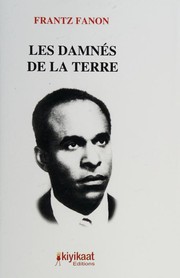
Fanon's The Wretched of the Earth, catalogued here under its original French title — the psychiatrist from Martinique who joined the FLN, writing on colonial violence and the dangers facing the post-colonial nation. The most influential book to come out of the war, and one whose argument about violence is still argued over.
The earlier and more concrete book, on how the revolution changed Algerian life — the veil, the radio, medicine, the family. Read it before or after the other Fanon, but read it: it is where the theory touches ground.

Camus's Algerian journalism, from the 1939 Kabylia reports to his 1958 collection, in the first full English translation. His refusal to endorse independence has been condemned by Fanon's readers and defended by others; here you can judge the position from his own words rather than from the quarrel about it.
The War Inside France, and Algerian Voices
IntermediateSee the war as it was fought in the metropole and in the Algerian countryside, and read an Algerian novelist rather than only historians.
▸ Study plan for this stage
Pace: Five weeks. Paris 1961 is 392 pages of archival social history and takes two; Burning the Veil is 432 pages and takes two more. Leave the last week for Nedjma, which is 255 pages and slower than any of the histories — it is fragmentary and circular by design, and it wants two passes rather than one
- 17 October 1961: an FLN-called demonstration against a curfew imposed on Algerians in Paris, met with police violence under Maurice Papon, and a death toll that the state denied for decades
- How House and MacMaster reconstruct an event the archive was arranged to obscure, and why the method matters as much as the finding
- The asymmetry of French memory: the Charonne deaths of February 1962 entered public memory quickly and 17 October did not, and the difference is about who died
- The French army's emancipation campaign for Algerian women — the unveiling ceremonies of May 1958, the Sections Administratives Spécialisées, the female auxiliaries — presented at the time as liberation and designed as counter-insurgency
- Regroupement: the forced resettlement of a very large share of the rural population into controlled camps, which reshaped Algerian society more than any battle and is remembered far less
- MacMaster's difficult conclusion, which complicates both the colonial account (emancipation was sincere) and the nationalist one (the veil was untouched tradition)
- Nedjma as the founding work of modern Algerian literature in French: four narrators, a broken chronology, and Nedjma herself readable as a woman and as the country
- That Kateb Yacine wrote this in French in 1956, as the war began, and later turned to Arabic and Berber theatre — the language choice is part of the book's subject
- What happened on 17 October 1961, and why did acknowledgement take decades? What made the eventual reconstruction possible?
- Compare the memory of 17 October with that of Charonne. What does the difference show about who counts as a victim in a national narrative?
- MacMaster argues the emancipation campaign was counter-insurgency. Does that make its stated aims false? How should a reader hold both at once?
- Regroupement displaced an enormous proportion of rural Algerians. Why is it less present in both national memories than the Battle of Algiers?
- Nedjma refuses linear chronology. What does the form achieve, in 1956, that a linear novel of the same events could not?
- Reconstruct 17 October 1961 hour by hour from House and MacMaster, marking for each claim what kind of source supports it
- Write 300 words on the disputed death toll for that night: the competing figures, who produced each, and the method behind each
- After Burning the Veil, return to Fanon's veil chapter from the previous stage and write a page on where each is right about the other. This is the single best exercise on the path
- Read the first forty pages of Nedjma twice — once straight through, once mapping which narrator holds each section — then write out the chronology the novel deliberately withholds
- Write the closing essay: 1,000 words on whether a single history of this war can be written, citing at least one book from every stage and naming the specific points where the two historiographies cannot both be right
Next up: This closes the path; the natural continuations are the Algerian civil war of the 1990s, French memory politics since the 1999 recognition of the war, and the wider literature on decolonisation that Fanon shaped.

House and MacMaster on the police massacre of Algerian demonstrators in Paris in October 1961 and the decades of official denial that followed. The clearest case study of how the war was remembered and unremembered in France.

The French army's campaign to emancipate Algerian women as counter-insurgency, and what actually happened to rural women during the war. It complicates both the colonial and the nationalist accounts of the same events.

The 1956 novel that is the founding work of modern Algerian literature in French, fragmentary and difficult and written as the war began. The right closing book: after the histories, the country's own imaginative account of itself.
Discussion
Keep reading
Paths that share books, cover the same subject, or open a related topic.


