This war has no neutral literature. It was fought between 1954 and 1962, it involved systematic torture by the French state and civilian massacres by both sides, and it is still contested politically in France and Algeria today — over casualty figures that range from roughly three hundred thousand to over a million depending on who is counting, over whether the word war could be used at all, and over the fate of the Harkis who fought for France. A reading order matters here because the primary accounts are testimony from people with stakes, and they land very differently if you read them before you have the chronology.
So take a narrative history first, then the documents, then the theory and the memory politics. That sequence will not resolve the disputes, and it should not: the aim is to understand where the lines fall.
The narrative frame
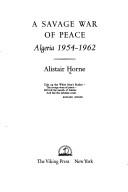
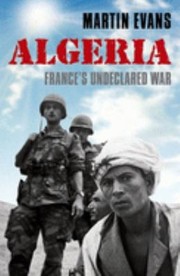
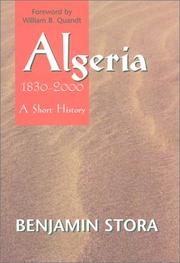
A Savage War of Peace is the standard English-language account and the place to begin. Alistair Horne wrote it in the 1970s with access to many participants, and it remains unmatched as a narrative; readers should know it is written broadly from a French vantage point and that Algerian scholarship since has revised parts of it. Algeria by Martin Evans is the modern corrective, drawing on work Horne could not use and giving more weight to Algerian sources. Algeria, 1830-2000 by Benjamin Stora is short, and it does the essential job of putting the war inside the hundred and thirty years of colonial rule that produced it.
The documents on torture
The Question is Henri Alleg's account of being tortured by French paratroopers in 1957. It was published and then banned in France, and it is the book that made the practice undeniable to a French readership. Read it before anything analytical.
The Battle of the Casbah is by Paul Aussaresses, the French general who commanded intelligence operations in Algiers. He admitted publicly to ordering torture and summary executions, was prosecuted in France for justifying war crimes, and was stripped of his rank and his Legion of Honour. The book is a perpetrator's account written without remorse, which is exactly what makes it a document. Torture and the Twilight of Empire is the scholarly analysis, and Marnia Lazreg's argument connects the practice to the structure of colonial rule rather than treating it as excess by individuals.
Theory, memory and fiction
Les damnés de la terre — published in English as The Wretched of the Earth — is Frantz Fanon's book on colonialism and violence, written as he was dying and still one of the most argued-over texts of the twentieth century. Its first chapter is read by some as an analysis of colonial violence and by others as an endorsement of anticolonial violence, and that reading has never been settled. A dying colonialism is the more concrete Fanon and the better introduction to his thinking on how Algerian society changed during the war.
Algerian Chronicles collects Albert Camus's journalism on Algeria across two decades. Camus opposed both colonial injustice and Algerian independence, a position that satisfied nobody at the time and remains criticised; the collection is valuable as evidence of what a liberal European settler position looked like from inside.
Paris 1961 documents the police massacre of Algerian demonstrators in Paris, which the French state denied for decades. Burning the veil examines the French campaign to unveil Algerian women as an instrument of counterinsurgency. Nedjma closes the path with fiction — Kateb Yacine's novel, listed in our catalogue under his inverted name, is the major Algerian literary work of the period and refuses the clean chronology every history imposes.
Follow the path in full, and expect to end with a sharper view of the disagreements rather than a verdict on them.
Follow the full ordered path here: The Algerian War of Independence: The Best Books to Read, in Order.
Ready to learn something deeply?
Build a reading path — free