T.S. Eliot Reading Order: Where to Start with the Poems
Opening The Waste Land cold, with its 434 lines in six languages and its own footnotes, is how most people decide they dislike Eliot. The poem is not difficult because it is hostile; it is difficult because it assumes the reading Eliot had done and expects you to have done some of it too. This path starts with the early poems, which are strange but perfectly readable, buys you the critical vocabulary from Eliot's own essays before the hard poem rather than after it, then follows him into verse drama and out the far side to Four Quartets, which is the real destination.
Before The Waste Land
BeginnerRead the early Eliot — ironic, urban, funny about its own paralysis — and see that the fragmentary method is present from the first page, in a poem anyone can follow.
▸ Study plan for this stage
Pace: Two to three weeks, and the page counts are misleading — both books are short but Prufrock and Other Observations is roughly 30 pages of poetry that will take longer than 300 pages of prose. Read one poem a sitting, aloud, twice. Old Possum's Book of Practical Cats is around 45 pages and is an eveni
- The Love Song of J. Alfred Prufrock is the most approachable major modernist poem there is: a dramatic monologue by a man who cannot bring himself to ask a question, and every technique The Waste Land later scales up is already present in it.
- The fragmentary method is there from the first page. Prufrock moves by association and abrupt cut — the etherised patient, the stairs, the mermaids — without narrative connective tissue, and it is still perfectly followable. That combination is the thing to notice.
- The Epigraph from Dante, the Hamlet reference, the Lazarus allusion: the borrowing habit that makes The Waste Land forbidding is here at a manageable density, which is exactly why this book goes first.
- Eliot's early voice is ironic, urban and funny about its own paralysis. Preludes and Rhapsody on a Windy Night are city poems built from smells, gaslight and street furniture — the dislocated modern cityscape arrives before any of the mythic apparatus.
- Portrait of a Lady is a companion piece to Prufrock and a study in social embarrassment. Reading the two together shows how much of early Eliot is about the failure to say the thing.
- Old Possum's Book of Practical Cats is not a joke inclusion. The light verse Eliot wrote for his godchildren is the work of a prosodist with a superb ear enjoying himself, and it is the single hardest thing to believe about him if you have only read The Waste Land.
- The metrical variety in the cat poems — the galloping anapaests of Macavity, the patter rhythms — is technically the same skill that controls the tonal shifts in the long poems, applied without any weight on it.
- In Prufrock, what is the question he never asks? Point to the lines where the poem circles it.
- Where does Prufrock cut abruptly between images, and how does the poem stay coherent across the cuts?
- Eliot's early poems are full of urban detail — fog, sawdust, coffee spoons. What is that detail doing that a description of feeling would not?
- How does the irony in Portrait of a Lady differ from the irony in Prufrock? Both are about social failure; the target is not the same.
- Having read the cat poems, what can you now say about Eliot's ear that The Waste Land alone would not tell you?
- Which of these early poems could you hand to someone who says they hate poetry, and why that one?
- Read Prufrock aloud twice in one sitting, then write 200 words on what actually happens in the poem, stated as plainly as you can.
- Mark every abrupt transition in Prufrock and write one line for each on how the poem gets you across the gap.
- Scan the opening stanza of Macavity for its metre, then find a passage in Prufrock with an equally strong rhythm. Note that they are the same poet doing the same thing.
- List every allusion you can identify in Prufrock and Other Observations without looking anything up. Then look them up and note how many mattered to your reading.
- Copy out a six-line passage of Preludes and rewrite it as a plain prose description of the same scene. Compare what the poetry keeps.
Next up: You now know the method at a scale you can follow; the next stage arms you with Eliot's own theory of it before turning it loose at full strength.

The right first Eliot. The Love Song of J. Alfred Prufrock is the most approachable major modernist poem there is, and the whole slim book establishes the voice, the dislocated cityscape and the self-conscious irony The Waste Land later scales up.
Not a joke inclusion. The light verse he wrote for his godchildren shows a prosodist with a superb ear having fun, which is the single hardest thing to believe about Eliot after you have only read The Waste Land.
The Waste Land, With the Criticism Beside It
IntermediateTake on the central poem with Eliot's own critical position in hand, and be able to explain the impersonal theory of poetry he was arguing for while writing it.
▸ Study plan for this stage
Pace: Six to eight weeks. Read The Sacred Wood first — about 170 pages of essays, two weeks, taking Tradition and the Individual Talent and the Hamlet essay slowly. Then give The Waste Land itself three to four weeks, which sounds absurd for 434 lines and is not: read it aloud entire on the first sitting,
- Read the criticism first, not after. The Sacred Wood contains Tradition and the Individual Talent and the Hamlet essay, and they explain what The Waste Land is attempting, written by the man about to attempt it.
- Tradition and the Individual Talent argues that a poet writes with the whole of European literature simultaneously present, and that the poet's mind is a catalyst rather than a personality expressing itself. That impersonal theory is the licence for a poem built entirely out of other voices.
- The Hamlet essay coins the objective correlative — the claim that an emotion must be conveyed by a set of objects, a situation, a chain of events, rather than stated. Once you have it, The Waste Land's method of pure image and quotation stops looking evasive.
- The first reading of The Waste Land is meant to feel like overheard fragments. That is the designed experience, not a failure of preparation, and trying to resolve every allusion on the first pass destroys it.
- Eliot's own notes are part of the poem's game rather than a key to it — he later said as much — and the poem was cut drastically by Ezra Pound, whose editing is responsible for much of its abruptness.
- The poem has recurring anchors that hold the fragments: water and drought, the Thames, London crowds, a voice that keeps changing gender and register, and the repeated failure of speech between people. Track those rather than the allusions.
- Ash-Wednesday, written after Eliot entered the Anglican church, is the necessary bridge to everything later. Its liturgical repetitions — phrases turned over and over rather than juxtaposed — are the exact opposite of The Waste Land's collage.
- The contrast is the point of putting them together: one poem assembles fragments it cannot reconcile, the other repeats a small number of phrases until they change meaning. Eliot's late style begins in the second.
- State the impersonal theory of poetry in your own words. What does it license a poet to do that a Romantic theory would not?
- What is the objective correlative, and does The Waste Land supply one? Pick a passage and argue it either way.
- Which voices in The Waste Land can you distinguish on a first reading without notes? What tells them apart?
- Eliot's notes have been called both essential and a joke. On the evidence of using them, which is nearer the truth?
- How does Ash-Wednesday's repetition work differently from The Waste Land's juxtaposition? Take a passage from each and describe the mechanism.
- Does knowing that Pound cut the poem heavily change how you read its abruptness?
- Read Tradition and the Individual Talent and write 250 words summarising its argument without using the word 'impersonal'. The paraphrase is the test of understanding.
- Read The Waste Land aloud from beginning to end in one sitting, without notes, and write down immediately what you took from it. Keep that page; compare it after the third reading.
- Take Part I alone and mark every change of speaker. Then do the same for Part III. Compare the density.
- Choose five allusions Eliot's notes identify and read the source passages. Then decide, for each, whether the poem needed you to know it.
- Copy out the opening ten lines of Ash-Wednesday and the opening ten of The Waste Land, and write a paragraph on what the sentence rhythms tell you about the two poems' relationship to certainty.
Next up: With the collage poem and the liturgical poem both in hand, you can follow Eliot onto the stage, where he spent twenty years trying to make verse carry ordinary speech.
Read this first, not after. It contains Tradition and the Individual Talent and the Hamlet essay that coins the objective correlative — the two ideas that explain what The Waste Land is trying to do, written by the man about to do it.
Now read it, and read it aloud, and read it more than once — the first pass is meant to feel like overheard fragments. Treat Eliot's notes as part of the poem's game rather than a key to it, and do not try to resolve every allusion on the first attempt.
The conversion poem, written after Eliot entered the Anglican church, and the necessary bridge to everything later. Its liturgical repetitions are the opposite of The Waste Land's collage, and the contrast is the point.
The Verse Drama
IntermediateFollow Eliot's twenty-year attempt to write a modern poetic theatre, and judge for yourself where the experiment succeeds and where the verse disappears into drawing-room comedy.
▸ Study plan for this stage
Pace: Five to six weeks for roughly 400 pages of playtext. Murder in the Cathedral is about 90 pages and should be read aloud, which takes two evenings and is worth it. The Family Reunion is around 130 pages and The Cocktail Party around 185; a week to ten days each. Keep the order — the stage is an argum
- Murder in the Cathedral is the best of the plays and the most performed: Becket's martyrdom, written for a cathedral festival, and the chorus of Canterbury women carries the finest verse Eliot wrote for the stage.
- The chorus is the formal solution the later plays abandon. It lets Eliot write at full poetic pressure without asking a naturalistic character to speak that way, and losing it is what changes everything afterwards.
- The tempters' scene rewards having read Ash-Wednesday: the fourth tempter offers Becket the temptation of doing the right thing for the wrong reason, which is the same spiritual problem the conversion poem circles.
- The knights' prose speeches to the audience after the murder are a deliberate rupture — the play drops verse and modern political self-justification walks straight in. It is the boldest thing in Eliot's theatre.
- The Family Reunion transposes the Oresteia to an English country house, with the Furies appearing at the window, and it is a fascinating half-failure. It is the play where Eliot starts hiding the verse inside natural speech.
- The Furies are the specific problem: they must be visible and they cannot be staged without absurdity, and the difficulty is a symptom of the larger one — a mythic apparatus inside a drawing room.
- The Cocktail Party was his commercial hit and the verse is so submerged most audiences never noticed it was there. Whether that is the experiment's success or its disappearance is the question the stage exists to pose.
- Read as a sequence, the three plays trace a single argument about how much poetry a modern stage will carry — starting from a cathedral where it carries everything, ending in a Mayfair flat where it carries almost nothing.
- What does the chorus in Murder in the Cathedral do that no individual character could? Point to a specific passage.
- Why does Eliot give the knights prose? What would be lost if they justified themselves in verse?
- The fourth tempter offers the subtlest temptation. State it precisely, and connect it to something in Ash-Wednesday.
- The Furies in The Family Reunion are notoriously hard to stage. Is that a production problem or a structural one?
- In The Cocktail Party, find a passage you would not have known was verse. Does the concealment gain anything?
- Across the three plays, did Eliot solve the problem of modern verse drama, dissolve it, or abandon it? Argue from the texts.
- Read one chorus from Murder in the Cathedral aloud at full volume. It is written to be spoken by many voices and does not work silently.
- Take a page of The Cocktail Party and mark the line breaks. Then read it aloud twice, once honouring them and once ignoring them, and note whether you can hear the difference.
- Write 250 words on why The Family Reunion does not quite work, using a specific scene rather than a general impression.
- Compare the tempters' scene in Murder in the Cathedral with the psychiatrist's scenes in The Cocktail Party. Both are about a person being offered a life; write a page on what changed.
- Choose the single passage of stage verse on this list you think is best and copy it out. Being able to point at it is the stage's whole payoff.
Next up: Having watched Eliot spend two decades on the stage, you are ready for the poem the whole path exists to deliver — and for his own account of everything you have just read.
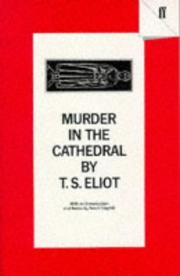
The best of the plays and the most performed: Thomas Becket's martyrdom, written for a cathedral festival, with a chorus of Canterbury women who carry the finest verse Eliot wrote for the stage. The tempters' scene rewards having read Ash-Wednesday.
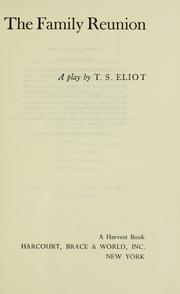
The Oresteia transposed to an English country house, with the Furies appearing at the window. A fascinating half-failure, and the play where Eliot begins hiding the verse inside natural speech.
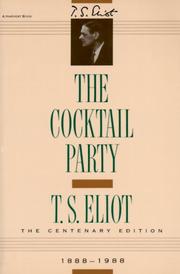
His commercial hit, in which the verse is so submerged most audiences never noticed it was there. Read third, as the endpoint of an argument about how much poetry a modern stage will carry.
Four Quartets and the Late Criticism
IntermediateReach the poem the whole path exists to deliver, and place it against Eliot's mature criticism and the drafts that show how any of it was made.
▸ Study plan for this stage
Pace: Three to four months. Four Quartets is under 50 pages and should take at least a month: one quartet a week, read aloud, then all four together at the end. Selected Essays is about 460 pages and can be read selectively over six weeks. On Poetry and Poets is around 310 pages and goes faster. Invention
- Four Quartets is four meditations on time, place and prayer, each named for a location and each following the same five-movement structure — Eliot borrowing musical form deliberately, so that a theme is stated, complicated, and resolved rather than argued.
- Because the four share a structure, reading them as a set teaches you the shape once and then lets you hear variations. That is why one a week, in order, beats reading straight through.
- Little Gidding was written during the Blitz and the air-raid encounter with the 'familiar compound ghost' is the poem's most direct scene. The wartime pressure is in the poem's texture, not just its background.
- The poem is structurally musical and rhythmically slow, and it needs everything earlier on this path to be heard properly — the collage technique inverted, the liturgical repetition of Ash-Wednesday matured, the dramatic ear from the plays.
- Selected Essays contains the metaphysical-poets essay that reshaped the English canon for a generation, promoting Donne and Herbert and demoting Milton and the Romantics — Eliot the critic did as much to change what people read as Eliot the poet. Its central idea, the dissociation of sensibility, ho
- On Poetry and Poets collects the later, gentler lectures, including Eliot's own retrospective account of the verse-drama experiment, where he is unusually honest about grading his own homework.
- Inventions of the March Hare is the early notebook, unpublished until 1996, containing drafts and discarded poems — including material Eliot suppressed that is genuinely ugly, with racist and antisemitic content. The extent to which that material bears on the published poetry has been argued over by
- The notebook's real service is that it makes the finished poems look like decisions rather than inevitabilities — you can see what was cut, and what a slightly different Eliot would have published.
- Describe the five-movement structure the Quartets share, using Burnt Norton, then find its equivalent in East Coker.
- What does Four Quartets think time is? State the claim in prose and then find the lines that resist your paraphrase.
- The compound ghost in Little Gidding is composed of several poets. Who can you hear, and what does the layering accomplish?
- The metaphysical-poets essay changed the canon. What is its argument, and what would you need to know to test it?
- In On Poetry and Poets, how honest is Eliot about the failures of his own plays? Compare his verdict with yours from the previous stage.
- Having seen the suppressed drafts, does the notebook change how you read the published poems — and can you say precisely how, rather than generally?
- Read one quartet aloud each week and, after each, write a paragraph identifying where the five movements begin and end.
- Take the same movement number from all four quartets and read them consecutively. Write 300 words on what stays constant across the set.
- Read the metaphysical-poets essay, then read a Donne poem and a Milton passage with Eliot's criteria in hand. Write a page on whether his judgement holds up for you.
- In On Poetry and Poets, find Eliot's account of what went wrong with his verse drama and compare it point by point with the notes you made in the previous stage.
- Working through Inventions of the March Hare, pick three discarded poems and write a line each on why they were probably cut.
- Finally, reread Prufrock. Write 200 words on what has changed in how you read it since the first stage — that comparison is the measure of the whole path.
Next up: This closes the path: you have read Eliot from the first published poem to the late masterpiece, with the criticism and the drafts that show how the poems were made, and can meet any Eliot poem without needing a guide.

The late masterpiece and, for many readers, the greater poem — four meditations on time, place and prayer written partly through the Blitz. Slow, patient and structurally musical; it needs everything above it to be heard properly.
The mature criticism, including the metaphysical-poets essay that reshaped the English canon for a generation. Eliot the critic did as much to change what people read as Eliot the poet, and this is where you see it happen.
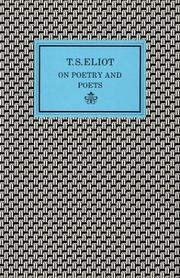
The later, gentler lectures, including his own retrospective account of the verse-drama experiment. Read after the plays, because he is grading his own homework and is unusually honest about it.

The early notebook, unpublished until 1996, containing the drafts and the discarded poems — including material Eliot suppressed and which is genuinely ugly. The last book to read, and the one that makes the finished poems look like decisions rather than inevitabilities.
Discussion
Keep reading
Paths that share books, cover the same subject, or open a related topic.