Class is the thing English-speaking societies are least willing to name and most organised around. The United States calls itself classless and then sorts people by neighbourhood, accent, university and grocery basket; Britain admits class exists and argues endlessly about who counts as which. This reading order is built to make that machinery visible: signalling first, then what class feels like from inside, then the meritocracy argument, and finally the sociology of where mobility is actually decided.
One honest gap before the list. Pierre Bourdieu's Distinction is the theoretical backbone of nearly everything below — taste as a weapon, cultural capital inherited like money — and our catalogue holds it only as the French La distinction, so it is not shipped as a book on this path. Several titles here are extended applications of it and say so. Read Bourdieu in English if you can find him; this list is not complete without him and it would be dishonest to pretend otherwise.
Class as a signalling system
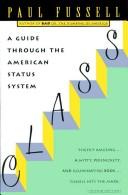
Class is Paul Fussell's anatomy of American status markers — furniture, vocabulary, clothing, where the drinks live — written with a cruelty that is part of the method. It is dated in its specifics and exactly right in its approach, and it is the fastest way to start noticing signals you had been reading unconsciously. Our record credits the illustrator, Martim de Avillez, as a second author alongside Fussell.
The sum of small things is the data-driven successor. Elizabeth Currid-Halkett shows the aspirational class spending on education, childcare, health and organic groceries rather than visible luxury, which makes the advantage cheaper to hold and far harder to copy. Read it straight after Fussell to see what changed and what did not.
Class from the inside
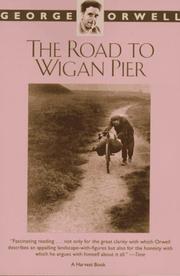
The Road to Wigan Pier is reportage from the northern English coalfields in the first half and George Orwell interrogating his own class position in the second. It establishes the two moves the rest of this stage makes: go and look, then admit where you are standing. Our catalogue record carries a nonsense date; the book is from 1937.
Nickel and Dimed is Barbara Ehrenreich taking low-wage jobs and trying to live on the pay. It has been fairly criticised for the limits of temporary immersion — she could always leave — and remains the most vivid account of the arithmetic. Limbo is the core book of the stage: Alfred Lubrano's interviews with people who moved from blue-collar families into professional life, and the idea of the straddler, fluent in two cultures and at home in neither. The Dignity of Working Men is the scholarly counterweight, Michele Lamont finding that working-class men in France and the United States draw moral boundaries around discipline and integrity rather than accepting the status ranking imposed on them.
Meritocracy, and where mobility is decided
Treat this stage as a debate you are joining. The Rise of the Meritocracy 1870-2033 invented the word in 1958, as a satire written from 2033 about sorting by IQ and effort producing a caste system with a clean conscience; Michael Young lived to complain that people had missed the joke. The Tyranny of Merit is the philosophical case, that meritocracy breeds hubris in winners and humiliation in everyone else — Michael Sandel is arguing normatively, and borrows rather than tests the empirical claims. The Meritocracy Trap supplies the mechanism, elite parents investing in human capital that pays and reproduces. Pedigree is the evidence: Lauren Rivera's ethnography of hiring at elite law, banking and consulting firms, where recruiters select on cultural fit and leisure pursuits while sincerely believing they select on merit. Critics of all three respond that the alternative to imperfect meritocratic sorting is not equality but patronage, which is a serious objection rather than a dodge.
The last four are about reproduction. Our kids is emotionally effective and its paired-life method has been criticised for selecting cases to fit the thesis, so read Robert Putnam through his data rather than his stories. Privilege is the sharpest observation here: Shamus Khan's ethnography of St Paul's School finds the new elite taught to perform ease rather than display status, a marker that works because it is invisible as one. Social Class in the 21st Century presents the Great British Class Survey's seven-class model of economic, social and cultural capital, and drew substantial criticism for its self-selected sample and its class names. Chavs closes with Owen Jones on the demonisation of the British working class, a political argument rather than a study, and the necessary counterpart to books about how elites see themselves.
You can work through the whole thing stage by stage on the class and mobility path, and there is an adjacent list on social movements and protest if the political question is what brought you here.