Small Engine Repair: The Best Books to Fix Mowers and Generators
This curriculum takes a complete beginner from zero mechanical knowledge to confident, independent small engine repair across lawn mowers, generators, and both 2- and 4-stroke engines. Each stage builds on the last — starting with how engines work, moving into hands-on repair procedures, then tackling specific equipment and advanced diagnostics — so no step feels like a leap.
Foundations: How Engines Work
BeginnerUnderstand the core principles of internal combustion, basic tool use, and mechanical vocabulary so that repair manuals and later books make immediate sense.
▸ Study plan for this stage
Pace: 4–5 weeks, ~25–30 pages/day, with 2–3 days per week reserved for hands-on practice and review
- The four-stroke engine cycle (intake, compression, power, exhaust) and how each stroke contributes to engine operation
- Basic combustion chemistry: how fuel, air, and spark combine to create controlled explosions that produce power
- The role of key engine components (pistons, crankshaft, valves, spark plugs, carburetor) and how they work together as a system
- Mechanical vocabulary and terminology used in repair manuals (bore, stroke, displacement, compression ratio, RPM, torque)
- Essential hand tools for small engine work and their proper use and safety practices
- The difference between two-stroke and four-stroke engines and why small equipment uses each design
- How ignition, fuel, and cooling systems support the combustion process
- Describe the complete four-stroke cycle in order, explaining what happens to the fuel-air mixture and piston position during each stroke
- Why does a spark plug fire at a specific moment in the engine cycle, and what would happen if it fired at the wrong time?
- What is the relationship between bore, stroke, and displacement, and why do manufacturers care about these measurements?
- Explain how a carburetor meters fuel into the engine and why this ratio matters for engine performance
- What are the main differences between a two-stroke and four-stroke engine, and why might a chainsaw use a two-stroke while a lawnmower uses a four-stroke?
- Name five essential hand tools for small engine repair and describe the correct and safe way to use each one
- Disassemble and reassemble a simple four-stroke engine model or watch a detailed video teardown, labeling each major component and tracing the path of the fuel-air mixture through the cycle
- Create a labeled diagram or animation of the four-stroke cycle, showing piston position, valve states, and spark timing at each stage
- Practice using each essential hand tool (wrench, screwdriver, socket set, feeler gauge, spark plug socket) on scrap hardware or a practice engine block, focusing on proper grip, leverage, and safety
- Read a small engine repair manual excerpt and translate the technical vocabulary into plain English; identify which components are being discussed and why they matter
- Observe a running small engine (lawnmower, generator, or similar) and identify the sounds and vibrations corresponding to each stroke of the cycle
- Build or sketch a simple carburetor diagram showing how fuel enters, how air is drawn in, and how the mixture is delivered to the intake valve
Next up: This foundation in how engines work and mechanical literacy equips you to understand the specific failure modes, diagnostic procedures, and repair techniques covered in the next stage, so you'll know not just what to do but why each repair step matters.

Expands on engine fundamentals with clear photos and step-by-step procedures for common maintenance jobs on mowers, tillers, and generators, building hands-on confidence right away.
Generators and Outdoor Power Equipment
IntermediateApply engine repair knowledge to generators and a wider range of outdoor power equipment, including electrical system basics and load-specific troubleshooting.
▸ Study plan for this stage
Pace: 4–5 weeks, ~25–30 pages/day with 2–3 days per week for hands-on practice
- Generator types and sizing: portable, standby, inverter, and load-matching calculations
- Electrical fundamentals for generators: voltage regulation, frequency control, and power output specifications
- Fuel system maintenance and troubleshooting specific to generator engines under continuous load
- Cooling and ventilation requirements for generators operating in extended duty cycles
- Load-specific troubleshooting: identifying whether problems stem from the engine, electrical output, or connected equipment
- Installation best practices: grounding, fuel storage, exhaust management, and safety protocols
- Preventive maintenance schedules and seasonal storage procedures for generators
- Diagnosing and repairing generator-specific failures: voltage drop, frequency instability, and load rejection
- How do you select the correct generator size for a given load, and what are the differences between rated capacity and surge capacity?
- What are the key differences between portable, standby, and inverter generators, and when would you recommend each type?
- How do voltage regulation and frequency control work in a generator, and what symptoms indicate problems with these systems?
- What troubleshooting steps would you follow if a generator runs but produces no electrical output, and how would you isolate whether the problem is engine-related or electrical?
- What are the critical safety and installation requirements for a standby generator, including grounding, fuel storage, and exhaust venting?
- How do you diagnose and repair fuel system problems in a generator that has been in storage, and what preventive measures prevent fuel degradation?
- Calculate load requirements for a typical household or small business scenario, then select an appropriate generator type and capacity using manufacturer specifications
- Perform a complete pre-season inspection on an actual generator: check fuel system, oil level, air filter, spark plug, and battery (if applicable)
- Test generator voltage and frequency output under no-load and full-load conditions using a multimeter and clamp meter; document results and compare to specifications
- Drain and replace fuel in a generator that has been in storage; inspect fuel lines and filter for varnish or blockage, and document the condition
- Practice load-shedding troubleshooting: connect a generator to progressively larger loads and observe voltage drop and frequency changes; identify the maximum stable load
- Inspect and clean or replace a generator's cooling fins and air intake; verify proper ventilation clearances for safe operation
Next up: Mastery of generator repair and load-specific troubleshooting prepares you to tackle more complex outdoor power equipment (lawn mowers, pressure washers, chainsaws) where similar engine principles apply but with equipment-specific mechanical and operational demands.

Focuses specifically on portable and standby generators — covers the engine, alternator, voltage regulation, and electrical output side that pure engine books skip.
Advanced Diagnostics and Professional Techniques
ExpertDevelop systematic diagnostic thinking, understand engine rebuilding, and reach a near-professional level of competence that saves maximum money and handles any small engine problem.
▸ Study plan for this stage
Pace: 8–10 weeks, ~40–50 pages/day with 2–3 hands-on lab sessions per week
- Systematic diagnostic methodology: using compression tests, spark tests, fuel system checks, and ignition timing to isolate root causes rather than guessing
- Engine teardown and inspection protocols: proper disassembly sequences, identifying wear patterns, measuring tolerances, and recognizing when parts are beyond service limits
- Briggs & Stratton engine architecture: understanding the specific design of horizontal and vertical shaft engines, fuel systems, governors, and ignition modules used across their product line
- Valve and piston ring service: reconditioning, proper installation, gap setting, and why these are critical to compression and performance
- Carburetor rebuilding and fuel system diagnostics: complete disassembly, cleaning, jet sizing, float adjustment, and troubleshooting fuel delivery problems
- Bearing and crankshaft assessment: measuring runout, identifying scoring, determining when reboring or crankshaft replacement is necessary
- Gasket and seal replacement strategies: knowing which seals fail, proper installation techniques, and torque sequences to prevent leaks and loss of compression
- Cost-benefit analysis in repair decisions: when to rebuild versus replace, sourcing parts, and maximizing customer value
- Walk through a complete diagnostic sequence for a no-start engine: what tests would you perform in order, and how would you use the results to narrow down whether the problem is fuel, ignition, or compression?
- Explain the proper procedure for measuring cylinder wear and determining if boring and honing are necessary. What tolerances matter, and how do you know when a cylinder is beyond repair?
- Describe the complete teardown and inspection of a Briggs & Stratton four-stroke engine, including what to look for at each step and how to identify parts that need replacement versus reconditioning.
- How do you rebuild a carburetor from scratch? What are the critical steps, common mistakes, and how do you verify the rebuild is successful?
- What is the relationship between valve clearance, compression, and engine performance? How do you measure and adjust valve clearance correctly?
- When would you recommend a customer replace an engine versus rebuild it? What factors (cost, parts availability, engine age) inform that decision?
- Perform a complete diagnostic workup on a non-running small engine: conduct compression test, spark test, fuel flow test, and ignition timing check. Document findings and create a repair plan.
- Fully disassemble a Briggs & Stratton engine (horizontal or vertical shaft), photograph each stage, measure critical tolerances (cylinder bore, crankshaft runout, bearing clearances), and identify all parts needing service.
- Rebuild a carburetor: completely disassemble, clean all passages, replace gaskets and seals, adjust float height and needle settings, and test on an engine to verify proper operation.
- Perform a valve service: measure valve clearance, remove and inspect valves, lap valves to seats, reset clearance, and verify compression improvement.
- Measure and assess piston ring wear: remove rings, measure end gap and side clearance, determine if honing is needed, install new rings with correct gap, and verify compression.
- Conduct a complete engine rebuild on a worn or damaged small engine: bore and hone cylinder (or assess if needed), replace all gaskets and seals, reassemble with proper torque sequences, and perform a cold compression test to verify success.
Next up: This stage equips you with the diagnostic thinking, hands-on skills, and cost-analysis judgment to handle any small engine failure independently; the next stage will likely focus on specialization (two-stroke engines, lawn equipment systems, or business/customer management) or advanced topics like fuel injection and emission controls.
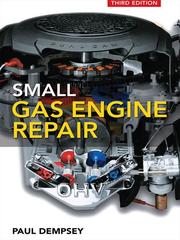
Dempsey's comprehensive capstone text covers advanced topics including full engine rebuilds, precision measurement, and systematic fault diagnosis — the book that ties the entire curriculum together.
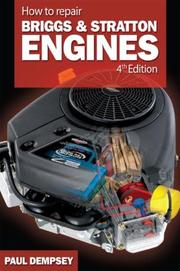
Briggs & Stratton powers the majority of lawn mowers and generators sold in North America; this deep-dive into the world's most common small engine brand is the ultimate practical reference for real-world repair savings.
Discussion
Keep reading
Paths that share books, cover the same subject, or open a related topic.