Shusaku Endo Reading Order: Where to Start
Endo wrote about faith the way other novelists write about war: as something that breaks people. This path starts with Silence, the novel that made his reputation outside Japan, then moves through the two later books that argue with it, turns to the bleakest work he ever published, and finishes with the strange, funny, uneven novels that only readers already committed to him tend to reach.
Start with Silence
BeginnerMeet Endo's central question — what a God who does not answer is worth — in the one book of his that everyone agrees is the place to begin.
▸ Study plan for this stage
Pace: One week is plenty — Silence runs under 300 pages and reads faster than its reputation suggests, because Endo plots it like a manhunt. Know before you open it what the book is: it is about the persecution of Japanese Christians in the seventeenth century, and its central event is a priest being pres
- The mudswamp argument — Endo's recurring claim, made by the interrogator Inoue and never quite refuted, that Japan cannot grow a transplanted Christianity and that what the missionaries think took root is something else wearing the same name
- Apostasy as the moral centre rather than the moral failure: the novel is constructed so that trampling the image is the act that most resembles mercy, which is why it was condemned by Catholic readers on publication
- The silence of the title is God's, and Endo makes you feel it structurally — prayers are answered by weather, by insects, by nothing
- Rodrigues's slow slide from imitating Christ to identifying with Judas, which is the arc the whole book is engineered to produce
- Kichijiro, the serial betrayer who keeps coming back for confession — the weak man is Endo's real subject, and every later book has a version of him
- The epistolary opening: the first quarter is Rodrigues's own letters, so his confidence is his own account, and it is being set up
- The hidden Christians (kakure kirishitan) as a real historical community, not a device — they survived two centuries underground and their descendants exist
- At the fumie, whose voice speaks to Rodrigues, and does the novel give you grounds to trust it?
- What is Inoue's actual argument about Japan and Christianity, and where in the book is it strongest?
- Why does Endo shift out of the letter form partway through, and what does the change in narration cost Rodrigues?
- Kichijiro apostatises repeatedly and repeatedly seeks forgiveness. Is he the novel's weakest character or its most important one?
- Is Rodrigues's final act a betrayal, an act of love, or both — and does the closing appendix material change your answer?
- Mark every place God is described as silent, absent or unresponsive. There are more than you expect, and their spacing is the novel's rhythm.
- Before the last thirty pages, write one sentence predicting what Rodrigues will do and why. Compare it with what he actually does; almost every reader gets the act right and the reason wrong.
- Read the closing diary and official-record sections rather than skimming them. Endo puts the aftermath in bureaucratic prose deliberately, and readers who stop at the dramatic climax miss the coldest part of the book.
- Look up one image of an actual fumie. Seeing that these were worn smooth by feet does more for the novel than any critical essay.
Next up: You now have Endo's central question in its sharpest form, which is exactly what the next stage needs, because both books there are arguments with Silence rather than repetitions of it.
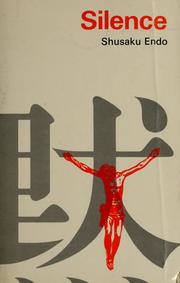
A Portuguese missionary in seventeenth-century Japan is asked to trample an image of Christ to save others from torture. It is short, plotted like a thriller, and contains in miniature every argument the rest of Endo's work elaborates, which is why it is the only sensible entry point.
The two novels to read next
IntermediateSee how Endo reopened the problem of Silence twice more across thirty years — once as historical fiction, once as a late, forgiving summing-up.
▸ Study plan for this stage
Pace: About a month for the pair — The Samurai is roughly the length of Silence and moves at the same pace, while Deep River is shorter but slower going because it braids four separate life stories before it does anything with them. Read them in this order and leave a gap of a week or so between them; the
- Inversion as method: The Samurai reverses Silence by sending a Japanese man to Christendom rather than a European to Japan, and the faith that survives is the one nobody chose
- Hasekura's conversion for reasons of state, which the novel treats as neither cynical nor invalid — Endo is interested in belief that arrives by the wrong door
- The recurring figure of the emaciated, ugly, powerless Christ that Endo prefers to a triumphant one, stated almost explicitly in The Samurai and again at the Ganges
- Deep River as a late softening of the mudswamp thesis: Otsu the disgraced priest argues that the God rejected by Europe can be found in a Hindu river, which is Endo answering his own younger book
- Four wounded pilgrims as a structure — each of the Japanese tourists carries a private failure, and Varanasi is where Endo lets them collide rather than resolve
- Endo's Catholicism as a borrowed suit, his own phrase for it, and the way both novels are about wearing something that does not fit
- The distance between an official journey and a real one, which is the shape of both books
- In The Samurai, at what point does Hasekura's faith stop being diplomatic, and what does Endo give him instead of a conversion scene?
- Velasco the missionary is ambitious and self-serving. Why does Endo make the man carrying the gospel less sympathetic than the man receiving it?
- What has changed in Endo's position between Silence and Deep River, and is Otsu a genuine answer to Inoue or an evasion of him?
- Which of Deep River's four travellers is the novel's real centre, and what does your choice say about which of Endo's themes you are reading for?
- Both books end with a man in an impossible position choosing to stay in it. What is Endo claiming that kind of stubbornness is worth?
- Write two paragraphs putting Inoue from Silence and Otsu from Deep River in argument with each other. This is the single most useful thing you can do with Endo, and the two books are built to make it possible.
- Track the physical descriptions of Christ in The Samurai. Endo repeats a small number of adjectives with almost no variation, and the repetition is doing theological work.
- In Deep River, note the point at which each of the four travellers stops being a type and becomes a person. Endo does this at different rates on purpose, and one of them arguably never makes it.
- Read a page of Silence again after finishing Deep River. The younger book sounds harsher than you remembered, which is the measure of what the later one is doing.
Next up: Having seen Endo at his most consoling, you are in the right position for the two books where he offers no consolation at all.

A low-ranking samurai is sent on an embassy to Mexico and Rome and converts for reasons of state before the faith becomes real to him. Read it second because it is Silence inverted: the Japanese man travelling out, rather than the European coming in.
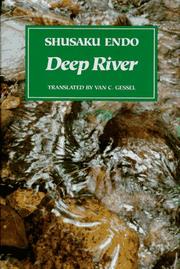
His last major novel, following four Japanese tourists to Varanasi, each carrying a private wound. Endo had spent his career insisting Christianity could not be transplanted into Japanese soil; here he stops arguing and simply lets the river hold everyone, which only lands if you have read the earlier books first.
The darkest turn
IntermediateRead the two books where Endo drops consolation entirely and writes about ordinary moral collapse.
▸ Study plan for this stage
Pace: Two to three weeks. The Sea and Poison is very short, around 170 pages, and can be read in two sittings; Scandal is longer and considerably more uncomfortable, and most readers want a break before starting it. Both are optional in the sense that you can leave Endo after the previous stage with a coh
- Atrocity without a villain: The Sea and Poison is built from the wartime vivisection of captured American airmen, and its argument is that nobody in the room ever decided to do it
- Suguro and Toda as the two ways of consenting — one drifts, one reasons — and Endo refuses to say which is worse
- The absence of God as a plot condition rather than a theme: nothing in The Sea and Poison believes in anything, and the flatness is the effect
- Scandal as self-indictment — the protagonist is a decorated Catholic novelist of Endo's exact age and reputation, being followed by a double who does what he only imagines
- The doppelganger as a device for asking whether a life of writing about sin is itself a way of avoiding it
- Sexual cruelty and the aged body handled with a bluntness readers who arrived via Silence do not expect, and which Endo evidently intended as a violation of his own public image
- The pattern across both books: evil in Endo is never grand, it is a small permission granted in a corridor
- In The Sea and Poison, at what moment could the vivisection still have been stopped, and by whom?
- Toda gives reasons for his participation and Suguro gives none. Which of them does the novel treat as more culpable, and do you agree?
- Why does Endo set an atrocity novel in a hospital rather than on a battlefield?
- In Scandal, is the double real, hallucinated, or deliberately left undecidable, and does the answer matter to what the book is doing?
- Scandal was written by a man widely regarded as Japan's great Catholic novelist. What is he trying to destroy, and why do it in fiction rather than in a confession?
- Read The Sea and Poison in as few sittings as you can manage. Its power depends on the accumulation of ordinary detail, and breaks let the horror dissipate.
- List the excuses each character in The Sea and Poison makes, in order. The list is short, which is the point, and it is recognisable from any workplace.
- After Scandal, go back to the Kichijiro passages in Silence. The weak man Endo forgave at thirty-five is not the same figure as the one he examines at sixty, and the difference is the argument of his late career.
- Decide, and write down, whether you think Scandal is a brave book or a self-serving one. It is the live critical question about it and there is no consensus.
Next up: With the bleakest work behind you, the last stage can do what completist stages should do — show you the comic, autobiographical and historical Endo that the famous novels crowd out.
Based on the wartime vivisection of American prisoners at a Kyushu hospital, this is Endo without any theology to soften it — a study of how decent people assent to atrocity by never quite deciding to. It predates Silence and shows where his obsession with weakness began.

An ageing Catholic novelist, transparently Endo himself, is stalked by a double who frequents Tokyo's sex districts. Placed here because it is the most uncomfortable thing he wrote and reads as a confession that the moral seriousness of the earlier novels was never fully earned.
The completist tail
IntermediateFill in the comic novels, the early autobiographical fiction and the late historical work that round out the picture of a much stranger writer than Silence alone suggests.
▸ Study plan for this stage
Pace: Two to three months if you read all five, and there is no need to. Treat this stage as a menu rather than a queue: Wonderful Fool and Volcano are short and can be read in a weekend each; Foreign Studies is the one to prioritise if you want to understand where Endo came from; Kiku's Prayer is the lon
- The holy fool — Gaston in Wonderful Fool is the kindest thing Endo ever wrote and the clearest statement of what he thought Christ actually looked like in practice
- Endo's comic register, genuinely funny and almost never discussed, which changes the shape of the whole body of work once you have met it
- Self-deception as a landscape in Volcano: the dormant mountain everyone insists is safe is the least subtle image in Endo and one of the most effective
- Foreign Studies as raw autobiography — his miserable years as a student in Lyon, and the source of the conviction that Japan and the Christian West cannot fully reach each other
- When I Whistle's generational cut, in which the father's wartime sentimentality is set against the son's modern medical ruthlessness, restating Deep River's charge against Japanese materialism directly
- Kiku's Prayer as the return to Silence's ground two centuries later: the same Nagasaki, the same persecution, a village girl instead of a priest
- How much of Endo is minor by his own standard, and why reading the minor books is what makes the major ones legible
- Gaston is cheated by everyone he meets and the novel calls him a fool. In what sense does Wonderful Fool think he is right?
- What is the volcano in Volcano actually standing for, and does the novel earn an image that obvious?
- Foreign Studies argues that the gap between Japan and Europe is unbridgeable. Which later book most clearly contradicts it, and did Endo change his mind or just his mood?
- In When I Whistle, does Endo hold the son responsible or the era that made him?
- Kiku is not a priest, not educated and not a theologian. What does Endo gain by finally telling the persecution story from the point of view of someone with nothing to renounce?
- Read Wonderful Fool immediately after The Sea and Poison. The tonal whiplash is the fastest way to understand the range of the writer you have been reading.
- Keep a one-line note on each book in this stage recording which earlier novel it most resembles. By the fifth you will have mapped Endo's four or five permanent obsessions.
- Pair Foreign Studies with Kiku's Prayer deliberately — the first is Endo failing to belong in Europe, the second is Europe failing to belong in Japan, and they are the same complaint from opposite ends.
- Choose the two books from this stage you would keep and be able to say why. A completist tail is only worth reading if it changes your ranking of the main works.
Next up: This is the end of the path. The natural next step is not another novel but a reread of Silence, which after these nine books stops looking like a book about missionaries and starts looking like the one problem Endo spent his whole life failing to put down.
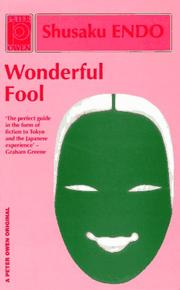
A hopeless, kind Frenchman blunders around Tokyo being cheated by everyone. Endo's comic register surprises readers who arrive from Silence, and the holy-fool figure recurs throughout his work.

A retired weatherman and a defrocked priest circle a dormant volcano that everyone insists is safe. A tight, early treatment of self-deception, and short enough to read in a sitting.

A father remembering his wartime schooldays is cut against his son's ruthless career in modern medicine. The generational contrast makes explicit the argument about Japanese materialism that Deep River later handles more gently.
Three linked stories about Japanese students in Europe, drawn from Endo's own miserable years in Lyon. This is the raw material — the conviction that the gap between Japan and the Christian West cannot be crossed — before he learned to dramatise it.

A late historical novel about the hidden Christians of Nagasaki persecuted in the 1860s, told through a village girl in love with a seminarian. It closes the loop with Silence two centuries on, and belongs at the end because its power depends on knowing that earlier history.
Discussion
Keep reading
Paths that share books, cover the same subject, or open a related topic.