Sharon Kay Penman books in order: where to start
Penman wrote two great medieval sequences and a standalone that arguably outshines both, and the connection between them is loose enough that you can genuinely start in more than one place. This path starts with The Sunne in Splendour because it is self-contained and it is the book that converts people, then reads the Welsh trilogy, then the Plantagenets in internal chronological order, which for once is also publication order. The medieval mysteries come last: they are shorter, lighter, and sit inside the Plantagenet timeline.
Start here: the standalone that made her name
IntermediateRead the 900-page Richard III novel that established Penman's method, before committing to any sequence.
▸ Study plan for this stage
Pace: One book, 936 pages, and the longest single volume on this path — plan a month rather than a fortnight, and do not treat the length as a reason to skip it. That length is the test the stage exists for: Penman writes at a density of documented detail that some readers find immersive and others find s
- Penman's method: a scaffold of documented events with invention confined to what the record does not fix
- A revisionist reading of Richard III argued through character rather than asserted, and the fact that it is an argument
- Dynastic politics made legible by keeping a small number of point-of-view characters across decades
- Length as a function of the method — 936 pages because the documentary detail is the point, not because the plot needs it
- The Wars of the Roses as a family quarrel with a country attached, which is how the novel frames it
- Author's notes as part of the work: where Penman separates evidence from invention
- What is Penman's case for Richard III, and what does she do with the evidence that runs against it?
- How does she keep thirty years of dynastic conflict followable? Name two specific techniques.
- Where can you feel the documentary record constraining the plot, and does that help or hurt?
- Is 936 pages the right length for this story? Point to a section you would cut and one you would not.
- Having read her at full length once, do you want 1,892 more pages of the Welsh trilogy? This book is designed to let you answer that.
- Read Penman's author's note before starting the novel, then again at the end, and mark what changed in how you read the invented scenes.
- Keep a one-line note per point-of-view character recording what they know that others do not; the dramatic irony is the engine.
- Pick one famous accusation against Richard III and track exactly how the novel handles it — accepted, reassigned or refused.
- Decide, in writing, whether the density suits you. Everything else on this path is written the same way.
Next up: Having tested the method on a self-contained 936 pages, the Welsh trilogy applies it across three books and one long defeat.
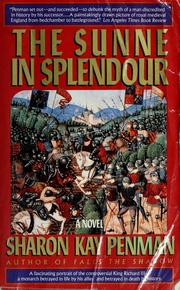
A revisionist Richard III across the whole Wars of the Roses, and still the book Penman is best known for. Entirely standalone, so it is a low-commitment test of whether her density of detail suits you — and if it does, everything else will.
The Welsh trilogy
IntermediateRead the sequence on Wales and the Marches, in order. It is the most emotionally punishing thing she wrote.
▸ Study plan for this stage
Pace: 1,892 pages across three — Here be dragons 720, Falls the shadow 580, The reckoning 592 — and about three months at one a month. Read them in order and leave no long gaps: the third book's effect depends entirely on having lived with the first two. Here be dragons at 720 pages is the longest and the
- A marriage across a border war — Joanna as an English king's daughter married into the country he is fighting
- Historical inevitability as a structural problem: the reader knows how the conquest ends and the novels use that
- Simon de Montfort written as neither reformer nor opportunist, with the ambiguity left standing
- Wales given its own political interiority rather than functioning as the frontier of an English story
- Two braided sequences — Welsh and English — sharing a timeline across 1,892 pages
- Defeat as the shape of the trilogy, and what a historical novelist owes a story with no consolation
- How does Here be dragons make a political marriage into the trilogy's emotional centre?
- What does Penman refuse to decide about Simon de Montfort, and is the refusal a strength?
- How do the Welsh and English strands of Falls the shadow comment on each other?
- Given that the outcome is documented, where does the tension in The reckoning actually come from?
- Is this trilogy better than The Sunne in Splendour? What criterion are you using?
- Draw the two family trees, Welsh and Angevin, and mark every marriage that crosses between them. The chart is the plot.
- Note each point where a character makes a decision the record fixes and Penman has to motivate; those are where the novelist is working hardest.
- After The reckoning, reread the first chapter of Here be dragons and note how much of the ending is already implied there.
- Write one paragraph on what the trilogy argues about conquest, using only events it dramatises.
Next up: With the Welsh sequence behind you, the Plantagenet novels go back a century to the dynasty whose kings you have just watched from the other side.
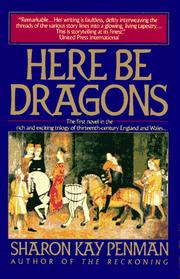
Llywelyn the Great and Joanna, King John's illegitimate daughter, married into a country that is at war with her father. The best single novel Penman wrote, and many readers' actual starting point.
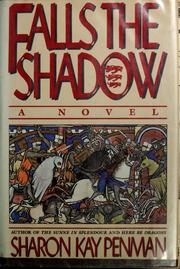
Simon de Montfort and the Barons' War, running alongside the Welsh story. Broader in scope than Here Be Dragons and darker in outcome.
Closes the trilogy with Llywelyn ap Gruffydd and the English conquest of Wales. Read all three in order; the third is devastating precisely because of the first two.
The Plantagenets
IntermediateRead the Angevin sequence — Henry II and Eleanor of Aquitaine — where publication order and chronology agree.
▸ Study plan for this stage
Pace: The heaviest stage on the path: 2,047 pages across three — When Christ and his saints slept 759, Time and Chance 496, Devil's brood 792. Three to four months. The middle book at 496 pages is far shorter than either of its neighbours and reads much faster, so do not plan a uniform pace. Read Devil's
- Publication order and internal chronology agreeing for once, which makes this the simplest sequence on the path
- The Anarchy as a functioning state failure, dramatised through supply, siege and loyalty rather than battles
- Becket written as neither saint nor careerist, with the friendship and the rupture both taken seriously
- Eleanor of Aquitaine given political agency rather than romance, across all three books
- A family destroying itself as the sequence's actual subject, with kingship as the instrument
- Length distribution — 759, 496, 792 — tracking how much documented event each period supplies
- What makes the Anarchy comprehensible in When Christ and his saints slept, where a chronicle would only list sieges?
- How does Time and Chance apportion responsibility for the Becket quarrel, and does it settle it?
- What does Eleanor want across the three books, and how consistently is it drawn?
- Why is Devil's brood the longest, and does its 792 pages earn the length?
- Which is the stronger sequence, the Welsh trilogy or this one, and what is the difference in method?
- Track the Becket friendship from its first scene to the rupture and mark the specific point of no return.
- List the sons in Devil's brood with what each one wants; the overlapping claims are the whole plot and the list makes it navigable.
- Compare Penman's Eleanor here with her Joanna in Here be dragons and describe the two models of a royal woman's power.
- Check the author's notes for all three books and mark one invention in each that you had taken for documented.
Next up: With Henry's sons grown and warring, the next stage follows the one who became king and the sequence to its end.

The Anarchy: Stephen against Matilda, and Henry II's arrival. Opens the sequence and can be read without any of the above.
Henry, Eleanor and Thomas Becket. The middle book, and the one where Penman's refusal to make Becket either saint or careerist does the most work.
The sons' rebellions and the collapse of the family. Read straight after Time and Chance.
Richard the Lionheart, and the last novel
IntermediateFinish the Angevin story and read the final novel Penman published before her death.
▸ Study plan for this stage
Pace: Two lengths recorded and one not: Lionheart is 400 pages and The land beyond the sea 688, while our catalogue holds no page count for King's Ransom, so treat its length as unrecorded — it is a full-length novel, not a short one. About two months for the three. Read Lionheart directly after Devil's b
- A shift from court politics to campaign narrative, and what Penman's method does with battles
- Richard I as a competent commander and a poor king, held as two facts rather than reconciled
- Captivity as a plot with no forward motion, and how King's Ransom generates a story out of waiting
- The Kingdom of Jerusalem as a functioning state rather than a crusading backdrop
- Illness written as a political fact — Baldwin IV's leprosy determining succession, alliance and war
- A late novel outside the author's established ground, and what she had to build from scratch
- How does Penman's method survive the change from court to campaign in Lionheart?
- Is Richard sympathetic in these novels? Identify what the text does to keep the question open.
- What does The land beyond the sea have to establish that the English novels could take for granted?
- How does the novel handle Baldwin IV's illness without reducing him to it?
- Which of the two crusading strands — Richard's and Jerusalem's — is the better novel, and why?
- Map Richard's campaign route as Lionheart proceeds and note where logistics rather than tactics decide events.
- In The land beyond the sea, list the political consequences that follow directly from Baldwin's health, and see how the plot is organised around them.
- Compare the author's note of The land beyond the sea with that of The Sunne in Splendour and describe how the evidentiary problem differs.
- Write a paragraph on what Penman's Angevin sequence, read whole, argues about hereditary monarchy.
Next up: With both great sequences finished, the mysteries offer the same period at a quarter of the weight.

Richard I on the Third Crusade. A direct continuation of Devil's Brood and much more military in emphasis than anything before it.

Richard's captivity and death, completing the sequence. Our catalogue files it without the leading article, as King's Ransom.

The Kingdom of Jerusalem and Baldwin IV, the leper king. Her last novel, standalone, and the one where she is working furthest outside her home ground.
The medieval mysteries
IntermediateRead the Justin de Quincy series, which is short, light, and set inside the Angevin timeline you now know.
▸ Study plan for this stage
Pace: The lightest stage by far: 1,223 pages across four — The queen's man 291, Cruel as the Grave 272, Dragon's Lair 329, Prince of darkness 331 — each roughly a third the length of a Penman novel and readable in a few evenings. A month covers all four comfortably. Read them last and read them as what th
- The same historical scaffolding carrying a detective plot, and what has to be simplified for it
- A fictional protagonist inside documented events, which is the inverse of the novels' arrangement
- Register as a deliberate choice — 291 pages against 936 for the same period and author
- An unfinished series as a reading decision, and how much of one you can enjoy knowing it stops
- What the mysteries reveal about which parts of Penman's method were essential and which were optional
- What does the mystery form let Penman show about the period that the big novels do not?
- How does having a fictional protagonist change what the plots are allowed to do?
- Does Dragon's Lair add anything to the Wales of Here be dragons, or does it borrow from it?
- Which elements of the method survive the shorter length, and which are the first to go?
- Having read all fourteen books, where would you now tell a new reader to start?
- Read The queen's man immediately after Devil's brood and note every fact it assumes you already know.
- Take one mystery and identify the documented events it is built around, then check how much invention the gaps allowed.
- Write down what you would want from a fifth Justin de Quincy book, then note that the series stops here.
- Assemble your recommended Penman order for a new reader and state explicitly whether you would include the mysteries at all.
Next up: The path covers fourteen books and the whole of both major sequences, so there is little left to read afterwards — the natural next step is a different medieval novelist rather than more Penman.
Justin de Quincy as Eleanor of Aquitaine's agent while Richard is captive. A quarter the length of her novels and a completely different register — read it as a palate cleanser, not as major Penman.
The second mystery, and the point at which the series settles into its rhythm.
Justin in Wales, which lets Penman reuse the ground of Here Be Dragons at a lighter weight.
The fourth and last, centred on John. The series stops here, unfinished rather than concluded.
Discussion
Keep reading
Paths that share books, cover the same subject, or open a related topic.