Scott Pilgrim Reading Order: Where to Start
Scott Pilgrim is six books read in the order they were published, and the story is a single continuous arc rather than six standalone adventures — the seven evil exes are fought in a fixed sequence, so there is genuinely no other order. The complication is shelf-side rather than story-side: the series is catalogued by individual volume title rather than by number, the colour hardcovers reprint exactly the same six books with new art rather than adding anything, and the Complete Series edition bundles all six into one brick. This path follows the six original volumes by their own titles, then points at O'Malley's standalone books.
Start Here: Books One and Two
BeginnerMeet Scott, Ramona and the premise, and get used to a book that plays a break-up as a video game without ever explaining why.
▸ Study plan for this stage
Pace: One to two weeks. Scott Pilgrim's Precious Little Life is 168 pages and Scott Pilgrim vs. the World is 200, and both read in a sitting each if you let them — O'Malley's page rhythm is fast, with wide gutters and a lot of silent panels. Resist the urge to read all six in a weekend, though: the series
- The premise stated flatly and never justified: Scott is twenty-three, unemployed, in a band, dating a seventeen-year-old, and must defeat Ramona Flowers's seven evil exes in combat. O'Malley offers no explanation and the book is stronger for the refusal
- The video-game grammar as a native language rather than a gimmick — coins on defeat, life bars, level-up text, a pause button — used the way another cartoonist would use weather
- Knives Chau in book one, and the fact that the book presents Scott's treatment of her as a joke he is telling about himself
- The Toronto specificity: real subway stops, real venues, Casa Loma, a winter that shows up in the linework. The city is a character and the geography is accurate
- Matthew Patel as the deliberately weightless first fight, establishing that the fights are punctuation rather than plot
- Lucas Lee and Todd Ingram in book two, and how each ex is a different critique of Scott rather than a different combat challenge
- The supporting cast acquiring weight — Kim Pine, Stephen Stills, Wallace Wells, Envy Adams named but held offstage
- The first cracks: book two is where the series begins signalling that Scott's account of his own past is unreliable, well before it says so
- The story never explains why exes must be fought. What does the refusal to explain buy O'Malley that an explanation would cost him?
- What has Scott told you about how things ended with Kim, and what does book two suggest actually happened?
- Each of the first three exes embodies a different accusation against Scott. Name the accusation in each case.
- How does the book treat Knives, and how do you think it wants you to feel about Scott's handling of her by the end of book two?
- Where does the video-game logic apply and where does it conspicuously not? Notice which emotional events get a life bar and which do not.
- Keep a list of every ex as you meet them, numbered, with one line on what each reveals about Ramona and one on what each reveals about Scott. You will use this list all the way to book six.
- Pick any fight scene and read it a second time watching only the panel-to-panel transitions rather than the action. O'Malley cuts on rhythm rather than on movement, and it is the most technically interesting thing in the books.
- Note every moment in books one and two where Scott says something about his own past. Mark each as verified, unverified or contradicted. The list gets long.
- Count how many panels pass between Ramona's first appearance and her first line of dialogue that tells you something true about her.
- If you have seen the film or the animated adaptation, write down three things the comics do differently in these two books. The differences start early.
Next up: You have spent two books enjoying Scott's company, which is exactly the position the series needs you in before book three starts taking that away.
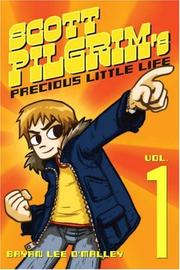
Book one and the only sane starting point. Twenty-three-year-old Scott is dating a high schooler, meets Ramona, and discovers he has to defeat her seven evil exes. O'Malley never justifies the fight scenes, and the book is better for it.

Book two. The exes keep coming and the supporting cast — Kim, Stephen Stills, Envy Adams — starts carrying real weight. Second because this is where the series quietly establishes that Scott is not a reliable narrator of his own past.
The Middle Books
BeginnerGet through the stretch where the comedy stops covering for the protagonist and the series turns into a book about someone behaving badly.
▸ Study plan for this stage
Pace: Two weeks, and slower than the first stage on purpose. Scott Pilgrim and the Infinite Sadness is 192 pages and Scott Pilgrim, Vol. 4 — printed as Scott Pilgrim Gets It Together, though searching that printed title tends to return the six-in-one Complete Series instead — is 216. Read book three, then
- Envy Adams's return as the tonal hinge of the whole series: the first person in the books with a documented account of Scott that contradicts his own
- The retroactive reframing that follows — the break-up Scott has been narrating as something done to him turns out to have been substantially done by him
- Todd Ingram's vegan powers as the last purely comic ex, placed in book three so that the comedy and the reckoning sit on the same pages
- Book three as the point the fights start losing narrative priority: the emotional plot stops waiting for them
- Ramona's history surfacing in book four, and the deliberate structural symmetry — you have been asking about her exes for three volumes and now you get her point of view
- Roxie Richter and the fact that the book treats Scott's reaction to Ramona's past as the actual problem in the scene
- The Kim Pine material in book four, which is the series' quietest and best-written relationship and gets almost no fight scenes
- The shift in O'Malley's art across these two volumes — more confident figure work, more use of black, backgrounds doing emotional rather than comic work
- What does Envy's version of their relationship contradict, specifically? Go back to books one and two and find the passages.
- Book four gives you Ramona's past and Scott's reaction to it. Which of the two does the book treat as the problem, and how does it signal that?
- The fights get shorter and less consequential across these two volumes. What replaces them as the source of tension?
- Kim gets no fight scene and arguably the most important arc in this stretch. What is O'Malley saying by structuring it that way?
- At what exact point did you stop being on Scott's side? Note the page. Readers' answers differ and the difference is worth thinking about.
- Reread the final twenty pages of book two immediately after finishing book three. The scene reads completely differently and doing this once is the fastest way to see how the series is built.
- Update your ex list with Ramona's perspective now that you have book four, and mark which entries you had wrong.
- Track Knives across books three and four and write a paragraph on where her arc is going. She is the character the series treats most carefully and most readers underrate her.
- Pick one page from book one and one from book four and compare them purely as drawing — line weight, blacks, screentone, background density. The change is substantial.
- Write down the three things Scott has said about himself that you now believe are false.
Next up: The comedy has stopped covering for the protagonist, which is precisely the state the last two volumes need him in.

Book three, and the tonal hinge: Envy's return forces the story to look at how Scott treated people before the book started. Third exactly — the reveal only works after two volumes of liking him.
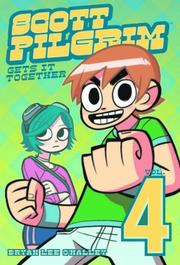
Book four, printed as Scott Pilgrim Gets It Together but catalogued under its volume number — searching the printed title returns the six-in-one Complete Series instead. Fourth: Ramona's own history finally surfaces and the fights become almost incidental.
The Ending
IntermediateFinish the series and see the ending that the earlier volumes' jokes were quietly setting up.
▸ Study plan for this stage
Pace: Two weeks. Scott Pilgrim vs. the Universe is 184 pages and Scott Pilgrim's Finest Hour is 252 — the longest of the six. Read book five in one sitting; it is short, it is the darkest of the six, and the momentum matters. Then leave several days. Book six rewards being read slowly and in one uninterru
- Book five as the volume where the relationship fails on its own terms rather than because of an antagonist, which is the series abandoning its own premise as a mechanism
- Ramona's disappearance and what the book does with Scott alone, which is the least comic sequence O'Malley had written up to that point
- The Glow and the visual vocabulary O'Malley develops for Scott's avoidance — a supernatural rendering of not wanting to think about something
- Gideon Graves as an antagonist who is not a challenge to be beaten so much as a thesis about Ramona and about Scott
- The Power of Self-Respect and the Power of Understanding as the finale's two acquisitions, and the fact that the book delivers its moral through the game logic rather than despite it
- Nega-Scott, set up as a joke volumes earlier and paid off as the series' cleanest statement of what growing up requires
- The ending's refusal to let the fantasy plot substitute for the actual work, which is what separates the book from the genre it is parodying
- That the series ends here: the colour editions add no new story, and the Complete Series edition is the same six books bound together
- In book five the relationship fails without an ex causing it. What is the series saying by breaking its own premise at that point?
- What does the Glow represent, and where in the earlier volumes can you find it before it is named?
- Gideon is presented as the final boss. What is he actually a final boss of — Scott's problem, or Ramona's?
- Nega-Scott is set up as a throwaway joke in an earlier volume. Find the setup, then say what the payoff argues.
- Does Scott earn the ending? Readers genuinely disagree. Make the case both ways using specific scenes from books five and six.
- Having finished, what was the fighting for as a storytelling device? Answer at the level of craft rather than plot.
- Before starting book six, reread book one in a single sitting. It takes forty minutes and doubles the value of the finale.
- Find at least four jokes from books one to three that book six turns into plot. There are more than four.
- Complete your ex list with all seven, then write two sentences on what the sequence, taken as a whole, was actually about.
- Reread the Knives material across all six volumes in one go. It is a coherent arc and reading it isolated makes clear how carefully it was planned.
- Write 200 words on the last page — what it shows, what it withholds, and why O'Malley ends on that image rather than on a resolution.
- Note which volume you most want to reread. For most readers it is three or five, and knowing which tells you what you were reading the series for.
Next up: The series is finished; what remains is to see what O'Malley does with the same instincts at one-sixth the length, on either side of it.
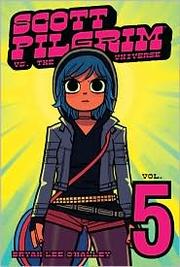
Book five, the darkest of the six, with the relationship failing on its own terms rather than because of an ex. Fifth — reading it out of order strips the ending of everything it depends on.
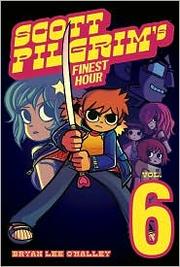
Book six and the finale, which resolves the fantasy plot by refusing to let it be a substitute for growing up. Sixth and last; the series ends here and the colour editions add no new story.
The Rest of O'Malley
IntermediateRead the standalone books either side of the series and see what O'Malley does with the same tools at one-sixth the length.
▸ Study plan for this stage
Pace: One to two weeks. Lost at Sea is 168 pages and reads in an hour or two — read it in one sitting, at night, which suits it. Seconds is 332 pages in full colour and is a much denser book; give it two or three sittings across a week. Read Lost at Sea first even though it came before Scott Pilgrim, beca
- Lost at Sea as O'Malley's first book, published before Scott Pilgrim, and the source of almost everything the series would later deploy — the interior monologue, the flat affect, the fear of being known
- Raleigh's belief that a cat has stolen her soul, presented with the same deadpan refusal to explain that the ex fights get, and how much less comic that device is here
- The visual quiet: heavy blacks, small panels, long silent sequences, and none of the video-game apparatus
- Seconds as the mature version of the same preoccupation — Katie is given a way to undo her mistakes and does exactly what everyone would do, which is use it far too many times
- The house spirit and the revision mechanic, and O'Malley's decision to make the fantastical element a rule system rather than a mystery
- Full colour, a larger page and a professional production, and what that does to a cartoonist whose earlier work depended on black and white
- The shared thesis across all three projects: a protagonist who would rather edit their past than face it, and a book that will not let them
- Seconds as the best single-volume entry point to O'Malley for a reader who would not commit to six books
- What in Lost at Sea already reads as Scott Pilgrim, and what does the later series add that this book lacks?
- The cat-stealing-a-soul premise gets the same non-explanation as the ex fights, but lands very differently. Why?
- Katie in Seconds is given the ability Scott spends six books avoiding needing. What does she do with it, and what is the book's verdict?
- Compare the endings of Seconds and Scott Pilgrim's Finest Hour. They resolve a very similar problem in different registers — which do you find more convincing?
- How does colour change O'Malley's storytelling? Compare a page of Seconds with a page of Lost at Sea doing similar emotional work.
- Read the first ten pages of Lost at Sea and the first ten of book one of Scott Pilgrim back to back, and write a paragraph on what is already fully formed and what is not.
- Track how many times Katie uses the revision mechanic in Seconds and what she is trying to fix each time. The pattern is the argument.
- Pick one two-page spread in Seconds and write down what the colour is doing that black and white could not.
- Write 250 words on the recurring O'Malley protagonist — the traits that appear in Raleigh, Scott and Katie alike — and on what he seems to think is wrong with them.
- Rank the three books for a friend who has read none of them, and write one sentence of justification for each placement.
Next up: You finish with the whole of O'Malley's early and middle work, and with a clear view of the one story he keeps rewriting.
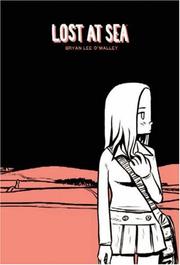
O'Malley's first book, published before Scott Pilgrim: a quiet road-trip story about a girl who believes a cat stole her soul. Read it after the series to see how much of the voice was already there.
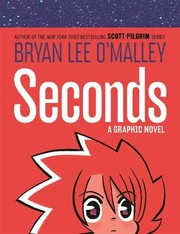
The full-colour standalone that came after: a restaurant chef given the power to undo her mistakes, which goes exactly as well as it sounds. The best single-volume entry point to O'Malley if Scott Pilgrim's length put you off.
Discussion
Keep reading
Paths that share books, cover the same subject, or open a related topic.