Roma Sub Rosa Reading Order: Where to Start
Steven Saylor's Roma Sub Rosa novels follow Gordianus the Finder, a private investigator in the last decades of the Roman Republic, and each case is pinned to a real event — Cicero's first murder trial, the Catiline conspiracy, Clodius's death on the Appian Way, Caesar crossing the Rubicon. Read them in publication order, which is also chronological for the main sequence; the later prequels sit earlier in Gordianus's life but were written for readers who already know him. This path takes the core run and stops before completeness.
Start at the Beginning
BeginnerMeet Gordianus in the two novels that establish the household, the method and the Rome he works in.
▸ Study plan for this stage
Pace: 4 weeks. Roman Blood is 392 pages and Arms of Nemesis 329 — these are proper detective novels and they move, so 30 pages a day is comfortable and most readers go faster. Two weeks each. Read them in this order and read them close together; the household established in the first is doing plot work in
- The whole series is historical detective fiction: Gordianus the Finder is a private investigator in the last decades of the Roman Republic, hired to find things out for people who cannot be seen looking
- The organising rule of the series, and the reason to read it at all, is that every case is pinned to a REAL event with a documented outcome. Saylor invents the investigation and keeps the history
- Roman Blood is built on Cicero's defence of Sextus Roscius on a charge of parricide in 80 BC — the trial that made Cicero's name, and one whose surviving speech you can read afterwards. Saylor's plot is the investigation Cicero's speech implies but does not describe
- The Rome of these books is deliberately unromantic: the smell, the tenements, the water supply, the violence of the streets and the total ordinariness of slavery. Saylor's research shows most in the domestic detail rather than in battles
- Bethesda is Gordianus's slave and lover, and the relationship is written with the inequality intact rather than sanded off. The books do not pretend the arrangement is anything other than what it was, and the tension in it develops across the series
- Sulla is the shadow over Roman Blood — a dictator whose proscriptions had recently killed and dispossessed people by list — and the fear of speaking freely under him is the atmosphere of the first novel
- Arms of Nemesis moves to 72 BC and a murdered overseer on Crassus's estate, with the standing Roman rule that if a master is murdered his entire household of slaves is executed. Ninety-nine lives depend on Gordianus's deadline, and Spartacus is in the field
- The publication order and the internal chronology run together for the main sequence, which is why this path follows it. The prequels written much later are the exception and come last
- What does Gordianus actually do that a modern detective does not? Note how much of his method is asking people who cannot refuse him.
- In Roman Blood, what is Cicero's interest in the case, and is it justice? The novel is quite cynical about a young advocate choosing a career-making trial.
- How does Saylor make Sulla's Rome frightening without putting Sulla on the page much? Point to specific devices.
- What is the legal rule that puts ninety-nine slaves under sentence in Arms of Nemesis, and what does it tell you about how Roman households actually worked?
- Describe the relationship between Gordianus and Bethesda as the first two novels present it. What does the series gain by refusing to make it comfortable?
- Both books use real documented outcomes. Does knowing the history in advance spoil the mystery, and if not, why not?
- Read Cicero's Pro Roscio Amerino, or a summary of it, AFTER finishing Roman Blood. Seeing what survives from the real trial and what Saylor built around it is the pleasure the whole series is designed for.
- Keep a household list — Gordianus, Bethesda, Eco, the slaves, the house on the Esquiline. The domestic cast recurs for ten books and tracking it from the start pays off later.
- Note every mention of a real historical figure in the first two novels and check the dates. Saylor is precise and the checking becomes a habit that makes the later books richer.
- Sketch a rough timeline of the late Republic — Sulla, Spartacus, Catiline, Clodius, the Rubicon, Caesar's triumphs. Ten minutes now and the entire series has a spine.
Next up: The first two cases sit in the background of the Republic's politics; the next two put Gordianus inside them, with people he likes on both sides.
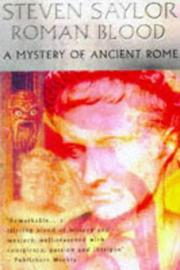
80 BC: a young Cicero hires Gordianus to investigate a parricide case, and the trial is the real one that made Cicero's name. Start here — it introduces Gordianus, Bethesda and the whole apparatus, and it is built on a case whose outcome is documented.
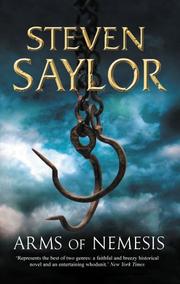
72 BC: a murdered overseer on Crassus's estate, ninety-nine slaves to be executed for it, and Spartacus in the field. Read second; the domestic situation set up in Roman Blood pays off directly here.
The Republic Starts to Crack
IntermediateFollow Gordianus into the conspiracies of the 60s BC, where the political background stops being scenery.
▸ Study plan for this stage
Pace: 5 weeks. Catilina's Riddle is 485 pages and the longest book in the series — three weeks at 25 pages a day, and it is slower than the first two because much of it is a man on a farm being pulled in two directions. The Venus Throw is 416 pages and moves faster; two weeks. Read Catilina's Riddle first
- Catilina's Riddle covers 63 BC, the year of the Catiline conspiracy, with Gordianus retired to a farm in Etruria and wanting nothing to do with Rome
- The situation is the best in the series: Catiline turns up needing shelter, Cicero — now consul — demands that Gordianus spy on him, and both men are plausible. Gordianus cannot refuse either without danger
- It is the most morally complicated of the books because Saylor declines to make Cicero the hero. The consul who saved the Republic executed citizens without trial, and the novel makes you feel both facts at once
- The riddle of the title is a real cipher-like verse attributed to the conspiracy, and the way Saylor uses it is the tightest piece of plotting in the run
- Widely considered the best novel of the series, and it is the one that changes the register: from this point the political background stops being scenery and starts being the plot
- The Venus Throw moves to 56 BC and the Clodia and Caelius affair, the scandal behind Cicero's Pro Caelio — the most vicious surviving speech he made, and one aimed almost entirely at destroying a woman's reputation
- It is the novel that turns most on private life rather than public politics, and it is Saylor's best writing about Roman women: Clodia is neither the monster of Cicero's speech nor a modern heroine
- Read as a pair, these two show the Republic's institutions being used as weapons — a consul's emergency powers in one, a courtroom character assassination in the other — which is the series' actual argument about how a republic dies
- What does Catiline want, on the evidence of the novel? Saylor gives him a real case and it is worth being able to state it.
- Cicero executed conspirators without trial. What does Catilina's Riddle make of that, and where does the novel place its sympathy?
- Gordianus wants to be left alone on his farm. Why can he not be, and what is Saylor saying about private life under a failing state?
- In The Venus Throw, what is Cicero actually doing to Clodia in the Pro Caelio? Read a summary of the speech and ask whether the novel's Clodia could have produced it.
- What did a Roman woman of Clodia's class have and not have? The novel is precise, and the precision is more interesting than either the ancient slander or a modern rescue.
- Both books turn on reputation as a weapon. How is that different from the murder cases in the first stage?
- Read a short account of the Catiline conspiracy before starting — one page is enough. The novel assumes the outline and is much better with it.
- Track what Gordianus is told by each side in Catilina's Riddle and by whom. The novel is largely about being lied to by people you like.
- After The Venus Throw, look up Cicero's Pro Caelio. Saylor is writing against a surviving text and the pairing is the point of the book.
- Write a paragraph defending Cicero's actions in 63 BC, then one attacking them. Catilina's Riddle supplies the material for both and refuses to choose.
Next up: The cracks become the collapse in the next three books, which have a continuous family storyline and must be read in strict order.
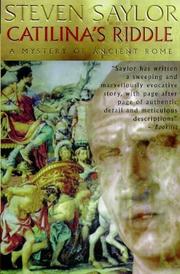
63 BC: Gordianus has retired to a farm, and Catiline turns up needing shelter while Cicero demands he be spied on. Widely considered the best of the series and the most morally complicated — it is the book that decides whether you stay.
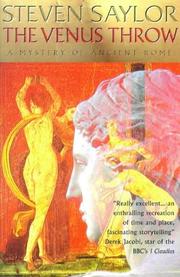
56 BC: the Clodia and Caelius scandal, and Cicero's most vicious surviving speech. The one that turns most on private life rather than public politics.
Civil War
IntermediateRead the three novels covering the collapse itself, in strict order — the personal storyline is continuous here.
▸ Study plan for this stage
Pace: 6 weeks and read these three in strict sequence with no other books in between. A Murder on the Appian Way is 408 pages, Rubicon 305, Last Seen in Massilia 289 — roughly two weeks, two weeks and a fortnight, at 25 to 30 pages a day. The personal storyline is continuous across all three and Last Seen
- A Murder on the Appian Way covers 52 BC: Clodius is killed on the road outside Rome, and the mob burns the senate house down as his funeral pyre. It is the most politically consequential case in the series
- The historical fact matters — the Republic's own legislature was destroyed by a crowd, and the emergency that followed put Pompey in sole charge. Saylor's investigation runs alongside a state visibly ceasing to function
- It is also the point where the sequence tightens: from here the novels stop being standalone cases with a historical setting and become one continuous story with cases in it
- Rubicon takes 49 BC and puts Gordianus under direct coercion: Pompey holds his son-in-law hostage against the solving of a murder, while Caesar crosses into Italy and the war begins
- The family situation is now the engine. Gordianus's sons have taken different sides, which is the ordinary Roman experience of that war rendered domestically, and it carries straight across into the next book
- Last Seen in Massilia sends Gordianus to a besieged Greek city on the Gaulish coast believing his son is dead. It is the bleakest book of the run and the least like a detective novel
- The siege setting does something the Roman books cannot: starvation, a city being slowly ground down, and a mystery whose solution changes nothing for anyone trapped inside
- Across all three, note that Saylor's Gordianus is aging visibly and losing the detachment that made him useful. The series is, among other things, about a man who can no longer stay outside the politics of his own city
- How does the burning of the senate house function in A Murder on the Appian Way — as an event, and as a symbol the novel does not have to explain?
- Who benefits from Clodius's death? The novel's political analysis is more interesting than its whodunit and is worth reconstructing.
- In Rubicon, what is Gordianus being forced to do, and what does the coercion cost him morally? He is no longer a free agent and the book knows it.
- Gordianus's sons choose different sides. What does Saylor do with that, and how does it change the family for the rest of the series?
- Why set a book inside the siege of Massilia rather than in Rome? What can the besieged city show that the capital cannot?
- Across the three books, what has happened to Gordianus's ability to stay out of politics? Point to the moment it becomes impossible.
- Read the three consecutively over six weeks without interleaving other novels. This is the one stage where the instruction actually affects comprehension.
- Keep a family chart from Rubicon onward — sons, son-in-law, allegiances, who is where. The plots turn on it and it is easy to lose.
- Look up what actually happened at Massilia in 49 BC after finishing the book. The historical outcome is bleaker than the novel's ending and the novel assumes you might check.
- Note when Gordianus refuses a case or wishes he had. The refusals across these three books trace an arc the individual plots do not.
Next up: With the Republic finished as a working system, the last three novels of the main sequence orbit the one man now holding it together.
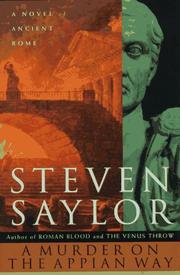
52 BC: Clodius is killed on the road and Rome burns its own senate house as a pyre. The most politically consequential case in the series, and the point where the sequence tightens.
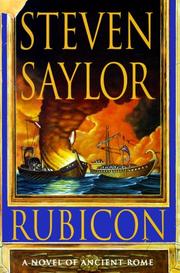
49 BC: Pompey holds Gordianus's son-in-law hostage against the solving of a murder, as Caesar crosses into Italy. Read straight after Appian Way; the family situation carries directly across.
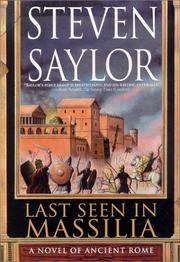
Gordianus travels to besieged Massilia believing his son dead. The bleakest book of the run, and unintelligible out of sequence.
Caesar
IntermediateFinish the main sequence with the three novels in which Caesar is the fixed point everything else moves around.
▸ Study plan for this stage
Pace: 6 weeks. A Mist of Prophecies (302 pages), The Judgment of Caesar (320) and The Triumph of Caesar (320) at two weeks each, 25 pages a day. Read them in order and read A Mist of Prophecies directly after Last Seen in Massilia — it follows on immediately and its opening assumes the previous book's end
- A Mist of Prophecies is set in 48 BC in a Rome emptied of its men, who are away fighting the civil war, and it is told substantially through the women left behind — which makes it the most unusual book of the series
- Its case is the murder of a street prophetess, and the structure gathers testimony from a sequence of Roman women of very different stations. It is Saylor's fullest use of a perspective the ancient sources barely record
- The Judgment of Caesar moves to Egypt in the same year: Pompey's death on a beach, Cleopatra and her brother at war, Caesar arriving, and Gordianus there because Bethesda is gravely ill and believes the Nile can cure her
- That double plot is the design — the fate of the Roman world and the fate of one household resolved in the same book — and it is the turning point for the family as much as for the Republic
- The historical set pieces here are among the best in the run, because the events are extraordinary and documented: Pompey killed by men he trusted, Cleopatra's arrival before Caesar, the fighting in Alexandria
- The Triumph of Caesar takes 46 BC and the four days of triumphal processions Caesar staged in Rome, with Calpurnia hiring Gordianus to find the threat against her husband. The tension comes from the reader knowing what is coming and Gordianus not
- ⚠️ THIS IS WHERE THIS PATH STOPS, AND THE SERIES DOES NOT. Saylor continued the sequence to the assassination itself in The Throne of Caesar, which is the obvious next book the moment you want more — this path ends before completeness rather than at the end of the story
- Beyond that there are further Gordianus books, the short-story collections, and Saylor's separate epic novels covering the whole span of Roman history, which are not part of Roma Sub Rosa. The finder's story has more in it than this path covers
- What does telling A Mist of Prophecies through women change about the picture of Rome the earlier books give? Name three things you had not seen.
- Who is the prophetess, and what is Saylor doing with prophecy in a series that is otherwise resolutely unsupernatural?
- In The Judgment of Caesar, how does Saylor handle Pompey's death? It is one of the most documented moments in Roman history and the novel has to work inside it.
- What happens to Bethesda, and what does it do to Gordianus? The domestic plot is the real subject of that book.
- Why is Caesar's triumph the right setting for a threat-detection plot? Consider what a triumph actually was and who was in the crowd.
- The Triumph of Caesar ends in 46 BC. Knowing what happens in 44, what does the series' choice of stopping points suggest about how Saylor uses reader foreknowledge?
- Before The Judgment of Caesar, read a short account of Pompey's death and Caesar's Alexandrian campaign. The novel is working against known events and the pleasure is in seeing how it fits Gordianus into them.
- In A Mist of Prophecies, list each woman who gives testimony and her position in Roman society. The list is a cross-section and is the book's real achievement.
- Track Bethesda across the whole series before reading The Judgment of Caesar. Ten books of a relationship arrive at that novel and it lands much harder with the arc in mind.
- Decide now whether you are going on to The Throne of Caesar. This path deliberately stops one book short of the assassination, and knowing that you are choosing to stop is better than assuming you have finished.
Next up: The main run is done, which is the only condition under which the prequels and the short cases make sense — both were written for readers who already know the older Gordianus.
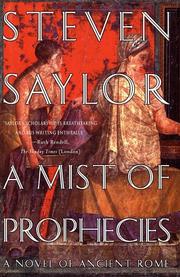
48 BC: a murdered street prophetess in a Rome emptied of its men, told partly through the women left behind. Follows directly on from Massilia.
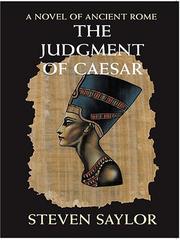
48 BC in Egypt: Pompey's death, Cleopatra, and Gordianus attending Bethesda's illness. The turning point for the family as much as the Republic.
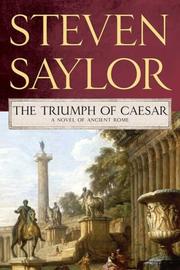
46 BC: Calpurnia hires Gordianus to find the threat to her husband during four days of triumphs. A natural stopping place — the series continues to the Ides in The Throne of Caesar, which is the obvious next book once you want more.
The Prequels and the Short Cases
IntermediateOnly after the main run: the young Gordianus books and the short stories that fill the gaps.
▸ Study plan for this stage
Pace: 4 weeks and strictly optional. The Seven Wonders is 379 pages and takes two weeks; The House of the Vestals is 275 pages of short stories, one or two an evening over a fortnight. ⚠️ Read the prequel only after the main run. It is set earliest in Gordianus's life and is the worst possible starting po
- The Seven Wonders was written roughly twenty years into the series but is set in 92 BC, with an eighteen-year-old Gordianus touring the seven wonders of the ancient world with his tutor and getting into a case at each
- It is a travelogue as much as a mystery, and it is the only book in the run that leaves the late-Republic political frame entirely — the wonders are the subject and the murders are the excuse
- Its pleasures are entirely retrospective: seeing where Gordianus learned his method, meeting Bethesda for the first time, and watching a young man be wrong about things you know he will be right about later. None of that works if you read it first
- It continues in Raiders of the Nile and Wrath of the Furies, which follow the young Gordianus in Alexandria and beyond, so the prequel strand is a series of its own and can be picked up at whatever length you want
- The House of the Vestals collects short stories set in the gaps between the early novels, mostly in the 70s BC, and they assume the household established in the first two books — which is why the earliest they should be read is after Catilina's Riddle
- The short form suits Saylor: a single documented incident, a compact investigation, no room for the political panorama. Several of these are as good as anything in the novels
- They also fill in the years when Eco is growing up, which the novels skip over, so they add domestic continuity rather than plot
- This stage is the natural end of the path and not the end of the series. Roma Sub Rosa continues past the point covered here, in both directions — later into Caesar's assassination, and earlier into the young Gordianus books — and there is a second short-story collection besides this one
- What does The Seven Wonders show you about how Gordianus became a Finder? Name the specific lesson each stop teaches him.
- How does meeting Bethesda in the prequel change your reading of the relationship in the main sequence? Be honest about whether it improves it.
- The wonders are largely gone. What is Saylor doing by writing a novel about monuments the reader knows have been destroyed?
- In The House of the Vestals, which story works best at short length, and what does the compression give it that a novel would not?
- The short stories fit into gaps between novels you have already read. Does knowing the outcome of the surrounding books defuse them, or is that the point?
- Having read the path, would you recommend the prequels to a new reader? Say where in the sequence you would place them and why.
- Before The Seven Wonders, list the seven wonders from memory and note which you could describe. The book is a tour and the gaps in your knowledge are the reason it is enjoyable.
- Slot each story in The House of the Vestals into the timeline between the novels. Doing it as you read turns a collection into a continuation.
- Reread the first chapter of Roman Blood after finishing the prequel. The older Gordianus reads differently once you have met the young one, which is the only real argument for the prequels existing.
- Finally, decide what you are reading next: The Throne of Caesar to finish the main story, or Raiders of the Nile to stay with the young Gordianus. This path ends here by choice, not because the series does.
Next up: That is the core of Roma Sub Rosa — ten novels, a prequel and a collection — and it stops one book short of the Ides of March, which is exactly where a reader who wants more should go next.

Written twenty years into the series but set in 92 BC, with an eighteen-year-old Gordianus touring the wonders of the ancient world. Chronologically first and absolutely not the place to start — it is written for readers who already know the older man. It continues in Raiders of the Nile and Wrath of the Furies.

Short stories set in the gaps between the early novels, mostly in the 70s BC. Read after Catilina's Riddle at the earliest; they assume the household you meet in the first two books.
Discussion
Keep reading
Paths that share books, cover the same subject, or open a related topic.