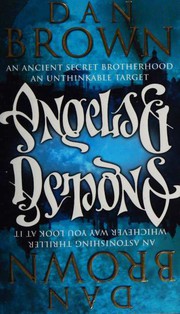
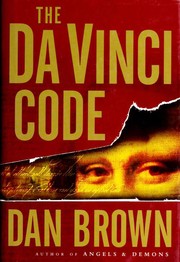
Start with Angels & Demons. It was published in 2000, three years before The Da Vinci Code, and it is Langdon's actual introduction: the symbology conceit, the ambigrams, the walk-and-lecture structure and the twenty-four-hour clock are all established there and never explained again. The Da Vinci Code assumes every one of them.
Almost everyone meets these books backwards, and there is a reason. The Da Vinci Code sold in the tens of millions in 2003, the earlier novel was reissued on the back of it, and bookshops shelved the reissue as the new one. That is a marketing accident, not a reading order. Read them as written.
The order controversy, settled
The case for starting with The Da Vinci Code is that it is the better-constructed book and the one people actually want. The case against is that it opens with Langdon already established as a public figure whose method the reader is expected to recognise, and half the pleasure of Angels & Demons is watching that method get built. Publication order by original date wins here, and it costs you nothing: the first novel is not a slower or weaker book, only a less famous one.
One catalogue note before you buy. We hold two separate records for this novel, one spelled with an ampersand and one spelled out, for the same 2000 book. The ampersand record, at 575 pages, is the one this path uses.
The Langdon novels in order
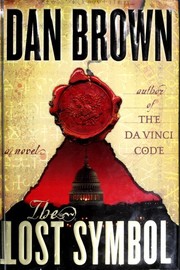
Angels & Demons (2000) is the Illuminati, a Vatican conclave and a canister of antimatter, across one night in Rome. The Da Vinci Code (2003) is the Louvre murder, the Priory of Sion and the Grail as a person. The Lost Symbol (2009) moves to Washington, the Freemasons and noetic science; it is the weakest of the five and the most interesting as a case study in a formula straining. Inferno (2013) is Florence, Venice and Istanbul, built as a treasure hunt across Dante's poem, and is the return to form. Origin is Bilbao, Barcelona, Gaudi and a computer scientist's answer to where we came from; it was published in 2017, though our record carries a wrong 2013 date.
Origin is a fair place to stop. It swaps religious conspiracy for artificial intelligence, which is as close to a change of subject as the series gets, and anything published after it is not in our catalogue.
Brown without Langdon
Two standalone thrillers, best read after the series rather than before. Digital Fortress (1998) is his actual debut — the NSA, an unbreakable cipher, a code-breaking machine — and it is much more visible as apprentice work, though the short chapters and the twenty-four-hour structure were invented here. Deception Point (2001) is a meteorite under the Arctic ice and a NASA political scandal; it appeared between the first two Langdon novels and is the most conventional thriller Brown has written, which makes it good evidence that the symbology is the franchise rather than the plotting.
The real books behind the plots
Read The real history behind the Da Vinci code first of these three. Sharan Newman is a medieval historian and she goes through the novel's claims one at a time — the Priory of Sion, the Merovingians, Constantine, the formation of the canon — which is the fastest way to find out which parts of the story are load-bearing fiction.
The Holy Blood and the Holy Grail is the 1982 bestseller that supplied the Grail-as-bloodline thesis, and whose authors later sued Brown unsuccessfully over it. It is on this path as a primary source on the conspiracy, not as history. Its central document trail, the Priory of Sion, is a documented twentieth-century hoax, and Newman's chapter on it is the place to check. Read the two together and in that order.
The inferno is Dante, and it is the genuine detour. Brown's fourth novel uses the nine circles as its map and almost none of that registers without the poem. Our record is a 290-page edition that does not identify its translator, which matters more for Dante than for most books — translations differ enormously in register and in how much annotation they carry.
A note on the records
Four of the ten records on this path are non-English editions of the right book: our The Da Vinci Code ISBN is a Spanish edition, Digital Fortress is a Chinese one, Origin is Portuguese and The real history behind the Da Vinci code is Russian. The buy links follow the record, so check the language before ordering those four.
The ordered list with lengths is at the Robert Langdon path.