Rivers of London Reading Order: Where to Start
The Rivers of London series by Ben Aaronovitch blends police procedural with urban fantasy, set in a richly detailed London. This curriculum follows the canonical release order — novels first, then weaving in the novellas and graphic novels at the points Aaronovitch intended — so each entry builds on the characters, lore, and ongoing plot threads established before it.
The Beginning: Meet Peter Grant
BeginnerEstablish the world, the magic system, the Folly, and the core cast of characters before the series expands in scope.
▸ Study plan for this stage
Pace: 6–8 weeks total: spend weeks 1–3 on "Rivers of London" (~30–35 pages/day) and weeks 4–6 on "Moon over Soho" (~30–35 pages/day), leaving weeks 7–8 as buffer for re-reading key scenes, completing exercises, and reflection.
- The Folly as an institution: its history, hierarchy, and role as the Metropolitan Police's supernatural division — introduced and grounded in 'Rivers of London'
- The magic system (Newtonian magic): vestigia, formae, and the physical cost of learning/casting spells, established through Peter's apprenticeship under Nightingale
- Peter Grant's dual identity: a probationary constable navigating both mundane police procedure and the hidden magical world, forming the lens through which the reader experiences everything
- The genius loci — the personified Rivers of London (Mama Thames, Father Thames, and their children) as political and supernatural factions with their own agendas, central to the conflict in 'Rivers of London'
- The Punch/Mr Punch mythology and the nature of 'faceless man'-style possessing entities, which drives the central mystery of 'Rivers of London'
- Jazz and the 'jizz' of magic: in 'Moon over Soho', the idea that magic can leave a sonic/emotional imprint on music, and how Peter uses this as an investigative tool
- The recurring antagonist framework: the Faceless Man is introduced as a shadowy, intelligent enemy in 'Moon over Soho', establishing a series-long arc
- Molly and the Folly's supporting cast: understanding the non-human residents and allies of the Folly (Molly, Toby the dog) as important atmospheric and thematic anchors
- By the end of 'Rivers of London', can you explain what the Folly is, who Nightingale is, and how Peter Grant came to be apprenticed there — in your own words?
- How does Newtonian magic work as described in these two books? What are vestigia, what are formae, and what physical risks does Peter face when practising?
- Who are Mama Thames and Father Thames, and what does their rivalry in 'Rivers of London' reveal about the history and changing nature of London itself?
- What is the significance of jazz in 'Moon over Soho', and how does Peter use musical vestigia to investigate the deaths of jazz musicians?
- Who is the Faceless Man, and what evidence from 'Moon over Soho' suggests he will be a long-term threat beyond a single book?
- How does Peter's background (mixed heritage, his father's jazz career, his police training) actively shape the way he investigates cases in both books?
- Character map: After finishing 'Rivers of London', draw a relationship diagram connecting Peter, Nightingale, Lesley, Molly, Mama Thames, Father Thames, and the river daughters — annotate each connection with one key fact about their relationship.
- Magic-system notebook: Keep a running log as you read both books of every spell or magical phenomenon Peter encounters. Note the name (if given), what it does, and any cost or side-effect mentioned. By the end of 'Moon over Soho' you should have the outline of a Newtonian magic reference sheet.
- London geography exercise: Using a free online map of London, pin the key locations from both books (the Folly on Russell Square, the Thames tributaries, Soho jazz venues, etc.). Reflect in a short paragraph on how the city itself functions almost as a character.
- Thematic journal entry: After 'Rivers of London', write a one-page response to this prompt — 'How does the genius loci concept change the way you think about cities and their histories?' Revisit and expand it after 'Moon over Soho'.
- Antagonist profile: After completing 'Moon over Soho', write a one-page dossier on the Faceless Man using only evidence from the two books — what is known, what is suspected, and what questions remain unanswered. This will serve as a reference point as the series continues.
- Comparative scene analysis: Choose one scene from each book where Peter uses both police procedure and magic simultaneously. Write a short paragraph for each explaining how Aaronovitch uses that blend to define Peter's character and the tone of the series.
Next up: Mastering the Folly's foundations, the Newtonian magic system, and the introduction of the Faceless Man in these two books gives the reader the investigative and worldbuilding vocabulary needed to follow the series as it expands its cast, deepens its mythology, and escalates the threat in later entries.

The first novel and the essential entry point — introduces PC Peter Grant, DCI Thomas Nightingale, the Folly, and London's supernatural underworld. Everything else builds from here.
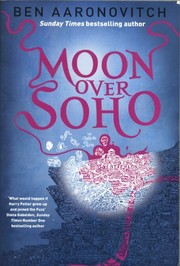
The second novel deepens Peter's magical training and introduces the jazz-ghost mystery; reading it immediately after book one cements the series' tone and ongoing story arcs.
Escalation: The Faceless Man Arc
BeginnerFollow the series' central villain arc to its climax across the next two novels, while picking up the first novella that bridges key plot points.
▸ Study plan for this stage
Pace: 8–10 weeks total: ~2.5–3 weeks per book at a relaxed beginner pace of 20–25 pages/day. Suggested breakdown — Broken Homes: weeks 1–3; Foxglove Summer: weeks 4–6; The Hanging Tree: weeks 7–10 (slightly longer to absorb the arc's climactic payoffs).
- The Faceless Man as a recurring antagonist: tracking his identity, motives, and escalating threat across all three books
- Skygarden / Brutalist architecture as thematic and magical setting in Broken Homes — how place encodes power in the Folly's world
- Peter Grant's moral and emotional growth: the cost of the job becomes personal after the shocking betrayal at the end of Broken Homes
- Lesley May's arc — her transformation from partner to antagonist and what it reveals about loyalty, disfigurement, and desperation
- Foxglove Summer as a deliberate rural detour: how the Herefordshire case explores folklore (fae, changelings, unicorns) outside London while Peter processes trauma
- The Folly's political landscape: the introduction of Lady Ty's family, the Chestnut Tree, and the expanding cast of supernatural stakeholders in The Hanging Tree
- Investigative procedure as narrative engine: how Peter's police-work methodology (HOLMES, policy files, actions) structures each mystery
- Magic system deepening — Newtonian magic, vestigia, signare, and the first hints of a broader international magical community
- By the end of Broken Homes, who is revealed to be working with the Faceless Man, and why is this revelation so devastating to Peter personally and professionally?
- What is the significance of the Skygarden tower in Broken Homes — both as a physical location and as a magical/architectural symbol?
- How does Foxglove Summer use the rural English countryside and its folklore (changelings, the fae) to contrast with — and comment on — the urban magic of the previous books?
- What does Peter learn about himself and his limits during his time away from London in Foxglove Summer?
- In The Hanging Tree, who is Lady Ty and what does her family's involvement reveal about the hidden power structures among the supernatural communities of London?
- How does the Faceless Man's plan evolve across all three books — what does he ultimately want, and how close does he come to achieving it by the end of The Hanging Tree?
- Betrayal map: After finishing Broken Homes, write a one-page character profile of Lesley May tracing every clue about her loyalties that was seeded in earlier books — then reflect on which signs you missed and why Aaronovitch hid them effectively.
- Folklore field notes: While reading Foxglove Summer, keep a running log of every folkloric element Peter encounters (changelings, fae bargains, unicorns, rural 'genius loci'). After finishing, compare these to the urban supernatural elements from Broken Homes and note what rules stay consistent and what changes.
- Villain timeline: Create a chronological timeline of the Faceless Man's known actions across all three books — what he does directly, what he does through proxies, and what remains unknown. Identify where the gaps are and what questions The Hanging Tree answers versus leaves open.
- Architectural close-read: Re-read the Skygarden chapters in Broken Homes and look up one real example of Brutalist social housing (e.g., Robin Hood Gardens or Trellick Tower). Write 3–4 sentences on how Aaronovitch uses the real cultural baggage of that architectural style to build dread and meaning.
- Power-structure diagram: After The Hanging Tree, draw a simple relationship map of the major supernatural factions in London (the Folly, the Rivers, the Fae, the Faceless Man's network). Label each connection as cooperative, hostile, or neutral, and note how those relationships shifted across this stage's three books.
- Reader-response journal: At the end of each book, write a short paragraph answering: 'What did Peter lose in this book, and what did he gain?' Compare all three entries when you finish the stage to track his arc as a protagonist.
Next up: By the end of The Hanging Tree the Faceless Man arc reaches a decisive turning point and the world of the Folly has expanded dramatically in scope and political complexity, setting the stage for the next phase of the series where the consequences of these events — and the new alliances and enemies forged here — drive the action forward.
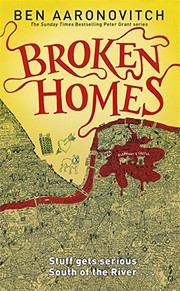
The fourth novel raises the stakes dramatically with a shocking ending that redefines the series; it should be read before any supplementary material set in this period.

The fifth novel sends Peter out of London to the countryside, offering a breather and new mythological layers (fae, rural magic) before the Faceless Man arc concludes.

The sixth novel brings the Faceless Man storyline to a head and introduces Lady Ty's family in depth; the payoff requires all five preceding novels to land fully.
Interlude: Novellas & Side Stories
IntermediateFill in gaps, explore side characters, and enrich the world with the shorter-form fiction that sits between the main novels.
▸ Study plan for this stage
Pace: 2–3 weeks total: spend the first week on The Furthest Station (~30–40 pages/day, it's a novella of ~130 pages), then the second week on The October Man (~40–50 pages/day, ~190 pages), leaving a few days at the end for reflection and exercises.
- The novella as a narrative form in the Rivers of London universe — tighter plotting, single-case focus, and compressed world-building compared to the main novels
- Abigail Kamara's expanded role in The Furthest Station: her growing magical aptitude, her dynamic with Peter and Nightingale, and her importance as a future protagonist
- Ghost typology and communication: The Furthest Station deepens the lore around vestigia and how the dead leave impressions on the London Underground, adding nuance to how magic interacts with place and memory
- The October Man as a deliberate geographic and cultural expansion — introducing the BKA (Bundeskriminalamt) and the German magical tradition (the Abteilung KDA), showing that the Folly is not the only institutional response to the uncanny
- Tobias Winter as a foil to Peter Grant: a more rule-bound, institutionally embedded practitioner whose voice and methods contrast sharply with Peter's improvisational style
- The German wine-country setting of The October Man and how Aaronovitch uses regional specificity (the Mosel valley, viticulture, local folklore) to ground the supernatural in a distinct cultural landscape
- Thematic thread of institutional secrecy vs. transparency: both novellas explore how magical law enforcement manages public knowledge, each in a different national context
- How side-fiction enriches the main series: filling timeline gaps, developing secondary characters, and expanding the world's rules without requiring a full novel's worth of plot
- In The Furthest Station, what is the nature of the ghostly disturbances on the Metropolitan line, and how does the resolution reveal something new about how vestigia and memory work in the Rivers of London universe?
- How does Abigail Kamara demonstrate her developing magical sensitivity in The Furthest Station, and what does her characterisation here suggest about her trajectory in the broader series?
- In The October Man, how does Tobias Winter's relationship with the BKA and the Abteilung KDA differ structurally and philosophically from Peter Grant's relationship with the Folly, and what does this contrast imply about different national approaches to policing the uncanny?
- What folkloric and regional elements does Aaronovitch draw on in The October Man, and how do they serve both the mystery plot and the world-building?
- Both novellas feature a detective working a contained, single case. How does the compressed format change the pacing, the depth of investigation, and the emotional stakes compared to the main novels you've read so far?
- What new information or rules about magic — its practice, its institutions, or its consequences — do these two novellas add that was absent or only hinted at in the main novels?
- **Comparative character sketch:** Write a one-page side-by-side profile of Abigail Kamara (The Furthest Station) and Tobias Winter (The October Man). Focus on their voice, their relationship to authority, and their magical competence. What does each reveal about the world that Peter Grant's first-person narration cannot?
- **World-building map:** Draw or diagram the institutional landscape of magical law enforcement as revealed across both novellas — the Folly, the BKA's Abteilung KDA, their apparent rules of engagement, and any hinted-at equivalents elsewhere. Note what is confirmed vs. what is implied.
- **Vestigia & place journal:** The Furthest Station is deeply tied to the London Underground as a place saturated with memory. Pick a real transit system or public space you know and write a short scene (300–500 words) in which a Rivers of London-style practitioner reads its vestigia. What emotional or historical residue would it hold?
- **Folklore audit:** For The October Man, list every piece of real German/Mosel regional folklore, viticulture tradition, or local legend Aaronovitch references. Then look up one or two of them to verify or expand on them. How accurately and how creatively does he deploy them?
- **Narrative format reflection:** Write a short essay (400–600 words) arguing whether each story was better served by the novella format or whether it could — or should — have been a full novel. Use specific plot and pacing evidence from the texts.
- **Bridge questions:** Before moving on, write down three questions these novellas raised but did not fully answer — about characters, magical rules, or institutions — that you predict the next stage of the series will address.
Next up: By absorbing the expanded institutional world (the Folly, the BKA, Abigail's growing role) and the series' capacity for geographic and cultural range introduced in these novellas, the reader is primed to engage with the later main novels with a richer, more global sense of how magic is governed, practiced, and contested across Europe.

This novella focuses on Peter and Abigail investigating ghost sightings on the Metropolitan line; best read after The Hanging Tree, as it references its events.

A standalone novella set in Germany following a new protagonist, Tobias Winter; reading it here broadens the world beyond London before the later novels do the same.
Continuing the Main Series
IntermediateContinue Peter Grant's story through the next full novels, armed with the enriched world-knowledge from the novellas.
▸ Study plan for this stage
Pace: 8–10 weeks total: ~2.5 weeks per novel at roughly 25–30 pages/day. Suggested breakdown — Lies Sleeping (weeks 1–2.5), False Value (weeks 3–5), Rivers of London (weeks 5.5–8), with a final week for review, re-reading key scenes, and completing exercises.
- Resolution of the Faceless Man arc: Lies Sleeping brings the long-running Martin Chorley storyline to a climax, showing how Aaronovitch structures multi-book villain arcs and pays off years of foreshadowing
- The Folly's institutional evolution: by this stage the Folly has grown from Peter and Nightingale alone to a small team; tracking how its culture, rules, and resources shift across the three books
- Peter Grant's maturation as a practitioner and detective: compare his competence, judgment, and moral reasoning in Lies Sleeping and False Value against his raw-recruit voice in Rivers of London
- The mythology of London's genius loci: Rivers of London foregrounds the river gods and the spiritual ecology of the city; revisiting this foundation after the later books reveals how Aaronovitch seeded ideas he developed over the whole series
- Tech-sector magic and new threats in False Value: the Silicon Valley–style Serious Cybernetics Corporation introduces questions about magic, automation, and corporate secrecy that expand the series' thematic range
- Narrative voice and unreliable/limited perspective: Peter's first-person narration filters everything; practicing close reading of what he notices, misses, or withholds is central to understanding all three books
- Intertextuality and genre blending: police procedural, urban fantasy, and literary London history are woven together differently in each book — identifying those seams deepens appreciation of Aaronovitch's craft
- Thematic continuity of justice and institutional accountability: from the Metropolitan Police politics in Rivers of London through the Chorley trial questions in Lies Sleeping to corporate oversight in False Value
- How does Lies Sleeping resolve the Faceless Man plot, and what moral or legal compromises does that resolution involve — and how do those compromises reflect the series' ongoing tension between official law and magical necessity?
- What does False Value reveal about the limits of the Folly's knowledge, and how does the Serious Cybernetics Corporation storyline use tech-industry satire to comment on secrecy and power?
- Returning to Rivers of London after the later novels: which characters, locations, or throwaway details now read as deliberate foreshadowing, and which feel like happy accidents Aaronovitch later developed?
- How has Peter Grant's relationship with Nightingale changed across the three books, and what specific scenes best illustrate the shift from apprentice/mentor to something closer to partnership?
- What role do female characters — Beverley Brook, Guleed, Lesley, and others — play in each of the three books, and how does their agency and narrative weight evolve?
- How does Aaronovitch use the physical geography of London as more than backdrop — pick one location from each book and explain how the place itself shapes the plot or theme of that scene?
- Villain arc timeline: Before starting Lies Sleeping, reconstruct the Faceless Man's appearances and schemes from memory (or brief notes). After finishing, annotate your timeline with how each thread was resolved — or deliberately left open — and assess whether the payoff felt earned.
- Comparative voice journal: Choose one action scene and one quieter character scene from each of the three books. Write a one-paragraph analysis of Peter's narrative voice in each, noting changes in confidence, humor, and self-awareness across the reading order.
- London location map: Keep a running map (digital or hand-drawn) marking every significant real London location mentioned across all three books. After finishing Rivers of London, identify which locations appear in multiple books and research their actual history to see what Aaronovitch is riffing on.
- Thematic thread tracker for 'institutional accountability': As you read, flag every scene where a character questions whether the Folly, the Met, or a corporation is operating ethically. After all three books, write a one-page argument about what the series as a whole says on this theme.
- Re-read the opening chapter of Rivers of London last: After completing all three books in order, re-read only Chapter 1 of Rivers of London and write down every detail that reads differently now that you know the full world. Share or discuss your list with another reader if possible.
- Character relationship web: Draw a relationship diagram for Peter Grant's key allies and antagonists at the END of False Value. Then draw a second one for the START of Rivers of London. Annotate the differences to articulate how much the world has grown.
Next up: Having traced Peter Grant's arc from raw recruit (Rivers of London) through seasoned detective (False Value) and experienced the full sweep of a major villain arc, readers are now equipped to engage with the novellas, graphic novels, and any future entries as informed insiders who can spot callbacks, appreciate craft-level foreshadowing, and situate new threats within the series' richly establishe

The seventh novel resolves the long-running Faceless Man arc definitively; it rewards readers who have followed every prior entry in sequence.

The eighth novel takes Peter undercover in a tech company and opens a bold new story arc; it assumes full familiarity with all prior lore and character relationships.

The first graphic novel collection; by this stage readers know the world deeply enough to appreciate the visual storytelling and the new cases it depicts alongside the novels.
Advanced: Latest Entries & Graphic Novel Expansions
ExpertComplete the current published series with the most recent novel and explore the graphic novel line that runs parallel to the prose, gaining a full panoramic view of the universe.
▸ Study plan for this stage
Pace: 6–8 weeks total: Weeks 1–3 cover "Amongst Our Weapons" (~25–30 pages/day, allowing time for close reading of late-series lore payoffs); Weeks 4–8 cover the "Rivers of London" graphic novels (~2–3 issues/day per sitting, with dedicated reflection sessions after each collected arc).
- Late-series narrative maturity: how 'Amongst Our Weapons' reflects Aaronovitch's evolution in plotting complexity, character depth, and world-building density compared to earlier entries
- The Pale Lady and theological/mythological layering: understanding how the novel weaves Christian iconography, angelic lore, and folkloric tradition into the Folly's casework
- Peter Grant's professional and personal arc reaching advanced-career status — his relationships, ethical growth, and expanding magical competence as a fully-fledged practitioner
- The graphic novel as a parallel canon: how the 'Rivers of London' comic line expands, contradicts, or enriches the prose novels through visual storytelling and side-character spotlights
- World-building through medium: comparing how magic, London geography, and the Folly's culture are rendered differently in prose versus sequential art
- Continuity and canon management: tracking which graphic novel storylines are explicitly referenced or implied in the prose, and how Aaronovitch maintains consistency across formats
- Panoramic universe synthesis: assembling a complete mental map of the Rivers of London universe — its factions, ongoing mysteries, unresolved threads, and thematic preoccupations across all published works
- Thematic closure vs. open-endedness: identifying which long-running questions 'Amongst Our Weapons' answers and which are deliberately left open for future entries
- How does 'Amongst Our Weapons' resolve or complicate the ongoing tension between the Folly's institutional secrecy and the broader world's encroaching awareness of magic — and what does this suggest about the series' future direction?
- What mythological and religious traditions does the Pale Lady draw from, and how does Aaronovitch integrate them into the procedural crime framework without undermining either element?
- In what specific ways do the 'Rivers of London' graphic novels expand the universe beyond what the prose novels cover — which characters, locations, or historical periods receive treatment only in the comics?
- How does the visual grammar of the graphic novels (panel composition, color palette, character design) shape the reader's understanding of magic and London differently than Aaronovitch's prose style does?
- By the end of this stage, what are the three to five most significant unresolved mysteries or dangling plot threads in the Rivers of London universe, and where were they introduced?
- How has Peter Grant's narrative voice and moral reasoning evolved from the first prose novel to 'Amongst Our Weapons', and what does the graphic novel line add to understanding his character?
- Create a dual-column continuity log: as you read each graphic novel arc, note every character, location, or event that cross-references the prose novels, then flag any apparent contradictions or expansions — use this as a living document throughout the stage.
- Write a 500-word 'state of the universe' essay after finishing 'Amongst Our Weapons', cataloguing all major factions (the Folly, the Rivers, the Faceless Man's legacy, Nightingale's network, etc.) and their current status — then revisit and annotate it after completing the graphic novels.
- Choose one scene from 'Amongst Our Weapons' that you feel is particularly dense with lore and rewrite it as a 2-page comic script (panel descriptions, dialogue, captions) — then compare your choices to how the official graphic novels handle similar scenes.
- Map the London geography of this stage: using a physical or digital map of London, pin every named location from both 'Amongst Our Weapons' and the graphic novels, color-coding prose vs. comics appearances, to visualize how each medium uses the city.
- Compile a 'Unresolved Threads' tracker — a structured list of every open plot question across the entire series as you understand it after this stage, ranked by narrative urgency, with citations to where each thread was introduced or last developed.
- Conduct a comparative medium analysis: select one character who appears in both the prose and the graphic novels (e.g., Beverley Brook, Nightingale, or Molly) and write a character study examining how their portrayal differs across formats, citing specific textual and visual evidence.
Next up: Completing both the latest prose entry and the full graphic novel line gives the reader a truly panoramic command of the Rivers of London universe — its lore, its gaps, and its open questions — providing the ideal foundation for any next stage focused on critical analysis, fan scholarship, or anticipating and contextualizing future installments as they are published.
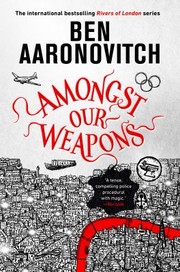
The ninth novel and one of the most mythologically ambitious entries; it requires the full accumulated knowledge of the series to appreciate its deep lore and character payoffs.

This graphic novel arc focuses on Nightingale's wartime past and expands the history of the Folly; best appreciated once the reader has a complete picture of the main series.
Discussion
Keep reading
Paths that share books, cover the same subject, or open a related topic.