Reptile and Amphibian Keeping: The Best Books to Read, in Order
A leopard gecko can live twenty years, a ball python thirty, a box turtle fifty or more, and most of the animals sold as beginner pets die early of husbandry failures that are entirely preventable. This path is ordered to make that the first thing you meet rather than the last: principles and honest commitment first, then the species keepers actually start with, then amphibians, which need a different set of assumptions, then health and the harder species, and finally the natural history that tells you what the animal is for. One standing caution — the species manuals here are the best available and several date from the 1990s, so treat their heating, lighting and UVB advice as a floor to be checked against current guidance, not a ceiling.
Principles, and the right first animal
BeginnerDecide honestly whether to keep a reptile at all — decades of lifespan, live-food supply, vet access, electricity and heat — and set up a correct thermal gradient, humidity range and quarantine protocol for a captive-bred first animal
▸ Study plan for this stage
Pace: Six to eight weeks, and all of it before you acquire anything. 588 pages across the three, but the real schedule is: read Susan M. Barnard's Reptile keeper's handbook (252 pages) first and properly, at a chapter a sitting over three weeks — thermoregulation, humidity, photoperiod, nutrition, quarant
- The thermal gradient — a hot end, a cool end, and an animal allowed to choose — as the single most important thing you provide
- Humidity and photoperiod as measured parameters with target ranges, not impressions
- Quarantine as a protocol with a duration, separate equipment and a reason
- Captive-bred against wild-caught, and how to tell which you are being offered
- Lifespan and running cost — electricity, heat, live food, vet access — as the actual purchase decision
- Record-keeping: weights, sheds, feeds and temperatures, which is how you notice a problem early
- Why UVB and supplementation guidance in older manuals has to be checked against current sources
- What are the target hot-end and cool-end temperatures for the species you are considering, and how will you measure and control both?
- How long is quarantine, what does it require in practice, and what are you watching for?
- What is the realistic total lifetime cost and lifespan of the animal you are considering, and who cares for it if your circumstances change?
- Which specific claims in the de Vosjoli manual you read should you check against current UVB and supplementation guidance, and where would you check?
- How do you verify that an animal offered for sale is genuinely captive-bred?
- Set up the full enclosure with no animal in it and log hot-end, cool-end and ambient temperature plus humidity twice daily for two weeks; do not buy anything until the readings are stable.
- Write your own quarantine protocol from Barnard — duration, separate equipment, hand order, what triggers a vet call — and put it on the wall.
- Take the heating, lighting and supplementation advice from your chosen species manual and check each point against a current care resource; write down every place they disagree.
- Cost out twenty years of keeping the species you want, then write one honest paragraph on why you should or should not do it.
Next up: With principles, a stable enclosure and one animal chosen honestly, the next stage covers the species most keepers move to — and where each of them fails.

The principles book: thermoregulation, humidity, photoperiod, nutrition, quarantine and record-keeping treated as general husbandry rather than species trivia. Read it first, because every species manual afterwards is an instance of what is in here. Note the definite article kills the catalogue match — this is the book usually listed as The Reptile Keeper's Handbook.
The standard on the most common first reptile, and honest that a gecko sold at eight weeks is a twenty-year animal. Use it for the enclosure and feeding regime, but check current guidance on low-level UVB and on calcium and D3 supplementation, which has moved since it was written.
Love bred corn snakes commercially for decades and this is the fullest account of the classic first snake — feeding, shedding, handling, and the temperament reasons it is recommended over almost anything else. Read it beside the gecko manual and pick one animal, not both.
The species most keepers move to
BeginnerMeet the husbandry demands of the next tier of common pets — a large basking lizard, a constrictor that will outlive a mortgage, and a chelonian that may outlive you — and understand why each fails in captivity when it does
▸ Study plan for this stage
Pace: Four to six weeks of reading, and again ahead of any purchase — 352 pages across three short de Vosjoli manuals, so the reading is quick and the deciding is not. Read The Bearded Dragon Manual (174 pages) first and read its lighting chapter twice, because bearded dragons are the species where gettin
- UVB provision by index and distance rather than by bulb wattage, and lamp replacement intervals
- Metabolic bone disease: what causes it, how early it shows, and why it is a husbandry diagnosis
- Feeding refusal in ball pythons as a normal behaviour with several causes, and when it becomes a problem
- Basking-site temperature measured at the animal's back, not at the substrate
- Outdoor space and hibernation cycles as requirements a box turtle cannot do without
- Why a species is surrendered — the specific husbandry failure behind each, rather than 'people lose interest'
- What UVB index should reach the animal at its basking site, and how would you verify it rather than assume it?
- What are the earliest visible signs of metabolic bone disease, and what would you change the day you saw one?
- What are the legitimate reasons a ball python refuses food, and at what point does it stop being normal?
- What does a box turtle need that an indoor keeper realistically cannot provide?
- For each of these three species, what is the single most common reason it ends up rehomed?
- Measure the actual temperature at the basking site with the animal's body height in mind, not the substrate, and adjust until it matches the target.
- Check the UVB advice in each of these three manuals against a current index chart and write the corrected figures into the front of the book.
- Build a feeding and weight log template and use it for eight weeks, so a refusal is measured against a baseline rather than remembered.
- Write down, for the species you keep or intend to, exactly what you would do if you could no longer care for it — and find out whether a rescue in your area would take it.
Next up: Every assumption so far has been about heat; the next stage keeps animals for which almost all of it is wrong.
Catalogued as The Bearded Dragon Manual (Advanced Vivarium Systems). The reference for the most popular pet lizard, and the species where getting UVB and basking temperature wrong produces metabolic bone disease fastest. Read the lighting chapter twice and then check it against a current UVB index chart.

Catalogued as Ball Python Manual (The Herpetocultural Library. Series 300). Ball pythons are sold as easy and are the species most often surrendered, usually over feeding refusal, which this book treats seriously. A thirty-year commitment described as such.
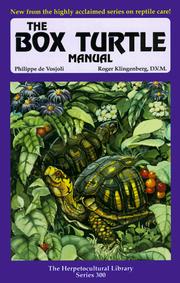
Box turtles are wild-caught far more often than the trade admits, need outdoor space and a real hibernation cycle, and routinely live past fifty. Included precisely because it is the strongest argument in the path for not buying an animal on impulse.
Amphibians are not small reptiles
IntermediateKeep frogs, toads or salamanders with the assumptions their permeable skin demands — water quality, dechlorination, humidity, cool temperatures, minimal handling — and recognise the chytrid and ranavirus risks that make quarantine non-negotiable
▸ Study plan for this stage
Pace: Six to eight weeks, and the two books are wildly different in weight — 658 pages, of which 499 belong to one veterinary reference. Devin Edmonds's Frogs and toads (159 pages) is the working introduction and reads in a fortnight: species selection, planted vivaria, water treatment and live-food cultu
- Permeable skin as the governing fact: everything the animal touches enters it
- Dechlorination and water quality testing as routine husbandry, not an aquarium hobbyist's extra
- Cool temperatures — many amphibians are harmed by the heat a reptile requires
- Minimal handling, and the specific reasons handling is different in kind here
- Chytrid and ranavirus: transmission routes, and why quarantine and equipment separation are absolute
- Live-food culture as a standing commitment established before the animal arrives
- What temperature range does your chosen amphibian actually need, and what in a typical reptile setup would kill it?
- How do you treat and test water for a vivarium, and how often?
- What are the transmission routes for chytrid and ranavirus, and what does that mean for shared nets, hands and water?
- What live foods will you need, in what sizes, and can you culture them reliably before you buy an animal?
- Which chapters of Wright would you turn to first if an animal stopped eating?
- Establish and maintain a live-food culture for four weeks before acquiring anything, and record whether it actually kept up.
- Test your tap water, treat it, and test again; log the results and repeat weekly through the setup period.
- Write a quarantine and equipment-separation protocol specific to amphibians and post it beside the vivarium.
- Read Wright's section on one common amphibian disease and write the three signs you would act on.
Next up: With two very different groups kept correctly, the next stage covers what happens when something goes wrong and whether a harder species is within your reach.

The best current introduction for the amphibian keeper: species selection, planted vivaria, water treatment, live-food culture. Start here because almost everything you learned about reptile heating is wrong for a frog.
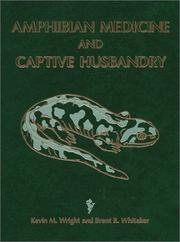
Wright and Whitaker is the veterinary reference for the group, and the only place a serious keeper will find real detail on amphibian disease, nutrition and water chemistry. Expensive and technical; own it if you keep amphibians for more than a season.
Health, and the harder species
IntermediateRecognise and act on parasite loads, respiratory infection, dysecdysis and metabolic bone disease early, and judge whether a demanding species — a chameleon, a large or venomous snake — is within your setup and experience
▸ Study plan for this stage
Pace: Six to eight weeks of reading you should do before you need it, not during an emergency. Philippe de Vosjoli's The art of keeping snakes (232 pages) is his broadest and most thoughtful book — naturalistic vivaria, species selection across the family, and the reasoning behind an enclosure rather than
- Mites, nematodes and protozoa: how each presents and how each is actually found
- Respiratory infection, dysecdysis and metabolic bone disease as husbandry symptoms first and diseases second
- Naturalistic vivarium design reasoned from the species rather than assembled from a parts list
- Chameleon-specific requirements — airflow, drip watering, gutloading, visual privacy — and why a glass tank fails
- Judging honestly whether a demanding species is within your current setup and experience
- When a keeper treats and when a keeper calls a vet, decided in advance
- What are the first visible signs of a mite infestation, and what do you do the same day?
- Which health problems on this list are caused by husbandry, and what specifically would you change for each?
- What does a chameleon need that a standard vivarium actively prevents?
- What would have to be true of your setup, budget and experience before taking on a large or venomous snake?
- Which of Klingenberg's treatments should never be started without a vet, and why?
- Register with a reptile-experienced vet now and note their emergency arrangements before you need them.
- Inspect every animal you keep for mites using Klingenberg's method, and record the result even when it is negative.
- Redesign one enclosure from de Vosjoli's reasoning rather than from a caresheet, and write down what each element is for.
- Write an honest one-page assessment of whether you should keep a chameleon, using Le Berre's requirements as the checklist.
Next up: Husbandry answers what to do; the last stage answers why, which is what lets you reason about a species nobody has written a manual for.
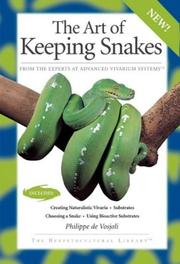
De Vosjoli's broadest and most thoughtful snake book, covering naturalistic vivaria, species selection across the family, and the reasoning behind an enclosure rather than a parts list. The step up from the single-species manuals.

Published under François Le Berre. Chameleons are the classic case of an animal that looks beginner-friendly in a shop and is not: they need airflow, drip watering, gutloaded insects and a stress-free sightline. Read this before, not after, buying one.

Catalogued as Understanding Reptile Parasites (Advanced Vivarium Systems). Written by a veterinarian for keepers, on the mites, nematodes and protozoa that quarantine exists to catch. The most practically useful health book on the list; dosing advice should still be confirmed with a reptile vet.
Know the animal, not just the enclosure
IntermediateUnderstand these species as wild organisms — thermal biology, foraging mode, reproduction, evolutionary history — so that husbandry decisions follow from what the animal is rather than from a caresheet
▸ Study plan for this stage
Pace: Three to six months, and the three books are not read at the same rate. George R. Zug, Laurie J. Vitt and Janalee P. Caldwell's Herpetology (675 pages) is a university textbook — physiology, ecology, behaviour and systematics — and should be read in chapters, at 20 to 30 pages a session, over severa
- Thermal biology: what an ectotherm is actually doing when it moves between hot and cool, and why the gradient works
- Foraging mode — ambush against active search — and what it predicts about feeding in captivity
- Reproduction and seasonality, including why some species need a cooling period
- Evolutionary history and systematics as the reason related species share requirements
- Reading a caresheet critically against the animal's field biology
- The difference between a textbook's evidence, a field biologist's observation, and a manual's rule of thumb
- What does the thermal biology chapter in Zug explain about why your gradient works, that the husbandry books only assert?
- How does foraging mode predict how a species should be fed and how often?
- What would you look up, and in what order, to design husbandry for a species with no published manual?
- Where does Greene's field account of snake behaviour contradict something you were told by a species manual?
- What does Pianka's desert fieldwork imply about lighting and basking that a heat lamp specification does not capture?
- Take the species you keep, find it or its close relatives in Zug, and write a one-page account of its wild thermal and feeding ecology.
- Compare that account against the caresheet you have been following and list every point where the caresheet is a simplification.
- Read Greene or Pianka on a behaviour you have observed in your own animal and write what the field account explains that the manual did not.
- Design husbandry from first principles for a species you do not keep and for which you deliberately do not read a manual — then find one and check yourself.
Next up: The path ends here, and the standing obligation does not: the animal in front of you may outlive this reading list, so keep checking your husbandry against current practice rather than against the book that taught you.
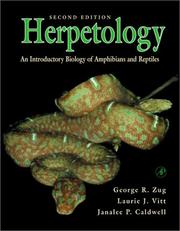
Zug, Vitt and Caldwell is the standard university textbook on amphibians and reptiles: physiology, ecology, behaviour and systematics. The book that turns a keeper into someone who can reason about a species nobody has written a manual for.
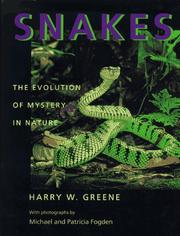
Catalogued as Snakes. Greene is a field biologist and a superb writer, and this is the best book in existence on what snakes actually do and why. It reframes the animal in the tank as something with a life history rather than a feeding schedule.

Catalogued as Lizards. Pianka and Vitt on lizard ecology and diversity worldwide, drawn from decades of desert fieldwork. The right last book: it closes the loop from a vivarium's heat lamp back to the sun the species evolved under.
Discussion
Keep reading
Paths that share books, cover the same subject, or open a related topic.