Best Books on Herpetology, Reptiles and Amphibians
Herpetology is the one zoology field where the popular books and the university texts are unusually close together, because so many of its best writers are working field biologists. Start with narrative natural history that shows you what the animals actually do, add the field guides that let you name what you are looking at, and only then open the two standard textbooks — they are far easier once you already have animals in your head. The last two stages take you into the specialist problems the field is currently arguing about, and into what the working life looks like.
Start With the Animals
BeginnerGet a working picture of reptile and amphibian diversity and behaviour before any taxonomy or physiology, so the later technical reading has something to attach to.
▸ Study plan for this stage
Pace: 4-5 weeks. Life in Cold Blood is 288pp and mostly photographs with a clear text — a week. Greene's Snakes is 351pp of large-format writing that is genuinely worth slowing down for, so give it two to three weeks. Frogs by Dorcas and Gibbons is a question-and-answer book you can read in any order (the
- The three living amphibian orders and the four reptile lineages, and roughly what each does for a living
- Ectothermy and behavioural thermoregulation — basking, retreat, activity windows — as the constraint that shapes almost everything else
- Amphibian skin and the biphasic life cycle, and why both make amphibians unusually exposed to their environment
- Venom, defence and warning as an evolutionary arms race, introduced through specific snakes in Greene rather than as a category
- Feeding as the organising problem of snake biology: gape, constriction, envenomation, and what a limbless predator can and cannot eat
- Parental care in reptiles and amphibians, which is far more common than the textbook stereotype allows
- Natural history as evidence — Greene's argument that decades of close observation produce knowledge nothing else can
- Why does ectothermy make a lizard's daily schedule a biological rather than a behavioural fact?
- What does Greene identify as the key innovations in snake evolution, and in what order does he think they arrived?
- How does amphibian skin function in respiration and water balance, and why does that matter for where frogs can live?
- Name three forms of parental care shown in Life in Cold Blood and the clade each belongs to.
- What kind of question can only be answered by long-term field observation of the sort Greene describes?
- Watch a single reptile or amphibian in the field or in a collection for thirty minutes and write down everything it does. Then read Greene's account of a comparable observation and compare what he noticed with what you did.
- Build a one-page cladogram of the reptiles and amphibians from Life in Cold Blood, from memory, and check it against the book. You will redo this from the textbooks later; the gap between the two versions is the lesson.
- Take one snake species treated in Greene and list the evidence he cites for its feeding ecology — dissection, field observation, museum records. This is what the field's evidence base actually looks like.
- Use Dorcas and Gibbons to answer three questions you already had about frogs, then check whether the answer is general or specific to a region. The book's format makes this easy and the habit is the point.
Next up: With animals in your head rather than categories, the field guides stop being lists and become a way of finding those animals where you live.
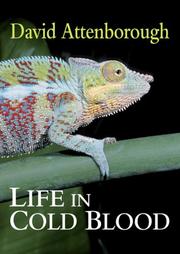
The companion book to Attenborough's series, and the most efficient possible survey: thermoregulation, parental care, venom and courtship shown through specific animals rather than defined abstractly. Read it first because it gives you the whole clade in one sitting.
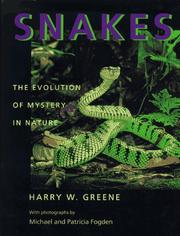
A field biologist's classic that is genuinely literature as well as science — Greene builds snake evolution, feeding and defence out of decades of his own fieldwork. Open Library files it under the bare title Snakes; it is the 1997 University of California Press book. Second because it shows what a career of looking closely at one group actually yields.

Dorcas and Gibbons answer the questions people actually ask about frogs, which is a surprisingly good way to cover amphibian biology. Read it here so the amphibians are as vivid to you as the reptiles before the textbooks treat them as parallel chapters.
Learn to Identify What Is in Front of You
BeginnerAcquire the identification habit — keys, range maps, diagnostic characters — which is the skill every later chapter silently assumes.
▸ Study plan for this stage
Pace: Ongoing rather than finished — 3-4 weeks to work through the front matter and keys, then years of use. Conant's Peterson guide to eastern and central North America is 429pp, Stebbins's western guide 336pp, and Turtles of the World 416pp. Note that both field guides here are the older editions in the
- The dichotomous key as a tool, and reading a couplet correctly when both options seem plausible
- Diagnostic characters — scale counts, dorsal patterns, ventral markings, toe lamellae — versus merely descriptive ones
- Range maps as hypotheses, and why locality is often the most powerful character you have
- Regional herpetofaunas as distinct problems: Conant's east and Stebbins's west are different faunas needing different characters
- Subspecies and the instability of names, which is why an old guide can be right about the animal and wrong about the label
- Turtle diversity by family, and shell morphology as the visible index of ecology (Bonin, Devaux and Dupre)
- Voucher photographs, field notes and locality data as the difference between a sighting and a record
- What is a diagnostic character, and how does it differ from a field mark that merely looks distinctive?
- Given an unfamiliar snake in hand, what sequence of characters would you check, and in what order?
- How do Conant and Stebbins differ in how they organise a key, and which do you find more usable?
- Why can two guides call the same animal by different names, and what should you record so the identification survives a taxonomic revision?
- What does a turtle's shell shape tell you about where it lives, and can you give three examples from Turtles of the World?
- Key out ten species from photographs using Conant or Stebbins without looking at the plates first. Working the keys rather than matching pictures is the transferable skill and the plates undermine it.
- Take the same species and key it in both guides where their ranges overlap. Seeing two authors solve the same identification problem differently is the point of owning both.
- Keep a proper field notebook for one season — date, locality, weather, substrate, behaviour, photograph — for every animal you find. This is the actual practice of the discipline and it starts now.
- Pick five turtle families from Bonin, Devaux and Dupre and predict habitat from shell and limb morphology before reading the account. Check yourself; the correlation is strong enough to be genuinely useful.
Next up: You now have named animals with known ranges and habits, which is exactly the scaffolding the textbooks assume when they start talking about phylogeny and physiology in the abstract.

The Peterson guide that trained several generations of American herpetologists. Work through the keys rather than only the plates; learning to read a diagnostic character is the transferable skill.
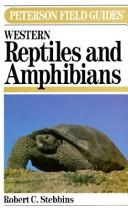
Stebbins covers the other half of the continent and is the standard for the west. Paired with Conant it also shows you how two authors handle the same problem of making a key usable in the field.

Turtles get short shrift in most general herpetology reading, and this is the accessible global account of the group — every family, with conservation status. Here because turtle diversity is the easiest to grasp visually before you meet it as phylogeny.
The Two Standard Textbooks
IntermediateMove from natural history to the organised discipline: phylogeny, systematics, thermal biology, reproduction and physiology as a field treats them.
▸ Study plan for this stage
Pace: 6-9 months, and this is university-level reading. Pough and colleagues is 612pp and Zug, Vitt and Caldwell 675pp — these are the two texts the field teaches from and they assume general biology, some genetics and comfort with reading a phylogeny. Do Pough first at a chapter a week, then Zug as the s
- Phylogenetic systematics: reading a tree, monophyly, and why the term reptile is problematic without birds
- Amniote origins and the major radiations — turtles, lepidosaurs, crocodilians — and the current disputes about turtle placement
- Thermal biology as a quantitative subject: preferred body temperature, thermal performance curves, cost of thermoregulation
- Reproductive modes across the clades — oviparity, viviparity, and the repeated transitions between them
- Water and salt balance, and the physiological reason amphibians and reptiles occupy different habitats
- Larval ecology and metamorphosis, and the plasticity that makes amphibian development a model system
- Amphibian systematics and morphology in the depth only Duellman and Trueb provide
- Where the two textbooks weight differently: Pough is ecological and physiological, Zug is systematic and phylogenetic
- Why is the traditional class Reptilia not a valid clade, and what is used instead?
- Draw a thermal performance curve and explain what an animal loses by operating either side of its optimum.
- How many independent origins of viviparity are recognised in squamates, and what does that number tell you about the evolutionary accessibility of the trait?
- Where do Pough and Zug disagree, or emphasise differently, on a question you can identify — and how would you find out which view currently holds?
- What does Duellman and Trueb cover on larval ecology that neither textbook has room for?
- Redraw the cladogram you made in stage one from Pough's treatment, then update it from Zug's. Three versions of the same tree, drawn months apart, is the most efficient record of what you have learned.
- Take one species you identified in the field-guide stage and write a two-page account of it using the textbooks' framework — phylogenetic position, thermal biology, reproductive mode, diet. This is the exercise that welds the two stages together.
- Work through Pough's thermal biology chapter with a thermometer and one accessible basking site: record substrate, air and (if you can, non-invasively) animal temperature across a day, and plot it against the book's expectations.
- Use Duellman and Trueb to answer one question the textbooks raised and dropped, and note how much more detail a dedicated reference carries. This calibrates when to reach for it.
Next up: The textbooks close on questions still open, and the next stage takes three of them — venom evolution, lizard community ecology and the amphibian decline — far enough that you can read the primary literature.
Pough and colleagues' Herpetology is one of the two textbooks the field actually teaches from, and the more ecologically and physiologically weighted of the pair. Read it before Zug because its chapter order runs closer to the way the earlier narrative books think.
Zug, Vitt and Caldwell is the other standard text — stronger on systematics and phylogeny, and the better reference to keep. Open Library files it under the bare title Herpetology, so do not be alarmed that it looks identical to the previous entry; they are different books.

Duellman and Trueb is the amphibian reference the textbooks compress, and the place to go once a chapter on caecilians or larval ecology leaves you wanting more. Read it as a reference after the survey texts, not cover to cover.
The Specialist Problems
IntermediateFollow three live research programmes — venom chemistry, lizard diversity and the global amphibian collapse — deep enough to read the primary literature on each.
▸ Study plan for this stage
Pace: 3-5 months, with very uneven components. Venomous is 256pp of popular science and reads in a week. Pianka and Vitt's Lizards is 346pp of accessible but genuinely scientific writing — three to four weeks. Amphibian Declines is 1,115pp and is an edited compendium of species accounts for the United Sta
- Venom as a biochemical system: what the toxins actually are, and the repeated independent evolution of venom across lineages
- The distinction between venomous and poisonous, and why it is more than pedantry once you look at delivery
- Lizards as a model system for questions about niche, competition and community structure (Pianka and Vitt's central claim)
- Desert lizard communities and the classic niche-partitioning studies that came out of them
- The global amphibian decline: chytridiomycosis, habitat loss, climate and contaminants as multiple simultaneous causes
- Species accounts and conservation status assessment as a form of scientific writing with its own conventions
- Reading an edited volume: chapters by different authors with different standards of evidence, which Lannoo's compendium makes obvious
- How a research programme is structured — what counts as an open question versus a settled one in each of these three areas
- What is venom, chemically, and how many independent origins are recognised across reptiles?
- Why did lizards become the model system for community ecology rather than some other group?
- What is the evidence that chytrid fungus is a primary rather than a secondary cause of amphibian declines?
- Given a species account in Lannoo, what would you need to add to turn it into a research question?
- Where does Wilcox simplify for a general audience in ways the primary literature would not, and how can you tell?
- Take one venom system Wilcox describes and find the primary paper behind her account. Reading the popular version and then the source is the single best training in how science journalism compresses.
- Reconstruct one of Pianka's niche-partitioning analyses from the data as presented in Lizards — the axes, the overlap measure, the conclusion. The reasoning is transparent enough to follow and it is the model system's whole argument.
- Look up the Lannoo species accounts for every amphibian recorded in your county and note which have declined and what cause each account gives. This turns a 1,115-page reference into a local research brief.
- For each of the three problems in this stage, write down what would count as decisive evidence. Doing it before reading the current literature makes the literature much easier to evaluate.
Next up: The research is done by people with grants, permits, field seasons and risk, and the last stage is what that looks like from the inside.

The clearest popular account of what venom actually is chemically and how it evolved repeatedly, which is exactly the topic where textbook coverage is thinnest. Read it before the more technical work because it makes the biochemistry memorable.
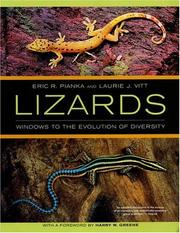
Pianka and Vitt use lizards as the model system for questions about diversity, niche and community ecology. Placed here because it is the best demonstration in the field of using one group to answer general evolutionary questions.

The big edited conservation-status volume on the amphibians of the United States, and the reference behind the phrase global amphibian decline. It is a compendium, so read the framing chapters and then the accounts for species you can find near you.
The Working Life
IntermediateUnderstand herpetology as a career and a practice — fieldwork, collecting, permits, risk and the politics of working in other people's countries.
▸ Study plan for this stage
Pace: 2-3 weeks. Tracks and Shadows is 297pp of memoir and reads at whatever pace you like; Emerald Labyrinth is a full-length expedition narrative (the catalogue record here carries no page count) and is similarly readable. Read Greene first, since it lands very differently once you know his snake book.
- Field biology as a practice with a cost — time, relationships, physical risk — stated plainly by both authors
- Collecting and vouchering: why specimens are still taken, and the ethical and legal framework around it
- Permits, export authorisation and the Nagoya Protocol landscape that governs working in another country's biodiversity
- Working in other people's countries: local collaborators, capacity, and the politics of who gets authorship
- Species discovery as it actually happens — mostly in museum drawers and genetic datasets, not in dramatic encounters
- Careers in herpetology: academic, museum, agency and consultancy, and the realistic odds of each
- Greene's argument that natural history is an art as well as a science, and what he says it cost him
- Why are voucher specimens still collected, and what is the strongest argument against the practice?
- What permits and permissions would a foreign researcher need to survey reptiles in another country, and who benefits from the resulting data?
- How does a new species actually get described, from encounter to publication?
- What does Greene say fieldwork cost him personally, and how does that change your reading of his snake book?
- Having read the whole path, what would you actually want to work on, and what training would that require?
- Read Greene's account of a field season and then reread a passage of Snakes describing the same kind of work. Knowing what it took to gather is the reason Tracks and Shadows is placed second.
- Find your region's permit requirements for handling or collecting reptiles and amphibians and read them in full. Every practitioner does this and it takes an afternoon.
- Look up a recent species description from central Africa and trace the acknowledgements and author list for local collaborators. Greenbaum's book makes this legible in a way the papers alone do not.
- Write a one-page proposal for a study you could actually do near where you live, using the framework of the specialist stage and the practical constraints these two books describe. This is the point at which reading turns into herpetology.
Next up: This is the end of the path: from here the reading is journal literature, regional monographs and your own field notes.

Greene's memoir of field biology as art, written after the snake book and much more personal. Read it once you know his science, because the pleasure is watching him say what the fieldwork cost and meant.

A herpetologist's account of survey expeditions in the Democratic Republic of Congo — the logistics, the militias, and the new species. The honest closing picture of what discovering reptile diversity involves today.
Discussion
Keep reading
Paths that share books, cover the same subject, or open a related topic.