Read the commitment before you read the caresheet. A leopard gecko sold at eight weeks old is a twenty-year animal. A ball python is a thirty-year animal. A box turtle may outlive you. Reptiles are surrendered to rescues in large numbers, usually for reasons that were foreseeable at the point of sale, and the first book on this path is a principles book rather than a species manual for exactly that reason.
Start with Susan Barnard's Reptile keeper's handbook, 252 pages on thermoregulation, humidity, photoperiod, nutrition, quarantine and record-keeping treated as general husbandry. Every species manual after it is an instance of what is in here. Note the catalogue match: the definite article kills it, so this is the book usually shelved as The Reptile Keeper's Handbook.
One standing caution about the older manuals
Several of the best species books on this list are by Philippe de Vosjoli and date from 1995 to 2004. They remain the clearest accounts of the animals, and their heating, lighting and supplementation advice is a floor to check against current guidance, not current guidance itself. UVB provision and calcium and D3 dosing have both moved substantially since these were written, and this is the one subject on the site where following outdated advice has a living victim. None of these books replaces a reptile-experienced veterinarian, and finding one before you buy an animal is part of the setup, not an afterthought.
The right first animal
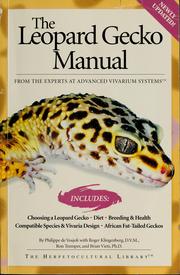
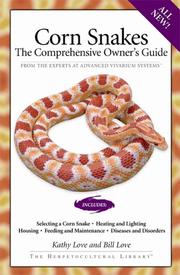
The leopard gecko manual, 96 pages, is the standard on the most common first reptile and is honest about the lifespan. Use it for the enclosure and the feeding regime, and check its lighting and supplementation chapters against a current source. Kathy Love's Corn Snakes is the fullest account of the classic first snake at 240 pages — feeding, shedding, handling, and the temperament reasons it gets recommended over almost anything else. Read both and then pick one animal, not both.
The species most keepers move to
The Bearded Dragon Manual (Advanced Vivarium Systems) covers the most popular pet lizard, and the species where getting basking temperature and UVB wrong produces metabolic bone disease fastest. Read the lighting chapter twice and then check it against a current UV index chart. Ball Python Manual (The Herpetocultural Library. Series 300) is short, 76 pages, and takes seriously the feeding refusal that is the most common reason ball pythons end up in rescues. The box turtle manual is on the path partly as an argument against impulse buying: box turtles are wild-caught more often than the trade admits, need outdoor space and a genuine hibernation cycle, and routinely pass fifty years.
Amphibians are not small reptiles
Almost everything you have just learned about heating is wrong for a frog. Devin Edmonds's Frogs and toads is the best current introduction — species selection, planted vivaria, water treatment, live-food culture — and it is the newest book on the path at 2011. Kevin Wright and Brent Whitaker's Amphibian medicine and captive husbandry is the veterinary reference for the group at 499 pages: expensive, technical, and the only place a serious keeper finds real detail on amphibian disease and water chemistry. Chytrid and ranavirus are the reason quarantine is not optional here.
Health, and the harder species
The art of keeping snakes is de Vosjoli's broadest book and the step up from single-species manuals, arguing an enclosure from the animal outwards rather than as a parts list. The Chameleon Handbook, published under François Le Berre, covers the classic animal that looks beginner-friendly in a shop and is not: airflow, drip watering, gutloaded insects, sightlines. Roger Klingenberg's Understanding Reptile Parasites (Advanced Vivarium Systems) is a veterinarian writing for keepers about the mites, nematodes and protozoa that quarantine exists to catch; it is the most practically useful health book here, and dosing should still be confirmed with a vet.
Knowing the animal, not just the enclosure
Zug, Vitt and Caldwell's Herpetology is the university textbook, 675 pages of physiology, ecology, behaviour and systematics — the book that lets you reason about a species nobody has written a manual for. Harry Greene's Snakes is the best book in existence on what snakes actually do, and Eric Pianka and Laurie Vitt's Lizards closes the loop from a heat lamp back to the sun the species evolved under.
The stages, with lengths and dates for every record, are on the reptile and amphibian keeping path.