Rabindranath Tagore Reading Order: Where to Begin with the First Non-European Nobel Laureate
Tagore wrote poems, novels, plays, songs and essays in Bengali across sixty years, and the English Tagore most readers meet is a thin, mystical-sounding selection of it — much of it translated by Tagore himself into a register that flattened him. That gap is worth knowing about before you start. This path takes the famous book first, then moves deliberately to the fiction and essays, where a much sharper writer is visible.
Start here: the book that won the Nobel
BeginnerRead the collection that made him the first non-European Nobel laureate in literature, and understand what it is and is not.
▸ Study plan for this stage
Pace: About a week for 94 pages. These are short prose pieces: read five or six a sitting rather than straight through, and save Yeats's introduction until after your first pass.
- These are Tagore's own English prose versions, not the Bengali verse he actually wrote
- What the English flattens: metre, song, and a far wider register
- Yeats's introduction and the Western reception it manufactured
- The 1913 Nobel and the image of the mystic sage it fixed
- Devotional address and its conventions in this English
- Reading a translation as a document of its own moment
- What form are these poems in English, and what were they in Bengali?
- What does Yeats's introduction claim, and where is it plainly wrong about him?
- Which of the poems still work once the mystic framing is set aside?
- Why does it matter that this is a self-translated selection rather than a complete book?
- What kind of writer would you assume Tagore was if this were all you read?
- Read ten poems, then read Yeats's introduction, then reread the same ten and note what the introduction changed
- Find a modern translation of any Gitanjali song, from William Radice or Ketaki Kushari Dyson, and set it beside Tagore's own English version of the same piece
- Keep a list of every poem whose voice is not devotional, and carry it forward into the fiction stage
Next up: Knowing what the English Gitanjali is and is not is exactly what stops the fiction coming as a shock.
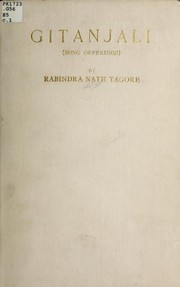
The song offerings, in Tagore's own English prose versions with Yeats's introduction. It is the book the West made him famous for, and it is a partial and rather solemn representation of a far more varied Bengali poet — read it knowing that.
The fiction
IntermediateMeet the novelist, who is sharper, funnier and more political than the poet of Gitanjali.
▸ Study plan for this stage
Pace: About 3 weeks. Two or three stories a sitting for the first week, then a novel a week; both novels are short but argumentative and reward slower reading than their length suggests.
- The Bengali village and the zamindari system as social fact rather than scenery
- Women's confinement inside the household as a recurring subject
- Bimala, Nikhil and Sandip as three incompatible positions on nationalism
- The Swadeshi boycott and its cost to the poor, including Muslim tenants
- Binodini as a widow with desire, and the scandal that caused
- A novelist sharper, funnier and more political than the poet of Gitanjali
- Which of the stories turn on money or land, and how exactly?
- What is Nikhil's argument against Sandip, and does the novel let him win it?
- How does The Home and the World treat the tenants who bear the cost of the boycott?
- What does Chokher Bali refuse to punish, and how did its first readers respond?
- Where is the poet of Gitanjali still audible in this prose, and where is he gone entirely?
- Read The Postmaster and Kabuliwala and note precisely what each withholds at its ending
- Read the three narrators of The Home and the World one voice at a time, straight through, then reconstruct the chronology
- Read about Satyajit Ray's film of Ghare Baire after finishing the novel and list what the adaptation resolves that the book leaves open
- Set one chapter of Chokher Bali beside one Gitanjali poem and describe the two Tagores in a paragraph
Next up: With the fiction read, the play and the long novel show the same arguments taken to their shortest and longest possible forms.
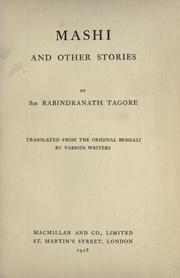
The stories are where his social observation is at its most exact, and where rural Bengal stops being scenery.

Three voices argue about nationalism, marriage and violence during the Swadeshi movement. Satyajit Ray filmed it; it remains contested for how critical it is of the nationalist cause.
A young widow inside a Bengali household, and a novel that treats female desire with a directness that startled its readers.
Theatre and the long novel
IntermediateRead the play that travelled furthest and the novel he thought his largest.
▸ Study plan for this stage
Pace: About 4 weeks. The Post Office is 37 pages and should be read in one sitting, preferably aloud; Gora is 501 pages of sustained argument, so a month at around 25 pages a day is realistic.
- Amal at the window: confinement and the world beyond it, held in one image
- The Warsaw ghetto performance weeks before the orphanage was deported, and how it shaped the play's reception
- Symbolist economy: how little the play is willing to state
- Gora's plot turning on the fact of his birth
- Caste, Hindu revivalism and Brahmo reform argued out between characters
- The novel Tagore considered his largest
- What does the letter mean at the end of The Post Office, and what does the play refuse to explain?
- How does knowing about the Warsaw performance change your reading of a short play about a dying child?
- What does Gora believe at the outset, and what exactly breaks it?
- How does Tagore give genuine arguments to positions he does not hold?
- Is Gora's ending a resolution or a concession?
- Read The Post Office aloud in one sitting, dividing the parts among readers if you can find any
- Keep a list of Gora's set-piece debates and mark who wins each one on the page rather than in your sympathies
- Read the closing chapter of Gora again once you reach the Nationalism lectures, and note the overlap
Next up: Having watched him dramatise the argument about nation and identity, the essays state it in his own voice and at his own risk.
A short play about a dying child at a window. It was performed in the Warsaw ghetto weeks before its orphanage was deported, which is part of how it is now read.
His biggest novel — identity, caste and Hindu revivalism argued out at length. Demanding, and the most substantial thing here.
The essays
IntermediateFinish with the prose arguments, which are the most surprising part of him.
▸ Study plan for this stage
Pace: 2-3 weeks. Nationalism is three lectures across 153 pages and can be read in a few sittings; The Religion of Man is denser, so take a chapter a sitting.
- The nation-state as organised self-interest, which is his central charge
- Lectures delivered in Japan and America during the First World War, and the hostility they met
- His break with the Indian nationalism he was expected to endorse
- The Hibbert Lectures and the fullest statement of what he believed
- A universalism aimed at empire and nation alike
- The prose arguments lying under the poems
- What exactly is his objection to nationalism, and does it apply to India's as well?
- Why did the Japanese and American audiences react the way they did?
- What does he mean by the religion of man, and where does it depart from orthodoxy?
- How do these arguments appear inside The Home and the World and Gora?
- How far is this writer from the one the Nobel committee thought it was rewarding?
- Read the Japan lecture and Sandip's speeches from The Home and the World in the same sitting
- Mark each passage of The Religion of Man that could sit beside a Gitanjali poem, and each that plainly could not
- Write a paragraph on what changed in your picture of Tagore between the first stage of this path and this one
Next up: With the poems, fiction, drama and essays read, the obvious next move is a modern verse translation, which is where the Bengali poet finally becomes visible in English.

Lectures delivered in Japan and America during the First World War, attacking the nation-state as such — including the Indian nationalism he was expected to endorse. He was booed for them.
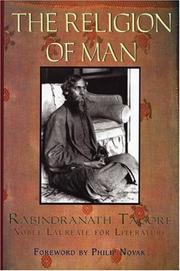
The Hibbert Lectures, and the fullest statement of what he actually believed, as against what Gitanjali's English suggested.