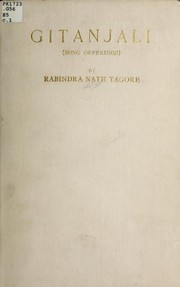
Start with Gitanjali (song offerings). It takes an evening, and it is the book that made Tagore the first non-European to win the Nobel Prize in Literature. Read it first so that you know what the West decided he was — and then read past it quickly, because it is a narrow and rather solemn slice of a writer who worked in poems, novels, plays, songs and political essays across sixty years.
One thing is worth knowing before you open it, and it explains a great deal about how the book reads. The English Gitanjali (song offerings) is Tagore's own translation of his Bengali songs, made by the poet himself into English prose, and W. B. Yeats wrote the introduction that launched it. A self-translation is an unusual object: Tagore was rendering himself for an Edwardian English audience, and he chose a hushed, devotional, King James register that the Bengali does not have. Readers who find the English strangely airless are not missing something — they are reading a deliberate act of self-presentation. Our catalogue record for this edition carries confused metadata, listing Yeats alongside Tagore and giving a date that should not be trusted; ignore the listing and read the book.
The fiction, which is where he gets sharp
Selected Short Stories is the correction to Gitanjali (song offerings). Here rural Bengal stops being scenery and becomes a society with money, caste, gossip and cruelty in it. His social observation is at its most exact in this form, and if you read only one more Tagore book, make it this one.
The Home And The World puts three voices into argument about nationalism, marriage and political violence during the Swadeshi movement. Satyajit Ray filmed it. It remains contested — readers have disagreed for a century about how critical Tagore intended it to be of the nationalist cause, and the novel does not settle the question for you.
Chokher bali follows a young widow inside a Bengali household and treats female desire with a directness that startled its first readers. It is the most novelistic of the three, in the ordinary sense of characters and consequences.
Theatre and the long novel
The post office is a short play about a dying child at a window who talks to everyone passing. It travelled further than anything else he wrote for the stage, and it is now inseparable from one fact about its performance history: it was staged in the Warsaw ghetto weeks before the orphanage that performed it was deported.
Gora is his largest novel — identity, caste and Hindu revivalism argued out at length. It is demanding and it is the most substantial thing on this list. Take it only if the shorter fiction has convinced you.
The essays, which are the surprise
Nationalism collects lectures given in Japan and the United States during the First World War, attacking the nation-state as such, including the Indian nationalism he was widely expected to endorse. He was booed for them. They read as startlingly current.
The religion of man is the Hibbert Lectures and the fullest statement of what he actually believed, as against what the English Gitanjali (song offerings) implied he believed.
Where to stop
Gitanjali (song offerings) plus Selected Short Stories is a real reading of Tagore and takes a week. Add The Home And The World if you want the political novelist, or Nationalism if you want the political thinker. Gora is for readers who are already committed. See the Rabindranath Tagore hub.
Follow the full ordered path here: Rabindranath Tagore Reading Order: Where to Begin with the First Non-European Nobel Laureate.
Ready to learn something deeply?
Build a reading path — free