Goosebumps books in order: where to start with R.L. Stine
There are sixty-two original Goosebumps books and several hundred R.L. Stine titles in total, so completeness is not a useful goal and this path does not attempt it. It picks the canonical early run — the books that defined the series and are still the ones worth handing a new reader — puts the four best-known first rather than the four earliest, and then crosses over to Fear Street, which is where a reader who has outgrown Goosebumps goes next.
The Four to Start With
BeginnerRead the four Goosebumps everybody means when they say Goosebumps. ORDER CHOSEN: not publication order and not series numbering — the originals are almost all standalone, so this stage ranks by which books actually hook a new reader. Publication numbering is restored from the next stage on.
▸ Study plan for this stage
Pace: A week, comfortably. These four run 144, 141, 141 and 144 pages — 570 in total — in large type with short chapters, so each is an hour or two and the whole stage is one weekend if you want it to be. Read them in the order given rather than by series number: only Welcome to Dead House is also first b
- The Goosebumps template: an ordinary suburban family, a wrong house or wrong object, and no adult who believes the child
- The chapter-ending shock as a structural device — a cliffhanger every eight pages or so, often defused on the next page
- One rule, applied relentlessly: Say Cheese and Die! is the cleanest example of a single supernatural premise driving an entire plot
- Why these are standalones, and what that lets Stine do that a continuing series cannot
- Slappy as the closest thing the series has to a recurring villain, and the commercial logic that followed from Night of the Living Dummy
- The Haunted Mask's shift from external monster to the protagonist's own timidity as the source of the fear
- Say Cheese and Die! sets one rule and never breaks it. State the rule in a sentence, then find the point where the plot would collapse if Stine bent it.
- Count the chapter endings in any one of these four that are real shocks and the ones that are defused immediately. What ratio does Stine actually run?
- Welcome to Dead House is markedly darker than the three that follow it here. What does the series give up when it stops doing that?
- The Haunted Mask is the one adults name as the best-written. What is it doing that the other three are not?
- In all four, adults are absent, disbelieving or complicit. Is that a limitation of writing for children or the whole engine of the format?
- Read Say Cheese and Die! with a pencil and mark every chapter break; count how many end on a threat and how many of those threats are real by the next page.
- Write down the twist of Welcome to Dead House at the halfway mark as you predict it, then check it against the actual ending — the series trains a reader to guess, and it is worth knowing how well you can.
- Take the first two pages of The Haunted Mask and the first two of Welcome to Dead House and compare how quickly each puts its protagonist somewhere unsafe.
- If you are reading these to or with a child, read one chapter ending aloud and stop there deliberately; the format assumes exactly that interruption and it is the fastest way to see how the pacing works.
Next up: With the four best-known books read and the template visible, the next stage returns to publication order and fills in the rest of the opening year, where the range of premises Stine would reuse for a decade was established.

Goosebumps #1, and the only one of the four that is also first by publication. It is unusually bleak for the series — a whole town of the dead — and it sets the template: ordinary suburban family, wrong house, no adult who believes them.
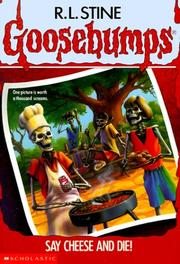
The camera that photographs the future, and disaster follows. Second because it is the cleanest single premise in the series and the best demonstration of Stine's actual craft: one rule, applied relentlessly, with a chapter-ending shock every eight pages.

Slappy the ventriloquist dummy, the closest thing Goosebumps has to a recurring villain and the reason the series ran for thirty years. Here because it is the most-remembered book of the lot and it spawned the longest sub-series.
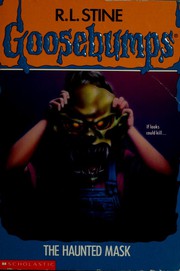
Carly Beth buys a Halloween mask she cannot take off. Fourth because it is the best-written of the early run — the fear is about her own timidity rather than a monster — and it is the one adults reread without embarrassment.
The Rest of the Original Run's Opening Year
BeginnerFill in the 1992-93 books that established the range of premises Stine would recycle for the next decade, now reading in publication order.
▸ Study plan for this stage
Pace: Another week or so — 555 pages across four books running 128 to 144 pages each, the same one-or-two-sitting length as the first stage. These are read in publication order (numbers 2, 3, 5 and 6), which is the right order from here on because it shows Stine's range widening month by month. Stay Out o
- Body horror in a children's series: what Stay Out of the Basement can show and what it has to leave implied
- The sequel-able premise — why green goo that keeps growing generates four books and a haunted mask generates one
- Setting as a variable Stine rarely changed: The Curse of the Mummy's Tomb is one of the few originals that leaves the American suburb
- Borrowing from adult horror cinema, and how the borrowings are sanded down for the audience
- The rule-with-a-time-limit structure in Let's Get Invisible!, the tightest construction in the second tier
- Series numbering versus reading quality: why these four are numbers 2, 3, 5 and 6 and what that says about consistency
- Stay Out of the Basement is about a father. How does the book keep a parent threatening without making the book unreadable for its audience?
- What exactly makes Monster Blood extensible into four sequels when The Haunted Mask is not? Answer in terms of the premise's rules.
- The Curse of the Mummy's Tomb leaves the suburb. What does the series lose along with the familiar setting?
- Let's Get Invisible! attaches a time limit to its magic. Track how Stine uses that limit to structure the second half.
- Across these four, which premises could you restate in one sentence and which need three? Does the one-sentence group read better?
- Write each of these four premises as a single sentence with its rule stated explicitly, then rank them by how many stories you think the rule could generate — then check against how many sequels each actually got.
- In Let's Get Invisible!, mark each mention of elapsed time; the escalation is entirely built on that count and it is invisible until you list it.
- Compare the cover copy of Stay Out of the Basement with what the book actually does; the mismatch is a real feature of how the series was sold.
- Pick the weakest of these four by your own reading and write a paragraph on what is missing, using the first stage's four as the standard.
Next up: Having covered the opening year, the next stage takes three books from the series at its most confident and then deliberately stops, rather than working through all sixty-two.
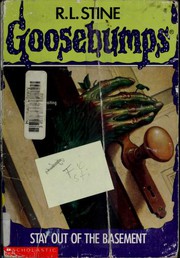
Goosebumps #2: a botanist father, a basement full of plants, and the question of what came back up the stairs. The series' first body-horror premise, and much stranger than its cover suggests.
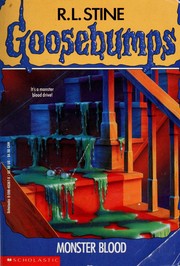
Goosebumps #3, and the first premise Stine liked enough to sequel four times. Read it to see how a one-joke idea — green goo that will not stop growing — gets stretched into a franchise.
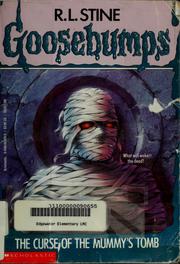
Goosebumps #5, set in Egypt, and the series' clearest borrowing from adult horror movies. Useful here because it shows Stine working outside the suburban setting, which he rarely did.
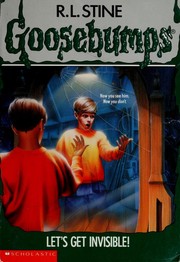
Goosebumps #6: an attic mirror that makes you disappear, and a rule about how long you can stay gone. The best-constructed of the second-tier books and a good test of whether you want the whole run.
The Best of the Middle Run
BeginnerTake three books from the 1993-94 stretch where the series was at its most confident, and stop there rather than working through all sixty-two.
▸ Study plan for this stage
Pace: Under a week — three books, 140, 141 and 130 pages, 411 in total and the shortest stage on the path. This is where the path stops with Goosebumps by design. There are sixty-two originals plus sequels and the 2000-era reboots, and from roughly number 20 onward the premises begin repeating, so complet
- The retroactive twist: Welcome to Camp Nightmare's ending changes what every previous chapter meant, the most ambitious thing Stine attempted in the original run
- The whodunnit under the monster story in The Werewolf of Fever Swamp, and why the mystery structure holds a conventional premise up
- Diminishing returns in a formula series — how to recognise when premises have started recycling
- Rural and small-town settings as a late variation on the suburban template
- Why the sequels and the 2000-era reboots are for completists, and what a reader gains by stopping instead
- The difference between a twist that surprises and a twist that rereads
- Welcome to Camp Nightmare's ending recontextualises the book. Which specific earlier scenes were written to survive that recontextualisation, and do they?
- The Werewolf of Fever Swamp gives you a suspect list. Is it a fair mystery — could a reader solve it — or is the answer withheld?
- The Scarecrow Walks at Midnight is put here as a stopping point. Reading it, can you see the repetition the path is warning about?
- Compare the twist here with the one in Welcome to Dead House. What has Stine learned in eight books?
- Having read eleven Goosebumps, what would you actually gain from the remaining fifty-one? Answer honestly.
- After finishing Welcome to Camp Nightmare, reread its first two chapters immediately; every line that now reads differently is the twist doing structural work rather than decorative work.
- List the suspects in The Werewolf of Fever Swamp in the order the book introduces them and note the page where each is cleared or confirmed — that is the mystery skeleton laid bare.
- Take the premises of all eleven Goosebumps read so far and group them by type (cursed object, transformed adult, wrong place). The size of the groups is the argument for stopping.
- Write one paragraph recommending which single Goosebumps to hand to a new reader, citing a scene rather than a reputation.
Next up: The last stage crosses to Fear Street, the older and bloodier series Stine was writing three years before Goosebumps existed, which is where a reader who has outgrown these goes next.
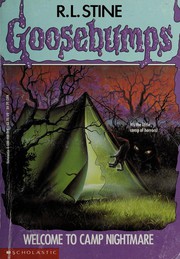
Goosebumps #9. A summer camp where children keep disappearing, and an ending that reframes the whole book. The most ambitious twist Stine attempted in the original run.
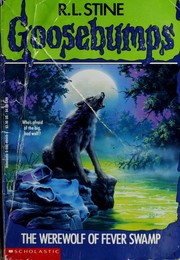
Goosebumps #14, and the series' most conventional monster story done well — a Florida swamp, a stray dog, and a whodunnit structure underneath the werewolf.

Goosebumps #20: a grandparents' farm, a superstitious hired hand and twelve scarecrows. A good place to stop the Goosebumps portion, because from here the premises begin repeating and the sequels and 2000-era reboots are for completists only.
Fear Street, for Readers Who Have Outgrown Goosebumps
IntermediateMove to the older, bloodier series Stine was already writing before Goosebumps existed — teenage protagonists, real deaths, and no reset button at the end of the book.
▸ Study plan for this stage
Pace: Two weeks. The two 1989 books run 168 and 167 pages, longer than any Goosebumps here, and the 2014 relaunch is 283 pages — the longest book on the path, and noticeably slower going than the others despite the same author. Read them in the order given: the two originals first, then Party Games direct
- Shadyside as a persistent setting, in contrast with Goosebumps' interchangeable suburbs
- The Fear Street formula: a group of teenagers, a secret from a year ago, and someone working through them one at a time
- Real consequence — what changes in the writing when a death cannot be undone by the last chapter
- Fear Street predates Goosebumps by three years, so the children's series is the derivative one, not the origin
- What the 2014 relaunch keeps and what it updates for readers who grew up on the originals
- Length as a signal of audience: 168 pages and 283 pages against the 130 to 144 of the Goosebumps books
- The New Girl came first, in 1989. Reading it after eleven Goosebumps, what looks like a scaled-up children's book and what does not?
- State The Surprise Party's formula in one sentence. How many of the fifty-plus Fear Street volumes could that sentence describe?
- Party Games was written twenty-five years later for a grown audience. Name three specific things Stine updated and one he refused to.
- What does a persistent town give the Fear Street books that the standalone Goosebumps cannot have?
- After both series, which one do you think Stine is actually better at, and what is your evidence?
- Read the opening chapter of The New Girl and the opening chapter of Welcome to Dead House side by side and mark every difference in sentence length, vocabulary and how quickly the threat arrives.
- Chart The Surprise Party's cast against the order in which they are threatened; the shape of that chart is the formula the series ran for over fifty volumes.
- Read Party Games immediately after The Surprise Party and keep a two-column list of kept versus updated elements — that comparison is why it is placed last rather than by publication date.
- Decide, in writing, whether you want to continue with Fear Street; if the answer is yes the sensible next step is the numbered originals in publication order, and if it is no this path has done its job.
Next up: This is the end of the path: eleven Goosebumps chosen from sixty-two originals, plus three Fear Street books that show where the harder version of the same craft lives — from here, continue Fear Street in publication order rather than completing Goosebumps.
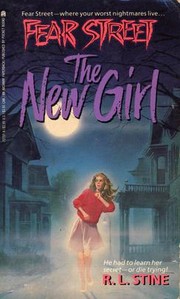
Fear Street #1, published in 1989, three years before Goosebumps #1. Start here: it establishes Shadyside and the tone, and it is a genuine teen thriller rather than a scaled-up children's book.
Fear Street #2, and the clearest early example of the series' actual formula: a group of teenagers, a secret from a year ago, and someone picking them off. Read second to see the pattern Stine would run for over fifty volumes.
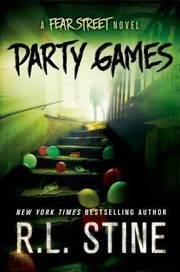
The 2014 relaunch, written twenty-five years after The New Girl for readers who grew up on the originals. Last because reading it directly after the two 1989 books shows exactly what Stine kept and what he updated.