Quantum computing: books to grasp qubits and algorithms
This curriculum takes an intermediate learner — someone comfortable with linear algebra and basic programming — from the core mathematics of qubits and quantum gates all the way to real quantum algorithms, error correction theory, and hands-on quantum programming. Each stage builds directly on the vocabulary and intuition established in the previous one, so the path should be followed in order.
Foundations: Qubits, Gates, and Quantum Mechanics
IntermediateBuild a solid mathematical and conceptual foundation in quantum mechanics as it applies to computing — understanding qubits, superposition, entanglement, and quantum circuit models.
▸ Study plan for this stage
Pace: 8–10 weeks, ~40–50 pages/day, with 2–3 days per week dedicated to problem sets and exercises
- Qubit representation: basis states, superposition, and the Bloch sphere as a geometric model
- Quantum gates and unitary operations: single-qubit gates (Pauli, Hadamard, phase) and multi-qubit gates (CNOT, controlled operations)
- Entanglement: Bell states, EPR pairs, and why entanglement cannot transmit classical information faster than light
- Quantum measurement and collapse: Born rule, measurement postulate, and the relationship between observables and Hermitian operators
- Quantum circuit model: composing gates into circuits, circuit notation, and equivalence of quantum programs
- Linear algebra foundations: complex vector spaces, inner products, tensor products, and matrix representations of operators
- Quantum algorithms fundamentals: reversibility, quantum parallelism, and interference as mechanisms for computational advantage
- Density matrices and mixed states: describing subsystems, partial trace, and decoherence
- What is a qubit, and how does superposition differ from classical probabilistic uncertainty?
- Explain the Bloch sphere: what do points on its surface represent, and what do rotations correspond to?
- What is the difference between single-qubit gates (e.g., Hadamard, Pauli-X) and multi-qubit gates (e.g., CNOT), and how do they compose in circuits?
- What is entanglement, and why does it not allow faster-than-light communication despite correlations between measurements?
- How does the Born rule determine measurement outcomes, and what happens to a quantum state after measurement?
- Why is the tensor product essential for describing multi-qubit systems, and how does it relate to entanglement?
- What makes quantum algorithms potentially faster than classical ones, and what role do interference and superposition play?
- Work through Nielsen & Chuang's exercises on qubit representation (Chapter 1–2): compute superposition states, verify normalization, and visualize states on the Bloch sphere
- Implement single-qubit gates (Pauli X, Y, Z; Hadamard; phase gates) as 2×2 matrices; verify unitarity and compute their action on basis states
- Construct and analyze Bell states by hand: write out |Φ+⟩, |Ψ+⟩ in tensor product form, verify entanglement, and compute measurement probabilities
- Build simple quantum circuits (2–3 qubits) using Hidary's circuit examples; trace through gate applications step-by-step to predict output states
- Solve problems on the CNOT gate and controlled operations: apply CNOT to various input states, verify its role in creating entanglement
- Practice tensor product calculations: compute (|0⟩ + |1⟩) ⊗ |0⟩, expand multi-qubit states, and identify separable vs. entangled states
- Work through measurement problems: given a quantum state, compute probabilities of measuring each basis state using the Born rule
- Implement a simple quantum algorithm (e.g., Deutsch algorithm or Deutsch–Jozsa) by hand on small inputs; trace execution and verify correctness
Next up: Mastering qubits, gates, and the quantum circuit model provides the mathematical machinery and intuition needed to understand how quantum algorithms exploit superposition and entanglement for computational speedup—preparing you to study specific algorithms like Shor's and Grover's in the next stage.

The definitive textbook in the field, covering qubits, quantum gates, circuits, and the mathematical formalism in full rigor. Starting here ensures every subsequent book's notation and concepts feel familiar.

Bridges theory and practice by pairing circuit-model concepts with real code examples in Qiskit and Cirq. Reading it after Nielsen & Chuang grounds the abstractions in runnable implementations.
Core Algorithms: Shor, Grover, and Quantum Speedup
IntermediateUnderstand the landmark quantum algorithms — Deutsch-Jozsa, Grover's search, and Shor's factoring — and develop intuition for where and why quantum computers outperform classical ones.
▸ Study plan for this stage
Pace: 4–5 weeks, ~40–50 pages/day. Start with Mermin's accessible treatment of the Deutsch-Jozsa algorithm and quantum parallelism (weeks 1–2), then move to Kaye's deeper coverage of Grover's algorithm and complexity analysis (week 3). Conclude with Shor's algorithm in both texts and comparative speedup a
- Quantum parallelism and superposition as the foundation for quantum speedup: how quantum computers evaluate a function on multiple inputs simultaneously
- The Deutsch-Jozsa algorithm: promise problem structure, oracle queries, and the first concrete example of exponential separation between quantum and classical query complexity
- Grover's search algorithm: amplitude amplification, the role of the diffusion operator, and quadratic speedup for unstructured search
- Shor's factoring algorithm: period-finding via quantum Fourier transform, modular exponentiation, and the exponential advantage for a practically important problem
- Query complexity and oracle models: how to count quantum versus classical resources fairly and understand when quantum advantage is guaranteed
- Phase kickback and phase encoding: the subtle mechanism by which quantum algorithms extract information from oracles
- Quantum speedup types: exponential (Shor), polynomial (Grover), and problem-dependent speedups; when each applies
- Explain how the Deutsch-Jozsa algorithm achieves exponential speedup over classical algorithms. What is the promise problem, and why does quantum parallelism solve it with a single oracle query?
- Describe Grover's algorithm step-by-step: what is the initial state, how does the oracle work, what does the diffusion operator do, and why does amplitude amplification yield a quadratic speedup?
- How does Shor's algorithm use the quantum Fourier transform to solve period-finding, and why is period-finding the key to factoring large numbers?
- Compare the speedups offered by Deutsch-Jozsa, Grover, and Shor. For each, explain whether the advantage is exponential or polynomial, and under what conditions it applies.
- What is phase kickback, and how do oracle constructions in Grover's and Shor's algorithms exploit it to encode information into quantum states?
- Discuss the oracle model: why is it important for analyzing quantum algorithms, and what are its limitations when comparing quantum and classical complexity?
- Work through the Deutsch-Jozsa algorithm by hand for a concrete 2-qubit example (Mermin, Chapter 3): construct the initial superposition, apply the oracle for a balanced function, apply the final Hadamard, and verify the measurement outcome.
- Simulate Grover's algorithm on a small database (e.g., 4 or 8 items) using a quantum computing framework (Qiskit, Cirq, or Q#): implement the oracle, diffusion operator, and iterate the correct number of times; observe amplitude amplification.
- Derive the number of Grover iterations needed for an N-item database and verify it scales as O(√N). Compare to classical linear search and quantify the speedup.
- Study the period-finding subroutine in Shor's algorithm (Kaye, Chapter 5): implement or trace through a small example (e.g., finding the order of 3 modulo 35) using the quantum Fourier transform.
- Construct an oracle for a concrete promise problem (e.g., Deutsch-Jozsa with a specific balanced or constant function) and verify that your quantum circuit correctly encodes the problem structure.
- Write a detailed comparison essay: explain why Shor's algorithm is exponentially faster than classical factoring for large numbers, while Grover is only polynomially faster than classical search. What structural properties of each problem enable these different speedups?
Next up: This stage establishes the algorithmic foundations and intuition for quantum advantage; the next stage will likely deepen the analysis of error correction, noise resilience, and practical implementation constraints that determine whether these theoretical speedups survive on real hardware.

Written by a physicist for computer scientists, this book unpacks Grover's and Shor's algorithms with exceptional clarity and minimal hand-waving, making it the ideal algorithmic deep-dive after the foundations stage.
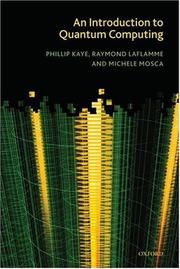
Provides worked, step-by-step derivations of the major algorithms with a focus on mathematical precision, reinforcing and extending what Mermin introduces at a slightly more formal level.
Error Correction and Fault Tolerance
ExpertUnderstand why quantum error correction is essential, master the stabilizer formalism, and learn how fault-tolerant quantum computation is designed and analyzed.
▸ Study plan for this stage
Pace: 8–10 weeks, ~40–50 pages/day with 2–3 days per week for problem-solving and review
- Quantum error sources and decoherence mechanisms (amplitude damping, phase damping, depolarizing channels)
- Stabilizer codes and the stabilizer formalism as a framework for constructing quantum error-correcting codes
- The surface code and topological codes as practical, scalable error correction architectures
- Fault-tolerant quantum gates and the threshold theorem: conditions under which error correction improves reliability
- Syndrome extraction and measurement-based error correction protocols
- Logical qubits and the encoding of quantum information in error-correcting codes
- Trade-offs between code distance, physical qubit overhead, and computational overhead
- Why is quantum error correction fundamentally different from classical error correction, and what makes it necessary for quantum computation?
- Explain the stabilizer formalism: what are stabilizer generators, logical operators, and how do they define a quantum error-correcting code?
- How does the surface code achieve fault tolerance, and why is it considered one of the most practical codes for near-term quantum devices?
- What is the threshold theorem, and what does it tell us about the relationship between physical error rates and logical error rates?
- Describe the syndrome extraction process: how do we measure errors without destroying the encoded quantum information?
- What are the key differences between concatenated codes and topological codes in terms of scalability and resource requirements?
- Work through 3–4 detailed examples of stabilizer code construction (e.g., the [[4,2,2]] code, [[5,1,3]] code) by hand, identifying stabilizer generators and logical operators
- Simulate syndrome extraction and error correction for a small stabilizer code using Qiskit or a similar framework; measure how correction fidelity depends on error rate
- Derive the threshold condition for a simple error model (e.g., depolarizing channel) and calculate the break-even point where error correction begins to help
- Analyze the surface code: map out the 2D lattice, identify syndrome patterns for single-qubit errors, and trace through a complete error correction round
- Implement a fault-tolerant CNOT or Hadamard gate on an encoded logical qubit and verify that the gate is indeed fault-tolerant under a specified error model
- Compare resource costs (physical qubits, circuit depth, measurement overhead) for different codes (surface code, concatenated codes, color codes) at a fixed logical error rate target
Next up: This stage equips you with the theoretical and practical foundations of quantum error correction—the essential prerequisite for understanding how to scale quantum computers to useful problem sizes and how to design realistic quantum algorithms that tolerate noise.

A comprehensive, research-level treatment of quantum error-correcting codes, decoherence-free subspaces, and fault tolerance — the natural next step once algorithms are understood.
Real Quantum Programming and Near-Term Devices
ExpertWrite and run real quantum programs on simulators and cloud quantum hardware, understand NISQ-era constraints, and explore variational algorithms like VQE and QAOA.
▸ Study plan for this stage
Pace: 8–10 weeks, ~40–50 pages/day with 2–3 days per week for hands-on coding and experimentation
- Quantum circuit design and gate decomposition using Qiskit, Cirq, or similar frameworks
- NISQ-era hardware constraints: decoherence, gate errors, limited qubit counts, and connectivity limitations
- Variational Quantum Eigensolver (VQE): ansatz design, classical optimization loops, and hybrid quantum-classical workflows
- Quantum Approximate Optimization Algorithm (QAOA): problem encoding, cost Hamiltonians, and parameter optimization
- Quantum simulation on classical simulators and execution on real quantum hardware (IBM, Rigetti, IonQ platforms)
- Error mitigation strategies for near-term devices: readout error correction, zero-noise extrapolation, and circuit optimization
- Measurement and expectation value estimation: shot noise, sampling strategies, and statistical analysis
- Practical debugging and benchmarking of quantum circuits on real hardware
- How do you design and decompose a quantum circuit for a specific problem, and what are the trade-offs between circuit depth and gate fidelity on NISQ devices?
- What is the VQE algorithm, how does the classical-quantum loop work, and why is ansatz design critical for near-term success?
- How does QAOA encode optimization problems into quantum circuits, and what role does the mixer Hamiltonian play?
- What are the primary sources of error on NISQ devices, and what error mitigation techniques can you apply to improve results?
- How do you execute a quantum program on a real device, interpret measurement results given shot noise, and validate correctness?
- What are the connectivity constraints of real quantum processors, and how do you map logical circuits to physical qubits?
- Implement a simple quantum circuit (e.g., Bell state, GHZ state) using Qiskit or Cirq, run it on a simulator, and verify the results match theoretical predictions
- Build a VQE implementation to find the ground state energy of a small molecule (e.g., H₂ or LiH) using a parameterized ansatz; optimize the parameters classically and compare to exact diagonalization
- Implement QAOA for a small combinatorial problem (e.g., MaxCut on a 4–6 node graph); sweep parameters and plot the approximation ratio as a function of circuit depth
- Execute a quantum circuit on real hardware (IBM Quantum, Rigetti QCS, or similar cloud platform); analyze the results, identify errors, and apply one error mitigation technique
- Design a parameterized circuit ansatz for a specific problem domain (e.g., chemistry, optimization); justify your choices and test on both simulator and hardware
- Implement a measurement-based expectation value estimator that accounts for shot noise; compare statistical convergence for different shot budgets
Next up: This stage equips you with practical experience running real quantum algorithms on near-term hardware and understanding their limitations, preparing you to explore advanced error correction, fault-tolerant quantum computing, and scalable quantum algorithms in the next stage.

A hands-on, example-driven guide to writing quantum programs using real toolkits; it translates all prior theoretical knowledge into working code and practical circuit design patterns.
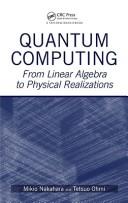
Closes the curriculum by connecting the abstract circuit model to physical hardware implementations (superconducting qubits, ion traps, photonics), giving the learner a complete end-to-end picture.
Discussion
Keep reading
Paths that share books, cover the same subject, or open a related topic.